Year: 2026
Runtime: 1 h 46 m
Language: english
Director: Jane Schoenbrun
Echo Score: 66Budget: $10M
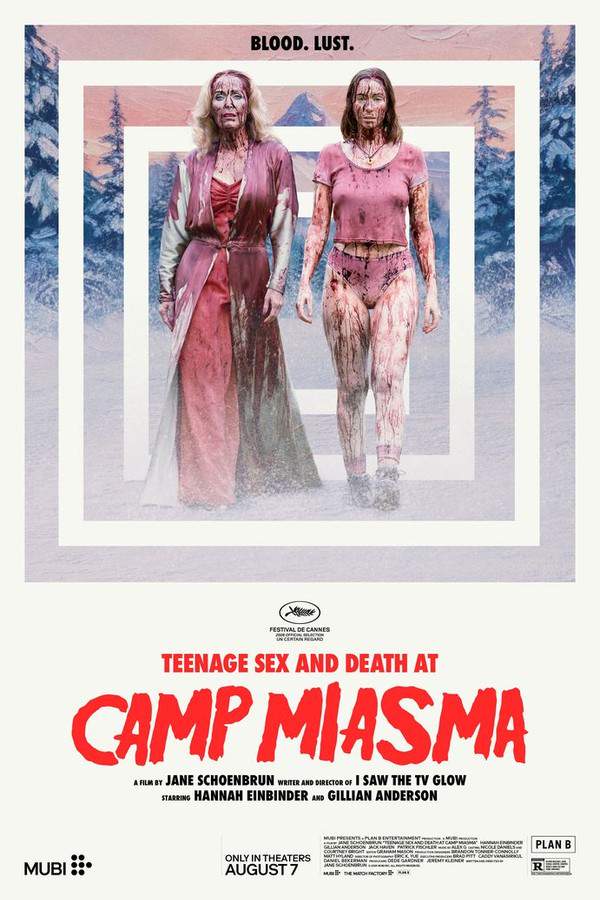
After years of hasty sequels, the Camp Miasma series is handed to an eager young director determined to revive it. When she seeks out the original film’s enigmatic, reclusive star, the two women become tangled in a blood‑soaked nightmare of desire, terror and delirium, pulling the new director deep into the franchise’s dark mythology.
Warning: spoilers below!
Haven’t seen Teenage Sex and Death at Camp Miasma yet? This summary contains major spoilers. Bookmark the page, watch the movie, and come back for the full breakdown. If you're ready, scroll on and relive the story!
Still thinking about how Teenage Sex and Death at Camp Miasma (2026) ended? Here’s a full breakdown of the ending, key final moments, major twists, and the deeper meaning behind the film’s conclusion.
Kris and Billy’s intimacy in the cabin merges with the imagery of the original Camp Miasma until Little Death kills them both. The apparent slasher conclusion is then destabilized when the final scenes show Kris and Billy alive, while Little Death puts away their video. Elsewhere, Kris and Eric appear blood-soaked but comfortable as they buy snacks at a convenience store after their own violent, ecstatic encounter. These conflicting images do not establish a simple resurrection or reveal that the killer was imaginary; they collapse the boundary between the old movie, the reboot Kris hoped to make, and the experience through which she finally confronts desire.
Kris began by trying to solve the franchise intellectually and to correct its history from a safe critical distance. Her survival with Billy reframes the masked figure whose name also means orgasm: Little Death becomes a passage through fear and self-observation rather than only a punishment for sex. By storing their video, the killer seems to take possession of a new installment even as Kris and Billy escape the victim roles assigned by the older story. The ending’s ambiguity is therefore functional. It refuses to tell viewers which layer is objectively real because Kris’s change comes from entering the flesh-and-fluids world she analyzed, allowing feeling and vulnerability to rewrite the genre from inside it.
Last updated: August 25, 2026 at 14:20
Read frequently asked questions about the ending of Teenage Sex and Death at Camp Miasma (2026), including final-scene interpretation, twist explanations, character outcomes, and the deeper meaning behind the conclusion. This ending explained FAQ is designed for viewers searching for clear spoiler-heavy answers and ending breakdown insights.
The film deliberately collapses the boundary between the original Camp Miasma footage and Kris's lived experience, so their apparent death inside the slasher imagery is not presented as the final truth. The closing scenes show them alive because the movie refuses to lock the viewer into a single reality. Their survival signals that Kris has stepped out of the victim role the older franchise assigned to her and Billy, treating the killing scene as one layer of the story rather than its conclusive outcome.
Kris's earlier conversations about how slasher victims are written into fixed roles foreshadow her refusal to remain inside that scripted ending.
When the masked figure stores the recording of Kris and Billy, the killer symbolically claims a new installment of the Camp Miasma series. It suggests that the horror franchise absorbs whatever Kris and Billy experience, turning their intimate encounter into raw material for the next chapter. The gesture frames Little Death not just as a murderer but as an auteur who archives desire and violence for the genre to keep consuming.
Kris's early fixation on the original film's unseen footage and missing reels hints that her story would itself become part of the archive.
"Little Death" is a translation of the French la petite mort, a common euphemism for orgasm. The film's masked killer carries that name because the horror and the erotic experience are treated as the same threshold in Camp Miasma. Naming the slasher after an intimate release reframes every killing as a passage through desire rather than a simple punishment for sex, which is central to how the ending recodes the franchise's original logic.
Kris's academic lecture about how the original film eroticized its victims plants the linguistic connection long before the final scene makes it explicit.
The convenience store scene places Kris and Eric inside the same flattened, everyday register the film uses for its blood-soaked survivors, refusing to treat post-horror trauma as a clean reset. Their calm, snack-buying demeanor suggests that the violence has been metabolized into something livable rather than erased. It also visually echoes the couple's earlier violent, ecstatic encounter, implying that intimacy and bloodshed have become indistinguishable in Kris's new reality.
Eric's earlier talk about surviving his own past horrors by staying practical primes the audience for this deadpan, blood-streaked survival.
The ambiguity is functional rather than evasive: the film refuses to confirm which layer is real because Kris's transformation depends on her entering the flesh-and-fluids world she had only analyzed. By keeping the reboot, the original movie, and her lived experience blurred, the ending argues that genuine change in the horror genre cannot come from a safe critical distance. The unresolved imagery is the point, showing that feeling and vulnerability rewrite the slasher from inside rather than from outside.
Kris's opening statement that the franchise can only be saved by someone willing to go through it foreshadows exactly this collapse of distance.
Kris begins the story trying to revive Camp Miasma through intellectual criticism and historical correction, keeping the franchise at arm's length. Her intimacy with Billy and her bloody encounter with Eric drag her into the genre's physical reality instead. By the closing scenes, she has stopped trying to solve the mythology from the outside and has become part of it, which is presented as a kind of authorship rather than defeat.
Kris's very first meeting with Billy, where she insists the franchise needs an insider's body, sets up the arc she eventually fulfills.
The final act stages Kris and Billy's cabin scene using the visual language of the original Camp Miasma, so their intimacy reads as both a present-day event and a continuation of the 1980s footage Kris has been studying. Characters, settings, and kills from the source material bleed into her reboot until the two productions feel like one ongoing nightmare. The collapse is what allows Little Death to store their video and claim a new chapter of the franchise.
Kris's repeated screenings of the original film, matched frame by frame to her own set, predict the visual merger that takes over the climax.
Little Death's name ties killing to orgasm, and the ending treats that fusion as a passage rather than a sentence. By surviving, Kris and Billy demonstrate that desire can move through the slasher's violence without being consumed by it. Their escape rewrites the franchise's old rule that sex equals death, turning the masked figure into a threshold the lovers cross instead of a punishment they receive.
Billy's earlier line about refusing to perform the expected victim choreography hints at the survival the ending delivers.
The submerged figure of Little Death suggests that the killer is not destroyed but embedded in the franchise's mythology, waiting inside the very imagery Kris now inhabits. It reinforces the idea that the horror cannot be exorcised; it can only be entered, survived, and carried forward. The lake becomes a reservoir of the genre itself, ready to surface again in whatever installment the stored video represents.
The original Camp Miasma's lake scenes, which Kris obsessively reviews, foreshadow the killer's return to that exact setting.
The film deliberately refuses to settle that question. Little Death functions simultaneously as a costumed slasher, a figure inside the original Camp Miasma footage, and a symbol of the erotic death-drive Kris has been studying. Treating the killer as either fully real or fully imaginary would collapse the layered structure the ending depends on, so the movie keeps all three readings in play as part of its thesis about genre, desire, and authorship.
Kris's interviews with cast and crew, each offering a different theory of the original killer, foreshadow the deliberate undecidability of the ending.
Their linked hands and quiet smiles, paired with the blood on their bodies, condense the film's central argument: intimacy and horror have become inseparable in Kris's story. The image reads as both lovers escaping a massacre and survivors of a genre that has just been rewritten through their participation. It is the visual thesis of the ending, showing that the couple has crossed into a new relationship with the franchise rather than out of it.
Billy's recurring gesture of reaching for Kris's hand during their first conversations predicts the final image of connection through violence.
The original film punished its characters for desire, but the ending reframes that equation by letting Kris and Billy carry their pleasure and their blood out of the woods together. Rather than confirming the old rule that sex equals death, the closing scenes argue that the genre can be rewritten from inside the experience of its victims. Little Death archiving the encounter completes the reframing, turning what was once a moralizing kill into raw material for a more honest continuation.
Kris's pitch that the franchise must confront its own violence rather than recycle it foreshadows the corrective ending the film actually delivers.
Don't stop at just watching - explore Teenage Sex and Death at Camp Miasma in full detail. From the complete plot summary and scene-by-scene timeline to character breakdowns, thematic analysis, and a deep dive into the ending - every page helps you truly understand what Teenage Sex and Death at Camp Miasma is all about. Plus, discover what's next after the movie.
Read a complete plot summary of Teenage Sex and Death at Camp Miasma, including all key story points, character arcs, and turning points. This in-depth recap is ideal for understanding the narrative structure or reviewing what happened in the movie.
Track the full timeline of Teenage Sex and Death at Camp Miasma with every major event arranged chronologically. Perfect for decoding non-linear storytelling, flashbacks, or parallel narratives with a clear scene-by-scene breakdown.
Discover the characters, locations, and core themes that shape Teenage Sex and Death at Camp Miasma. Get insights into symbolic elements, setting significance, and deeper narrative meaning - ideal for thematic analysis and movie breakdowns.