Plot Explained Spoilers guaranteed!
Plot Explained

Browse by genre

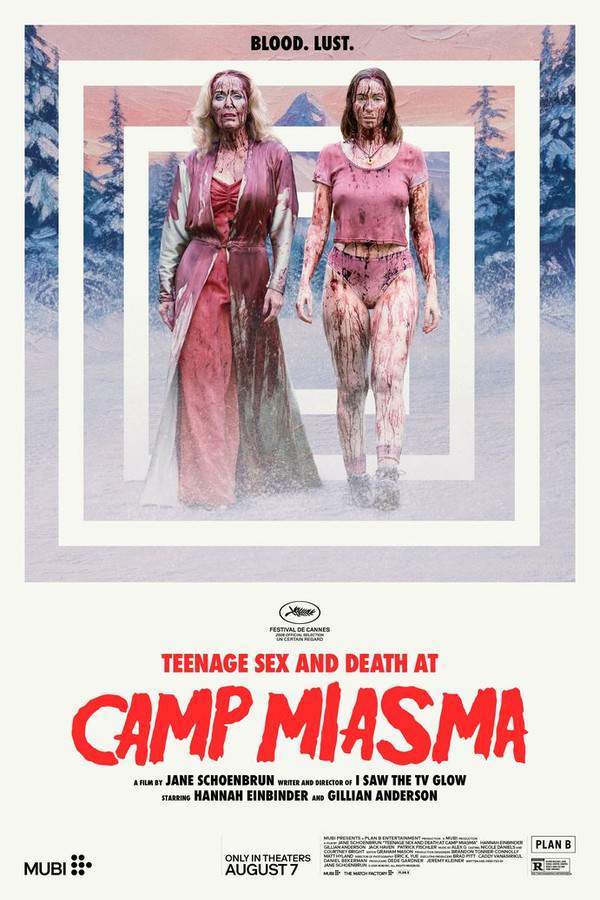
Teenage Sex and Death at Camp Miasma (2026) movie poster

Characters & Themes

Teenage Sex and Death at Camp Miasma (2026) Characters, Setting & Themes Explained

Release, runtime and language
2026 · 1 h 46 m · English
Echo score 66
Loading streaming availability…
Directed by
Jane Schoenbrun
Starring
Gillian Anderson, Patrick Fischler, Sarah Sherman, Dylan Baker, Hunter Dillon, Zach Cherry
Budget
$10M

After years of hasty sequels, the Camp Miasma series is handed to an eager young director determined to revive it. When she seeks out the original film’s enigmatic, reclusive star, the two women become tangled in a blood‑soaked nightmare of desire, terror and delirium, pulling the new director deep into the franchise’s dark mythology.

On this page (8)
  1. 1 Where to watch
  2. 2 Characters explained (2)
  3. 3 Where & when it takes place
  4. 4 Themes & meaning (2)
  5. 5 Character & meaning questions
  6. 6 Movie threads
  7. 7 Categories
  8. 8 Every angle
Loading streaming availability…

2 main characters · contains spoilers

Teenage Sex and Death at Camp Miasma Characters Explained: Who Is Who

The main characters of Teenage Sex and Death at Camp Miasma (2026), heroes and villains: what drives them, how they change over the course of the story and what each of them reveals about the film's bigger ideas.

  • Kris Williams

    played by Hannah Einbinder

    Kris is a queer filmmaker who passionately revisits her childhood love for the Camp Miasma franchise. Driven by a desire to reshape the narrative and infuse it with modern sensibilities, she confronts her own struggles with intimacy and identity. Her connection with Billy propels her into a journey of self-discovery amidst horror.

    • 🎬 Filmmaker
    • 💔 Personal Growth
    • 👩‍❤️‍💋‍👩 Queer Relationships
  • Billy Presley

    played by Gillian Anderson

    Billy is a warm and perceptive actress who retired after the original film's success. Her complicated history with the Camp Miasma franchise and her traumatic experiences during filming shape her character. Obsessed with Little Death, she represents both vulnerability and strength, encouraging Kris to embrace her fantasies and explore her identity.

    • 🌟 Actress
    • 🏳️‍🌈 Queer Icon
    • 💔 Trauma

Last updated: September 09, 2026 at 04:40

Was this helpful?

Setting

Where and When Does Teenage Sex and Death at Camp Miasma Take Place?

The setting of Teenage Sex and Death at Camp Miasma (2026): the year and time period, the places and locations, and how they shape the characters, the mood and the tension of the story.

Time period

1980s, Modern Day

The movie spans two time periods: the original Camp Miasma films of the 1980s and the modern-day reboot attempt. The 1980s era is noted for its iconic slasher films, which laid the foundation for the franchise, while the current timeline reflects contemporary sensibilities and the push for inclusivity in storytelling.

Location

Camp Miasma, Pacific Northwest

Camp Miasma is a fictional slasher film setting, known for its dark and eerie atmosphere. Nestled in the Pacific Northwest, it serves as the backdrop for a long-running horror franchise, infusing both nostalgia and terror. The camp's secluded nature makes it an ideal location for the gruesome tales revolving around the infamous Little Death.

  • 🏕️ Camp
  • 🌲 Nature

Last updated: September 09, 2026 at 04:40

Was this helpful?

2 major themes

Teenage Sex and Death at Camp Miasma Meaning: Themes & Message Explained

What is Teenage Sex and Death at Camp Miasma (2026) really about? The emotional, social and philosophical themes the film keeps returning to, its symbolism and the message beneath the surface.

  • Identity

    The film explores themes of identity through the lens of horror and representation. Kris's journey highlights the complexities of her own sexual identity and her connection to the franchise's past. The relationship she forms with Billy represents a reconciling of personal trauma and the reclamation of one's narrative within a historically problematic genre.

  • Fear and Survival

    Fear and survival are central themes, exemplified by the constant threat of Little Death. The film delves into how characters navigate fear, not just of physical harm, but of confronting their pasts and desires. Kris's transformation into the final girl embodies the struggle to survive both the horror of the slasher and the intricacies of personal trauma.

Last updated: September 09, 2026 at 04:40

Was this helpful?

Character & theme questions

Teenage Sex and Death at Camp Miasma Characters & Meaning: Your Questions Answered

The questions people ask about Teenage Sex and Death at Camp Miasma (2026): who the characters really are, their relationships, what the symbols mean, where it takes place and what the movie is really about. Each answer contains spoilers.

Q1

Where is Camp Miasma located?

Camp Miasma is set in the Pacific Northwest, a region known for its dense forests and remote landscapes. The camp's seclusion deepens the atmosphere of isolation and dread that defines the franchise, making the surrounding wilderness an active part of the horror.

  • pacific northwest
  • camp location
  • horror setting
  • secluded camp
Q2

What kind of place is Camp Miasma?

Camp Miasma is a fictional summer camp that serves as the iconic setting for a long-running slasher franchise. It is portrayed as dark, eerie, and cut off from the outside world, with the surrounding nature adding to the sense of inescapable danger. The camp is inseparable from the myth of Little Death, a presence that haunts its grounds and lake.

  • summer camp
  • slasher franchise
  • eerie setting
  • horror camp
Q3

When does the story take place?

The story unfolds across two distinct timelines: the 1980s, when the original Camp Miasma films were produced, and the present day, when a reboot is being attempted. This dual structure contrasts the conventions of the classic slasher era with contemporary sensibilities around inclusivity and representation.

  • 1980s
  • modern day
  • dual timeline
  • horror reboot era
Q4

What era are the original Camp Miasma films from?

The original Camp Miasma films are products of the 1980s, widely regarded as the golden age of slasher cinema. That era established the franchise's tone, imagery, and mythology, all of which the modern reboot must reckon with and reinterpret.

  • 1980s slasher
  • horror golden age
  • original franchise era
Q5

What are the main themes of the film?

The film centers on two intertwined themes: identity and fear and survival. Identity is explored through Kris's journey of reconciling her sexual identity with the franchise's problematic past, while fear and survival examines how characters navigate both physical danger and the deeper terror of confronting trauma and desire.

  • identity
  • fear
  • survival
  • queer horror themes
Q6

How does the movie explore identity?

Identity is examined through Kris's connection to the franchise's history and her evolving relationship with Billy. The film treats horror as a space to confront personal trauma and reclaim narrative, allowing Kris to work through her sexual identity while reshaping a genre that has often excluded or harmed marginalized voices.

  • identity exploration
  • queer identity
  • sexual identity
  • narrative reclamation
Q7

How does the movie explore fear and survival?

Fear operates on two levels in the film: the immediate physical threat of Little Death and the deeper terror of confronting one's past and desires. Survival becomes more than escaping violence; it is about integrating trauma and embracing one's identity, a journey embodied in Kris's arc toward becoming the final girl.

  • fear and survival
  • final girl
  • confronting trauma
  • horror threat
Q8

Who is Kris Williams?

Kris Williams is a queer filmmaker who grew up loving the Camp Miasma franchise and is now directing its reboot. Driven by a desire to reshape the series with modern sensibilities, she also uses the project to confront her own struggles with intimacy and identity. Her bond with Billy becomes the catalyst for a deeper journey of self-discovery amid the horror.

  • kris williams
  • queer filmmaker
  • reboot director
  • hannah einbinder
Q9

Who is Billy Presley?

Billy Presley is the original star of Camp Miasma, a warm and perceptive actress who retreated from public life after the first film's success. Her complicated history with the franchise and the traumatic experiences she endured during filming shape her as a figure of both vulnerability and strength. Her ongoing obsession with Little Death ties her fate to the series' mythology.

  • billy presley
  • original actress
  • gillian anderson
  • retired star
Q10

What is the relationship between Kris and Billy?

Kris and Billy's bond is the emotional core of the film, weaving together desire, romance, and mutual reckoning. Billy's complicated history with Camp Miasma and her obsession with Little Death draw Kris into a connection that is as much about personal healing as it is about horror, encouraging Kris to embrace her fantasies and explore her identity.

  • kris and billy
  • queer romance
  • emotional bond
  • identity exploration
Q11

What is Little Death in the Camp Miasma franchise?

Little Death is the central antagonist and core mythology of the Camp Miasma franchise, a haunting presence tied to the camp and its lake. Across decades of storytelling, the figure has embodied the series' dark fusion of desire and death, anchoring the horror that drives both the original films and the modern reboot.

  • little death
  • franchise villain
  • horror mythology
  • slasher antagonist
Q12

Why does Kris want to reboot Camp Miasma?

Kris is driven by both nostalgia and a desire to reimagine the franchise through a contemporary, more inclusive lens. Having grown up loving the series, she sees the reboot as a chance to correct the genre's past shortcomings while also working through her own struggles with intimacy, identity, and the place horror has in her life.

  • reboot motivation
  • franchise revival
  • modern sensibilities
  • queer filmmaking
Q13

How does the film use the slasher genre to explore deeper themes?

The film treats the slasher framework as a lens for examining identity, trauma, and the act of reclaiming narrative. By centering a queer filmmaker rebooting a historically problematic franchise, the movie interrogates how horror has treated marginalized identities and what it means to reinvent those stories. Genre conventions become a vehicle for exploring vulnerability, desire, and survival.

  • slasher genre
  • queer horror
  • genre subversion
  • horror reclamation

Movie threads

More Movies Like Teenage Sex and Death at Camp Miasma, by Mood & Story

Curated lists built around what makes Teenage Sex and Death at Camp Miasma tick: the same mood, the same kind of story or the same emotional payoff. Each list explains why these movies belong together.

Meta horror like in Teenage Sex and Death at Camp Miasma

Stories where the act of creating or revisiting horror becomes the horror itself. Looking for movies like Teenage Sex and Death at Camp Miasma? These meta horror stories turn the act of filmmaking, franchise-making, or obsessive fandom into the monster itself. If you liked how Camp Miasma blurred reboots, reality, and slasher mythology, you'll find similar unsettling, reality-bending horror films here.

  • meta horror
  • self-aware
  • dreamlike
  • obsessive
  • oppressive
  • recursive
  • Tone: dark, unsettling, self-aware
  • Pacing: slow build, erratic climax
Why these movies?

The story pattern: A creator or devotee returns to a notorious horror property, convinced they can revive or reinterpret it. As production unfolds, the line between the movie being made and the horror being lived dissolves. Past victims, masked killers, or repressed traumas bleed into the present, the protagonist becomes both filmmaker and final girl, and the ending refuses to confirm whether the monster was ever just fiction. The structure is recursive, self-aware, and deeply destabilizing.

Why they belong together: These films share a fascination with horror's own mythology and the way stories consume their makers. They tend to be dark, complex, and ambiguously resolved, with pacing that slowly builds through eerie conversations before erupting into graphic, surreal violence. Viewers who want horror that thinks about itself, and about who pays the price for loving horror, will feel at home.

Sensual horror like in Teenage Sex and Death at Camp Miasma

Films where intimacy, obsession, and violence blur into one feverish pull. Searching for movies like Teenage Sex and Death at Camp Miasma? These sensual horror films fuse queer desire, romance, and graphic violence into a single intoxicating atmosphere. If you were drawn to Camp Miasma's mix of intimacy, obsession, and grotesque horror, this collection gathers similar disturbing, seductive, and emotionally heavy stories.

  • sensual
  • seductive
  • queer
  • obsessive
  • grotesque
  • dreamlike
  • Tone: dark, sensual, obsessive
  • Pacing: slow burn into chaotic violence
Why these movies?

The story pattern: Two or more figures are pulled together by an attraction they can barely name, often against a backdrop of trauma, secrecy, or a mythic threat. Early scenes are charged with whispered conversation, lingering glances, and slow-burn seduction. As the bond deepens, so does the violence around them, until love, blood, and death become impossible to separate. The climax is frantic and graphic, and the ending often leaves the lovers walking away together, changed and possibly doomed, with the horror still waiting.

Why they belong together: These films share a willingness to treat sensuality and horror as the same emotional language rather than opposites. They tend to be dark, heavy, and atmospheric, with variable pacing that lingers in intimate moments before erupting into graphic slasher or psychological violence. Many foreground queer, trans, or otherwise marginalized bodies, and none of them promise a clean escape. They are grouped here because they offer a similar feverish, romantic, and deeply disturbing experience.

Categories

Movie Lists Featuring Teenage Sex and Death at Camp Miasma

Teenage Sex and Death at Camp Miasma appears in these hand-built movie categories. Each one groups movies by a specific mood, theme or story type, with their plot summaries and endings explained.

View all movie categories

Every angle

Teenage Sex and Death at Camp Miasma (2026) Explained: Plot, Ending, Timeline & Characters

Everything about Teenage Sex and Death at Camp Miasma in one place: what happens in the plot summary, the timeline in chronological order, the characters and meaning, the ending explained and a spoiler-free summary. What's After the Movie adds the cast, box office and post-credit scenes.

Coming soon on iOS and Android

The Plot Explained Movie Summary App

Plot summaries, endings explained and timelines on your phone. Catch up on any movie in minutes, save your favorites and never miss a twist again.

Be the first to know when we launch. Your email stays private, always.

Learn more about the app