Plot Explained Spoilers guaranteed!
Plot Explained

Browse by genre

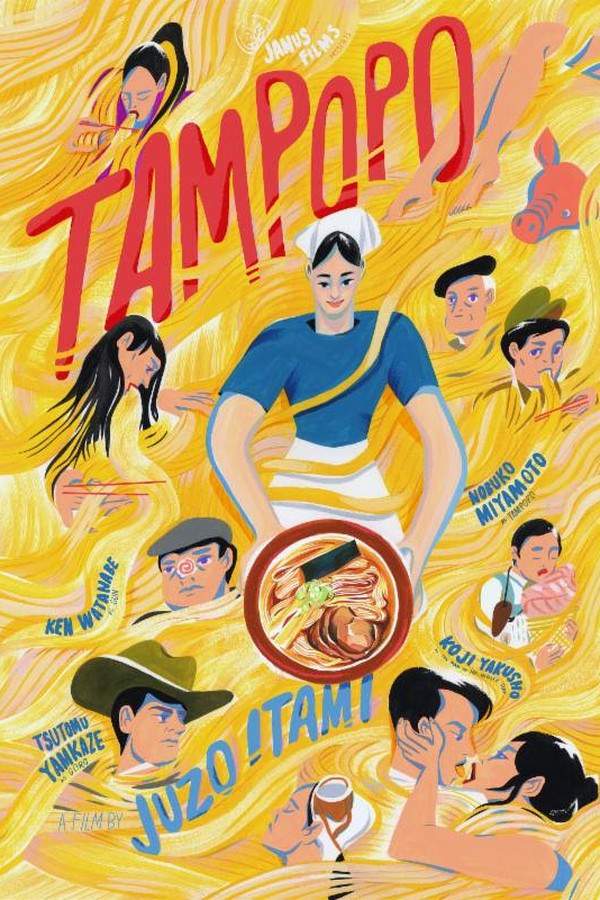
Tampopo (1987) movie poster

Plot Summary

Tampopo (1987) Plot Summary Explained

Release, runtime and language
1987 · 114 min · Japanese
JustWatch #2,908 17
Directed by
Jûzô Itami
Starring
Ken Watanabe, Nobuko Miyamoto, Tsutomu Yamazaki

A compassionate truck driver and his harmonica-playing companion help a young widow revive her deceased husband's beloved ramen shop. Along their journey, they encounter a quirky group of noodle enthusiasts, each offering unique and unconventional advice. The film blends humor, romance, and a deep appreciation for Japanese cuisine, exploring themes of grief, passion, and the art of creating the perfect bowl of ramen.

On this page (6)
  1. 1 Where to watch
  2. 2 What happens: full plot
  3. 3 Plot questions answered
  4. 4 Movie threads
  5. 5 Movies like Tampopo
  6. 6 Every angle

Where to watch

Where to Watch Tampopo (1987)

Where can you watch Tampopo? Stream, rent or buy it in the US, including on HBO Max, Apple TV Store and Fandango At Home: current JustWatch availability with up-to-date prices.

Streaming availability powered by JustWatch

Full plot summary · contains spoilers

What Happens in Tampopo: Full Plot Summary

The whole story of Tampopo (1987) explained, from the opening scene to the final frame: every key event, every twist and what it all adds up to. Read it as a quick recap before the sequel, to check a scene you missed, or to finally understand what really happened.

A duo of truck drivers, the seasoned Gorō and his junior colleague Gun, make a stop at a run-down roadside ramen noodle shop. While outside, Gorō heroically intervenes to save a boy named Tabo, who is being bullied by three classmates. Tabo is the son of Tampopo, the widowed owner of the struggling eatery known as Lai Lai. When a troublesome customer named Pisken pressures Tampopo to sell the shop, Gorō stands up for her, igniting a physical altercation. Although Gorō fights valiantly, he ultimately loses to Pisken and his goons, waking up the next morning in Tampopo's home.

During breakfast, Tampopo graciously prepares a meal for Gorō and Gun. She inquires about their thoughts on her ramen, to which Gorō and Gun respond it is "sincere, but lacks character." After receiving some valuable advice from Gorō, she proposes that he become her teacher, leading them to embark on a quest to transform her shop into a true temple of noodle soup mastery. They journey to rival establishments where Gorō evaluates their strengths and weaknesses. Struggling to perfect her broth, Gorō seeks out a "master" living in a homeless camp, who wields impressive culinary wisdom.

In an incident of gallantry, they save a wealthy elderly man from choking, who, grateful for their assistance, introduces them to his adept chauffeur Shohei, who possesses extraordinary noodle-making skills. With cunning tactics, the trio extracts ramen-making secrets from competitors, while Gun and his friends give Tampopo a stylish makeover as a modern restaurant owner. As they progress, they decide to rebrand the shop from Lai Lai to Tampopo.

Feeling remorse for accidentally complicating their prior confrontation, Pisken suggests a rematch with Gorō, concluding this time in a stalemate. To everyone's surprise, Pisken reveals he is a contractor and childhood friend of Tampopo's, offering to update the restaurant’s interior. Despite the renovation, Tampopo's culinary efforts still leave something to be desired, prompting Pisken to share his private recipe with her. When five customers savor her latest dish down to the last drop, Tampopo realizes she has finally succeeded.

Meanwhile, Tabo also finds victory by outsmarting his bullies, ultimately befriending them. As her freshly revamped shop welcomes a line of eager customers, the story intertwines other minor narratives, showcasing a variety of quirky characters engaged in unique culinary encounters. For example, a group of corporate executives awkwardly navigate a French restaurant, while a woman’s etiquette class hilariously shifts focus upon witnessing cultural dining practices.

Throughout the film, viewers witness heartwarming acts of love and culinary artistry, like a housewife rising from her deathbed to prepare a family meal, and a man exploring sensual food experiences, culminating in a poignant and reflective moment. Such diverse vignettes enrich the tapestry of this compelling journey centered around ramen, community, and personal growth.
Last updated: November 16, 2024 at 18:07

Was this helpful?

Plot questions answered

Tampopo Plot Explained: Your Questions Answered

The questions people ask most about Tampopo (1987): what happens in the confusing scenes, why the characters do what they do, the twists, hidden details and what the ending means. Each answer contains spoilers.

Q1

Why does Gorō decide to help Tampopo improve her ramen shop?

Gorō intervenes initially to protect Tabo from bullies and stands up to Pisken when he pressures Tampopo to sell her shop. These acts of chivalry demonstrate his honorable character. After tasting her ramen and recognizing her sincere but unrefined cooking, he sees potential in her and agrees to teach her the art of ramen-making, viewing it as a meaningful quest rather than just a side trip.

Foreshadowing: Early scenes establish Gorō as a heroic figure who cannot ignore injustice, setting the foundation for his commitment to helping strangers.

  • gorō motivation
  • helping tampopo
  • ramen teacher
  • chivalry
Q2

What does Gorō mean when he says Tampopo's ramen lacks character?

When Gorō and Gun taste her ramen, they describe it as "sincere, but lacks character." This means her cooking is technically competent and made with genuine effort, but it lacks the distinctive flair, personality, and depth that distinguish exceptional ramen from merely adequate dishes. The critique refers to the absence of unique flavor profiles and culinary identity that comes from mastery and creative expression.

  • character in cooking
  • ramen critique
  • culinary meaning
  • flavor profile
Q3

Who is Pisken and what is his connection to Tampopo?

Pisken is initially presented as an aggressive customer who pressures Tampopo to sell her shop. However, during the rematch with Gorō, he reveals he is actually a contractor and Tampopo's childhood friend. His tough exterior masks genuine care for her wellbeing, and he offers to renovate her restaurant as a way to make amends for his earlier behavior and help her succeed.

Foreshadowing: Pisken's aggressive insistence on the shop's potential value hints at personal investment beyond mere customer complaints.

  • pisken character
  • childhood friend
  • contractor
  • tampopo past
Q4

Why do Gorō and Tampopo seek out the homeless master for cooking advice?

Gorō recognizes that professional ramen shops guard their secrets closely, so he seeks out an unconventional source of wisdom. The homeless master lives outside the restaurant industry and possesses impressive culinary knowledge without commercial bias. His insights into broth-making provide crucial technical understanding that helps transform Tampopo's cooking from sincere but generic to genuinely skilled.

  • homeless master
  • ramen secrets
  • culinary wisdom
  • broth technique
Q5

Why is Shohei the chauffeur important to their mission?

After Gorō and Tampopo save a wealthy elderly man from choking, the man rewards them by introducing his skilled chauffeur Shohei, who possesses extraordinary noodle-making abilities. Shohei becomes an invaluable addition to their team, contributing technical expertise that complements Gorō's strategic guidance and helps accelerate Tampopo's culinary development.

Foreshadowing: The choking incident seems random but serves as the mechanism for acquiring skilled help.

  • shohei
  • chauffeur
  • noodle skills
  • ramen expertise
Q6

Why does the ramen shop get rebranded from Lai Lai to Tampopo?

The team decides to rebrand the restaurant from Lai Lai to simply "Tampopo" to give the shop a new identity that reflects the owner's personal journey. The new name symbolizes their commitment to elevating the ramen's quality and the restaurant's standing in the culinary world, making it a destination rather than just a roadside stop.

  • rebranding
  • lai lai
  • restaurant name
  • new identity
Q7

What finally triggers Tampopo's culinary success?

Despite renovations and improvements, Tampopo's ramen still falls short until Pisken shares his private recipe with her. After implementing this secret recipe, five customers finish their dishes to the last drop, which signals her breakthrough. This success comes from combining her sincere effort with the hidden wisdom passed down from Pisken's family recipe.

Foreshadowing: Pisken's offer to renovate and his connection to Tampopo foreshadow his deeper involvement in her success.

  • pisken recipe
  • culinary success
  • secret recipe
  • ramen perfection
Q8

Why does the film include so many unrelated vignettes about food?

The film uses an episodic structure with multiple vignettes that, while seemingly unrelated to the main plot, all explore different aspects of food, cooking, and human connection. These stories, from the corporate executives at a French restaurant to the housewife rising from her deathbed, enrich the narrative by demonstrating the universal themes of culinary love, community, and the emotional significance of sharing meals. They create a tapestry that celebrates food as a cultural and emotional experience beyond just the central ramen quest.

  • vignettes
  • food themes
  • episodic structure
  • side stories
Q9

Why is saving the elderly man from choking a pivotal moment?

The choking incident appears random but proves strategically important. The elderly wealthy man is grateful for their heroic assistance and introduces them to his adept chauffeur Shohei. This chance encounter provides the team with a skilled noodle-maker whose expertise becomes crucial to perfecting Tampopo's ramen, directly advancing their quest.

  • elderly man
  • choking incident
  • shohei introduction
  • grateful reward
Q10

How does Tabo overcome his bullies?

Tabo, the young son of Tampopo, is initially bullied by his classmates. Rather than relying solely on Gorō's protection, Tabo eventually outsmarts his bullies through cleverness and eventually befriends them. This subplot mirrors the main theme of transformation through skill and wisdom, showing personal growth and the power of wit over brute force.

Foreshadowing: Gorō's intervention in saving Tabo establishes the theme that the boy will eventually need to stand up for himself.

  • tabo
  • bullies
  • friendship
  • personal growth
  • resilience

Movie threads

More Movies Like Tampopo, by Mood & Story

Curated lists built around what makes Tampopo tick: the same mood, the same kind of story or the same emotional payoff. Each list explains why these movies belong together.

Whimsical Passion Films like Tampopo

Characters with big, eccentric dreams finding joy in their unique crafts. If you liked Tampopo's celebration of ramen artistry, explore more movies like it that focus on charming, quirky characters dedicated to their craft. These similar comedy stories find joy and humor in the pursuit of a unique passion.

  • quirky
  • uplifting
  • idiosyncratic
  • passionate
  • comforting
  • humorous
  • Tone: whimsical, uplifting
  • Pacing: steady, relaxed
Why these movies?

The story pattern: These stories typically follow a protagonist or group dedicated to mastering a niche skill or art, encountering a series of humorous and eccentric challenges. The journey is less about high-stakes conflict and more about the joy of learning, community, and the small, perfect details of their craft, leading to a satisfying and happy conclusion.

Why they belong together: Movies are grouped here for their shared focus on passion as a source of comedy and joy, their whimsical tone, and their light emotional weight. They offer a comforting, almost sensual appreciation for a specific subject, be it food, music, or another art form.

Episodic Community Stories like Tampopo

A central story enriched by humorous and poignant side-character vignettes. Discover movies with a narrative style like Tampopo, where a main story is punctuated by quirky side tales. These similar comedy films use an episodic structure to build a charming world and explore a central theme through a diverse community of characters.

  • episodic
  • vignette
  • community
  • humorous
  • idiosyncratic
  • charming
  • Tone: whimsical, humorous
  • Pacing: variable, meandering
Why these movies?

The story pattern: The narrative pattern involves a steady central plot that serves as an anchor, while the film frequently pauses to explore self-contained mini-stories of side characters. These vignettes are thematically linked to the main plot, adding depth, humor, and a sense of a wider world, resulting in a moderately complex but highly engaging structure.

Why they belong together: This thread groups movies based on their unique storytelling structure and the vibe it creates. They share a variable pacing, a focus on community, and a blend of humor and heartfelt moments that feel more like observing a slice of life than a tightly-woven singular plot.

If you liked this

Movies Like Tampopo

Similar movies to Tampopo: the same genre, themes or kind of story. Each one comes with its own plot summary, timeline and ending explained.

Browse all movie summaries

Every angle

Tampopo (1987) Explained: Plot, Timeline & Characters

Everything about Tampopo in one place: what happens in the plot summary, the timeline in chronological order, the characters and meaning and a spoiler-free summary. What's After the Movie adds the cast, box office and post-credit scenes.

Coming soon on iOS and Android

The Plot Explained Movie Summary App

Plot summaries, endings explained and timelines on your phone. Catch up on any movie in minutes, save your favorites and never miss a twist again.

Be the first to know when we launch. Your email stays private, always.

Learn more about the app