Plot Explained Spoilers guaranteed!
Plot Explained

Browse by genre

Caprice Italian Style (1968) movie poster

Plot Summary

Caprice Italian Style (1968) Plot Summary Explained

Release, runtime and language
1968 · 79 mins · Italian
Loading streaming availability…
Directed by
Pier Paolo Pasolini, Mauro Bolognini
Starring
Walter Chiari, Adriana Asti, Ninetto Davoli, Laura Betti, Silvana Mangano, Dante Maggio

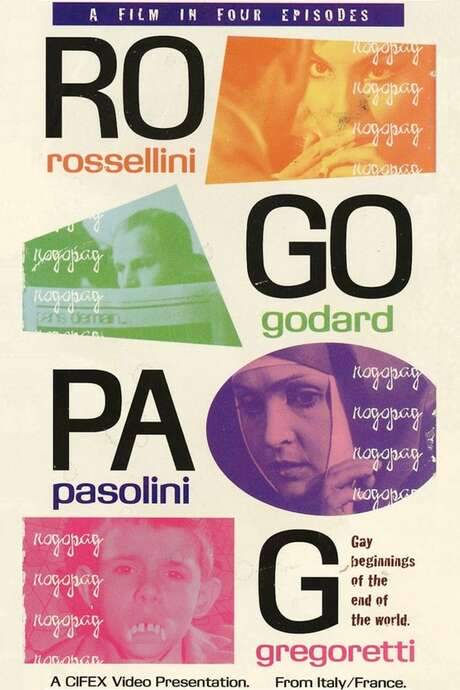
The film consists of six short stories created by different directors, but all the stories share one thing: a warm irony to current events.

On this page (6)
  1. 1 Where to watch
  2. 2 What happens: full plot
  3. 3 Plot questions answered
  4. 4 Movie threads
  5. 5 Movies like Caprice Italian Style
  6. 6 Every angle
Loading streaming availability…

Full plot summary · contains spoilers

What Happens in Caprice Italian Style: Full Plot Summary

The whole story of Caprice Italian Style (1968) explained, from the opening scene to the final frame: every key event, every twist and what it all adds up to. Read it as a quick recap before the sequel, to check a scene you missed, or to finally understand what really happened.

Last updated: October 09, 2025 at 11:19

Was this helpful?

Plot questions answered

Caprice Italian Style Plot Explained: Your Questions Answered

The questions people ask most about Caprice Italian Style (1968): what happens in the confusing scenes, why the characters do what they do, the twists, hidden details and what the ending means. Each answer contains spoilers.

Q1

Why does the German nanny insist on reading a comic social satire to the children?

The nanny's harsh demeanor and insistence on reading the comic social satire about Germany appear to be a deliberate act of cultural provocation. She uses the material to unsettle the children, establishing authority through shock value rather than warmth. This scene uses humor as a tool of social critique, reflecting the film's theme of warm irony toward current events.

Foreshadowing: The tension established early between the nanny and children hints at broader cultural conflicts that will echo throughout the anthology.

  • german nanny
  • children
  • comic satire
  • authority
  • cultural critique
Q2

Why is the Queen's speech in Africa interpreted as racist by the audience?

The Queen of the United Kingdom travels to Africa intending to spread messages of hope and brotherhood, but her speech is misinterpreted by the African audience as racist. This scene satirizes the fragility of good intentions and how intent can be lost in translation when there are deep cultural and historical divides. The audience's hostile response pushes her back toward the civilized world, reversing her mission entirely.

  • queen
  • africa
  • speech
  • racist
  • misunderstanding
  • irony
Q3

What is Toto's diabolical revenge plan against the young generation?

After coming to despise the young people he initially allied with, calling them dirty, ignorant, and rude, Toto, a conservative bourgeois, devises a revenge scheme to counter their influence. While the specific details of his plan aren't fully detailed in the timeline, the revenge represents his response to the widening generation gap and his refusal to accept the changing social models represented by the hippie-aligned young woman.

Foreshadowing: His growing disdain for the younger generation, established through his complaints about their behavior, foreshadows his decision to plot revenge.

  • toto
  • revenge
  • young generation
  • bourgeois
  • generation gap
Q4

Why does the wife provoke her husband while they are stuck in Rome traffic?

The wife displays emotional detachment and deliberately provokes her husband during the traffic standstill in Rome. Her indifferent provocations push him toward a hasty and volatile reaction, creating escalation from within the claustrophobic situation. The scene underscores how manipulation and stress can drive people to extremes, even in confined spaces where escape is impossible.

  • rome
  • traffic
  • couple
  • provocation
  • marriage
Q5

What does Ninetto discover about Othello while performing as a puppet?

During the puppet performance of Shakespeare's Othello, Ninetto, who plays Othello, comes to realize that the character is a very bad man. This discovery prompts him to question the nature of evil within the story. Toto appears as Iago, amplifying the sense that the world of the play is morally compromised, creating a meta-theatrical reflection on manipulation and deception.

  • ninetto
  • toto
  • othello
  • puppets
  • moral darkness
Q6

Why does the husband attack the driver with a wrench during the traffic incident?

Following his wife's provocations and the mounting stress of being trapped in Rome traffic, the husband becomes desperate to find an escape. When a crash occurs, he seizes a wrench to injure the driver. The act illustrates how desperation can escalate into violence in a moment of crisis, showing how the combination of confinement, emotional manipulation, and frustration can drive someone to violent extremes.

  • husband
  • driver
  • wrench
  • crash
  • violence
  • rome
Q7

Why does the wife hypocritically accuse her husband of violence after provoking him?

After deliberately provoking her husband and pushing him toward the violent outburst with the driver, the wife hypocritically accuses him of violence. This moment exposes the double standards and shifting blame within their relationship, adding dramatic irony to the scene. It highlights how the wife manipulates the situation to position herself as the victim despite being the architect of the escalation.

Foreshadowing: The wife's earlier provocations directly set up this moment of accusations, creating a cause-and-effect pattern.

  • wife
  • husband
  • accusation
  • hypocrisy
  • blame
Q8

Why are the children so upset by the nanny's harsh demeanor?

The children respond with upset and unease as the nanny's blunt and sharp demeanor dominates the household. Her harsh treatment leaves little room for warmth or compromise, creating immediate tension. The children also fear that the comic social satire about Germany may mock their culture, adding cultural anxiety to their personal discomfort with her authoritarian style.

  • children
  • nanny
  • harsh
  • discomfort
  • authority

Movie threads

More Movies Like Caprice Italian Style, by Mood & Story

Curated lists built around what makes Caprice Italian Style tick: the same mood, the same kind of story or the same emotional payoff. Each list explains why these movies belong together.

Witty Anthology Satire like in Caprice Italian Style

Collections of humorous, standalone stories that offer a lighthearted critique of society. Find more movies like Caprice Italian Style—collections of short, comedic stories that satirize society. If you enjoyed the warm irony and episodic structure of this film, you'll appreciate similar anthology films that use humor and a light touch to reflect on the world.

  • witty
  • satirical
  • episodic
  • playful
  • reflective
  • lighthearted
  • Tone: light, ironic, playful
  • Pacing: variable, episodic
Why these movies?

The story pattern: Films in this thread are structured as a series of distinct, short narratives rather than one continuous plot. Each segment functions as a self-contained story, often with a punchline or satirical point, contributing to a collective theme or mood. The journey is one of variety and playful observation, not deep character arcs or complex overarching plots.

Why they belong together: These movies are grouped by their shared format—the anthology—and their shared purpose—gentle, humorous social commentary. They connect through a light tone, a reflective yet playful mood, and a narrative structure that prioritizes variety and irony over linear storytelling.

Lighthearted Cultural Reflection like in Caprice Italian Style

Comedies that use gentle irony to hold a mirror to a specific time and place. Discover movies similar to Caprice Italian Style that use gentle comedy to reflect on a specific culture and era. If you liked the film's warm, ironic take on Italian current events, you'll enjoy these humorous and nostalgic stories that capture the spirit of a time and place.

  • nostalgic
  • ironic
  • reflective
  • cultural
  • witty
  • lighthearted
  • Tone: warm, ironic, nostalgic
  • Pacing: steady, reflective
Why these movies?

The story pattern: The narrative pattern here often involves observing everyday life, social norms, or current events through a humorous filter. Conflict is typically minor and derived from cultural misunderstandings, generational gaps, or societal absurdities, resolved with a wink rather than deep drama. The journey is one of recognition and amusement.

Why they belong together: These films are united by their focus on cultural specificity and their use of light, ironic humor as a tool for reflection. They share a mood that is more witty and nostalgic than outrageous, creating a cohesive vibe of affectionate societal observation.

If you liked this

Movies Like Caprice Italian Style

Similar movies to Caprice Italian Style: the same genre, themes or kind of story. Each one comes with its own plot summary, timeline and ending explained.

Browse all movie summaries

Every angle

Caprice Italian Style (1968) Explained: Plot, Timeline & Characters

Everything about Caprice Italian Style in one place: what happens in the plot summary, the timeline in chronological order, the characters and meaning. What's After the Movie adds the cast, box office and post-credit scenes.

Coming soon on iOS and Android

The Plot Explained Movie Summary App

Plot summaries, endings explained and timelines on your phone. Catch up on any movie in minutes, save your favorites and never miss a twist again.

Be the first to know when we launch. Your email stays private, always.

Learn more about the app