Plot Explained Spoilers guaranteed!
Plot Explained

Browse by genre

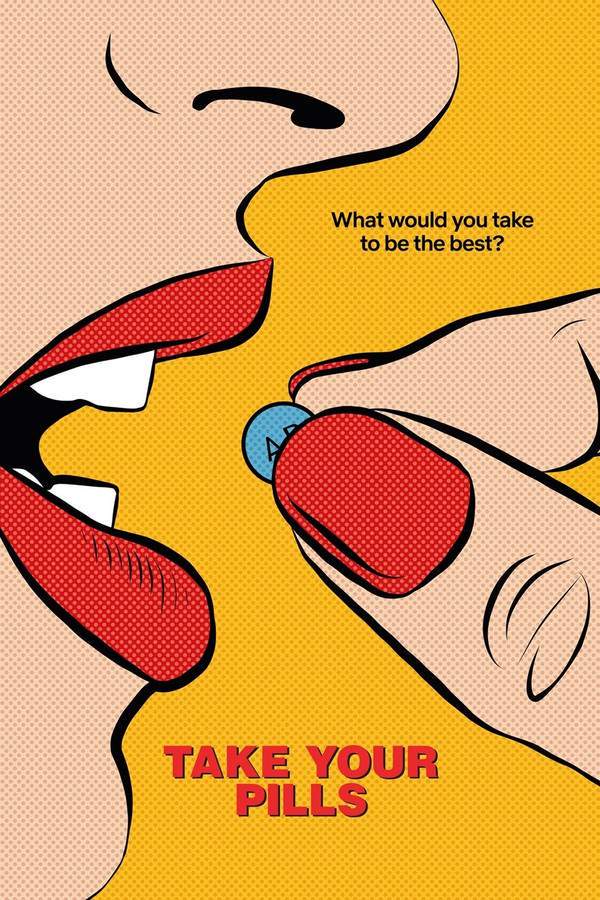
Take Your Pills (2018) movie poster

Plot Summary

Take Your Pills (2018) Plot Summary Explained

Release, runtime and language
2018 · 87 min · English
Echo score 52
JustWatch #33,664 3
Directed by
Alison Klayman
Starring
Anjan Chatterjee, Dr. Wendy Brown, Eben Britton

Fueled by a relentless drive for achievement, a growing number of Americans have turned to prescription stimulants like Adderall. This documentary explores a generation’s increasing dependence on these drugs, examining how the pursuit of success has blurred the lines between enhancing performance and struggling with addiction. It investigates the cultural pressures and personal stories behind this widespread phenomenon.

On this page (6)
  1. 1 Where to watch
  2. 2 What happens: full plot
  3. 3 Plot questions answered
  4. 4 Movie threads
  5. 5 Movies like Take Your Pills
  6. 6 Every angle

Where to watch

Where to Watch Take Your Pills (2018)

Where can you watch Take Your Pills? Stream, rent or buy it in the US, including on Netflix and Netflix Standard: current JustWatch availability with up-to-date prices.

Streaming availability powered by JustWatch

Full plot summary · contains spoilers

What Happens in Take Your Pills: Full Plot Summary

The whole story of Take Your Pills (2018) explained, from the opening scene to the final frame: every key event, every twist and what it all adds up to. Read it as a quick recap before the sequel, to check a scene you missed, or to finally understand what really happened.

The documentary opens by presenting a diverse array of individuals, each intricately linked to Adderall and stimulant medications. In the academic sphere, college students such as Jasper Holt, who was diagnosed with ADHD as a child, and Delaney, a junior reliant on the medication to maintain her performance, candidly share their experiences. Transitioning into the realm of professional sports, former NFL player Eben Britton offers a unique perspective on the use of these drugs.

Accompanying them are health professionals who provide essential historical insights and expert commentary, unraveling the intricate factors contributing to the rampant use of stimulants. Stories of personal struggle and triumph are prominently featured, showcasing family members who have become witnesses to the profound effects of Adderall on their loved ones.

Jasper reflects on his journey, reliving the transition from being prescribed medication in his youth to feeling embarrassed during his high school years, and currently striving to taper off his dosage. His story exemplifies the tension between personal choice and societal expectations. In contrast, Delaney offers a sobering critique of the academic landscape, presenting her reliance on Adderall as a response to the competitive pressures imposed by her education.

Another poignant narrative emerges through Rahiem, a high school student diagnosed with ADHD early in life. His mother's heartfelt insights reveal how the medication has significantly influenced Rahiem's behavior, providing a glimpse into their family dynamic. As these narratives intertwine, the documentary crafts a multifaceted depiction of the human experience, shedding light on the crucial role that Adderall occupies in contemporary society.

Prominent voices in this discourse include Dr. Wendy Brown, a noted political theorist from the University of California, Berkeley, who examines why so many students and adults resort to stimulants to cope within an intensely competitive environment. She argues that relentless academic and career pressures compel individuals to seek out performance-enhancing drugs to maintain their edge.

Furthermore, Martha Farah, a cognitive neuroscientist at the University of Pennsylvania, scrutinizes the historical and controversial facets of psychostimulant medications. She challenges the misconception that these drugs can enhance intelligence, advocating instead for responsible usage and accurate diagnosis.

Adding to the conversation, Anjan Chatterjee, chair of neurology at the University of Pennsylvania, reflects on the distinct differences in drug consumption between his generation and today’s youth. His insights trace the evolution of stimulant use over time and address the growing complexities surrounding medication.

However, perspectives vary within this debate. Alternascript co-founders, Matthew Piskorz and Lucas Siegel, assert that if students are increasingly resorting to prescription medications to maintain their academic performance, the marketplace for legal supplements must be expanded to ensure a level playing field.

The documentary ponders the ethical implications of medication use, as Dr. Chatterjee expresses caution regarding its misuse, while the founders' proposals aim to democratize academic success. Through these contrasting viewpoints, the film weaves an intricate tapestry of ideas, inviting viewers to reflect on the nuanced balance between personal ambition and the quest for knowledge.
Last updated: November 22, 2024 at 19:08

Was this helpful?

Plot questions answered

Take Your Pills Plot Explained: Your Questions Answered

The questions people ask most about Take Your Pills (2018): what happens in the confusing scenes, why the characters do what they do, the twists, hidden details and what the ending means. Each answer contains spoilers.

Q1

Why do college students rely on Adderall to get through school?

College students use Adderall primarily to manage the intense competitive pressures of academic life. Delaney, a junior featured in the documentary, explains that the medication helps her maintain performance in a demanding educational environment where students feel they must constantly outperform their peers. The film presents this reliance as a response to systemic academic pressure rather than simple laziness or desire for enhancement.

Foreshadowing: Earlier scenes establish the high expectations placed on students from an early age.

  • college students
  • adderall
  • academic pressure
  • performance drugs
Q2

Does Adderall actually improve intelligence or cognitive ability?

No, Adderall does not enhance intelligence. Cognitive neuroscientist Martha Farah explicitly addresses this misconception in the documentary, stating that stimulants improve focus and concentration but do not actually increase intellectual capacity. The drug helps people with ADHD concentrate on tasks they already have the ability to perform, but it does not make someone smarter who otherwise would not be.

  • adderall
  • intelligence
  • cognitive enhancement
  • martha farah
Q3

Why is Adderall prescribed to children diagnosed with ADHD?

Adderall is prescribed to children with ADHD because the medication helps regulate their neurotransmitter levels, allowing them to focus and control impulses. Jasper Holt shares his experience of being diagnosed with ADHD in childhood and prescribed medication, though he later felt embarrassed during high school and is now working to taper off his dosage. The documentary presents this as a legitimate medical treatment for a diagnosed condition, while also exploring the complex feelings that can accompany long-term use.

  • adderall
  • adhd
  • children
  • prescription
  • jasper holt
Q4

What do health experts say about the increase in stimulant prescriptions?

Health professionals in the documentary provide historical context for the increase in stimulant prescriptions, explaining how cultural and economic factors have driven more diagnoses and treatments. Dr. Anjan Chatterjee, chair of neurology at the University of Pennsylvania, discusses how stimulant consumption patterns have evolved dramatically between generations, noting that today's youth face different pressures and access levels than previous generations.

  • health experts
  • stimulants
  • prescriptions
  • anjan chatterjee
Q5

Why does the documentary present conflicting viewpoints on stimulant use?

The documentary deliberately presents conflicting viewpoints without taking a clear side, leaving the conclusion ambiguous. On one hand, Dr. Chatterjee warns against misuse of prescription stimulants. On the other hand, Alternascript co-founders argue for expanding access to legal supplements to level the playing field. This structure invites viewers to form their own conclusions rather than accepting a single narrative perspective.

  • documentary
  • conflicting views
  • ethics
  • debate
Q6

Why do professional athletes like Eben Britton use stimulants?

Former NFL player Eben Britton discusses the use of stimulants in professional sports as a means of enhancing performance in high-stakes competitive environments. His perspective highlights how the pressure to perform at elite levels extends beyond academia into professional athletics, where the demand for competitive advantage can drive athletes toward performance-enhancing substances.

  • athletes
  • stimulants
  • nfl
  • eben britton
  • performance enhancing
Q7

What cultural pressures lead people to use stimulants according to the documentary?

Dr. Wendy Brown, a political theorist from UC Berkeley, analyzes how relentless academic and career pressures compel individuals to seek performance-enhancing drugs. She argues that the competitive environment in American society creates a culture where people feel they must use any available means to maintain an edge, whether in school or the workplace.

  • cultural pressure
  • academic pressure
  • wendy brown
  • society
Q8

How do family members feel about their loved ones using Adderall?

Family members featured in the documentary share their experiences witnessing the effects of Adderall on their loved ones, revealing the profound impact the medication has on family dynamics. Rahiem's mother provides particularly poignant insights, describing how the medication has shaped her son's behavior and expressing the complex emotions that come with watching a child depend on prescription drugs.

  • family
  • rahiem
  • mother
  • relationships
  • home dynamics
Q9

What happens when someone tries to stop taking Adderall?

Jasper Holt's story illustrates the challenge of tapering off Adderall. After being diagnosed with ADHD as a child and taking medication throughout his youth, he reached a point where he felt embarrassed by his reliance on the drug during high school. He is now actively working to reduce his dosage, demonstrating that discontinuation is a difficult process that requires conscious effort and support.

Foreshadowing: His earlier embarrassment in high school hints at his desire to reduce dependency.

  • tapering off
  • withdrawal
  • jasper holt
  • addiction
Q10

What do the Alternascript founders propose regarding performance enhancement?

Matthew Piskorz and Lucas Siegel, co-founders of Alternascript, argue that if students are increasingly using prescription medications to maintain academic performance, the marketplace for legal supplements should be expanded to create a level playing field. Their proposal suggests that making more accessible options available could democratize academic success rather than leaving it to those with prescriptions or access.

  • alternascript
  • supplements
  • marketplace
  • academic success
Q11

Is Adderall considered addictive according to the documentary?

The documentary presents Adderall as a medication that can lead to dependency, particularly when used recreationally or without proper medical supervision. Multiple personal stories, including Jasper's struggle to taper off and accounts from family members, illustrate the potential for addiction. Health professionals discuss the fine line between legitimate medical use and problematic dependence.

  • adderall
  • addiction
  • dependency
  • prescription drugs
Q12

Why does the documentary end without a clear conclusion?

The documentary deliberately ends on an ambiguous note, refusing to advocate for a particular stance on stimulant use. The film presents contrasting perspectives, from medical professionals warning against misuse to entrepreneurs advocating for expanded access, without declaring which view is correct. This approach encourages viewers to reflect on their own relationship with performance-enhancing substances rather than prescribing a specific takeaway.

  • documentary ending
  • ambiguous
  • conclusion
  • reflection

Movie threads

More Movies Like Take Your Pills, by Mood & Story

Curated lists built around what makes Take Your Pills tick: the same mood, the same kind of story or the same emotional payoff. Each list explains why these movies belong together.

Unsettling Documentaries on Modern Crises like Take Your Pills

Investigative films that expose alarming societal trends and personal struggles. Explore movies like 'Take Your Pills' that critically examine pressing modern dilemmas. These documentaries share a sobering, investigative approach, blending personal stories with expert insights to explore themes of societal pressure, ethics, and the human cost of progress.

  • thought-provoking
  • urgent
  • unsettling
  • clinical
  • critical
  • anxious
  • Tone: dark, critical, unsettling
  • Pacing: steady, investigative
Why these movies?

The story pattern: These documentaries typically unfold through a mosaic structure, interweaving multiple personal accounts with historical context and expert commentary. The narrative builds a compelling, often distressing, case about a systemic problem, leaving viewers to grapple with the implications rather than offering easy answers.

Why they belong together: Movies are grouped here for their shared focus on exposing dark undercurrents in contemporary society, their analytical yet emotionally heavy tone, and their reliance on a steady, evidence-based pacing to build a sense of urgent concern.

Movies about Performance Pressure like Take Your Pills

Stories about individuals cracking under the weight of extreme competition. If you liked 'Take Your Pills', discover other films that explore the dark side of ambition and competition. These stories, both documentary and fiction, examine how immense pressure to perform can lead to addiction, moral compromise, and psychological unraveling.

  • anxious
  • competitive
  • unsettling
  • thought-provoking
  • critical
  • high-stakes
  • Tone: dark, anxious, critical
  • Pacing: steady, building tension
Why these movies?

The story pattern: The narrative pattern follows characters or subjects striving for excellence within a demanding system. The central conflict arises from the unsustainable costs of this pursuit, often exploring themes of addiction, identity loss, and the blurry line between enhancement and self-destruction.

Why they belong together: These films are connected by their exploration of the anxiety inherent in competitive worlds, their complex look at the sacrifices made for success, and their consistently dark, heavy tone that questions the very definition of achievement.

If you liked this

Movies Like Take Your Pills

Similar movies to Take Your Pills: the same genre, themes or kind of story. Each one comes with its own plot summary, timeline and ending explained.

Browse all movie summaries

Every angle

Take Your Pills (2018) Explained: Plot, Timeline & Characters

Everything about Take Your Pills in one place: what happens in the plot summary, the timeline in chronological order, the characters and meaning and a spoiler-free summary. What's After the Movie adds the cast, box office and post-credit scenes.

Coming soon on iOS and Android

The Plot Explained Movie Summary App

Plot summaries, endings explained and timelines on your phone. Catch up on any movie in minutes, save your favorites and never miss a twist again.

Be the first to know when we launch. Your email stays private, always.

Learn more about the app