Plot Explained Spoilers guaranteed!
Plot Explained

Browse by genre

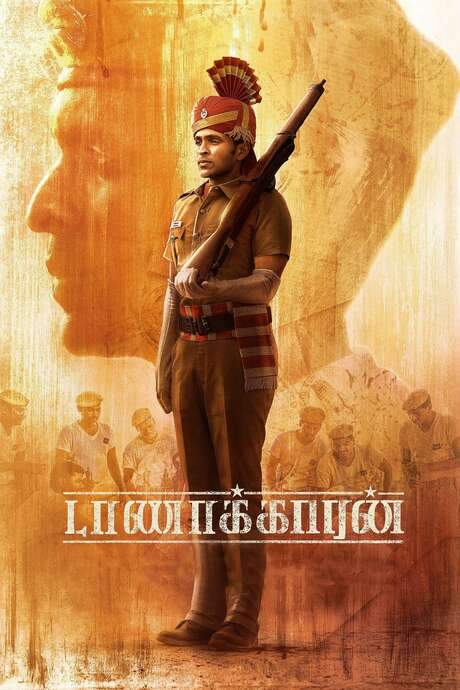
Taanakkaran (2022) movie poster

Timeline

Taanakkaran (2022) Timeline Explained – Every Event in Order

Release, runtime and language
2022 · 142 mins · Tamil
Echo score 84
Directed by
Tamizh
Starring
Vikram Prabhu, Madhusudhan Rao, Lal, M. S. Bhaskar, Livingston, Bose Venkat

A group of police recruits encounter horrific treatment at their police training school. Will they overcome the hardships or fall victims to the abusive system?

On this page (4)
  1. 1 Events in order (13)
  2. 2 Timeline questions answered
  3. 3 Movie threads
  4. 4 Every angle

13 events in order · contains spoilers

Taanakkaran Timeline: Events in Chronological Order

Every key event of Taanakkaran (2022) in order, scene by scene, with when and where it takes place. Use it to untangle flashbacks, time jumps and parallel storylines, to refresh your memory before the sequel or to find the exact scene you are thinking of.

  1. Arivu joins the Police Recruit School

    Arivu, a top-ranked recruit, arrives at the Police Recruit School in 1999. He befriends fellow trainees, including older members of the 1982 batch who have waited years for placement. The training camp atmosphere is tense as instructors glare at both new and old recruits.

    When
    1999 – Day 1
    Where
    Police Recruit School (PRS) Training Camp
  2. Old 1982 batch arrives and faces stigma

    The 1982 batch finally joins the PRS after a long court battle, but they are looked down upon by many trainers and younger recruits. Their placement in 1999 creates an uneasy dynamic at the camp. The older trainees bring both experience and resentment into the ranks.

    When
    1999 – early training
    Where
    PRS Training Camp
  3. Eshwaramurthy's brutal regime begins

    Eshwaramurthy, known for brutal discipline and extreme training (Extra Drill), asserts control from day one. He makes it clear that Arivu and his batch will be crushed if they resist. The atmosphere grows hostile as punishments mount.

    When
    1999 – early days
    Where
    Training Grounds
  4. First incident: toilet complaints trigger punishment

    On the first day, a member of the 1982 batch protests the lack of proper toilet facilities and is severely punished by Eshwaramurthy. The incident triggers harsh reprisals and sets a climate of fear. Arivu begins to see the brutality at the core of the system.

    When
    1999 – Day 1
    Where
    Toilet Facilities Area, PRS
  5. Eshwaramurthy targets Arivu as rival

    Eshwaramurthy marks Arivu as a rival and plots ways to break him. He devises tactical punishments to demotivate and eliminate the threat. Arivu refuses to quit and urges his fellow trainees to stand up.

    When
    1999 – early weeks
    Where
    PRs Training Grounds
  6. Corruption exposed to the Commandant

    Arivu reports corruption, bribery, and favoritism to the Commandant, trying to expose the rot at the PRS. The staff's complicity appears to shield the abusive practices. The situation intensifies as trust erodes.

    When
    1999 – mid training
    Where
    Commandant's Office, PRS
  7. A trainee dies and riots erupt

    A trainee from the 1982 batch dies due to an ED punishment, sparking riots inside the PRS. The incident becomes a flashpoint that exposes the system's brutality. Arivu's resolve to challenge the status quo hardens.

    When
    1999 – after incident
    Where
    PRS Campus
  8. Shift to Sellakkannu's team

    Arivu and his friends are shifted from Eshwaramurthy's team to Sellakkannu's, a principled trainer who commands little respect but practices fairness. Sellakkannu advises Arivu that honesty is rarely rewarded in the force, yet Arivu chooses to stay true to his ideals. The leadership's protection of the old guard is implied in the new dynamic.

    When
    1999 – mid training
    Where
    Sellakkannu's Training Wing
  9. Flashback: father's dream fuels Arivu

    A flashback reveals Arivu's determination rooted in his late father Rajendran's dream of becoming a police officer. The moment deepens his motivation and explains why he endures the harsh training. It also contextualizes his stubborn resolve to prove himself.

    When
    Pre-1999
    Where
    Arivu's memories
  10. The parade challenge is issued

    Eshwaramurthy issues a direct challenge: if Arivu's team wins the parade, Eshwaramurthy will quit; if Eshwaramurthy wins, Arivu will leave the police. The stakes are raised as pride and legacy hang in the balance. The challenge intensifies rivalries and tests leadership.

    When
    1999 – decision week
    Where
    Parade Grounds, PRS
  11. Muthupandi schemes to derail Arivu

    Muthupandi schemes to rig the outcome by feeding Sellakkannu wrong commands and offering a promotion to push Arivu's team to lose. The plan exposes the corrupt politics driving the training program. Arivu and his allies push to counter the manipulation.

    When
    1999 – final weeks
    Where
    Command Center & Parade Grounds
  12. Final parade: Arivu's team triumphs

    In the final parade, Arivu's team delivers a disciplined and spirited performance and wins the competition. However, the senior officers declare Eshwaramurthy's team as the winners to preserve a long-standing legacy. The moment is bittersweet, highlighting continued corruption despite a visible triumph.

    When
    1999 – final parade
    Where
    Parade Ground, PRS
  13. Arivu chooses to stay and push for change

    Dejected by the outcome, Arivu considers quitting the force. Mathi motivates him by arguing that change is possible only if energetic youngsters join and reform from within. Inspired by the talk, Arivu decides to stay in the police and work toward a better system.

    When
    1999 – post-parade
    Where
    PRS Campus

Last updated: October 01, 2025 at 10:24

Was this helpful?

Timeline questions answered

Taanakkaran Timeline Explained: Your Questions Answered

When does it happen, and why in that order? The questions people ask about the chronology of Taanakkaran (2022): time jumps, flashbacks, cause and effect between scenes and the correct order of events, each answered with spoilers.

Q1

Why does Arivu want to become a police officer?

Arivu's motivation stems from his father's dream. His father Rajendran died when Arivu was young, and Arivu joined the police to fulfill his father's unfulfilled ambition. This personal history fuels his determination to prove himself and honor his father's memory throughout the harsh training.

Foreshadowing: The flashback in episode 9 establishes this motivation early, explaining why Arivu endures the brutal treatment when others might quit.

  • arivu
  • motivation
  • father
  • rajendran
  • dream
  • police
Q2

Why does Eshwaramurthy use Extra Drill punishments?

Eshwaramurthy runs Extra Drill (ED) as a systematic tool of control and elimination. His brutal sessions have directly caused trainee deaths, yet the senior officers protect him because his methods maintain discipline through fear. He sees Arivu as a threat to this control system.

Foreshadowing: Eshwaramurthy's brutal nature is established from Day 1 when he severely punishes a trainee for toilet complaints, setting the tone for his regime.

  • eswaramurthy
  • extra drill
  • punishment
  • abuse
  • deaths
Q3

Why are the 1982 batch recruits looked down upon?

The 1982 batch trainees had cleared their police selection in 1982 but were kept waiting due to political maneuvering. They only got placed in 1999 after a lengthy court battle. By then they were older, and many trainers deem them unfit, creating stigma despite their experience.

Foreshadowing: Their arrival early in training establishes the corrupt political dynamics that plague the academy.

  • 1982 batch
  • older recruits
  • mockery
  • political maneuvering
Q4

Why does Arivu defend the older 1982 batch trainees?

Arivu befriends the 1982 batch members and stands up for them because they share the same dream of becoming police officers. Despite facing mockery from trainers and younger recruits, he helps keep their spirits alive and believes in fairness over age-based discrimination.

Foreshadowing: This friendship is formed early when Arivu arrives at PRS and witnesses the tension against the older recruits.

  • arivu
  • 1982 batch
  • defend
  • friendship
  • dream
Q5

Why does Sellakkannu have low respect despite being fair?

Sellakkannu is a kind-hearted trainer who practices fairness and straightforward methods, but he lacks political cunning. His inability to play manipulative games keeps him stuck in a lower rank, even though his teaching style is more humane than Eshwaramurthy's.

Foreshadowing: When Arivu is shifted to Sellakkannu's team, the contrast between fair treatment and political helplessness becomes clear.

  • sellakkannu
  • fairness
  • respect
  • rank
  • politics
Q6

What causes the riots at the Police Recruit School?

A trainee from the 1982 batch dies due to Extra Drill punishment, sparking outrage and riots inside the PRS. This death becomes a flashpoint that exposes the system's brutality and hardens Arivu's resolve to challenge the corrupt practices.

Foreshadowing: Eshwaramurthy's harsh punishment of the 1982 batch member for toilet complaints earlier foreshadows this deadly incident.

  • death
  • riots
  • 1982 batch
  • extra drill
  • protest
Q7

How does Muthupandi try to sabotage Arivu's team?

Inspector Muthupandi schemes to rig the final parade outcome by pressuring Sellakkannu with the promise of a promotion. He feeds wrong commands to throw Arivu's team off their game, using manipulative tactics to ensure Eshwaramurthy's team wins despite Arivu's preparation.

Foreshadowing: This scheme is set up when Muthupandi plots to derail Arivu during the final weeks of training.

  • muthupandi
  • manipulation
  • parade
  • rig
  • promotion
Q8

Why don't senior officers admit Arivu's team won the parade?

Despite Arivu's team delivering a disciplined and spirited performance that clearly wins the final parade, senior officers declare Eshwaramurthy's team the winners to preserve the entrenched legacy. The corruption runs so deep that even visible triumph is overridden to protect the old guard.

Foreshadowing: The challenge between Arivu and Eshwaramurthy was designed to test leadership, but the system's protection of corruption was already hinted at throughout the film.

  • parade win
  • corruption
  • senior officers
  • legacy
  • overturned
Q9

Why does Arivu consider leaving the police after winning?

Even though Arivu's team technically wins the parade, the senior officers' decision to declare Eshwaramurthy's team winners leaves Arivu feeling dejected. The system is so deeply corrupted that victory means nothing, leading him to believe change is impossible.

Foreshadowing: The parade result directly crushes Arivu's hope that merit could overcome corruption.

  • quit
  • defeat
  • corruption
  • system
  • disappointment
Q10

What convinces Arivu to stay in the police force?

Mathi motivates Arivu by arguing that the police system is deeply corrupted, but real change can only occur when energetic and honest youngsters like Arivu stay and fight for reform from within. Inspired by this perspective, Arivu chooses to continue serving to work toward a more just system.

Foreshadowing: Earlier, Sellakkannu had counseled Arivu to consider leaving, but Mathi's argument about staying to change the system provides the final push.

  • stay
  • reform
  • mathi
  • change
  • hope
Q11

What is Extra Drill at the Police Recruit School?

Extra Drill (ED) is Eshwaramurthy's brutal training method used as punishment for trainees. It involves extreme physical exercise and harsh treatment that has led to trainee deaths. The practice is hidden behind training discipline but is actually a tool of cruelty that senior officers overlook.

Foreshadowing: The very first day establishes ED when a trainee dies, and Arivu begins questioning the practice.

  • extra drill
  • punishment
  • brutality
  • death
  • training
Q12

Why does Eshwaramurthy challenge Arivu to the parade competition?

Eshwaramurthy sees Arivu as a rival who threatens his authority. After Arivu exposes corruption and challenges his methods, Eshwaramurthy issues a high-stakes challenge: if Arivu's team wins the parade, Eshwaramurthy will quit; if Eshwaramurthy wins, Arivu will leave the force. The challenge is both personal pride and a way to eliminate Arivu.

Foreshadowing: Eshwaramurthy marks Arivu as a rival early and plots tactical punishments to break him.

  • challenge
  • parade
  • eswaramurthy
  • rival
  • competition

Movie threads

More Movies Like Taanakkaran, by Mood & Story

Curated lists built around what makes Taanakkaran tick: the same mood, the same kind of story or the same emotional payoff. Each list explains why these movies belong together.

Movies about fighting corrupt systems like in Taanakkaran

Individuals challenging oppressive institutions from the inside against all odds. If you liked Taanakkaran's story of a recruit defying a brutal police academy, explore these movies about individuals standing up to powerful, corrupt institutions from within. They share themes of moral conflict, resilience, and the hard-won hope of systemic change.

  • tense
  • defiant
  • hopeful
  • oppressive
  • righteous anger
  • cathartic
  • Tone: tense, defiant, hopeful
  • Pacing: steady, building to a climax
Why these movies?

The story pattern: These narratives typically follow a protagonist who enters or is already part of a flawed, often abusive institution. They witness injustice, struggle with the moral dilemma of compliance versus rebellion, and ultimately choose a difficult path of internal defiance, leading to a high-stakes confrontation and a cathartic, hopeful resolution.

Why they belong together: Movies are grouped here for their shared focus on the internal battle against institutional corruption. They deliver a specific emotional journey combining righteous anger, tense oppression, and a cathartic, hopeful payoff for the protagonist's courage.
Grim but hopeful dramas of resilience like Taanakkaran

Stories where characters endure extreme hardship to emerge with hard-won hope. For viewers who appreciated Taanakkaran's intense portrayal of perseverance against horrific training, this list features similar movies with heavy emotional weight, a tense tone, and a steady pace that builds to a hopeful, cathartic conclusion about human endurance.

  • grim
  • tense
  • hopeful
  • perseverance
  • cathartic
  • oppressive
  • Tone: grim, tense, ultimately hopeful
  • Pacing: steady, methodical build
Why these movies?

The story pattern: The narrative pattern involves placing characters in an intensely difficult situation designed to break them. The plot methodically charts their suffering and struggle, testing their spirit. The central question is not if they will survive, but if they can retain their humanity and emerge stronger, leading to a finale that validates their painful perseverance.

Why they belong together: These films are grouped by their specific emotional mix: they balance a grim, tense, and often oppressive atmosphere with a core message of hope and resilience. The viewing experience is characterized by high emotional intensity and a steady, purposeful pace that makes the hopeful ending feel earned.

Every angle

Taanakkaran (2022) Explained: Plot, Timeline & Characters

Everything about Taanakkaran in one place: what happens in the plot summary, the timeline in chronological order, the characters and meaning and a spoiler-free summary. What's After the Movie adds the cast, box office and post-credit scenes.

Coming soon on iOS and Android

The Plot Explained Movie Summary App

Plot summaries, endings explained and timelines on your phone. Catch up on any movie in minutes, save your favorites and never miss a twist again.

Be the first to know when we launch. Your email stays private, always.

Learn more about the app