Plot Explained Spoilers guaranteed!
Plot Explained

Browse by genre

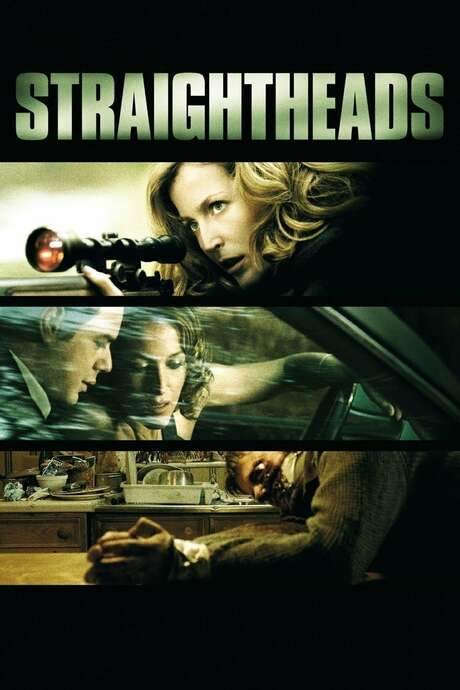
Straightheads (2007) movie poster

Plot Summary

Straightheads (2007) Plot Summary Explained

Release, runtime and language
2007 · 88 mins · English
Directed by
Dan Reed
Starring
Gillian Anderson, Ralph Brown, Anthony Calf, Danny Dyer, Steven Robertson, Francesca Fowler

There is chemistry between Alice (Gillian Anderson), a businesswoman, and Adam (Danny Dyer), a working‑class man who installs a security system in her London flat. After a country party turns violent—three thugs maim Adam and rape Alice—they become reclusive. When Alice spots the gang leader (Anthony Calf), they plot a brutal revenge.

On this page (6)
  1. 1 Where to watch
  2. 2 What happens: full plot
  3. 3 Plot questions answered
  4. 4 Movie threads
  5. 5 Movies like Straightheads
  6. 6 Every angle

Where to watch

Where to Watch Straightheads (2007)

Where can you watch Straightheads? Stream, rent or buy it in the US, including on Tubi TV, Amazon Video and Apple TV Store: current JustWatch availability with up-to-date prices.

Streaming availability powered by JustWatch

Full plot summary · contains spoilers

What Happens in Straightheads: Full Plot Summary

The whole story of Straightheads (2007) explained, from the opening scene to the final frame: every key event, every twist and what it all adds up to. Read it as a quick recap before the sequel, to check a scene you missed, or to finally understand what really happened.

Adam, Danny Dyer, a 23-year-old self-employed security technician, is hired by businesswoman Alice Comfort Gillian Anderson to set up a security system in her flat. After finishing the work, Adam falls asleep on her roof-garden. When Alice arrives home and finds him there, she impulsively asks him to accompany her to a housewarming party for her boss. He is unsure, but eventually agrees. While at the party, Alice and Adam share a charged moment and have passionate sex, a private moment that starkly contrasts with the quiet routine of their initial encounter.

Driving home from the party, Alice overtakes a slow-moving vehicle, while Adam shouts an obscenity at the driver. Shortly after, Alice accidentally hits a stag. While she and Adam are dragging the animal off the road, the car that Alice overtook earlier pulls up. Three men step out and proceed to beat Adam and then gang-rape Alice. The assault shatters their sense of safety and begins to fracture their relationship, even as they physically recover over the following weeks. A month passes, and while the injuries heal, both remain emotionally scarred, haunted by what happened and by the looming question of what to do next.

On news of her father’s death while she was hospitalised, Alice drives out to his country house to sort through his affairs. There she discovers a locked chest that she recognises from her childhood, a tangible link to a past she thought she’d left behind. On the return journey, she passes a group of horse riders; one rider looks familiar, and she later learns his name — Heffer — from another member of the troupe. The discovery of Heffer becomes a fuse for their plans, a name that ties the present danger to a history they barely glimpsed before.

Alice contacts Adam, and he makes his way to her father’s house, where she explains that she has found one of the men responsible for the attack. She then reveals the contents of her father’s locked chest: a sniper rifle and a silencer her father apparently smuggled home after being discharged from the army. She tells Adam that she intends to avenge herself against Heffer, and perhaps others who took part in the assault. They stake out Heffer’s home with the intent to kill, a plan that presses the boundaries of vengeance and legality.

A twist of fate interrupts their vigil when a young woman comes out of the house looking for her dog, which Alice has killed in the course of their vigilance. This woman, Sophie Francesca Fowler, is later identified as Heffer’s daughter. The sight of a human being with a family disrupts their resolve and forces them to confront the moral complexities of their planned retribution. They return home, unsettled by the realization that their attacker is not a faceless villain but a man with relationships and responsibilities.

In the days that follow, Adam’s drive hardens while Alice grows increasingly reluctant to kill Heffer, unsettled by the human element she has just witnessed. Instead, she shifts tactics, allowing Adam to return to Heffer’s house to install security equipment that could reveal the identities and locations of Heffer’s friends. The plan to uncover allies evolves into a dangerous intruder mission. Adam manages to breach Heffer’s house and finds himself in Sophie’s room; initially he tries to quiet her so he can escape, but a sudden surge of rage overtakes him and he rapes Sophie. She escapes in the middle of the attack, and Adam returns home, strangely capable of an erection for the first time since the assault.

The next day, Alice uses a laptop to monitor the security cameras and watches Heffer’s movements. She realizes his intention is to end his own life and, in a surge of urgency, hurries to his house with her rifle. She finds Heffer in his garage, seated in his car with the engine running, attempting to commit suicide by carbon monoxide poisoning. She pulls him from the car, saving his life, but the moment is disorienting for both of them. In the delirium of carbon monoxide exposure, Heffer confesses that a month earlier his friends had planned to rape his daughter, but he persuaded them to attack a woman and her friend in the road instead, a revelation that adds a troubling layer to the violence that has already occurred.

Just then, Adam’s voice calls from outside, and Heffer’s demeanor shifts to aggression once more. He grabs Alice, but she reacts, striking him and freeing herself. Adam bursts into the house, beats Heffer, and binds him to the kitchen table. He and Alice then enact a brutal sequence of revenge: Alice sodomizes Heffer with the barrel of the rifle, choosing not to shoot immediately, while Adam, in a surge of fury, carves out Heffer’s eye with a hunting knife. Horrified, Alice escapes, and she drives back toward her father’s home, where she spots Sophie hitch-hiking and invites her into the car. Sophie, wary, asks where they’re headed, and Alice responds with a quiet, ominous line: “Somewhere safe.”

Back at Heffer’s house, the cycle of vengeance continues. Adam taunts Heffer as more attackers arrive; Adam shoots one intruder in the head and pursues the second, shooting him in the leg to slow him down before delivering a brutal, final blow with the rifle butt. The violence culminates in a stark, unresolved close-up: Adam walks away from his victim, turning to look directly at the camera, leaving the audience to ponder the implications and consequences of their actions.

In the end, the film lingers on the cost of revenge and the blurred lines between justice and brutality, inviting reflection on whether there is a justice that can ever truly repair what has been broken. The camera’s final gaze asks viewers to confront the realities of vengeance, trauma, and moral ambiguity that define the characters’ choices.

> "Somewhere safe."
Last updated: October 09, 2025 at 16:29

Was this helpful?

Plot questions answered

Straightheads Plot Explained: Your Questions Answered

The questions people ask most about Straightheads (2007): what happens in the confusing scenes, why the characters do what they do, the twists, hidden details and what the ending means. Each answer contains spoilers.

Q1

Why does Alice invite Adam to the housewarming party?

Alice impulsively invites Adam after finding him asleep on her roof-garden. Though they're from different social classes, she's a businesswoman and he's a working-class security technician, she's drawn to him after watching him sleep peacefully, seeing something genuine and unguarded in him that contrasts with her own guarded life.

Foreshadowing: The party's charged atmosphere and their passionate encounter foreshadow how their lives become intertwined through both intimacy and violence.

  • Alice
  • Adam
  • housewarming party
  • attraction
  • class difference
Q2

Why do the three men attack Alice and Adam on the road?

The attack appears retaliatory. Earlier, Alice had overtaken the slow-moving vehicle on the road, and Adam had shouted an obscenity at the driver. The men who eventually attack them were the occupants of that vehicle, and they confront Alice and Adam specifically because of this earlier confrontation.

Foreshadowing: The road incident is set up when Adam and Alice leave the party, establishing the chain of events that leads to the assault.

  • attack
  • road assault
  • retaliation
  • confrontation
Q3

What does Alice find in her father's locked chest?

Alice discovers a sniper rifle with a silencer hidden in the chest at her father's country house. The chest is one she recognizes from childhood, and the weapons belonged to her father, who was apparently discharged from the army and smuggled the rifle home.

Foreshadowing: The rifle becomes the primary tool for Alice and Adam's planned vengeance, directly linking her father's military past to the violence that unfolds.

  • sniper rifle
  • silencer
  • father
  • chest
  • military
Q4

Why do Alice and Adam hesitate to kill Heffer when they see his daughter?

When Sophie emerges from the house searching for her dog, Alice and Adam witness the human side of their intended target, a man with a family, a daughter who depends on him. This realization forces them to confront the moral complexity of premeditated murder, disrupting their otherwise single-minded pursuit of revenge.

Foreshadowing: The encounter with Sophie plants the seed of doubt that will later cause Alice to reconsider killing Heffer, while simultaneously fueling Adam's darker impulses.

  • Sophie
  • Heffer
  • hesitation
  • moral dilemma
  • family
Q5

Why does Adam break into Heffer's house and rape Sophie?

Adam infiltrates Heffer's home intending to find and expose the locations of his accomplices. However, when he enters Sophie's room, he assaults her. The film suggests this act stems from a twisted need to mirroring the violence done to Alice, to assert power and masculinity after being violently victimized. The text notes Adam is capable of an erection for the first time since the assault, indicating the attack has twisted his capacity for intimacy and violence.

Foreshadowing: This act marks a pivotal moral descent for Adam, transforming him from victim to perpetrator and setting the stage for his extreme violence against Heffer.

  • Adam
  • Sophie
  • rape
  • assault
  • Heffer
  • revenge
  • corruption
Q6

Why does Alice save Heffer from killing himself?

Alice monitors Heffer through security cameras and realizes he's attempting suicide via carbon monoxide in his garage. She rushes to intervene and pulls him from the car, saving his life. Her motivation appears complex, she wants Heffer to face justice or her own form of punishment rather than a quick, anonymous death through suicide.

Foreshadowing: By saving him, Alice ensures Heffer remains alive to face confrontation, but also puts herself in position to receive his damning confession.

  • Alice
  • Heffer
  • suicide
  • save
  • confession
  • carbon monoxide
Q7

What does Heffer confess about the original attack?

In the disorientation of carbon monoxide exposure, Heffer confesses that his friends had originally planned to rape his own daughter Sophie. To protect her, he convinced them to attack another woman and her companion on the road instead, which is how Alice and Adam became targets.

Foreshadowing: This revelation exposes Heffer as the one who redirected the violence toward Alice, making him directly responsible for the attack despite not being the primary physical perpetrator.

  • Heffer
  • confession
  • Sophie
  • redirect attack
  • rape
  • planning
Q8

What happens to Heffer after he confesses?

After the confession, Adam arrives and beats Heffer, then ties him to a kitchen table. Alice commits a brutal act with the rifle barrel but chooses not to shoot. In a rage, Adam carves out Heffer's eye with a hunting knife. Heffer survives this but is left bound and mutilated.

Foreshadowing: The eye-gouging represents the ultimate descent into brutal retribution, visually marking Heffer and completing the cycle of violence.

  • Heffer
  • eye
  • knife
  • revenge
  • brutal
  • torture
Q9

What happens to Sophie at the end and why does Alice take her?

After the brutal confrontation, Alice drives away and encounters Sophie hitchhiking. Alice invites her into the car, and when Sophie asks where they're going, Alice responds with the ominous line "Somewhere safe." The destination remains deliberately unclear, it's ambiguous whether Alice intends to protect Sophie or harm her, continuing the film's unresolved, morally dark tone.

Foreshadowing: This final scene leaves the fate of Sophie uncertain, embodying the film's refusal to provide moral resolution or closure.

  • Sophie
  • Alice
  • ending
  • hitchhiking
  • somewhere safe
  • ambiguous
Q10

Why does Adam look directly at the camera in the final shot?

In the film's final moment, Adam walks away from his victim and looks directly into the camera, breaking the fourth wall. This unsettling gaze confronts the viewer with the consequences of the violence they've just witnessed, asking them to reflect on their own role as passive observers to brutality. It leaves the moral implications deliberately unresolved.

Foreshadowing: The direct address challenges the viewer to consider whether they have been complicit in seeking vicarious satisfaction from the revenge narrative.

  • Adam
  • final shot
  • camera
  • fourth wall
  • resolution
  • moral
Q11

Why does Adam gouge out Heffer's eye?

After Alice uses the rifle in her own brutal act but stops short of killing Heffer, Adam's rage escalates. He takes a hunting knife and carves out Heffer's eye as an act of extreme, disfiguring revenge. The act represents Adam's complete surrender to violent retribution, surpassing any notion of justice and entering pure retribution.

Foreshadowing: This act signals Adam's full transformation from victim to perpetrator of extreme violence, visually marking him as the most morally compromised character.

  • Adam
  • Heffer
  • eye
  • gouge
  • revenge
  • knife
  • violence

Movie threads

More Movies Like Straightheads, by Mood & Story

Curated lists built around what makes Straightheads tick: the same mood, the same kind of story or the same emotional payoff. Each list explains why these movies belong together.

Trauma-fueled revenge stories like Straightheads

Stories where survivors of violence descend into brutal, morally ambiguous vengeance. Movies like Straightheads that explore the dark aftermath of violence, where victims become perpetrators in a bleak cycle of revenge. If you liked the grim, morally complex journey in Straightheads, these films offer similar stories of trauma and brutal retribution.

  • vengeful
  • grim
  • traumatic
  • morally complex
  • brutal
  • unsettling
  • Tone: dark, bleak
  • Pacing: steady, methodical
Why these movies?

The story pattern: The narrative typically begins with a life-shattering act of violence against the protagonists. Instead of healing, their trauma fuels a meticulous and vicious plan for revenge, often blurring the lines between victim and aggressor and culminating in an emotionally devastating, non-cathartic conclusion.

Why they belong together: These films are grouped by their shared focus on the psychological corrosion of revenge, a consistently dark tone, and a heavy emotional weight stemming from trauma. They feature methodical pacing that builds oppressive tension towards an intensely violent and bleak climax.

Psychological thrillers of moral collapse like Straightheads

Character studies of ordinary people shattered by violence, descending into darkness. If you were fascinated by the psychological decay of the characters in Straightheads, these movies offer similar deep dives into the dark side of human nature. They are challenging films about ordinary people confronting trauma and violence, leading to a devastating moral collapse.

  • psychological
  • unsettling
  • grim
  • traumatic
  • tense
  • character-driven
  • Tone: dark, unsettling
  • Pacing: steady, psychological
Why these movies?

The story pattern: These stories center on a protagonist's internal journey from a state of normalcy to one of profound psychological damage. An external catalyst, often an act of extreme violence, triggers a gradual internal collapse, where the character's morals, sanity, and identity are systematically stripped away.

Why they belong together: These films are united by their heavy emotional weight, a dark and unsettling tone, and a steady pacing that allows for a deep, uncomfortable exploration of a character's psyche. The primary similarity is the focus on the devastating psychological impact of violence and trauma.

If you liked this

Movies Like Straightheads

Similar movies to Straightheads: the same genre, themes or kind of story. Each one comes with its own plot summary, timeline and ending explained.

Browse all movie summaries

Every angle

Straightheads (2007) Explained: Plot, Timeline & Characters

Everything about Straightheads in one place: what happens in the plot summary, the timeline in chronological order, the characters and meaning and a spoiler-free summary. What's After the Movie adds the cast, box office and post-credit scenes.

Coming soon on iOS and Android

The Plot Explained Movie Summary App

Plot summaries, endings explained and timelines on your phone. Catch up on any movie in minutes, save your favorites and never miss a twist again.

Be the first to know when we launch. Your email stays private, always.

Learn more about the app