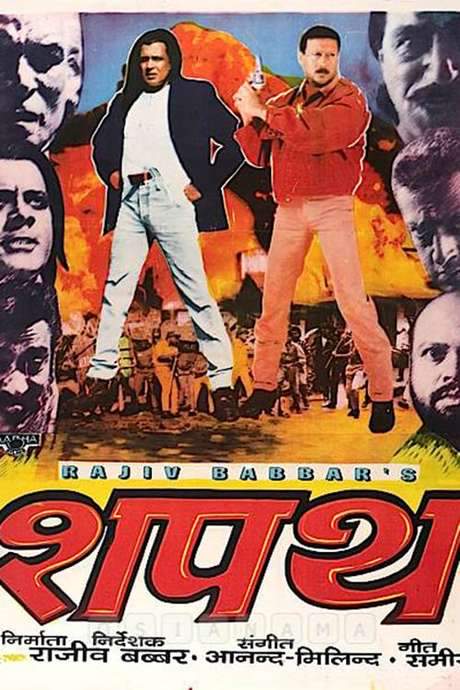
Sthalathe Pradhana Payyans

Sthalathe Pradhana Payyans

Year: 1993

Runtime: 149 mins

Language: Malayalam

Director: Shaji Kailas

ActionDrama

Goplakrishnan (Jagadish), a bright newspaper boy from Hindustan Colony, enters politics with his friends, runs for office and wins a landslide. He promises free policing and a clean law‑order system. Meanwhile, dynamic young officer Mohammed Iqbal (Siddique) is tasked with purging the capital city of goons and restoring order.

Where to Watch Sthalathe Pradhana Payyans?

Find where to stream, rent, or buy Sthalathe Pradhana Payyans (1993) in the US with current JustWatch availability, up-to-date pricing, and platform listings for subscription, rental, and digital purchase options.

Warning: spoilers below!

Haven’t seen Sthalathe Pradhana Payyans yet? This summary contains major spoilers. Bookmark the page, watch the movie, and come back for the full breakdown. If you're ready, scroll on and relive the story!

Timeline – Sthalathe Pradhana Payyans (1993)

Trace every key event in Sthalathe Pradhana Payyans (1993) with our detailed, chronological timeline. Perfect for unpacking nonlinear stories, spotting hidden connections, and understanding how each scene builds toward the film’s climax. Whether you're revisiting or decoding for the first time, this timeline gives you the full picture.

1

Gopalakrishnan is fielded as a candidate from Hindustan Colony

Kunhikannan Nambiar uses his influence to field Gopalakrishnan, an educated youth with no political experience, as the party candidate in the vacated seat. The Hindustan Colony workers rally behind him, banking on his popular appeal. He wins the election with a stunning majority.

Hindustan Colony
2

Gopalakrishnan becomes Home Minister under Nambiar's plan

During a party meeting, Nambiar pushes hard for a ministry for Gopalakrishnan and Govinda Menon reluctantly agrees to accept him as a candidate for the Home Ministry. Nambiar’s real motive is to control the ministry and facilitate weapons flow. Gopalakrishnan, unaware of the scheme, assumes the post and begins his duties.

State capital
3

Gopalakrishnan initiates policing reforms

Gopalakrishnan uses his position to promise free policing and a cleansing of law and order. He earns the support of Govinda Menon and the public who see him as an honest reformer. His approach unsettles Nambiar, who fears losing influence.

State capital
4

Iqbal is appointed police commissioner to clean the city

Mohammed Iqbal is tasked with cleaning up the city and begins taking down Nambiar’s goons. He arrests several of Nambiar’s men, drawing the ire of the veteran politician. The minister’s inaction on releasing the goons heightens the political tension.

State capital city
5

Nambiar initiates movement to divide Hindustan Colony

Nambiar’s plan to ignite communal violence begins with sowing distrust among Hindustan Colony residents. Minor scuffles break out as tensions rise under his influence. Subair tries to mediate outside the political arena.

Hindustan Colony
6

Temple and mosque raids trigger a larger crisis

Police raid temples and mosques on the Home minister’s orders, and deadly weapons are found, sparking public outcry. The raids widen the rift between communities and strain the government. The controversy exposes the manipulation behind the violence.

Hindustan Colony and city
7

Nambiar’s riot plan erupts in Hindustan Colony

A full-scale communal riot erupts, with Nambiar’s goons torching houses and assaulting residents, especially women. Subair’s sister is attacked as the violence spirals out of control. The colony descends into chaos under the leadership of Nambiar.

Hindustan Colony
8

Gopalakrishnan faces protest and resigns

As the violence escalates, Gopalakrishnan is accused by the public of mass murder and is pressured to resign. Govinda Menon refuses to accept his resignation and instead urges him to expose the real culprits. Gopalakrishnan confronts the challenge, balancing law and public pressure.

Hindustan Colony / State capital
9

Gopalakrishnan raids Nambiar’s stores with a mob

Following Govinda Menon’s directive, Gopalakrishnan, supported by a mob, raids the stores and garages of Nambiar, seizing explosives and weapons. The action signals a bold move to unmask the masterminds behind the violence. The crowd grows in support as they seek justice.

Hindustan Colony
10

The mob attacks and burns Nambiar and his partners

Driven by the search for accountability, the mob confronts Nambiar and his associates, setting them on fire. The attack effectively ends Nambiar's grip on the underworld and politics in the colony. Public sentiment shifts towards Gopalakrishnan’s anti-corruption stance.

Hindustan Colony
11

Govinda Menon acknowledges Gopalakrishnan’s power

With the real culprits exposed, Govinda Menon publicly supports Gopalakrishnan and praises his bold policing approach. The governor’s backing legitimizes the reform and the public begins to trust the new order. Gopalakrishnan reinforces his commitment to a free policing system.

State capital
12

Post-crisis state of flux and new leadership

The state remains in political flux with factionalism and infighting, but the Hindustan Colony episode reshapes power dynamics. Gopalakrishnan’s actions redirect the public discourse toward accountability and rule of law. The narrative closes with a sense of reform beginning to take root, even as tensions linger.

Kerala (state capital)

Last updated: October 07, 2025 at 08:46

Was this helpful?

Sthalathe Pradhana Payyans (1993) Timeline Questions Answered – Chronology FAQ

Find frequently asked questions about the Sthalathe Pradhana Payyans (1993) timeline, including chronological order, nonlinear jumps, cause-and-effect links, and scene sequence clarifications. This timeline FAQ helps explain when key events happen, how moments connect, and why the story unfolds in that specific order.

Q1

Why was Gopalakrishnan chosen as a candidate for the election?

A.

Kunhikannan Nambiar orchestrated Gopalakrishnan's candidacy as a political maneuver. After Minister Marukandam Madhavan's death created a vacancy, Nambiar pushed for his loyalist to take the seat while claiming party workers from Hindustan Colony should have a say. He believed Gopalakrishnan, an educated youth with no political experience, would be easily controllable and serve as a puppet to further his own schemes for power and weapons control.

gopalakrishnancandidatenambiarelectionhustan colony
Q2

Why did Gopalakrishnan become the Home Minister?

A.

Nambiar pushed for Gopalakrishnan to be appointed Home Minister as part of his scheme to control the ministry and facilitate weapons flow into the state. Gopalakrishnan, unaware of this ulterior motive, accepted the position believing he could bring genuine reform. Chief Minister Govinda Menon reluctantly agreed, though he later saw potential in Gopalakrishnan as an honest reformer who could restore public trust.

Earlier, Nambiar's claim that Hindustan Colony workers deserved representation foreshadowed his plan to install a controllable figure in power.

gopalakrishnanhome ministernambiarweaponspolitics
Q3

How did the communal violence in Hindustan Colony begin?

A.

Nambiar initiated the violence by deliberately sowing distrust among Hindustan Colony residents, attempting to fracture the community along religious lines. Minor scuffles broke out as tensions rose under his manipulation. His goons then escalated matters by torching houses and assaulting residents, particularly targeting women, with Subair's sister becoming a central casualty.

communal violencehindustan colonynambiarriotsubair
Q4

Why did police raid temples and mosques in the colony?

A.

The raids were ordered from the Home Ministry under Gopalakrishnan's authority, though he was being manipulated by Nambiar's machinations. During the crackdown, authorities uncovered deadly weapons hidden in these religious places. This discovery was actually part of Nambiar's plan to create public outcry and justify his political moves while creating chaos that benefited his underground operations.

Earlier, Nambiar's push for weapons flow and control over the ministry hinted at his plan to use religious spaces for storage.

police raidstemplesmosquesweaponshome ministry
Q5

What triggered the full-scale riots in Hindustan Colony?

A.

The riots were triggered by a combination of Nambiar's deliberate provocation and the aftermath of the temple-mosque raids. After weapons were discovered and public outcry grew, Nambiar's goons used the opportunity to launch coordinated attacks, burning homes and assaulting residents. The violence spiraled out of control, with women specifically targeted, including Subair's sister.

The earlier minor scuffles and Nambiar's movement to divide the colony planted the seeds for this explosion.

riotshindustan colonynambiarattackhouses burned
Q6

Why did Gopalakrishnan resign as Home Minister?

A.

Gopalakrishnan resigned because he was publicly accused of being the architect of the brutal crackdown that led to the riots and civilian casualties. Facing mounting pressure from the public who believed he had ordered the violent raids, he stepped down. However, Chief Minister Govinda Menon initially refused to accept the resignation, urging him instead to expose the real culprits behind the violence.

gopalakrishnanresignaccusationriotspublic protest
Q7

What happened to Nambiar at the end of the movie?

A.

In the climax, Gopalakrishnan, supported by a mob, raided Nambiar's stores and garages, seizing explosives and weapons. The mob then confronted Nambiar and his associates, setting them on fire. This violent confrontation effectively ended Nambiar's grip on both the underworld and local politics, though the victory came through mob justice rather than legal proceedings.

Earlier, Govinda Menon's directive for Gopalakrishnan to expose the culprits preceded this explosive confrontation.

nambiarmob attackfiredefeatexplosives
Q8

What was the conflict between Gopalakrishnan and Poomukhathu Kurup?

A.

Poomukhathu Kurup was Gopalakrishnan's uncle and a successful but morally shady business contractor. More critically, Kurup was implicated in the death of Gopalakrishnan's father, creating a bitter familial enmity between them. This personal vendetta added depth to the political drama, as Gopalakrishnan also became involved with Kurup's daughter Gowri.

gopalakrishnankurupfather deathenmityuncle
Q9

What was Subair's role in the story?

A.

Subair was Gopalakrishnan's childhood friend who was on leave from the Indian Army during the crisis. He stepped in to mediate the growing communal tensions and tried to keep the peace outside the political arena. His sister became a central casualty during the riots, which motivated the community's anger and the subsequent mob action against Nambiar.

subairarmymediatorriotsister
Q10

Why did Police Commissioner Iqbal target Nambiar's goons?

A.

Mohammed Iqbal was appointed specifically to clean up the city and restore law and order. He moved decisively against Nambiar's criminal network, arresting several of his goons. This drew the ire of the veteran politician, who pressed the Home Minister to order the release of the criminals. The tension between Iqbal's law enforcement actions and political interference became a central conflict.

iqbalnambiar goonsarrestpolice commissionerlaw order
Q11

What was the significance of the water shortage in Hindustan Colony?

A.

The water shortage in Hindustan Colony served as both a social issue and a political tool. It exposed the neglect by those in power and became a fault line that highlighted the community's struggles. The issue reflected the broader themes of political apathy and corruption, showing how basic civic problems were weaponized in political calculus.

water shortagehindustan colonyneglectpoliticscivic
Q12

What did the ending mean for Gopalakrishnan's political future?

A.

The ending was bittersweet. While Nambiar was defeated and Gopalakrishnan's reformist agenda gained public support, the victory came through mob violence rather than legitimate political processes. Gopalakrishnan lost his political innocence, and the community bore trauma from the riots. Despite Govinda Menon's backing and promises of reform, the state remained in political flux with lingering tensions.

endingreformmob violencepolitical futureaccountability
Mobile App Preview

Coming soon on iOS and Android

The Plot Explained Mobile App

From blockbusters to hidden gems - dive into movie stories anytime, anywhere. Save your favorites, discover plots faster, and never miss a twist again.

Sign up to be the first to know when we launch. Your email stays private, always.

Explore Movie Threads

Discover curated groups of movies connected by mood, themes, and story style. Browse collections built around emotion, atmosphere, and narrative focus to easily find films that match what you feel like watching right now.

Movies about chaotic grassroots uprisings like Sthalathe Pradhana Payyans

Stories where ordinary people rise up against a broken and corrupt system.If you liked the tense, community-driven revolution in Sthalathe Pradhana Payyans, explore these movies about grassroots uprisings. These films feature ordinary people fighting systemic corruption, often leading to chaotic but hopeful conclusions.

urgentchaoticdeterminedgrittyhopefulanxiousrebellious

Narrative Summary

These narratives typically begin with a local injustice that galvanizes a community. An underdog leader emerges, uniting a diverse group against a powerful, corrupt opposition. The story unfolds through escalating protests, strategic maneuvers, and often violent clashes, culminating in a victory that is significant yet comes at a heavy cost.

Why These Movies?

Movies in this thread are grouped by their shared focus on collective action against oppression, a fast-paced and tense atmosphere, and the bittersweet reality that change is hard-won. They share a heavy emotional weight and explore the moral complexities of fighting fire with fire.

Movies about idealism corrupted by power like Sthalathe Pradhana Payyans

Journeys of idealistic reformers tested by the brutal realities of power.Fans of Sthalathe Pradhana Payyans will appreciate these stories about moral compromise. These films follow idealistic protagonists whose fight against corruption forces them to make difficult, often dark choices, leading to complex and bittersweet endings.

tensegrittydeterminedanxiousmorally complexheavybittersweet

Narrative Summary

The narrative follows a principled protagonist who gains a position of influence to enact change. They are quickly confronted with the entrenched nature of the system and the necessity of morally grey tactics. The central conflict becomes an internal one: how much of their original self must they sacrifice to achieve their goal, often culminating in a Pyrrhic victory.

Why These Movies?

These films are united by their deep dive into the theme of power and morality. They share a complex narrative structure, a tense and heavy tone, and a focus on the personal cost of political or social battles. The pacing is often fast, mirroring the relentless pressure on the protagonist.

Unlock the Full Story of Sthalathe Pradhana Payyans

Don't stop at just watching - explore Sthalathe Pradhana Payyans in full detail. From the complete plot summary and scene-by-scene timeline to character breakdowns, thematic analysis, and a deep dive into the ending - every page helps you truly understand what Sthalathe Pradhana Payyans is all about. Plus, discover what's next after the movie.

Sthalathe Pradhana Payyans Summary

Read a complete plot summary of Sthalathe Pradhana Payyans, including all key story points, character arcs, and turning points. This in-depth recap is ideal for understanding the narrative structure or reviewing what happened in the movie.

Sthalathe Pradhana Payyans Summary

Characters, Settings & Themes in Sthalathe Pradhana Payyans

Discover the characters, locations, and core themes that shape Sthalathe Pradhana Payyans. Get insights into symbolic elements, setting significance, and deeper narrative meaning - ideal for thematic analysis and movie breakdowns.

Characters, Settings & Themes in Sthalathe Pradhana Payyans

Sthalathe Pradhana Payyans Spoiler-Free Summary

Get a quick, spoiler-free overview of Sthalathe Pradhana Payyans that covers the main plot points and key details without revealing any major twists or spoilers. Perfect for those who want to know what to expect before diving in.

Sthalathe Pradhana Payyans Spoiler-Free Summary

More About Sthalathe Pradhana Payyans

Visit What's After the Movie to explore more about Sthalathe Pradhana Payyans: box office results, cast and crew info, production details, post-credit scenes, and external links - all in one place for movie fans and researchers.

More About Sthalathe Pradhana Payyans

Similar Movies to Sthalathe Pradhana Payyans

Discover movies like Sthalathe Pradhana Payyans that share similar genres, themes, and storytelling elements. Whether you’re drawn to the atmosphere, character arcs, or plot structure, these curated recommendations will help you explore more films you’ll love.