



Plot Explained Spoilers guaranteed!
Plot Explained

Browse by genre

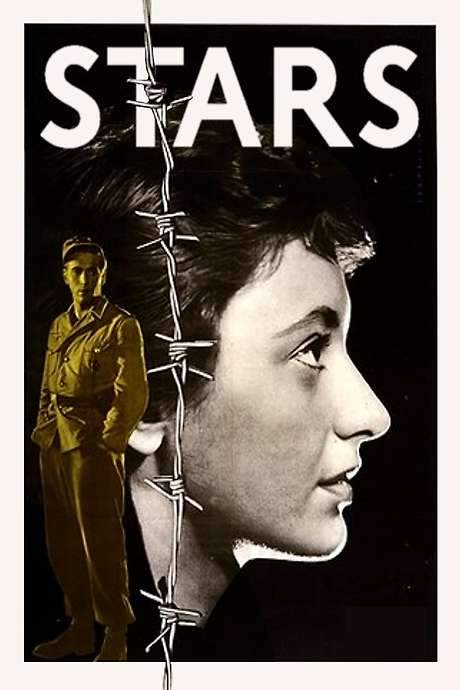
Stars (1959) movie poster

Timeline

Stars (1959) Timeline Explained – Every Event in Order

Release, runtime and language
1959 · 92 mins · German
Directed by
Konrad Wolf
Starring
Itzhak Finzi, Yuriy Yakovlev, Hannjo Hasse, Ivan Kondov, Waltraut Kramm, Trifon Dzhonev

Stationed in a secluded Bulgarian village in 1943, Walter—a German Wehrmacht sergeant and artist—lives in an almost idyllic distance from the war. When a transit camp is set up for Jews arriving from Greece, interned Ruth asks him to help a pregnant woman, and the two form an unlikely bond that alters their lives.

On this page (6)
  1. 1 Where to watch
  2. 2 Events in order (12)
  3. 3 Timeline questions answered
  4. 4 Movie threads
  5. 5 Movies like Stars
  6. 6 Every angle

Where to watch

Where to Watch Stars (1959)

Where can you watch Stars? Stream, rent or buy it in the US, including on MUBI and Kanopy: current JustWatch availability with up-to-date prices.

Streaming availability powered by JustWatch

12 events in order · contains spoilers

Stars Timeline: Events in Chronological Order

Every key event of Stars (1959) in order, scene by scene, with when and where it takes place. Use it to untangle flashbacks, time jumps and parallel storylines, to refresh your memory before the sequel or to find the exact scene you are thinking of.

  1. Walter's reluctant duty and artistic escape

    In 1943, a non-commissioned Wehrmacht officer named Walter is tasked with supervising civilian workers at a motor vehicle workshop in a small Bulgarian town. He confines himself to drawing the area and its people rather than engaging with the war, earning the nickname 'Rembrandt' from his supervisor. His best friend Kurt prizes a portrait Walter has made, while Walter himself longs to be far from the conflict.

    When
    1943
    Where
    Motor vehicle workshop, small Bulgarian town
  2. Ruth's plea at the camp

    From the camp near the town, Ruth, a Greek Sephardic Jew, asks Walter for help with a woman giving birth. Walter dismissively refuses, and Ruth brands him a wolf and a rat, full of contempt. The moment reveals Walter's emotional distance from the war and his moral ambivalence toward the prisoners.

    When
    Day
    Where
    Camp near town
  3. Delivery assisted by a doctor

    That day, Walter returns to the camp with a doctor who helps the exhausted woman bring a child into the world. The act of aiding a birth shows Walter's reluctant willingness to engage with people in need. The moment contrasts with the violence surrounding the war.

    When
    Evening
    Where
    Camp near town
  4. Workshop break-in and Petko's lighter

    That evening, the motor vehicle workshop is broken into, and Walter finds the lighter of a Bulgarian man named Bai Petko. He chooses not to tell on the man, signaling his preference to stay out of trouble even as crime occurs nearby. The moment marks a turning point in his moral gray zone.

    When
    Evening
    Where
    Motor vehicle workshop, town
  5. Petko's pitch and medicine smuggling

    Next day, partisan soldiers secretly arrive at Petko’s home. Petko, who treats the partisans in the woods, asks Walter for medicine, claiming the supply is for the Jews in the camp. Walter agrees to smuggle a package of medicine to Blashe, one of Petko’s errand boys, blurring the lines between aid and complicity.

    When
    Next day
    Where
    Petko's home
  6. Evening encounter with Ruth

    At the pub, Kurt notices the many Bulgarian women, while Walter brings Ruth from the camp to mingle in the town’s night streets. They walk together through the town and slowly grow closer, until Walter leaves Ruth at the camp gate and ponders what one can truly do.

    When
    Evening
    Where
    Pub and camp gate, town
  7. Arrest of Blashe and the crackdown

    The following day, Blashe is caught by the Bulgarian police with the medicine. Walter and Blashe do not inform on each other, but Kurt orders the Jews in the camp to be punished for possessing the medicine. Walter realizes that trying to do good has not actually helped anyone.

    When
    Next day
    Where
    Camp and police checkpoint
  8. Loyalties tested and Ruth's plan forms

    Walter returns Petko’s lighter to prove his loyalty, but Petko still suspects him of informing on Blashe. He then meets Ruth again; she is brought to him at Kurt’s initiative. They talk late into the evening, and Walter urges Ruth to escape, a plan she agrees to pursue the next night.

    When
    Evening
    Where
    Walter's room and nearby streets; camp
  9. Deportation looming and the escape plan

    The next day Kurt reveals that the Jews will be deported 'Tomorrow.' Walter tries to organize Ruth’s escape with Petko, hoping to use some ruse, while Petko confesses the partisan soldiers’ real aim to steal weapons. By the time the plan could be enacted, the deportations have begun and the timing collapses.

    When
    Next day
    Where
    Town camp and train area
  10. The platform chase and Ruth's departure

    Walter runs to the train platform but can only watch the cattle cars carrying Ruth depart. The failed rescue leaves him hollow as the lives of those he wanted to help drift away. He then returns to his room to confront the consequences of his choices.

    When
    Day
    Where
    Train platform; Walter's room
  11. Portrait revelation and turn toward resistance

    Back in his room, Walter finds Ruth’s portrait with a note from Kurt admitting that he lied about the departure time for Walter’s own good. The discovery hardens Walter and pushes him to join Petko in figuring out how to supply weapons to the partisan soldiers. The moment marks a pivot from personal longing to a broader resistance.

    When
    Evening
    Where
    Walter's room
  12. Ruth in the cattle car

    The final image shows Ruth inside the cattle car, with the poignant song It Burns playing in the background. The ending leaves Walter with a sense of how his small acts of defiance intersect with the brutal machinery of deportation. The film closes on Ruth’s fate as a testament to the costs of moral ambiguity in war.

    When
    Final moments
    Where
    Cattle car

Last updated: October 07, 2025 at 08:11

Was this helpful?

Timeline questions answered

Stars Timeline Explained: Your Questions Answered

When does it happen, and why in that order? The questions people ask about the chronology of Stars (1959): time jumps, flashbacks, cause and effect between scenes and the correct order of events, each answered with spoilers.

Q1

Why does Walter initially refuse to help Ruth with the woman giving birth?

Walter initially refuses because he has deliberately distanced himself from the war, focusing only on his art and avoiding any involvement with the prisoners. His emotional detachment is evident when Ruth calls him a wolf and a rat, accusing him of moral bankruptcy. However, he later returns with a doctor to assist with the birth, showing the first shift in his conscience.

Foreshadowing: Walter's early refusal sets up his later transformation as he cannot maintain his detached stance.

  • walter
  • ruth
  • birth
  • camp
  • refusal
Q2

What was Petko actually planning with the medicine Walter smuggled?

Petko told Walter the medicine was for the Jews in the camp, but this was a deception. The medicine was actually meant for partisan soldiers who needed it to treat their wounded. Petko's real agenda was to secure the medicine as part of a broader plan for the partisans to seize weapons, not to help the Jewish prisoners directly.

Foreshadowing: This deception becomes clear when Walter realizes his attempt to do good hasn't actually helped anyone.

  • medicine
  • petko
  • partisans
  • weapons
  • deception
Q3

Why does Kurt bring Ruth to Walter in the pub?

Kurt orchestrates the meeting between Walter and Ruth, apparently sympathetic to their connection. Later, Kurt reveals he altered the departure time of the deportation trains specifically to give Walter a chance to save Ruth, though this revelation comes too late. Kurt's motivations appear mixed, enforcing orders while also trying to help his friend.

Foreshadowing: Kurt's secret manipulation of the departure time only becomes clear after the deportation has already happened.

  • kurt
  • ruth
  • pub
  • meeting
  • departure time
Q4

Why does Walter's plan to help Ruth escape fail?

Walter's escape plan fails because the deportation begins before he can put it into action. Even though Kurt had secretly altered the departure time to give Walter a chance, the timing still collapses. Walter races to the train platform but arrives too late, Ruth has already been loaded into the cattle car and the train has departed.

Foreshadowing: The urgency builds when Kurt tells Walter the Jews will be deported 'Tomorrow,' creating a narrow window that ultimately closes.

  • ruth
  • escape
  • deportation
  • train
  • too late
Q5

Why does Walter ally with Petko and the partisans at the end?

After failing to save Ruth and discovering Kurt's note about the altered departure time, Walter is hardened by his failure. Rather than remain in his passive state, he chooses to ally with Petko to help supply weapons to the partisan fighters. This marks his shift from individual moral struggle to active resistance against the occupying forces.

Foreshadowing: Walter's earlier decision not to expose Petko as the thief foreshadows his eventual alignment with the local resistance.

  • walter
  • petko
  • partisans
  • resistance
  • weapons
Q6

What does Kurt's note on Ruth's portrait reveal?

Kurt leaves a note on Walter's portrait of Ruth confessing that he lied about the departure time. He reveals he altered the schedule specifically to give Walter a chance to save Ruth before the deportation. However, the note arrives too late, Walter only discovers it after Ruth has already been taken to the train.

Foreshadowing: This revelation explains why Walter's escape plan collapsed despite Kurt's apparent help.

  • kurt
  • note
  • portrait
  • departure time
  • confession
Q7

Why does Walter return Petko's lighter instead of reporting the workshop break-in?

Walter finds Petko's lighter at the break-in scene but chooses not to tell the German authorities, keeping a low profile amid town tensions. Later, he returns the lighter directly to Petko, signaling that he remains aligned with Petko's world rather than with the German military authorities. This act marks his growing preference for the local Bulgarian side over his official duties.

Foreshadowing: This decision foreshadows Walter's eventual complete shift to supporting the local resistance.

  • lighter
  • petko
  • workshop
  • theft
  • loyalty
Q8

What happens to Ruth's father in the camp?

Ruth's father is among the Greek Sephardic Jews held in the transit camp. He is present when Ruth asks Walter for help and remains with the group through the hardships of internment. Both Ruth and her father are ultimately deported together in the cattle cars, their fate sealed by the mass deportation that sweeps through the camp.

Foreshadowing: The film establishes Ruth's connection to her father early, making the final deportation scene more poignant.

  • ruth
  • father
  • deportation
  • camp
  • greek jews
Q9

What happens after Blashe is caught with the medicine?

When Blashe is caught with the medicine, both he and Walter choose not to expose each other, a quiet act of solidarity. However, Kurt punishes the Jewish prisoners in the camp who possessed pieces of the medicine. Walter realizes that his attempt to help has resulted in punishment for innocent people rather than actual relief.

Foreshadowing: This moment marks a turning point where Walter sees the unintended consequences of his actions.

  • blash
  • medicine
  • arrest
  • punishment
  • jews
Q10

What does the relationship between Walter and Ruth represent in the film?

Their relationship represents a fragile human connection formed under impossible circumstances. Ruth challenges Walter's moral apathy, while his growing love for her drives him to attempt rescue. Their bond embodies the film's meditation on moral choice, how ordinary people struggle to act rightly when confronted with the brutal machinery of war.

Foreshadowing: The tender moments between them contrast sharply with the final image of Ruth in the cattle car.

  • walter
  • ruth
  • relationship
  • love
  • moral choice

Movie threads

More Movies Like Stars, by Mood & Story

Curated lists built around what makes Stars tick: the same mood, the same kind of story or the same emotional payoff. Each list explains why these movies belong together.

Movies about wartime moral conflict and guilt like Stars

Stories of characters wrestling with conscience amid the bystander atrocities of war. If you liked Stars, discover other movies that explore moral quandaries and guilt for those on the sidelines of war. These similar dramas feature characters wrestling with their conscience amid societal atrocities, offering a thoughtful and somber viewing experience.

  • somber
  • tense
  • moral dilemma
  • guilt
  • oppressive
  • thought-provoking
  • Tone: melancholic, somber, tense
  • Pacing: slow, deliberate, reflective
Why these movies?

The story pattern: Narratives in this thread often follow an ordinary person, sometimes complicit by association, who is confronted with the suffering of others. Their journey involves a gradual moral awakening and the agonizing decision of whether to risk everything to help, typically leading to profound personal consequences.

Why they belong together: These films are grouped by their central focus on moral conflict within oppressive systems. They share a heavy emotional weight, a melancholic tone, and a deliberate pace that allows the gravity of ethical choices to resonate deeply with the viewer.


Somber and melancholic slow burn movies like Stars

Quiet, character-driven stories where emotional weight builds with deliberate pacing. Find movies with a similar slow, melancholic feel to Stars. If you appreciated its quiet pacing and heavy, somber atmosphere, these recommendations offer similarly immersive and emotionally resonant dramatic experiences focused on character and mood.

  • melancholic
  • somber
  • slow burn
  • meditative
  • quiet
  • heartbreaking
  • Tone: melancholic, somber, bleak
  • Pacing: slow, meditative, deliberate
Why these movies?

The story pattern: The narrative pattern is defined by a slow, contemplative build-up of emotional tension. The plot is often simple but deeply felt, focusing on the nuanced development of relationships or a character's internal world against a bleak backdrop, culminating in a poignant and often sad conclusion.

Why they belong together: They are united by a specific combination of slow pacing, a melancholic or somber tone, and heavy emotional weight. This cohesive blend creates a distinct viewing experience for audiences seeking thoughtful, atmospheric, and deeply moving dramas.

If you liked this

Movies Like Stars

Similar movies to Stars: the same genre, themes or kind of story. Each one comes with its own plot summary, timeline and ending explained.

Browse all movie summaries

Every angle

Stars (1959) Explained: Plot, Timeline & Characters

Everything about Stars in one place: what happens in the plot summary, the timeline in chronological order, the characters and meaning and a spoiler-free summary. What's After the Movie adds the cast, box office and post-credit scenes.

Coming soon on iOS and Android

The Plot Explained Movie Summary App

Plot summaries, endings explained and timelines on your phone. Catch up on any movie in minutes, save your favorites and never miss a twist again.

Be the first to know when we launch. Your email stays private, always.

Learn more about the app