Year: 1959
Runtime: 92 mins
Language: German
Director: Konrad Wolf
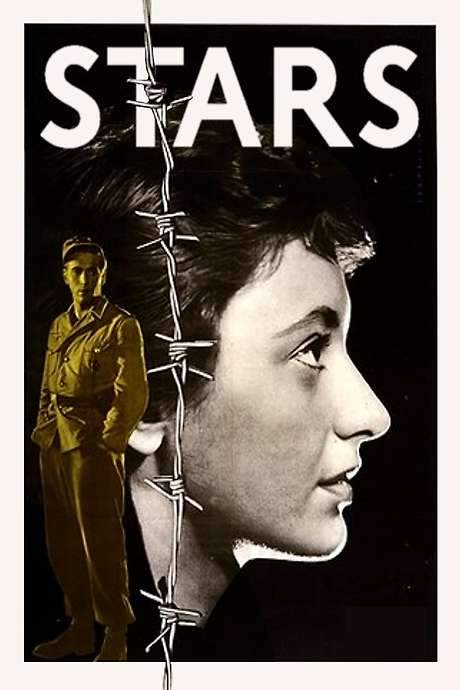
Stationed in a secluded Bulgarian village in 1943, Walter—a German Wehrmacht sergeant and artist—lives in an almost idyllic distance from the war. When a transit camp is set up for Jews arriving from Greece, interned Ruth asks him to help a pregnant woman, and the two form an unlikely bond that alters their lives.
Warning: spoilers below!
Haven’t seen Stars yet? This summary contains major spoilers. Bookmark the page, watch the movie, and come back for the full breakdown. If you're ready, scroll on and relive the story!
Read the complete plot breakdown of Stars (1959), including all key story events, major twists, and the ending explained in detail. Discover what really happened—and what it all means.
In a quiet Bulgarian town during 1943, a non-commissioned Wehrmacht officer, Walter, is assigned to supervise the civilian workers at a local motor vehicle workshop. He prefers sketching the town and its people to soldiering, earning the teasing title “Rembrandt” from his supervisor, while his closest comrade, Lieutenant Kurt, beams with pride at a portrait Walter has drawn of him. Walter’s thoughts drift away from the frontlines, and the war feels distant to him as he paces the streets with a quiet curiosity about the lives around him.
Soon, Greek Sephardic Jews are brought into the area, held in a nearby concentration camp until they can be transported to Auschwitz. Through the camp’s barbed wire, Ruth, a Jewish woman, asks Walter for help when a woman there gives birth. Walter initially refuses, and Ruth’s sharp rebuke lands with a sting: she calls him a wolf and a rat, full of contempt. Later, a doctor—a figure who tends to the camp’s exhausted inmates—helps the newborn, and Walter reappears in the camp with this medical aid, indicating a subtle shift in his view of the people behind the wire. Back in the town, Walter discovers the lighter belonging to a Bulgarian named Bai Petko at the workshop’s break-in site but does not tell on the thief, keeping a low profile in the face of the town’s tensions.
The following day, partisan riders secretly arrive at Petko’s home. The “doctor” who treats them claims a need for medicine, and Petko hopes to secure it through Walter’s help. He tells Walter that the medicine is meant for the Jews in the camp, prompting Walter to smuggle a package to Blashe, one of Petko’s trusted helpers. That same evening, Walter and Kurt sit in a pub, and Ruth—brought to Walter by Kurt’s arrangement—spends time with him. The two begin to form a fragile, unlikely connection as they walk the village’s dim streets after curfew, Ruth accompanies Walter to the camp gate, and Walter wonders, with growing ache, what he might actually do to change anything.
The next day brings a harsher reckoning. Blashe is caught with the medicine, and the two men share a quiet, unspoken allegiance—each choosing not to expose the other. Kurt, however, expands his search for stolen goods among the camp’s Jews, meting out punishment to those who possessed pieces of the contraband. Walter realizes that his attempts to do something good have not created real change; Petko’s deception about the medicine’s purpose becomes clear, and Walter returns Petko’s lighter, signaling he remains aligned with Petko’s world rather than with the German authorities. In a quiet, tender moment, Walter sees Ruth again and pleads for her to escape; she eventually agrees to flee the next night, though her fate remains uncertain.
That moment of hope is tempered by the brutal logic of war. The following day, Kurt tells Walter the Jews are to be deported the next day, a line that underscores the sense of impending loss. Walter, now clearly in love with Ruth, discovers a drawing of her in his notebook—the inscription from Kurt implies that the deception about deportation was a protective lie. Walter shifts his plan toward an escape for Ruth, enlisting Petko’s help to move her to safety. Petko reveals that the partisan soldiers had their own hidden agenda—to seize weapons—thus complicating any attempt to shelter Ruth. When the moment to act arrives, Walter tries to orchestrate a ruse with Petko to remove Ruth from the camp, but by then the deportation has already taken place. He races to the train platform and watches the cattle cars pull away, Ruth inside, their speed a painful reminder of what cannot be undone. Returning to his room, Walter finds Ruth’s portrait with Kurt’s note confessing that the departure time was altered for Walter’s sake. In the end, Walter allies with Petko to support the broader resistance’s weapons supply, and the final image lingers on Ruth in the cattle car as the poignant song It Burns (Es brennt) fills the scene. > “Tomorrow.”
Ruth’s plight—along with her father’s presence in the camp and the hardships faced by their group—anchors the film as a meditation on moral choice under occupation, the complexities of mercy, loyalty, and the costly price of choosing who to help when every helping hand risks drawing danger. The characters are drawn with restraint and humanity, tracing a path from apathy to a fragile, desperate attempt at saving lives, even as the war relentlessly presses in on them all.
Last Updated: October 07, 2025 at 08:11
Discover curated groups of movies connected by mood, themes, and story style. Browse collections built around emotion, atmosphere, and narrative focus to easily find films that match what you feel like watching right now.
Stories of characters wrestling with conscience amid the bystander atrocities of war.If you liked Stars, discover other movies that explore moral quandaries and guilt for those on the sidelines of war. These similar dramas feature characters wrestling with their conscience amid societal atrocities, offering a thoughtful and somber viewing experience.
Narratives in this thread often follow an ordinary person, sometimes complicit by association, who is confronted with the suffering of others. Their journey involves a gradual moral awakening and the agonizing decision of whether to risk everything to help, typically leading to profound personal consequences.
These films are grouped by their central focus on moral conflict within oppressive systems. They share a heavy emotional weight, a melancholic tone, and a deliberate pace that allows the gravity of ethical choices to resonate deeply with the viewer.
Quiet, character-driven stories where emotional weight builds with deliberate pacing.Find movies with a similar slow, melancholic feel to Stars. If you appreciated its quiet pacing and heavy, somber atmosphere, these recommendations offer similarly immersive and emotionally resonant dramatic experiences focused on character and mood.
The narrative pattern is defined by a slow, contemplative build-up of emotional tension. The plot is often simple but deeply felt, focusing on the nuanced development of relationships or a character's internal world against a bleak backdrop, culminating in a poignant and often sad conclusion.
They are united by a specific combination of slow pacing, a melancholic or somber tone, and heavy emotional weight. This cohesive blend creates a distinct viewing experience for audiences seeking thoughtful, atmospheric, and deeply moving dramas.
Don't stop at just watching — explore Stars in full detail. From the complete plot summary and scene-by-scene timeline to character breakdowns, thematic analysis, and a deep dive into the ending — every page helps you truly understand what Stars is all about. Plus, discover what's next after the movie.
Track the full timeline of Stars with every major event arranged chronologically. Perfect for decoding non-linear storytelling, flashbacks, or parallel narratives with a clear scene-by-scene breakdown.
Discover the characters, locations, and core themes that shape Stars. Get insights into symbolic elements, setting significance, and deeper narrative meaning — ideal for thematic analysis and movie breakdowns.
Get a quick, spoiler-free overview of Stars that covers the main plot points and key details without revealing any major twists or spoilers. Perfect for those who want to know what to expect before diving in.
Visit What's After the Movie to explore more about Stars: box office results, cast and crew info, production details, post-credit scenes, and external links — all in one place for movie fans and researchers.
Discover movies like Stars that share similar genres, themes, and storytelling elements. Whether you’re drawn to the atmosphere, character arcs, or plot structure, these curated recommendations will help you explore more films you’ll love.
Stars (1959) Scene-by-Scene Movie Timeline
Stars (1959) Movie Characters, Themes & Settings
Stars (1959) Spoiler-Free Summary & Key Flow
Movies Like Stars – Similar Titles You’ll Enjoy
A Woman in Berlin (2009) Story Summary & Characters
Lore (2013) Plot Summary & Ending Explained
Stars (2017) Full Summary & Key Details
Stars Above Us (2019) Story Summary & Characters
The Night of the Shooting Stars (1982) Movie Recap & Themes
Stars Await Us (2020) Ending Explained & Film Insights
A Starry Sky Above the Roman Ghetto (2020) Plot Summary & Ending Explained
Stella. A Life. (2023) Full Summary & Key Details
The Way to the Stars (1945) Plot Summary & Ending Explained
Holocaust (1000) Spoiler-Packed Plot Recap
Sky Without Stars (1955) Spoiler-Packed Plot Recap
The Stars Must Burn (1954) Full Movie Breakdown
The Star (1949) Ending Explained & Film Insights
Star-Crossed Lovers (1962) Film Overview & Timeline
The North Star (1943) Film Overview & Timeline