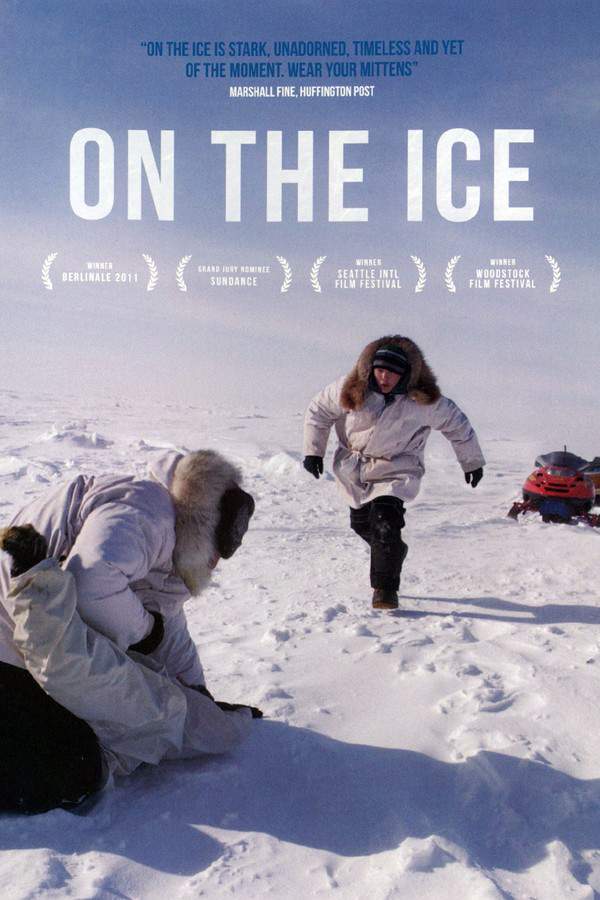
Starring Lyudmila Ivanova, with performances by Doskhan Zholzhaksynov, Tokon Daiyrbekov, Aleksandr Sasykov, and Bayarta Dambayev, this film unfolds in two distinct parts that together offer a patient, respectful portrait of a coastal people’s life and beliefs.
The first part unfolds as a documentary set in Sakhalin, the homeland of the Nivkh. It pauses to illuminate daily life and local culture in a series of intimate vignettes. The film observes how families live in compact, crowded houses that cluster along the shore, and it presents glimpses of social customs and hard realities that shape a small community. Scenes hint at the gravity of traditional practices, including the weight of honor within relationships, and the community’s deep connection to the land and sea. There are rugged, almost ceremonial moments of bear hunting and bear-related rites that feel like living traditions rather than distant folklore. We watch as the tribe engages in dances that carry memory and meaning, and as chants and spells are shown as a part of the fabric of everyday life. Throughout, the filmmaker aims to present the Nivkh with honesty, letting viewers witness how they hunt, work, celebrate, and navigate a world where the sea is both provider and peril.
The second part shifts into narrative territory, drawing on a story by Aitmatov. A boat is crafted through the resourcefulness of the elder generation and the collaboration of the family—an act that stands as a testament to intergenerational knowledge and communal labor. A ten-year-old boy accompanies his father, uncle, and grandfather on fishing and seal-hunting excursions, experiencing the cadence of sea-work and kinship in close, lived detail. But the voyage soon meets a terrible test: a veil of mist descends, the sea mists into a fierce storm, and the shore slips away from their sight. Dehydration and dwindling drinking water amplify the danger as the small crew confronts a life-or-death choice. In a heartrending act of sacrifice, the men put themselves into the water one by one to spare the child, a stark, humane decision that underscores themes of family duty, courage, and the perilous equilibrium between life and sea.
Throughout the film, the tension between landbound tradition and sea-borne peril is rendered in a quiet, observational mode that resists melodrama. The cinematic approach allows textures—the roughness of weathered wooden houses, the sound of waves, the rhythms of fishing and ritual—to carry emotional weight. The narrative honors both the intimate, documentary glimpses of Nivkh life on Sakhalin and the mythic, moral resonance of a grandfather’s grand plan and a boy’s first encounters with the sea. By weaving these two strands together, the film offers a contemplative exploration of survival, memory, and the bonds that sustain a community when the ocean tests their limits.