Plot Explained Spoilers guaranteed!
Plot Explained

Browse by genre

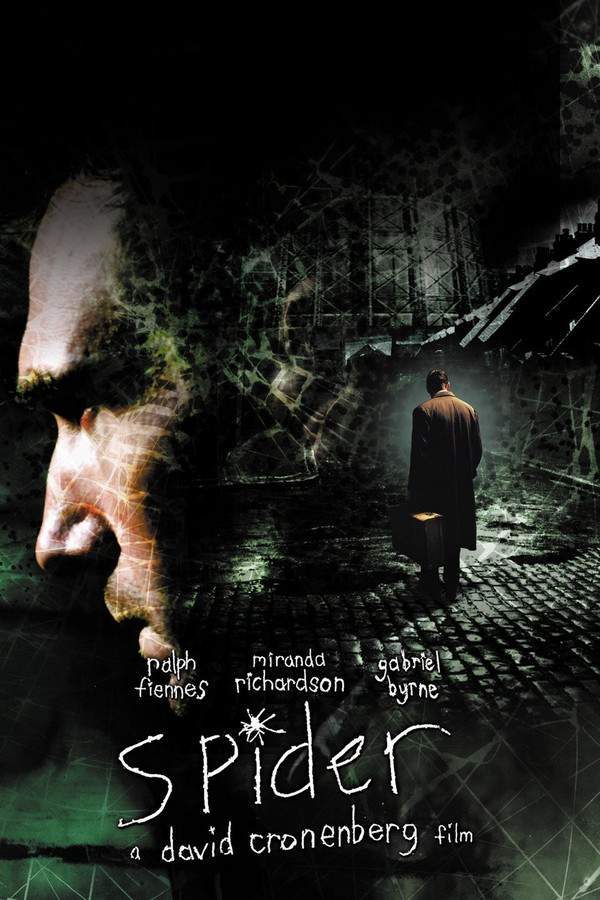
Spider (2002) movie poster

Plot Summary

Spider (2002) Plot Summary Explained

Release, runtime and language
2002 · 98 min · English
Loading streaming availability…
Directed by
David Cronenberg
Starring
Ralph Fiennes, Miranda Richardson, Gabriel Byrne
Budget
$10M

Dennis "Spider" Cleg is released from decades of confinement and finds himself struggling to adjust to life at Mrs. Wilkinson's halfway house. His already fragile mental state deteriorates as fragmented memories of his troubled childhood begin to resurface. Haunted by his past, Spider must confront the dark secrets and trauma that led to his incarceration, threatening to shatter his sense of reality.

On this page (6)
  1. 1 Where to watch
  2. 2 What happens: full plot
  3. 3 Plot questions answered
  4. 4 Movie threads
  5. 5 Movies like Spider
  6. 6 Every angle
Loading streaming availability…

Full plot summary · contains spoilers

What Happens in Spider: Full Plot Summary

The whole story of Spider (2002) explained, from the opening scene to the final frame: every key event, every twist and what it all adds up to. Read it as a quick recap before the sequel, to check a scene you missed, or to finally understand what really happened.

Peter Parker, portrayed by Ralph Fiennes, is a socially awkward senior in high school living in the bustling metropolis of New York City. Tragically orphaned, he resides with his caring Uncle Ben and Aunt May. His affection for his neighbor, Mary Jane Watson, is complicated by the bullying he endures from her boyfriend, Flash Thompson, and his clique. Despite his rich background, his friend Harry Osborn struggles with being an outcast and harbors jealousy towards Peter, who gains the admiration of Harry’s father, Norman, the CEO of Oscorp.

During a field trip to a genetics lab, Peter encounters a genetically modified spider that bites him, triggering a profound transformation. While he initially wakes up feeling revitalized and stronger, other strange abilities like web-slinging manifest when he goes to school the following day. However, the most ironic twist comes from a wrestling challenge where he hopes to fund his desire for a car to impress Mary Jane. Confronted by Uncle Ben's words about using powers responsibly, Peter disregards Ben's advice, leading to tragic consequences when a robber kills his uncle.

As the narrative progresses, Peter adopts his superhero persona, Spider-Man, finding purpose in fighting crime. Yet, he faces resistance from J. Jonah Jameson of the Daily Bugle who initially ridicules Spider-Man until he realizes the financial potential of exploiting the hero's fame. Meanwhile, Norman's madness begins to take hold, leading him to become the formidable Green Goblin after a scarring encounter with his own experimental formula.

The Goblin's violent tendencies ramp up as he attacks a public fair and targets Mary Jane, sparking a dangerous rivalry between him and Spider-Man. While Mary Jane develops feelings for Spider-Man, Peter is tortured by his inability to reveal his true identity. This tension escalates as the Goblin takes Mary Jane hostage, forcing Spider-Man into a heart-wrenching choice between saving her and a trolley car full of innocent lives.

Their climactic battle reveals Norman's connection to the Goblin, leading to tragic confrontation outcomes. A final showdown leaves Norman dead, plunging Peter into sorrow, especially as Harry vows vengeance against Spider-Man, believing him responsible for his father's demise. In a poignant moment at Uncle Ben's grave, Peter grapples with his dual life and realizes that his responsibilities as Spider-Man will forever affect his personal relationships, leaving him with the haunting question of his own identity: "Who am I? I'm Spider-Man."

Last updated: November 15, 2024 at 20:37

Was this helpful?

Plot questions answered

Spider Plot Explained: Your Questions Answered

The questions people ask most about Spider (2002): what happens in the confusing scenes, why the characters do what they do, the twists, hidden details and what the ending means. Each answer contains spoilers.

Q1

Why does Peter ignore Uncle Ben's advice about using his powers responsibly?

Peter ignores Uncle Ben's advice because he's desperate to earn money quickly to buy a car and impress Mary Jane. He enters a wrestling competition believing fame and fortune will solve his problems. This arrogance and tunnel vision leads to tragic consequences when he lets a robber pass him by, and that same robber later kills Uncle Ben. The loss teaches Peter that power comes with responsibility.

Foreshadowing: Earlier, Peter dismisses his aunt and uncle's financial struggles as 'not his problem,' showing his self-centered mindset before the tragedy.

  • uncle ben death
  • peter parker responsibility
  • spider man origin
  • power and responsibility
Q2

How does Peter Parker become Spider-Man?

Peter becomes Spider-Man after being bitten by a genetically modified spider during a school field trip to a genetics lab. The spider bite triggers a profound transformation, granting him superhuman abilities including enhanced strength, speed, agility, wall-crawling, and the ability to shoot web from his wrists. He initially discovers these powers the next day when he wakes up feeling stronger than ever.

  • spider bite origin
  • peter powers
  • how spider man began
  • transformation
Q3

Why does the Green Goblin attack Mary Jane?

The Green Goblin targets Mary Jane specifically to hurt Spider-Man psychologically. After discovering Spider-Man's secret identity, Norman Osborn uses Mary's connection to Peter as a strategic weakness. The Goblin takes her hostage during a climactic confrontation, forcing Spider-Man into an impossible choice between saving her or a trolley car full of innocent people. It's a deliberate attempt to break Spider-Man mentally and physically.

Foreshadowing: The Goblin's attack on the public fair already demonstrates his willingness to use civilians as pawns against Spider-Man.

  • green goblin mary jane hostage
  • villain motivation
  • spider man villain plan
Q4

Why does Norman Osborn become the Green Goblin?

Norman Osborn transforms into the Green Goblin due to his experimental formula at Oscorp. Desperate to prove himself as a businessman and protect his company, Norman tests an unstable performance-enhancing serum on himself. The formula works initially but causes severe mental deterioration, triggering violent psychosis that manifests as the Green Goblin. His madness escalates throughout the film, turning him into a dangerous villain.

Foreshadowing: Norman is shown struggling with the pressures of running Oscorp and impressing the board, showing his vulnerability to desperate measures.

  • norman osborn green goblin origin
  • oscorp formula
  • goblin transformation
  • harry osborn father
Q5

Why does Harry Osborn blame Spider-Man for his father's death?

Harry blames Spider-Man for Norman's death because he witnessed the final battle between Spider-Man and the Green Goblin without knowing both identities. Harry sees his friend Peter standing by as Norman dies, and Harry doesn't realize Peter was actually Spider-Man fighting to save Norman's life. Harry's grief and lack of context fuel his vow for vengeance against Spider-Man, believing the hero murdered his father.

Foreshadowing: Harry's jealousy toward Peter throughout the movie creates underlying tension that makes his misunderstanding more tragic.

  • harry osborn revenge
  • spider man osborn conflict
  • father death误会
Q6

What impossible choice does Spider-Man face with Mary Jane and the trolley?

The Green Goblin forces Spider-Man to choose between saving Mary Jane, whom he's dangling from a girder, or rescuing a trolley car full of innocent children. The Goblin knows Spider-Man won't be able to save both, designed to break his moral code. Spider-Man manages to save Mary Jane first, then uses his web to catch the trolley before it falls, demonstrating his heroism despite the impossible situation.

  • trolley choice dilemma
  • spider man saved mary jane
  • heroic sacrifice
  • spider man trolley scene
Q7

Why can't Peter reveal his secret identity to Mary Jane?

Peter cannot reveal his identity to Mary Jane because he fears putting her in danger. After the Green Goblin specifically targets her to hurt Spider-Man, Peter believes knowing his secret would make her a target for all his enemies. This creates constant tension in their relationship, as Mary Jane senses Peter is keeping something from her while he watches her develop feelings for his superhero alter ego.

  • spider man secret identity
  • mary jane relationship
  • peter parker disguise
  • double life
Q8

How does Uncle Ben's death change Peter Parker?

Uncle Ben's death transforms Peter from a selfish, awkward teenager into a responsible superhero. The guilt of having the power to stop the robber but choosing not to, combined with losing the parental figure who taught him about responsibility, drives Peter to dedicate his life to fighting crime. He channels his grief into purpose, using his powers to protect others so no one else suffers like he did.

Foreshadowing: Peter's initial refusal to stop the robber directly mirrors his earlier refusal to use his powers to help others without personal gain.

  • uncle ben murder
  • peter guilt
  • spider man motivation
  • becoming hero
Q9

Why does J. Jonah Jameson oppose Spider-Man?

J. Jonah Jameson initially ridicules Spider-Man because he believes masked vigilantes are dangerous and uncontrollable. As editor of the Daily Bugle, Jameson sees Spider-Man as a threat to law and order. However, he later exploits Spider-Man's fame for profit by publishing photos of the hero, showing he's more motivated by money than journalistic integrity.

  • daily bugle jameson
  • spider man media
  • journalism spider man
Q10

What realization does Peter come to at Uncle Ben's grave?

At Uncle Ben's grave, Peter realizes that being Spider-Man means sacrificing his personal happiness forever. He understands that his responsibility to protect New York City comes at the cost of normal relationships, a normal life, and any chance at simple happiness with Mary Jane. The ending leaves him haunted by his dual identity, questioning who he truly is: 'Who am I? I'm Spider-Man.'

  • spider man identity crisis
  • final scene meaning
  • uncle ben grave scene
  • hero sacrifice ending

Movie threads

More Movies Like Spider, by Mood & Story

Curated lists built around what makes Spider tick: the same mood, the same kind of story or the same emotional payoff. Each list explains why these movies belong together.

Movies with an unreliable narrator like Spider

Stories where a character's fragile psyche blurs the line between memory and delusion. If you enjoyed the psychological unraveling in Spider, this collection features movies like it where the protagonist's grip on reality is tenuous. Discover similar stories of fragile minds, distorted memories, and the haunting struggle to separate truth from traumatic delusion.

  • psychological
  • anxious
  • brooding
  • unsettling
  • somber
  • claustrophobic
  • Tone: dark, tense, somber
  • Pacing: deliberate, psychological
Why these movies?

The story pattern: Narratives in this thread are typically told through the distorted lens of a mentally troubled protagonist. The plot unfolds as a psychological puzzle, where past traumas intrude upon the present, and the audience must discern objective reality from the character's paranoid or guilt-ridden perceptions. The journey is often one of confronting a painful past that has been buried or rewritten.

Why they belong together: These films are grouped by their central use of an unreliable narrative perspective, creating a pervasive sense of psychological unease. They share a dark, introspective tone, a deliberate pacing that allows dread to build, and a heavy emotional weight centered on trauma, memory, and identity.

Bleak stories of isolation and trauma like Spider

Solitary characters haunted by past demons in grim, oppressive settings. This list features movies like Spider that explore themes of profound isolation and confronting trauma. If you were captivated by its bleak atmosphere and a solitary protagonist grappling with a painful past, you'll find similar stories of grief, guilt, and haunting memories here.

  • lonely
  • grief-stricken
  • bleak
  • somber
  • tragic
  • tense
  • Tone: bleak, somber, tragic
  • Pacing: steady, introspective
Why these movies?

The story pattern: The narrative pattern follows a character, often recently released from an institution or returning to a place of past pain, who is consumed by isolation. The bleak setting mirrors their internal state as they are relentlessly pursued by memories of a specific tragedy or guilt. The plot is a downward spiral into their psyche, culminating in a confrontation that is as much internal as external.

Why they belong together: These movies share a cohesive vibe defined by a dark, somber tone, heavy emotional weight, and a pervasive sense of loneliness. The pacing is often steady or slow-burn, focusing on the psychological deterioration of a single character within an oppressive atmosphere, making the experience intensely introspective and unsettling.

If you liked this

Movies Like Spider

Similar movies to Spider: the same genre, themes or kind of story. Each one comes with its own plot summary, timeline and ending explained.

Browse all movie summaries

Every angle

Spider (2002) Explained: Plot, Timeline & Characters

Everything about Spider in one place: what happens in the plot summary, the timeline in chronological order, the characters and meaning and a spoiler-free summary. What's After the Movie adds the cast, box office and post-credit scenes.

Coming soon on iOS and Android

The Plot Explained Movie Summary App

Plot summaries, endings explained and timelines on your phone. Catch up on any movie in minutes, save your favorites and never miss a twist again.

Be the first to know when we launch. Your email stays private, always.

Learn more about the app