







Plot Explained Spoilers guaranteed!
Plot Explained

Browse by genre

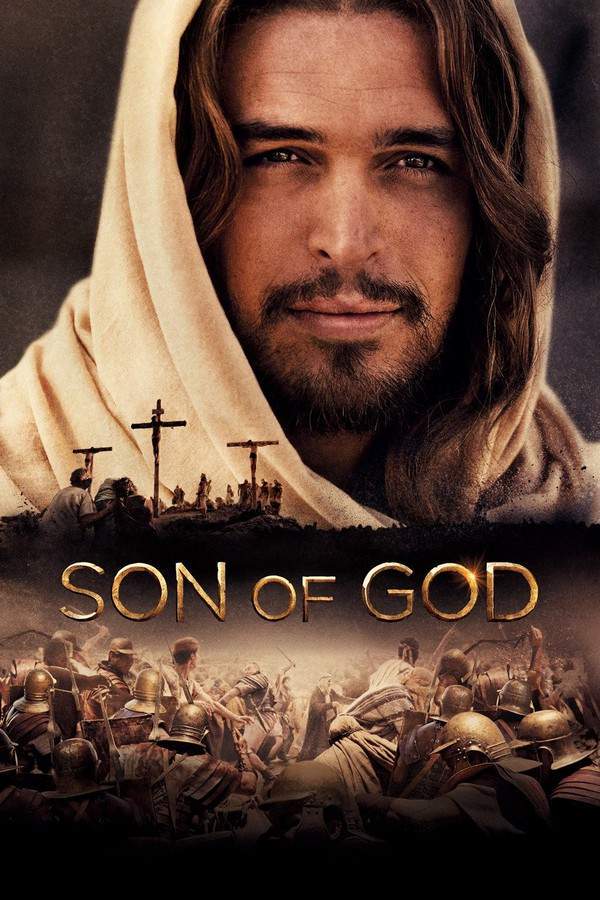
Son of God (2014) movie poster

Timeline

Son of God (2014) Timeline Explained – Every Event in Order

Release, runtime and language
2014 · 138 min · English
JustWatch #9,968 2
Directed by
Christopher Spencer
Starring
Diogo Morgado, Amber Rose Revah

In ancient Judea, the Roman rule creates unrest among the Jewish people. High Priest Caiaphas attempts to control the growing discontent while Roman governor Pontius Pilate enforces his authority. The arrival of Jesus in Jerusalem brings miracles and a message of love, which challenges the established order and fuels fears of rebellion. As the potential for uprising intensifies, a dangerous plan emerges to eliminate Jesus and prevent chaos.

On this page (6)
  1. 1 Where to watch
  2. 2 Events in order (15)
  3. 3 Timeline questions answered
  4. 4 Movie threads
  5. 5 Movies like Son of God
  6. 6 Every angle

Where to watch

Where to Watch Son of God (2014)

Where can you watch Son of God? Stream, rent or buy it in the US, including on Hoopla, Amazon Video and Apple TV Store: current JustWatch availability with up-to-date prices.

Streaming availability powered by JustWatch

15 events in order · contains spoilers

Son of God Timeline: Events in Chronological Order

Every key event of Son of God (2014) in order, scene by scene, with when and where it takes place. Use it to untangle flashbacks, time jumps and parallel storylines, to refresh your memory before the sequel or to find the exact scene you are thinking of.

  1. The Birth of Jesus

    The story begins with the miraculous birth of Jesus, which is celebrated and recognized by three wise men. They herald Him as the future King, signaling His divine purpose and the beginning of a significant spiritual journey.

  2. Jesus Begins His Mission

    After thirty years, an adult Jesus embarks on His mission in Galilee, gathering a group of followers who would later be known as His disciples. This marks the commencement of His impactful teachings and miraculous works.

    Where
    Galilee
  3. Recognition as the Messiah

    As Jesus performs miracles and shares profound wisdom, He captivates a large audience, where many begin to recognize Him as the long-awaited Messiah. This rising recognition, however, irritates the Jewish religious leaders.

  4. Conflict with the Pharisees

    Jesus’s growing popularity leads to accusations of blasphemy by the Pharisees, who are angered by His forgiving of sins. In a bold proclamation of His identity, Jesus declares Himself the Son of God, intensifying the conflict.

  5. Entry into Jerusalem

    As Passover approaches, Jesus instructs His disciples to go to Jerusalem, where He is welcomed with great fanfare. The crowd lays palm branches at His feet, creating a spectacle that instills fear in the high priest Caiaphas and the Roman authorities.

    Where
    Jerusalem
  6. Cleansing the Temple

    Upon entering the temple, Jesus sees the money changers exploiting worshippers, prompting Him to turn over their tables. This act earns Him admiration from the people but escalates tensions with the Pharisees.

    Where
    Temple in Jerusalem
  7. Judas's Betrayal

    In a secretive meeting, Judas Iscariot, one of the twelve disciples, agrees to betray Jesus after negotiating with the Pharisees for thirty pieces of silver. This sets in motion a chain of events leading to Jesus’s arrest.

  8. The Last Supper

    On the eve of Passover, during their final supper together, Jesus reveals that one of His disciples will betray Him. The atmosphere is heavy with tension as Jesus prepares for what is to come.

  9. The Arrest in Gethsemane

    Later that night, in the peaceful Garden of Gethsemane, Judas approaches Jesus and betrays Him with a kiss. This leads to Jesus's arrest, and the remaining disciples scatter in fear, marking a pivotal moment of betrayal.

    Where
    Garden of Gethsemane
  10. The Trial Before Caiaphas

    Caiaphas convenes a trial in secret, far from public scrutiny, to judge Jesus. During this hurried meeting, Jesus confirms His divine identity with the statement 'I am,' sealing His fate in the eyes of the religious leaders.

  11. Public Declaration of Guilt

    The next day, with a crowd gathered, Caiaphas publicly declares Jesus guilty of blasphemy and sentences Him to death. At the same time, Judas, filled with remorse, attempts to return the silver he received for the betrayal.

  12. Trial Before Pilate

    Caiaphas turns Jesus over to the Roman authorities to ensure the execution is carried out without public uproar. Pilate, after questioning Jesus and finding no violation of Roman law, orders Him to be lashed and offers to release a prisoner.

  13. Crucifixion of Jesus

    Amidst the crowd's decision between Jesus and Barabbas, Pilate washes his hands of the event before proceeding with Jesus’s crucifixion. Jesus is led to Golgotha, where He is nailed to the cross, enduring unimaginable suffering.

    Where
    Golgotha
  14. The Resurrection

    On the third day, Mary Magdalene discovers the empty tomb and encounters the resurrected Jesus. She hurriedly informs the disciples, who are initially skeptical until Jesus appears to them, affirming their faith.

  15. The Ascension

    Forty days following His resurrection, Jesus provides final instructions to His disciples to spread His teachings across the world. He then ascends into Heaven, leaving the disciples to continue His mission.

Last updated: October 25, 2024 at 11:55

Was this helpful?

Timeline questions answered

Son of God Timeline Explained: Your Questions Answered

When does it happen, and why in that order? The questions people ask about the chronology of Son of God (2014): time jumps, flashbacks, cause and effect between scenes and the correct order of events, each answered with spoilers.

Q1

Why did Judas betray Jesus?

Judas betrayed Jesus because he believed Jesus had overstepped His bounds by claiming divine authority. The Pharisees offered him thirty pieces of silver to identify Jesus, and Judas may have hoped this would force Jesus to declare His kingdom openly. When Judas realized Jesus would be executed, he was overcome with remorse and tried to return the silver before taking his own life.

Foreshadowing: Earlier, Jesus had warned His disciples at the Last Supper that one of them would betray Him, creating tension even before Judas's action.

  • judas betrayal
  • thirty pieces of silver
  • disciple betrayal
  • why judas betrayed
Q2

Why did the high priest Caiaphas want Jesus killed?

Caiaphas feared that Jesus's growing popularity and claimed divinity would provoke a Roman crackdown. Earlier, Pilate had warned Caiaphas that any uprising during Passover would result in severe consequences for the Jewish people. Caiaphas believed eliminating Jesus was necessary to prevent Roman retribution and maintain peace, even though he personally considered Jesus a threat to Jewish religious authority.

Foreshadowing: Caiaphas's fear was evident when Jesus entered Jerusalem triumphantly, causing the high priest to worry about crowd unrest.

  • caiaphas
  • high priest
  • jewish leadership
  • roman authority
  • fear of rebellion
Q3

Why did Pontius Pilate order Jesus crucifixion if he found no guilt?

Pilate found no basis for criminal charges against Jesus and even declared Him innocent. However, Caiaphas manipulated the crowd to demand Barabbas's release, threatening a riot during the sensitive Passover period. Faced with potential unrest and lacking support from the crowd, Pilate chose to satisfy the mob rather than risk rebellion, washing his hands of the matter to appear blameless while authorizing the execution.

Foreshadowing: Pilate's earlier warning to Caiaphas about maintaining order during Passover created the pressure that led to this outcome.

  • pilate
  • roman governor
  • crucifixion
  • roman law
  • crowd manipulation
  • political pressure
Q4

Why did the crowd choose Barabbas instead of Jesus?

The crowd chose Barabbas over Jesus because Caiaphas and the religious leaders strategically manipulated them. Caiaphas persuaded the crowd to demand Barabbas's release, portraying Jesus as a threat to Roman rule. This was a calculated move to ensure Jesus would be crucified while appearing to follow the traditional Passover prisoner release.

  • barabbas
  • crowd choice
  • passover
  • manipulation
  • pharisees
Q5

Why did Judas kill himself after betraying Jesus?

Judas experienced overwhelming remorse after betraying Jesus. He tried to return the thirty pieces of silver to the chief priests, saying he had betrayed innocent blood. When the priests refused to accept the money, Judas threw it down in the temple and left, later hanging himself out of despair.

Foreshadowing: At the Last Supper, Jesus revealed He knew about the betrayal, showing His awareness of Judas's impending action.

  • judas remorse
  • suicide
  • thirty pieces of silver
  • guilt
  • betrayal consequences
Q6

What did Jesus mean when He said 'I am'?

When Jesus declared 'I am' during His trial before Caiaphas, He was directly claiming divine identity, invoking God's name from the burning bush encounter with Moses. This explicit statement of being the Son of God was considered blasphemy by the religious leaders, forming the basis for their demand for execution.

Foreshadowing: Throughout His ministry, Jesus had made indirect claims about His divine relationship with the Father, building toward this definitive declaration.

  • i am
  • divine identity
  • son of god
  • blasphemy
  • jesus claims
Q7

Why did the disciples abandon Jesus after His arrest?

The disciples fled in fear when the armed crowd arrived to arrest Jesus in Gethsemane. Despite their previous dedication, the presence of soldiers and the sudden nature of the betrayal overwhelmed them. This scattering fulfilled Jesus's prediction that they would all abandon Him, though they would later regroup after the resurrection.

Foreshadowing: Jesus had told His disciples earlier that they would scatter like sheep without a shepherd, preparing them for this moment.

  • disciples fled
  • arrest garden
  • gethsemane
  • fear
  • abandonment
Q8

Why did Thomas doubt the resurrection?

Thomas, known as Doubting Thomas, refused to believe the other disciples' claim that Jesus had risen because he had not seen the resurrected Christ himself. He demanded physical proof, saying he would only believe if he could touch Jesus's wounds. When Jesus later appeared to him, Thomas immediately believed and declared his faith.

Foreshadowing: The other disciples had already received the Holy Spirit when Jesus appeared, though they initially doubted Mary Magdalene's report.

  • thomas doubt
  • doubting thomas
  • resurrection
  • proof
  • faith
Q9

Why did Jesus ascend into heaven?

Jesus ascended into heaven forty days after His resurrection to complete His earthly mission. He gave final instructions to His disciples to spread His teachings worldwide, then rose into the clouds in a deliberate departure, signifying that His physical presence on Earth had ended while His spiritual presence through the Holy Spirit would continue guiding believers.

Foreshadowing: Jesus had previously told His disciples He would return to His Father after completing His work on Earth.

  • ascension
  • heaven
  • forty days
  • final instructions
  • disciples mission
Q10

What is the significance of Jesus resurrection?

The resurrection proved Jesus's divine nature and validated His claim to be the Son of God. It demonstrated that death could not overcome the power of God and established the foundation of Christian faith. After rising, Jesus appeared to His disciples and others over forty days, confirming the truth of His teachings and empowering them to continue His mission.

Foreshadowing: Jesus had predicted His resurrection multiple times, telling His disciples that He would rise on the third day.

  • resurrection
  • empty tomb
  • mary magdalene
  • eternal life
  • divine proof
Q11

Why did the temple curtain tear when Jesus died?

At the moment of Jesus's death, the massive curtain separating the Holy of Holies from the rest of the temple ripped from top to bottom. This event symbolized the removal of the barrier between humanity and God, signifying that Jesus's sacrifice had opened direct access to God for all believers, ending the need for priestly intermediation.

Foreshadowing: Jesus had previously claimed He would destroy the temple and rebuild it in three days, which the religious leaders interpreted as a threat.

  • temple curtain
  • holy of holies
  • sacrifice
  • god access
  • symbolism
Q12

Why did John live longer than the other disciples?

John, the youngest of the disciples, survived the others because he was younger and lived through the period of persecution. According to the film, Jesus appeared to John in exile and promised him that he would not face death but would possess eternal life, making John unique among the disciples who all died for their faith.

Foreshadowing: Jesus had told His disciples they would face persecution, and John was the only one young enough to outlive the others.

  • john disciple
  • disciples death
  • eternal life
  • exile
  • patmos

Movie threads

More Movies Like Son of God, by Mood & Story

Curated lists built around what makes Son of God tick: the same mood, the same kind of story or the same emotional payoff. Each list explains why these movies belong together.

Movies about tragic martyrdom and redemption like Son of God

Stories of profound sacrifice that lead to a hopeful, transformative conclusion. If you were moved by the sacrificial journey and redemptive hope in Son of God, explore these movies. They feature stories of profound martyrdom where a tragic end gives way to a transformative and hopeful resolution, often with deep spiritual or inspirational themes.

  • tragic
  • solemn
  • devotional
  • redemptive
  • hopeful
  • sacrificial
  • Tone: dark, tragic, hopeful
  • Pacing: steady, deliberate
Why these movies?

The story pattern: Stories in this thread typically center on a virtuous or inspirational figure whose actions threaten a powerful establishment. Their persecution and inevitable martyrdom form the tragic climax, but the narrative arc is ultimately defined by the positive legacy, resurrection, or societal change their sacrifice inspires, creating a powerful emotional arc from despair to hope.

Why they belong together: Movies are grouped here for their shared emotional trajectory: a heavy, often dark exploration of suffering and sacrifice that deliberately pivots to a hopeful, redemptive, or triumphant ending. They balance the weight of tragedy with the catharsis of ultimate meaning and victory.


Solemn historical faith epics similar to Son of God

Earnest and heavy dramas about faith challenging powerful institutions. For viewers seeking movies like Son of God, this list features solemn historical dramas. These films depict intense conflicts between unwavering faith and authoritarian rule, sharing a steady pace, heavy emotional weight, and a serious, devotional tone centered on spiritual conviction.

  • solemn
  • devotional
  • historical
  • faith-based
  • serious
  • dramatic
  • Tone: solemn, dark, devotional
  • Pacing: steady, methodical
Why these movies?

The story pattern: The narrative pattern involves a protagonist or central figure whose deeply held beliefs pose a threat to the social or political order. The story unfolds with a steady, deliberate pace, building tension through ideological confrontation rather than fast-paced action, leading to a climactic trial of faith against overwhelming institutional power.

Why they belong together: These films share a coherent vibe defined by a serious tone, steady pacing, and high emotional intensity rooted in spiritual conflict. The focus is on the solemnity of conviction and the heavy cost of challenging authority for one's beliefs, creating a consistently weighty and immersive experience.

If you liked this

Movies Like Son of God

Similar movies to Son of God: the same genre, themes or kind of story. Each one comes with its own plot summary, timeline and ending explained.

Browse all movie summaries

Every angle

Son of God (2014) Explained: Plot, Timeline & Characters

Everything about Son of God in one place: what happens in the plot summary, the timeline in chronological order, the characters and meaning and a spoiler-free summary. What's After the Movie adds the cast, box office and post-credit scenes.

Coming soon on iOS and Android

The Plot Explained Movie Summary App

Plot summaries, endings explained and timelines on your phone. Catch up on any movie in minutes, save your favorites and never miss a twist again.

Be the first to know when we launch. Your email stays private, always.

Learn more about the app