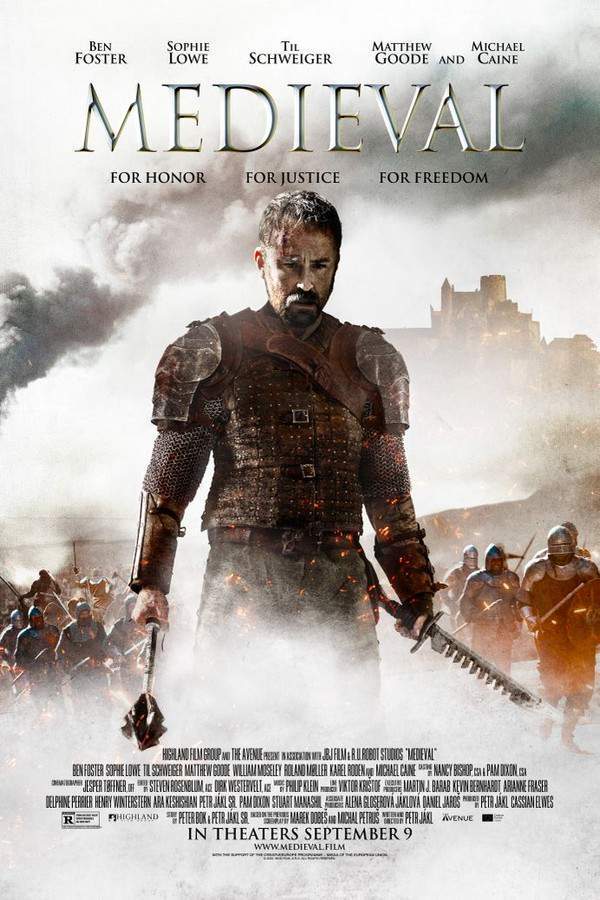
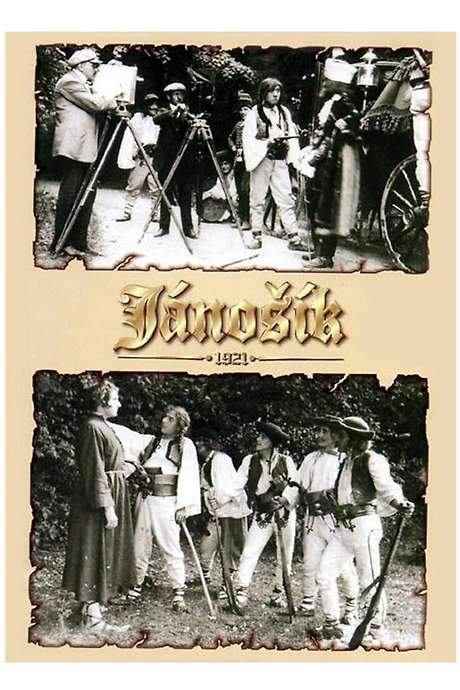
The movie opens with the Provost of the Louňovice monastery, along with the local sacristan and a young novice named Marta, fleeing from a mob of looting Taborites. As they run for safety, they seek refuge in the fortress of Ctibor of Hvozdno, a powerful yeoman who shields them from their pursuers. The trio manages to escape and ultimately find shelter in the castle of Příběnice, where they are joined by the influential Oldřich of Rožmberk. Meanwhile, most of the villagers and Ctibor’s daughter Zdena decide to follow the Taborites as they pass through Hvozdno on their way to Tábor, a city that becomes central to the unfolding conflict. As these villagers reach Tábor, they are warmly received, and Zdena is captivated by one of the Tábor priests, Jan Bydlinský.
The story deepens as the Provost urges Oldřich of Rožmberk to side with King Sigismund of Luxembourg, who is preparing to invade Bohemia at the head of a crusade. Driven by a promise of financial reward, young Rožmberk agrees to attack the weakened town of Tábor. The Provost then departs for Kutná Hora, where he meets with Sigismund and his army, who are planning an invasion of Prague. Meanwhile, Ctibor of Hvozdno returns to Tábor to see his daughter, intensifying tensions between the city’s defenders and the priests of Tábor, who demand to defend themselves against the crusaders, led by the resilient hejtman Jan Žižka, who recommends reinforcing Prague’s defenses. As these events unfold, a fervent group of followers gathers around fanatical priests like Petr Kániš and Jan Bydlinský, who openly rally believers to their cause. Among them, Zdena listens against her father’s wishes, caught in a web of religious zealotry and political turmoil.
In Kutná Hora, the Provost reveals to Sigismund the fragile position of Oldřich of Rožmberk. The Hungarian king, uninterested in negotiations, dismisses the Hussite envoys, a move that prompts Prague’s delegation to desperately seek aid from the rural Hussite camps, especially in South Bohemia. As the tide turns, most Hussites rally to defend Prague, with Žižka assuming leadership. Meanwhile, Ctibor and his nephew Ondřej set out to help the city, but they depart against their father’s will. Zdena, however, chooses to stay in Tábor along with Bydlinský, Kániš, and their followers, illustrating her commitment to her faith and her love for the priest.
The conflict reaches its peak as Oldřich of Rožmberk marches against the beleaguered Tábor with an army supported by the Austrian Duke Albrecht. The besieged city faces harsh odds; yet, the Hussite soldiers, led unexpectedly by Žižka, succeed in thwarting the siege in a daring counterattack. During the battle, the Provost and Sacristan are captured and executed by the Hussites, while Marta and her maid are spared from death through the bravery of young Ondřej. Once the immediate danger is over, divisions within Tábor deepen—radicals led by Kániš burn Zdena and Bydlinský alive in Příběnice, tragic acts of fanaticism that highlight the destructive power of religious extremism. Despite attempts at rescue, Ctibor can do nothing to save his daughter.
The climax of the film features the strategic defense of Vítkov Hill, a critical route to Prague that Žižka and his small forces fortify to withstand the advancing crusader armies. Despite being vastly outnumbered during the final assault, Žižka’s defenders hold firm, ultimately winning when reinforcements arrive from Prague. Their victory deals a decisive blow to Sigismund’s crusade, and the crusaders are defeated, marking a significant turning point in the Hussite Wars. The film concludes with scenes of the victorious Hussites celebrating their hard-fought success, symbolizing resilience and the triumph of faith and unity against overwhelming odds.