Plot Explained Spoilers guaranteed!
Plot Explained

Browse by genre

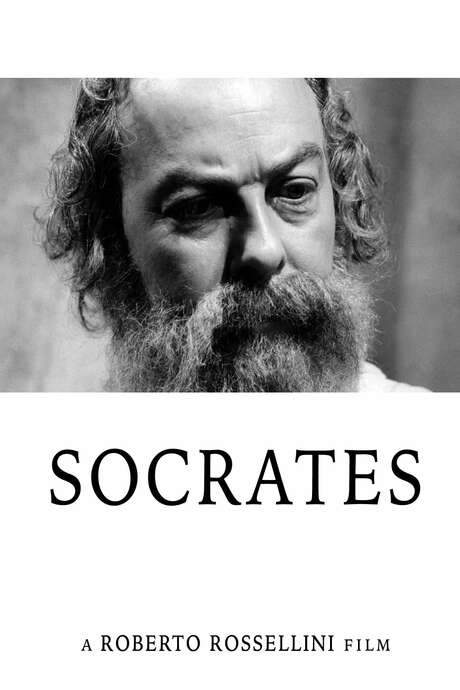
Socrates (1971) movie poster

Characters & Themes

Socrates (1971) Characters, Setting & Themes Explained

Release, runtime and language
1971 · 120 mins · Italian
Loading streaming availability…
Directed by
Roberto Rossellini
Starring
Ricardo Palacios, Anne Caprile, Antonio Medina, Giuseppe Mannajuolo, Jean Sylvère

A false accusation leads the philosopher Socrates to trial and condemnation in 4th century BC Athens.

On this page (8)
  1. 1 Where to watch
  2. 2 Characters explained (5)
  3. 3 Where & when it takes place
  4. 4 Themes & meaning (4)
  5. 5 Character & meaning questions
  6. 6 Movie threads
  7. 7 Movies like Socrates
  8. 8 Every angle
Loading streaming availability…

5 main characters · contains spoilers

Socrates Characters Explained: Who Is Who

The main characters of Socrates (1971), heroes and villains: what drives them, how they change over the course of the story and what each of them reveals about the film's bigger ideas.

  • Socrates (Jean Sylvère)

    Old, stubbornly virtuous philosopher who pursues truth through relentless questioning. He lives in poverty with his family, values the examined life, and faces a hostile political climate with calm resolve, choosing to respect the laws even at the cost of his life.

    • 🧠 Philosopher
    • 💬 Dialogue-driven
  • Santippe (Anne Caprile)

    Xanthippe-like wife who criticizes her husband’s preoccupation with philosophy, viewing it as a waste of time and a burden on the family’s finances. Her rough demeanor highlights the personal strain caused by Socrates’ vocation.

    • 👩 Wife
    • 💬 Domestic tension
  • Platone (Antonio Medina)

    A young disciple who witnesses Socrates’ method and the philosophical debates of his time. He represents the next generation engaging with virtue, knowledge, and the idea that questioning can illuminate truth.

    • 🎓 Student
    • 💬 Dialogue-driven
  • Apollodoro (Giuseppe Mannajuolo)

    A follower of Socrates who participates in the circle of his ideas and the dialogues. He observes the social and political upheavals shaping Athens and the philosopher’s influence on youth.

    • 🗣️ Follower
    • 💬 Dialogue-driven
  • Critone (Ricardo Palacios)

    A loyal friend from Socrates’ circle who urges him to escape prison and avoid death, illustrating the conflict between personal loyalty and respect for law.

    • 👤 Friend
    • ⚖️ Law & Loyalty

Last updated: October 04, 2025 at 18:20

Was this helpful?

Setting

Where and When Does Socrates Take Place?

The setting of Socrates (1971): the year and time period, the places and locations, and how they shape the characters, the mood and the tension of the story.

Time period

404–399 BCE

The film unfolds during a turbulent window in late classical Greece: the fall of Athens' democracy after the Peloponnesian War, the brief reign of the Thirty Tyrants, and the moral climate leading to Socrates' trial and death. It juxtaposes civic collapse with the intimate life of Socrates as he questions virtue and the gods. The time captures a clash between tradition and critical inquiry that defines Socrates' final years.

Location

Athens, Greece

After the Peloponnesian War, Athens is in political and social turmoil. The Spartans' victory and the rise of the Thirty Tyrants plunge the city into fear and faction. The setting juxtaposes impoverished households with public spaces where philosophers challenge received wisdom.

  • 🏛️ Ancient Athens
  • 🗺️ Classical Greece
  • 🏟️ City in turmoil

Last updated: October 04, 2025 at 18:20

Was this helpful?

4 major themes

Socrates Meaning: Themes & Message Explained

What is Socrates (1971) really about? The emotional, social and philosophical themes the film keeps returning to, its symbolism and the message beneath the surface.

  • Philosophy

    Socrates pursues truth through dialogue, challenging assumptions and encouraging others to examine their own beliefs. The film shows how questions can unsettle authority and reveal ignorance as a starting point for learning. It portrays the Socratic method as a collaborative search rather than a lecture, revealing virtue as the route to happiness. The film emphasizes the enduring tension between inquiry and conventional wisdom.

  • Justice

    The narrative centers on judgment—how a city defines right and wrong, and whether a wise man can be accused of corrupting youth. Socrates' defense highlights the conflict between personal integrity and political convenience. The trial exposes how legal systems can become instruments of fear and control under a volatile regime. The portrayal invites reflection on the relationship between law, virtue, and the common good.

  • Democracy

    Athens' political decline provides the backdrop for debates about liberty, authority, and dissent. The film contrasts vibrant philosophical debate with a climate of suspicion and punishment. It shows how populist pressure and military defeat erode civic tolerance. The result is a setting where critical thought is endangered by political fear.

  • Death and Immortality

    Socrates accepts his death with calm inquiry, turning the end into a philosophical dialogue about the soul and its fate. He refuses slights or escape, viewing his life as a continuous rational examination until the last breath. The hemlock becomes a stage for a final discussion with friends about life, death, and the immortality of the soul. The scene emphasizes that true philosophy endures beyond the body's end.

Last updated: October 04, 2025 at 18:20

Was this helpful?

Character & theme questions

Socrates Characters & Meaning: Your Questions Answered

The questions people ask about Socrates (1971): who the characters really are, their relationships, what the symbols mean, where it takes place and what the movie is really about. Each answer contains spoilers.

Q1

What city is the film set in?

The film is set in Athens, Greece, during the late classical period. After the Peloponnesian War and the rise of the Thirty Tyrants, the city is depicted as being in political and social turmoil, with impoverished households contrasted against public spaces where philosophers challenge received wisdom.

  • athens
  • greece
  • setting
  • location
  • ancient city
Q2

When does the story take place?

The story takes place in 404–399 BCE, during a turbulent period in Athens following the city's defeat in the Peloponnesian War. This era encompasses the brief reign of the Thirty Tyrants and leads directly to Socrates' trial and execution.

  • time period
  • 404 bce
  • 399 bce
  • classical greece
  • ancient athens
Q3

What was happening in Athens when Socrates was on trial?

Athens was experiencing political and social collapse after losing the Peloponnesian War to Sparta. The democracy had fallen, replaced briefly by the oligarchic Thirty Tyrants who ruled through fear and faction. This climate of suspicion and punishment created the environment in which Socrates was accused of corrupting youth and impiety.

  • thirty tyrants
  • peloponnesian war
  • athens politics
  • democratic decline
Q4

What philosophical ideas does the film explore?

The film explores Socrates' method of pursuing truth through dialogue, challenging assumptions and encouraging others to examine their beliefs. It portrays the Socratic method as a collaborative search for virtue and knowledge, showing how questioning can unsettle authority and reveal ignorance as a starting point for learning.

  • philosophy
  • socratic method
  • dialogue
  • truth
  • virtue
  • inquiry
Q5

What does the film say about justice?

The film examines how a city defines right and wrong and whether a wise man can be unjustly accused. Socrates' trial highlights the conflict between personal integrity and political convenience, showing how legal systems can become instruments of fear and control under volatile regimes.

  • justice
  • trial
  • corruption
  • law
  • accusation
  • socrates trial
Q6

How does the film portray Athenian democracy?

The film contrasts vibrant philosophical debate with a climate of suspicion and punishment, showing how populist pressure and military defeat eroded civic tolerance. It depicts a democracy in decline where critical thought becomes endangered by political fear, setting the stage for Socrates' execution.

  • democracy
  • athens
  • politics
  • dissent
  • freedom
  • tyranny
Q7

How does the film handle the theme of death?

Socrates accepts his death with calm inquiry, viewing his execution as a final philosophical dialogue about the soul and its fate. He refuses escape, turning the drinking of hemlock into a discussion with friends about life, death, and the immortality of the soul, emphasizing that true philosophy endures beyond the body's end.

  • death
  • immortality
  • soul
  • hemlock
  • execution
  • philosophy
Q8

Who is Socrates in the film?

Socrates is portrayed as an old, stubbornly virtuous philosopher who pursues truth through relentless questioning. He lives in poverty with his family, values the examined life, and faces a hostile political climate with calm resolve, ultimately choosing to respect the laws even at the cost of his life.

  • socrates
  • philosopher
  • protagonist
  • examined life
  • virtue
Q9

Who is Santippe in the story?

Santippe is Socrates' wife, portrayed with a rough demeanor who criticizes her husband's preoccupation with philosophy. She views his work as a waste of time and a burden on the family's finances, highlighting the personal strain caused by Socrates' dedication to his philosophical vocation.

  • santippe
  • wife
  • family
  • conflict
  • marriage
Q10

Who is Platone in the film?

Platone is a young disciple who witnesses Socrates' method and participates in the philosophical debates of the era. He represents the next generation engaging with questions of virtue, knowledge, and the illuminating power of questioning.

  • plato
  • disciple
  • student
  • philosophy
  • youth
Q11

Who is Critone and what is his relationship to Socrates?

Critone is a loyal friend from Socrates' circle who urges him to escape prison and avoid death. He illustrates the conflict between personal loyalty and respect for law, representing those who valued Socrates' life over his principles of civic obedience.

  • critone
  • friend
  • loyalty
  • prison
  • escape
  • conflict

Movie threads

More Movies Like Socrates, by Mood & Story

Curated lists built around what makes Socrates tick: the same mood, the same kind of story or the same emotional payoff. Each list explains why these movies belong together.

Tragic Intellectual Biographies like Socrates

Stories of brilliant minds crushed by the systems they challenged. A collection of movies like Socrates, featuring historical dramas about philosophers, scientists, and artists facing persecution. If you liked the story of Socrates's principled stand against Athenian corruption, you'll appreciate these similar films about brilliant minds confronting overwhelming power.

  • historical
  • tragic
  • philosophical
  • somber
  • thoughtful
  • meditative
  • Tone: somber, dark, philosophical
  • Pacing: slow, deliberate
Why these movies?

The story pattern: Narratives in this thread typically follow a linear path, charting the rise of a singular intellect, the growing conflict with societal or political norms, and the inevitable, devastating fallout. The drama stems from ideological clashes and moral conviction rather than physical action.

Why they belong together: These movies are grouped by their shared focus on a real-life intellectual figure, a slow, deliberate pacing that allows for philosophical exploration, a dark tone rooted in historical injustice, and a profoundly sad ending that emphasizes the cost of principle.

Slow Burn Tragedies of Injustice like Socrates

Where a slow, tense build-up leads to a known, devastating outcome. Discover movies similar to Socrates that master the art of the slow burn tragedy. These films, often based on true stories or well-known events, create a powerful sense of dread as they meticulously build towards an unjust and heartbreaking conclusion, perfect for viewers who appreciated the heavy mood of Socrates.

  • slow burn
  • tense
  • tragic
  • melancholic
  • somber
  • dread
  • Tone: dark, tense, melancholic
  • Pacing: slow burn
Why these movies?

The story pattern: The narrative pattern is one of ominous foreshadowing and escalating tension. The plot unfolds with a sense of grim inevitability, focusing on the psychological and emotional states of characters caught in a rigged system or facing an unstoppable force, leading to a cathartic but sorrowful ending.

Why they belong together: They share a specific emotional recipe: a slow pace that creates a meditative, heavy atmosphere, a high intensity derived from the looming tragic outcome, a dark and somber tone throughout, and a final emotional impact that is deeply sad and morally weighted.

If you liked this

Movies Like Socrates

Similar movies to Socrates: the same genre, themes or kind of story. Each one comes with its own plot summary, timeline and ending explained.

Browse all movie summaries

Every angle

Socrates (1971) Explained: Plot, Timeline & Characters

Everything about Socrates in one place: what happens in the plot summary, the timeline in chronological order, the characters and meaning and a spoiler-free summary. What's After the Movie adds the cast, box office and post-credit scenes.

Coming soon on iOS and Android

The Plot Explained Movie Summary App

Plot summaries, endings explained and timelines on your phone. Catch up on any movie in minutes, save your favorites and never miss a twist again.

Be the first to know when we launch. Your email stays private, always.

Learn more about the app