Plot Explained Spoilers guaranteed!
Plot Explained

Browse by genre

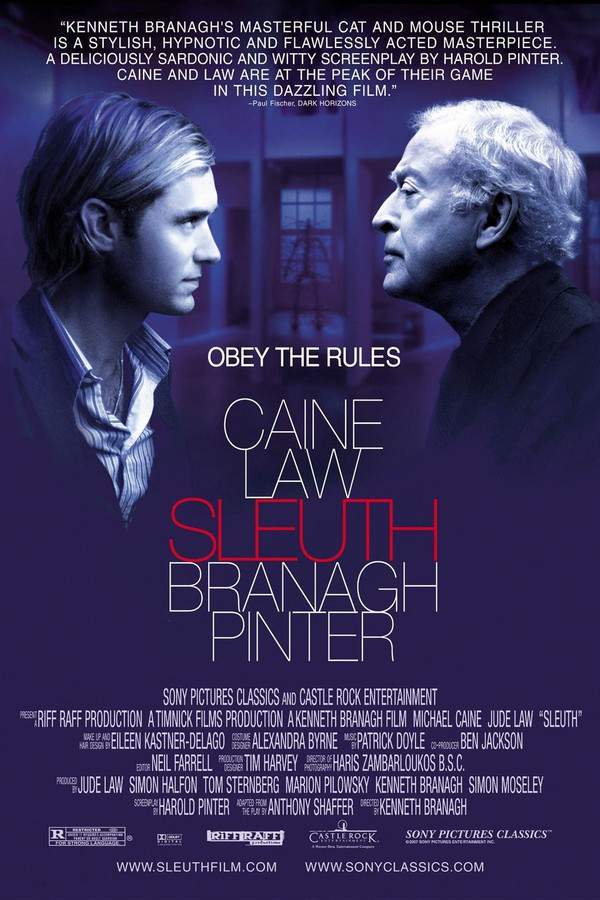
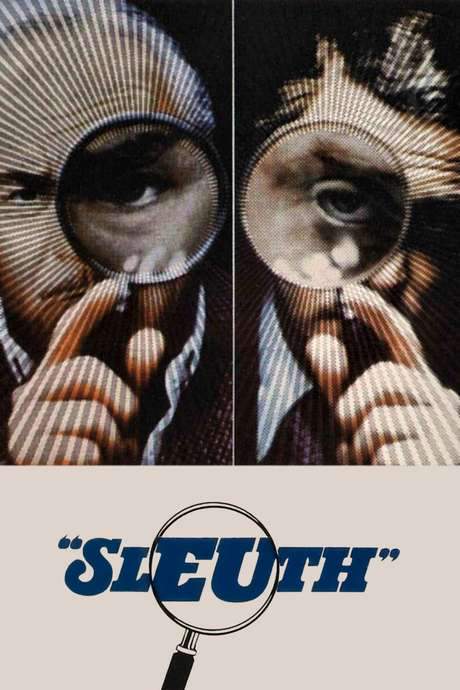
Sleuth (1972) movie poster

Timeline

Sleuth (1972) Timeline Explained – Every Event in Order

Release, runtime and language
1972 · 138 mins · English
Directed by
Joseph L. Mankiewicz
Starring
Michael Caine, Laurence Olivier, John Matthews, Teddy Martin, Eve Channing, Alec Cawthorne

Envisioning the perfect crime, a man obsessed with games and theatrical deception lures his wife’s lover to his home, turning a seemingly simple meeting into an elaborate battle of wits. As each tries to outmaneuver the other, the contest spirals toward increasingly dangerous, potentially lethal consequences.

On this page (6)
  1. 1 Events in order (12)
  2. 2 Timeline questions answered
  3. 3 The book behind the movie
  4. 4 Movie threads
  5. 5 Movies like Sleuth
  6. 6 Every angle

12 events in order · contains spoilers

Sleuth Timeline: Events in Chronological Order

Every key event of Sleuth (1972) in order, scene by scene, with when and where it takes place. Use it to untangle flashbacks, time jumps and parallel storylines, to refresh your memory before the sequel or to find the exact scene you are thinking of.

  1. Wyke invites Milo and pitches the plan

    Andrew Wyke hosts Milo Tindle at his countryside manor and lays out a scheme to settle Marguerite's needs. He proposes that Milo steal valuable jewellery and that Wyke will recoup the loss through an insurance claim. The idea is couched as a kind of dangerous game, signaling the start of a carefully constructed deception.

    When
    Evening
    Where
    Wyke Manor
  2. Milo agrees and the scheme is mapped out

    Milo, who owns two hair salons, agrees to participate to rescue his finances and win Marguerite's favour. Wyke leads him through the plan to fake a burglary, demonstrating how Milo would be framed and how the insurance claim would work. The two men sharpen their roles, treating the affair as another game to outsmart one another.

    When
    Night
    Where
    Wyke Manor
  3. The staged burglary begins

    Wyke and Milo enact the burglary plan, with Milo entering the house and following the elaborate setup. They stage a convincing break-in as Wyke's handpicked narrative of a crime unfolds, and a blank-fired shot is used to suggest an attempted murder. The moment feels like a game reaching its climax as the first scheme appears to succeed.

    When
    Night
    Where
    Wyke Manor
  4. Wyke criticizes Milo and escalates the motive

    During the exchange, Wyke belittles Milo's profession and immigrant background as a weapon in the psychological game. The tension escalates as the two men push toward the final act of the ruse, each trying to outwit the other. The air thick with danger as the plan nears its supposed conclusion.

    When
    Night
    Where
    Wyke Manor
  5. The bogus theft is revealed as a ruse

    In the closing moment of their first game, Wyke pulls a gun on Milo and reveals that the staged burglary was a ruse to frame Milo for murder. The claim is that Milo would be killed just as Wyke intended, and the screen cuts to black, leaving the outcome uncertain until the next sequence.

    When
    Night
    Where
    Wyke Manor
  6. A few days later, Inspector Doppler arrives

    A few days pass and Inspector Doppler arrives to investigate Milo's disappearance. Wyke maintains his composure, insisting he knows nothing, while the inspector begins collecting clues and weighing inconsistencies. The manor becomes a stage for the mounting tension of an impending reckoning.

    When
    A few days later
    Where
    Wyke Manor
  7. Andrew breaks down and confesses the burglary hoax

    Under pressure from Doppler's inquiry, Andrew finally confesses that the supposed 'shooting' was a blunt hoax and not a real murder. The police gather enough evidence to charge him with staging a crime, and Wyke is arrested for the burglary deception. The confession marks a turning point, revealing how deeply the game has spiraled.

    When
    During interrogation
    Where
    Wyke Manor
  8. Doppler reveals himself as Milo and the second game begins

    As Andrew awaits transport, Doppler removes his disguise to reveal himself as Milo in a final twist. He declares that they will play a real murder this time, turning the table and asserting that the score is not settled. The room becomes a battlefield as both men prepare for a second, more dangerous game.

    When
    Moment of reveal
    Where
    Wyke Manor
  9. Milo claims Téa's murder and planted clues

    Milo asserts that he fatally strangled Téa and planted incriminating evidence throughout the house to seal Andrew's fate. He hints the police will soon uncover the setup, and Téa's flatmate Joyce has been kept in the loop. Andrew's sense of control falters as the second game looms.

    When
    Shortly after the reveal
    Where
    Wyke Manor
  10. Joyce confirms Téa's death and Téa's status becomes ambiguous

    Joyce reveals Téa is dead, adding a layer of urgency to the investigation and complicating Milo's claims. Andrew frantically searches for the supposed planted evidence, trying to salvage his reputation. The atmosphere thickens with the sense that the truth is closer yet still out of reach.

    When
    Shortly after
    Where
    Wyke Manor
  11. Téa's death is revealed as a fake payback

    Milo reveals that Téa's death was faked as payback for the humiliations Andrew has inflicted on Téa, and that Téa herself was complicit with Joyce. The plan resets again, forcing Andrew to confront another layer of deception and to rethink his own gamemanship. The police are tipped off and on their way.

    When
    Following the reveal
    Where
    Wyke Manor
  12. The final confrontation ends in murder and the toy room outbreak

    The escalating confrontation culminates in Andrew fatally shooting Milo, who lies dying as the police close in. Milo tells Andrew to tell the officers that 'it was just a bloody game' and then triggers the automata control box. The manor erupts with the cacophony of activated toys as officers pound at the door.

    When
    Moments after the shooting
    Where
    Wyke Manor

Last updated: October 09, 2025 at 09:34

Was this helpful?

Timeline questions answered

Sleuth Timeline Explained: Your Questions Answered

When does it happen, and why in that order? The questions people ask about the chronology of Sleuth (1972): time jumps, flashbacks, cause and effect between scenes and the correct order of events, each answered with spoilers.

Q1

Why does Andrew Wyke ask Milo to stealjewellery from his own house?

Wyke uses the jewelry theft as an elaborate trap to frame Milo for murder. He claims he wants Milo to steal valuable pieces so Wyke can collect insurance money, but the real purpose is to lure Milo into a situation where Wyke can destroy him psychologically and legally. The entire scheme is a game designed to punish Milo for having an affair with Wyke's wife.

Foreshadowing: Wyke's initial invitation is framed as hospitality but feels like a trap from the start, with the manor itself acting as a chessboard.

  • wyke
  • milo
  • jewellery
  • theft
  • insurance
  • frame
  • murder
Q2

Why does Andrew Wyke pull a gun on Milo during the staged burglary?

Wyke reveals that the entire burglary was a fabricated scenario to frame Milo for murder. The gun is loaded with blanks, but Wyke's intention is to make Milo experience the terror of near-death and then charge him with attempted murder. This is Wyke's way of demonstrating intellectual superiority and punishing Milo for his relationship with Marguerite.

Foreshadowing: Wyke's earlier taunts about Milo's profession and background foreshadow his deep-seated need to dominate and humiliate.

  • wyke
  • milo
  • gun
  • staged
  • burglary
  • frame
  • murder
Q3

How does Milo manage to impersonate Inspector Doppler?

After the initial confrontation, Milo disappears for several days, allowing him to obtain a police uniform and forge the credentials of Inspector Doppler. The disguise is convincing enough that Wyke initially accepts him as a genuine investigator. Milo uses the fake identity to turn the tables on Wyke, gaining access to the manor under the guise of law enforcement while secretly orchestrating his revenge.

Foreshadowing: The timeline mentions a gap of several days between the staged confrontation and the inspector's arrival, giving Milo time to plan the impersonation.

  • milo
  • doppler
  • disguise
  • impersonate
  • police
  • inspector
Q4

Is Téa actually dead or is her death faked?

Téa's death is completely faked. Milo claims to have strangled her and planted evidence in Wyke's house, but the revelation comes when Joyce (Téa's flatmate) confirms Téa's death on the phone. Later, Milo admits the entire murder was fabricated as payback for the humiliations Wyke inflicted on Téa. Both Téa and Joyce participated willingly in the deception.

Foreshadowing: Milo's claim about Téa comes immediately after he gains the upper hand by revealing his identity as the fake inspector.

  • tea
  • death
  • faked
  • milo
  • joyce
  • revenge
  • payback
Q5

Why does Milo fabricate Téa's murder?

Milo engineers Téa's fake death as revenge for how Wyke mistreated her. Wyke had humiliated Téa, and she revealed to Milo that Wyke is impotent, information designed to wound him at his most vulnerable point. By faking Téa's murder and planting evidence in the house, Milo creates a scenario that would destroy Wyke's reputation and potentially send him to prison, escalating their psychological warfare to its peak.

Foreshadowing: Téa's earlier role as Wyke's glamorous mistress establishes her as someone also wronged by Wyke's arrogance.

  • milo
  • tea
  • fake
  • murder
  • revenge
  • humiliation
  • wyke
Q6

Why does Andrew Wyke shoot Milo at the end?

Wyke shoots Milo because he has been pushed beyond psychological endurance. Milo has systematically dismantled Wyke's control by exposing his vulnerabilities, revealing the fake Téa murder, and suggesting the police are closing in. The final revelation, that Téa told Milo about Wyke's impotence, targets Wyke's deepest insecurity. Overwhelmed and desperate, Wyke fires the gun, killing Milo as the police arrive.

Foreshadowing: The automata and mechanical toys throughout the house represent Wyke's need for control, which is systematically dismantled before his final violent act.

  • wyke
  • shoots
  • milo
  • ending
  • death
  • police
  • impotence
Q7

What does Milo mean when he says it was 'a bloody game' at the end?

Milo's final line encapsulates the film's central theme, that both men treated ruin and humiliation as entertainment. Despite destroying each other emotionally and physically, Milo views the entire ordeal as a game that Wyke ultimately lost. The phrase reflects Milo's sardonic satisfaction in having outmaneuvered Wyke, even though he dies in the process. It also underscores how both characters valued winning their psychological battles more than their own survival.

Foreshadowing: The entire narrative is structured as a series of games with shifting rules, where both men believe they are the master manipulators.

  • milo
  • bloody game
  • meaning
  • theme
  • manipulation
  • revenge
Q8

What is the purpose of the automata and mechanical toys in Wyke's house?

The automata represent Wyke's obsession with control, order, and theatrical performance. He designs games within games, treating life as a series of orchestrated scenarios where he holds all the strings. The mechanical toys, clanging and wheezing in the background, symbolize his desire to manipulate people like puppets. In the ending, when Milo triggers the control box, the automata's cacophony underscores Wyke's complete psychological collapse; his carefully constructed world of control descends into chaos.

Foreshadowing: The manor is described as conspiring with the deception, with its mazes of passages and ornate foolishness reflecting Wyke's theatrical mind.

  • automata
  • toys
  • manor
  • control
  • chaos
  • symbolism
  • wyke
Q9

Why do both Wyke and Milo continue playing these dangerous games?

Both men are driven by wounded pride and a desperate need to prove intellectual superiority. Wyke cannot accept being outwitted by someone he considers his social inferior, a hairdresser with immigrant roots. Milo refuses to be humiliated without response, seeing the games as a path to financial security and revenge. Neither can walk away because admitting defeat would mean acknowledging their own vulnerability, which neither character's ego allows.

Foreshadowing: The constant class-based insults throughout the narrative fuel the escalating psychological warfare between the two men.

  • wyke
  • milo
  • pride
  • ego
  • revenge
  • game
  • humiliation
  • class
Q10

Why does Milo agree to participate in Wyke's jewellery theft scheme?

Milo agrees because he sees it as an opportunity to secure his financial situation and maintain his relationship with Marguerite. As a two-salon entrepreneur without substantial wealth, Milo lacks the means to provide for Marguerite in the lifestyle she expects. Wyke frames the scheme as a win-win: Milo gets money, Wyke gets to pursue his younger mistress, and everyone benefits from the insurance fraud. Milo accepts despite recognizing thedanger, hoping it will lift him into financial stability.

Foreshadowing: Wyke specifically targets Milo's vulnerability, his financial insecurity and outsider status, as part of his psychological manipulation.

  • milo
  • jewellery
  • theft
  • scheme
  • financial
  • marguerite
  • motivation

Movie threads

More Movies Like Sleuth, by Mood & Story

Curated lists built around what makes Sleuth tick: the same mood, the same kind of story or the same emotional payoff. Each list explains why these movies belong together.

Movies with intense two-person mind games like Sleuth

A lethal duel of intellects, where every word is a weapon and deception is the only rule. If you enjoyed the cerebral duel in Sleuth, explore other movies like it that feature two brilliant characters locked in a high-stakes battle of wits. These similar films focus on psychological manipulation, verbal sparring, and narrative twists within a tightly contained setting.

  • cunning
  • taunting
  • claustrophobic
  • intellectual
  • unsettling
  • psychological
  • Tone: tense, intellectual, dark
  • Pacing: steady, dialogue-driven
Why these movies?

The story pattern: The narrative typically centers on a contained confrontation between two characters, often in a single location. Power dynamics constantly shift through a series of revelations, bluffs, and double-crosses, escalating the personal stakes until the game reaches a dangerous, often irreversible conclusion.

Why they belong together: These films are grouped together because they all deliver a specific, intense experience centered on intellectual combat. They share a focus on razor-sharp dialogue, psychological depth, and a tense, claustrophobic atmosphere where the primary conflict is one of minds, not action.

Movies about intellectual games turning deadly like Sleuth

When elegant intellectual exercises spiral into unforeseen, fatal consequences for the players. Fans of Sleuth who appreciate stories where a clever game spirals out of control will find more movies like it here. These similar thrillers and dramas explore the dark consequences of psychological manipulation, where pride and cunning lead to bleak and devastating outcomes.

  • unsettling
  • bitter
  • anxious
  • humiliating
  • fatal
  • cunning
  • Tone: bleak, dark, tense
  • Pacing: steady, escalating
Why these movies?

The story pattern: The narrative follows a protagonist who believes they are in complete control of an elaborate intellectual game. Their overconfidence and toxic pride blind them to the humanity of their opponent, leading to a point where the theoretical game breaks down, resulting in real, often fatal, consequences that they failed to anticipate.

Why they belong together: This thread connects movies that explore the dangerous allure of intellectual superiority and the theme of a gamemaster being outplayed by their own creation. They share a pattern of escalating tension, a bleak tone, and a heavy emotional weight derived from the tragic folly of the characters.

If you liked this

Movies Like Sleuth

Similar movies to Sleuth: the same genre, themes or kind of story. Each one comes with its own plot summary, timeline and ending explained.

Browse all movie summaries

Every angle

Sleuth (1972) Explained: Plot, Timeline & Characters

Everything about Sleuth in one place: what happens in the plot summary, the timeline in chronological order, the characters and meaning and a spoiler-free summary. What's After the Movie adds the cast, box office and post-credit scenes.

Coming soon on iOS and Android

The Plot Explained Movie Summary App

Plot summaries, endings explained and timelines on your phone. Catch up on any movie in minutes, save your favorites and never miss a twist again.

Be the first to know when we launch. Your email stays private, always.

Learn more about the app