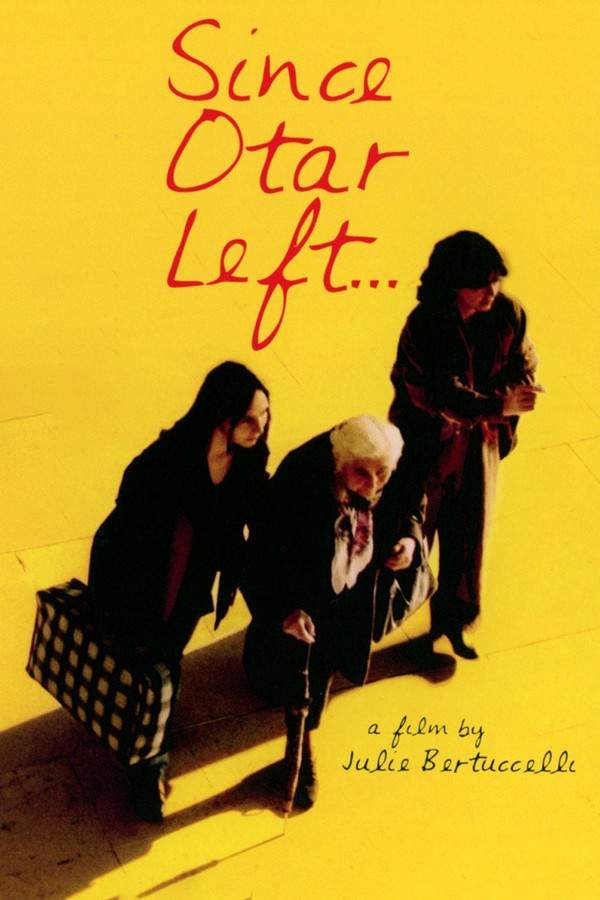
Since Otar Left
Year: 2004
Runtime: 103 min
Language: French
Director: Julie Bertucelli
In a Georgian city, elderly Eka cherishes letters from her son, Otar, who lives in Paris. To protect her, Eka’s daughter Marina hides the devastating news of his death, and a comforting illusion is maintained. As the lie continues, Eka’s granddaughter Ada becomes involved, leading to a moving story about loss, hidden truths within a family, and the enduring strength of hope and imagination.
Warning: spoilers below!
Haven’t seen Since Otar Left yet? This summary contains major spoilers. Bookmark the page, watch the movie, and come back for the full breakdown. If you're ready, scroll on and relive the story!
Timeline – Since Otar Left (2004)
Trace every key event in Since Otar Left (2004) with our detailed, chronological timeline. Perfect for unpacking nonlinear stories, spotting hidden connections, and understanding how each scene builds toward the film’s climax. Whether you're revisiting or decoding for the first time, this timeline gives you the full picture.
Last updated: November 16, 2024 at 17:46
Since Otar Left (2004) Timeline Questions Answered – Chronology FAQ
Find frequently asked questions about the Since Otar Left (2004) timeline, including chronological order, nonlinear jumps, cause-and-effect links, and scene sequence clarifications. This timeline FAQ helps explain when key events happen, how moments connect, and why the story unfolds in that specific order.
Why did Marina and Ada hide Otar's death from Eka?
Marina and Ada decided to conceal Otar's death because they believed the shocking news could be fatal to Eka, who was elderly and fragile. The film explicitly references 'Good Bye Lenin!' as their inspiration, a German film about protecting a mother from devastating news. Their fear was that losing her son could cause Eka to physically or emotionally collapse, so they chose to maintain the illusion that he was still alive in France.
Earlier scenes establish Eka's deep emotional dependence on Otar's phone calls and financial support, making sudden loss particularly dangerous.
Why did Eka decide to visit Otar in France?
Eka grew increasingly anxious because Otar's phone calls had stopped and the financial support had dwindled. Despite Marina and Ada's reassurances, she refused to accept that her son would simply abandon contact. Her determination to see him firsthand led her to sell her rare inherited French books to fund the trip, forcing Ada and Marina to reluctantly accompany her under false pretenses.
Earlier scenes show Eka's growing suspicion about the lack of communication and her insistence that something must be wrong.
What did Eka discover when she arrived in France?
When Eka searched for Otar in France, she found his old apartment and learned the truth from his neighbors, he had died in an accident. The neighbors told her that Otar had passed away, shattering the illusion his family had carefully maintained.
Niko had previously told Marina about Otar's death, and the escalating lack of contact hinted that something was wrong.
Why did Eka create a new lie about Otar moving to America?
After discovering Otar's death, Eka chose not to confront Marina and Ada with the painful truth. Instead, she fabricated a story suggesting Otar might have moved to America to escape his difficulties in France. This was her way of protecting her daughter and granddaughter from the devastating grief she herself had just experienced, she absorbed the truth alone to spare them additional pain.
Eka's initial breakdown upon learning the truth quickly transforms into composed deception, showing her maternal instinct to shield her family.
Why did Ada decide to stay in France at the end?
Ada chose to remain in France because it represented her lifelong dream of escaping Georgia's hardships and embracing Western ideals. Throughout the film, she had expressed yearning for the West and admiration for her uncle Otar who had made that leap. The trip confirmed both her desire and her ability to build a new life elsewhere. By staying, she fulfilled her personal ambition despite the emotional cost to her family.
Ada's earlier fascination with Western culture and her stated desire to follow her uncle's path to the West established this trajectory.
What was the significance of Eka selling her French books?
Eka selling her rare inherited French books to fund the trip to France demonstrated both her desperation to see Otar and the depth of her connection to him. These books represented her cultural identity and love for French culture, a passion she shared with her son. Giving them up signified her willingness to sacrifice precious personal treasures for the chance to reunite with him.
Eka's fluency in French and admiration for French culture had been established as key traits linking her to Otar.
How does the film reference Good Bye Lenin! and why is this important?
The film explicitly mentions 'Good Bye Lenin!' as the inspiration for Marina and Ada's decision to hide Otar's death. In that German film, a family conceals their mother's coma by fabricating a false reality. This reference signals to viewers that the Georgian film follows a similar theme of protective deception within families, where love motivates the maintenance of comforting illusions against overwhelming truth.
The mention occurs early when the sisters decide to forge letters, immediately setting up the film's central moral dilemma.
Why did Marina resort to selling family heirlooms?
Marina sold family heirlooms at the market because despite holding a degree, she could not find employment in Georgia's struggling post-independence economy. The film portrays the widespread unemployment and economic collapse facing newly independent Georgia, forcing educated people into desperate measures to survive. This economic desperation also explains why Otar left for France in the first place.
The opening scenes establish the harsh realities of daily life in Tbilisi, including power outages and crumbling infrastructure.
Why did Otar leave Georgia to work in France?
Otar left Georgia because of the severe economic struggles facing the newly independent country. Despite being a qualified doctor, he could not find adequate work and moved to France for better opportunities. There, he worked illegally in construction to send money back home, supporting his mother, sister, and niece, the very family he was trying to help when he died.
The film establishes early that Otar's financial support is crucial to the family's survival in Tbilisi.
Why was the relationship between Eka and Marina strained?
The relationship between Eka and Marina was strained due to fundamental ideological differences. Eka, despite loving French culture, remained a staunch Stalinist even in 2002, representing old Soviet values. Marina, holding a degree but forced into selling heirlooms, embodied the younger generation's frustration with the failed systems. Ada, meanwhile, dreamed of Western ideals, showing the widening gap between traditionalist elders and the younger generation seeking escape.
Early scenes explicitly contrast Eka's political views with Ada's Western aspirations, while Marina exists caught between them.
How did Ada cope with forging letters from Otar?
Ada struggled significantly with the moral implications of forging letters from her dead uncle. As the responsibility fell to her, she experienced growing guilt and anxiety as Eka grew more suspicious and demanding. The pressure of maintaining the lie while watching her grandmother's concern mount created increasing emotional distress, ultimately contributing to her decision to leave Georgia permanently.
The film shows Ada's increasing unease during the letter-writing scenes, with her facial expressions revealing inner conflict.

Explore Movie Threads
Discover curated groups of movies connected by mood, themes, and story style. Browse collections built around emotion, atmosphere, and narrative focus to easily find films that match what you feel like watching right now.
Movies about Family Secrets and Protective Lies like Since Otar Left
Stories where families construct delicate falsehoods to shield loved ones from pain.If you appreciated the delicate deception in Since Otar Left, explore these similar films centered on family secrets. These movies feature ordinary families facing extraordinary circumstances, choosing to hide a devastating truth to protect one another, often leading to a bittersweet and emotionally heavy journey.

Family Sins
2004

Separate Lies
2005

Family Viewing
1987

Character
1997

My Favorite Season
1993

Liebestraum
1991

Closing the Ring
2007

I've Loved You So Long
2008

Fireflies in the Garden
2008

September
1987

Father of My Children
2010
Since Otar Left
2004

Secret Sunshine
2007

Daughter’s Daughter
2024

The Lost Daughter
2021
Narrative Summary
The narrative pattern typically involves a devastating event, often a death or life-altering news, which a character or characters choose to conceal from a vulnerable family member. The story follows the gradual strain of upholding the lie, the near-misses of discovery, and the eventual emotional resolution, which may involve the truth coming out or a permanent acceptance of the comforting fiction.
Why These Movies?
Movies are grouped here for their shared exploration of a very specific moral and emotional dilemma: the love-driven choice to deceive. They share a focus on intimate, character-driven drama, a melancholic tone, and a heavy emotional weight stemming from the central secret and its consequences on family dynamics.
Quiet and Melancholic Dramas like Since Otar Left
Character studies immersed in a palpable sense of loss and quiet resilience.For viewers who connected with the somber, reflective mood of Since Otar Left, this section highlights similarly quiet and melancholic dramas. These films share a slow, deliberate pace, a heavy emotional atmosphere, and a focus on characters navigating grief, nostalgia, or hardship in intimate settings.














Narrative Summary
Stories in this thread are less about dramatic plot twists and more about emotional states. They often unfold in confined or fading settings, mirroring the internal worlds of the characters. The narrative journey is introspective, focusing on coping with grief, clinging to memory, or finding small glimmers of hope amidst a general atmosphere of sadness and resignation.
Why These Movies?
These films are grouped by their dominant vibe: a contemplative, melancholic mood that permeates every aspect of the film, from the pacing and cinematography to the character struggles. They provide a similar viewing experience of quiet introspection and emotional weight, appealing to those seeking deeply atmospheric and poignant stories.
Unlock the Full Story of Since Otar Left
Don't stop at just watching - explore Since Otar Left in full detail. From the complete plot summary and scene-by-scene timeline to character breakdowns, thematic analysis, and a deep dive into the ending - every page helps you truly understand what Since Otar Left is all about. Plus, discover what's next after the movie.
Since Otar Left Summary
Read a complete plot summary of Since Otar Left, including all key story points, character arcs, and turning points. This in-depth recap is ideal for understanding the narrative structure or reviewing what happened in the movie.

Characters, Settings & Themes in Since Otar Left
Discover the characters, locations, and core themes that shape Since Otar Left. Get insights into symbolic elements, setting significance, and deeper narrative meaning - ideal for thematic analysis and movie breakdowns.


