Plot Explained Spoilers guaranteed!
Plot Explained

Browse by genre

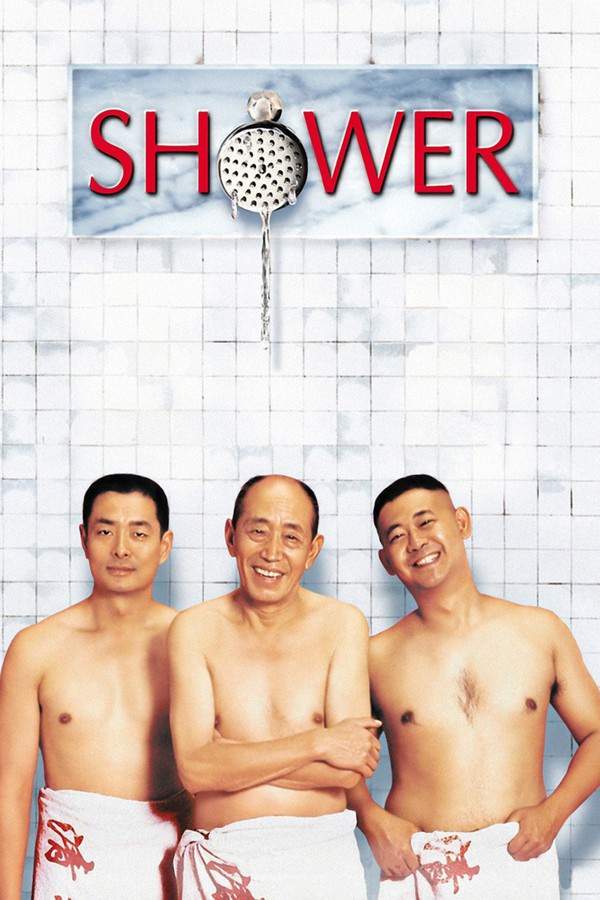
Shower (2000) movie poster

Plot Summary

Shower (2000) Plot Summary Explained

Release, runtime and language
2000 · 92 min · Chinese
Loading streaming availability…

Amidst China’s rapid modernization, a businessman is unexpectedly drawn back to his hometown, forcing him to reconnect with his aging father and brother. They run a beloved community bathhouse, a fading symbol of tradition. As he confronts his family’s history and the challenges they face, he embarks on a moving journey of cultural identity and the enduring bonds of human connection.

On this page (5)
  1. 1 Where to watch
  2. 2 What happens: full plot
  3. 3 Plot questions answered
  4. 4 Movie threads
  5. 5 Every angle
Loading streaming availability…

Full plot summary · contains spoilers

What Happens in Shower: Full Plot Summary

The whole story of Shower (2000) explained, from the opening scene to the final frame: every key event, every twist and what it all adds up to. Read it as a quick recap before the sequel, to check a scene you missed, or to finally understand what really happened.

An aged father known to everyone as Old Liu, [Zhu Xu], and his younger, mentally challenged son Liu Erming, [Jiang Wu], run a busy, old-school bathhouse in a winding Beijing neighborhood. This is not just a place to wash; it’s a small world where a dozen rooms hum with daily rituals and small dramas. The bathhouse offers a mix of services—haircuts, massages, shaves, fire cupping, even old-style pedicures—yet its real product is connection. Retired Beijingers, locals, and a motley crew gather here to pass the hours playing Chinese chess, watching cricket fights, or simply sharing space. Old Liu wears many hats at once: manager, fixer of petty squabbles, and a kind of marriage counselor whose advice is offered with a steady, patient tone. The atmosphere is warm, humorous, and gently bittersweet, a delicate balance of work and companionship that holds the place together.

Among the regulars, one man hums O Sole Mio in the shower, only to lose the tune when he steps out in public—until Erming provides a step-by-step, healing moment with a clever hose shower. Another patron, Mr. Zhang, finds himself in a sticky patch of marriage trouble after a naked chase of a thief; Old Liu helps bring about a reconciliation by arranging a quiet search to locate his wife within the bathhouse itself. The small victories and small sorrows that thread through these evenings are stitched together by the duo’s routines. After the bathhouse closes, Old Liu and Erming keep going with a daily jog around the neighborhood, then test their endurance by a playful breath-holding competition in water, a ritual that blends affection with a kind of stubborn resilience. Even the most routine chores—like cleaning up the place—become moments of playful companionship, where the two men behave like children, turning labor into a shared game.

The rhythm of the place shifts when Old Liu’s elder son, Liu Daming, [Pu Cunxin], returns unexpectedly from Shenzhen. Daming left years earlier to seek his fortune and arrives as a successful businessman, with a postcard in his pocket—an illustration of their father lying in bed that he initially believes signals his father’s death. The moment is a mix of relief and awkwardness, for the older son’s homecoming unsettles the old balance. The father-son dynamic is tested; Daming is torn between the call of his business life and the tenderness of a family left behind. The family threads are fragile, and the tension grows as Daming contemplates leaving again in three days to resume his life away from the bathhouse.

A day later, Erming accompanies Daming downtown to reserve a plane ticket, and in the course of the excursion the younger man strays, disappearing from sight. The search is frantic but ultimately fruitless, and when Daming returns, Old Liu lashes out with raw frustration, blaming his elder son for not safeguarding his vulnerable brother. The fear of losing Erming—already having lost one son once before—hangs heavy in the air. Yet the next morning brings a quiet relief: Erming has found his way home, and the family breathes again. The relief shifts into caution: Daming postpones his return to Shenzhen and stays another night, offering a tentative chance at reconciliation.

Rain pelts the city, and on a rooftop leak-fix session, Old Liu catches a chill that progresses into illness. In response, Daming offers to take over the bathhouse work, delaying his journey back and gradually embedding himself in the daily life he once left behind. He continues to join the evening jogs and—alongside Erming—finds a way to belong again. Then, one fateful night, Old Liu passes away peacefully while bathing, a stark moment that tests everyone’s capacity to carry on without him. Erming refuses to acknowledge the loss, insisting that the bathhouse keep its doors open at the usual hour, a testament to his stubborn refusal to surrender the rituals that defined their world.

In the wake of Old Liu’s death, Daming contemplates a drastic solution: taking Erming with him to Shenzhen or placing him in a mental hospital to escape the difficulties of care. The hospital stint is hard on Erming, who fights the attendants and longs for the familiar rhythm of the bathhouse. Ultimately, Daming returns with him to the baths, choosing to resume operations and keep the business—their shared sanctuary—alive for a time longer.

Meanwhile, the district is slated for demolition to make way for new commercial development. Removal crews begin to empty the space, and Erming fights to halt their sweep of the old furniture and memories, determined to preserve the place that has housed so many lives. After a brief struggle, he is gently guided toward accepting the reality of change, and the plan to move forward is set in motion.

The film closes with a poignant communal farewell. A circle of old customers gathers in the bathhouse one last time, carefully removing aging paintings and portraits from the walls as a gallery of the lives that passed through this place. Erming, with a voice thick with longing, returns to the familiar chorus of O Sole Mio, singing it as a final, nostalgic homage to the bathhouse that shaped their days. The scene lingers on the family’s and neighbors’ faces—grief, gratitude, and a quiet resolve—capturing the enduring power of place, memory, and kinship as they step into an uncertain future together.
Last updated: November 22, 2025 at 15:58

Was this helpful?

Plot questions answered

Shower Plot Explained: Your Questions Answered

The questions people ask most about Shower (2000): what happens in the confusing scenes, why the characters do what they do, the twists, hidden details and what the ending means. Each answer contains spoilers.

Q1

Why does Liu Daming return home thinking his father is dying?

Daming returns after receiving a postcard from Shenzhen that shows an illustration of his father lying in bed. He interprets this as a sign that Old Liu is sick or dying, prompting his urgent trip home. In reality, the postcard is simply a generic image Daming had sent to his family earlier, not an actual health warning, it's a misunderstanding that brings him back to the bathhouse just in time to reconnect with his father before it's too late.

  • liu daming
  • postcard
  • misunderstanding
  • return home
  • shenzhen
Q2

Why does Old Liu lash out at Daming after Erming goes missing?

Old Liu screams at Daming because he fears losing Erming the way he already lost his elder son years ago when Daming left for Shenzhen. Erming is mentally challenged and vulnerable, and Old Liu has spent years caring for him. The disappearance triggers his deep anxiety about losing family, and he projects that fear onto Daming, blaming him for not protecting his younger brother, something Old Liu himself has always done.

  • old liu
  • erming
  • daming
  • anger
  • family tension
  • fear of loss
Q3

Why does Daming decide to stay longer after Erming is found?

When Erming safely returns home the next morning, Daming chooses to postpone his flight and stay another night. The scare of losing his brother and seeing his father's emotional reaction makes Daming realize the fragility of his family situation. He wants to spend more time with them before leaving again, and the tension between his business life in Shenzhen and his family responsibilities becomes more pronounced.

  • liu daming
  • staying
  • flight
  • family
  • reconciliation
Q4

How does Old Liu die in the movie?

Old Liu catches a cold while fixing leaks on the roof during a heavy rainstorm. The illness progresses, and one evening after returning from his usual jog with his sons, he passes away peacefully while bathing in the tub. His death is quiet and undramatic, fitting for a man who lived a simple, devoted life maintaining the bathhouse and caring for his family.

  • old liu
  • death
  • illness
  • rain
  • bathhouse
Q5

Why does Daming consider putting Erming in a mental hospital?

After Old Liu dies, Daming struggles to care for his mentally challenged brother while running the bathhouse alone. He considers two options: taking Erming to Shenzhen to live with him (but fears his wife won't accept having a mentally challenged man in their home) or placing Erming in a mental hospital for professional care. It's a difficult decision driven by practical concerns about Erming's wellbeing and Daming's own limited ability to care for him.

  • erming
  • mental hospital
  • daming
  • care
  • decision
  • shenzhen
Q6

Why does Erming fight to stop the bathhouse demolition?

Erming physically tries to halt the removal workers because the bathhouse is his entire world, it's where he grew up, where his father devoted his life, and where he feels safe and useful. The bathhouse represents continuity, routine, and identity for him. Despite his mental challenges, Erming understands that losing the bathhouse means losing the last tangible connection to his father and their shared life together.

  • erming
  • demolition
  • bathhouse
  • resistance
  • tradition
  • loss
Q7

What is the significance of the O Sole Mio song in the film?

O Sole Mio becomes a recurring motif throughout the film. A regular patron first sings it in the shower but loses confidence when stepping into public, Erming helps him reclaim that joy with a playful shower moment. Later, Erming sings it at the end as a nostalgic farewell to the bathhouse. The song represents simple human connection, the warmth of shared spaces, and the bittersweet memory of times that will pass but leave lasting impressions.

Foreshadowing: The song first appears when a patron hums it in the shower, establishing its connection to the bathhouse's intimate, supportive atmosphere.

  • o sole mio
  • song
  • farewell
  • memory
  • bathhouse
  • erming
Q8

Why does Daming decide to keep the bathhouse running after his father's death?

After Old Liu dies and Erming struggles in the mental hospital, Daming brings his brother back and decides to resume operating the bathhouse. He recognizes that the place holds meaning for their family, their community, and especially for Erming, the routines and familiar surroundings are essential to his wellbeing. Daming chooses family and tradition over his business career in Shenzhen, at least for now.

  • bathhouse
  • continuing
  • daming
  • erming
  • family
  • tradition
Q9

What causes the tension between Old Liu and his son Daming?

The tension stems from Daming's years-long absence. He left Beijing to seek fortune in Shenzhen, leaving his father and mentally challenged brother at the bathhouse. Old Liu has carried the burden of running the business and caring for Erming alone. When Daming returns as a successful but distant businessman, Old Liu resents the ease with which Daming left and the guilt he feels about leaving them behind. Their relationship is marked by unspoken love and unresolved resentment.

  • old liu
  • daming
  • tension
  • father son
  • absence
  • guilt
  • shenzhen
Q10

What is the significance of the evening jog and breath-holding contest?

The daily jog and water breath-holding competition represent the routines that bind Old Liu, Erming, and later Daming together. These rituals are more than exercise, they're a way of maintaining vitality, discipline, and connection. After Old Liu dies, Daming continues joining Erming in these routines, using them as a way to stay connected to his father's memory and to his brother's way of life.

  • jog
  • breath-holding
  • routine
  • bonding
  • tradition
  • family

Movie threads

More Movies Like Shower, by Mood & Story

Curated lists built around what makes Shower tick: the same mood, the same kind of story or the same emotional payoff. Each list explains why these movies belong together.

Stories of fading tradition and community like Shower

Quiet, melancholic stories about the fading warmth of traditional places and communities. If you liked the gentle, melancholic mood of Shower, you'll find similar movies here. These films explore the bittersweet loss of traditional communities and places with a slow, contemplative pace and a warm, humanistic perspective.

  • nostalgic
  • melancholic
  • contemplative
  • autumnal
  • bittersweet
  • gentle
  • Tone: melancholic, bittersweet, warm
  • Pacing: slow, contemplative
Why these movies?

The story pattern: Stories in this thread often follow an outsider or prodigal child who returns to a traditional community on the brink of disappearance. Through their eyes, we witness the daily rituals and deep bonds that define the place, culminating in a bittersweet acceptance of change while honoring the past.

Why they belong together: These films are grouped by their shared mood of nostalgic melancholy and their thematic focus on cultural transition. They share a slow, observational pacing that allows the atmosphere of a place to sink in, and a bittersweet, humane tone that avoids outright bleakness.

Movies about reconnecting with family like Shower

Emotional journeys where characters find solace and purpose by returning to family roots. For viewers who enjoyed the father-son relationship and themes of reconnection in Shower, this section features movies where characters return home to mend family bonds. These dramas blend emotional weight with gentle humor and a focus on everyday life.

  • bittersweet
  • heartwarming
  • family drama
  • contemplative
  • gentle
  • nostalgic
  • Tone: bittersweet, warm, humane
  • Pacing: steady, character-driven
Why these movies?

The story pattern: The narrative pattern involves a character forced to confront their past by returning to a family setting, often a small business or home. Initial resistance gives way to immersion in daily routines, leading to emotional confrontations, understanding, and ultimately, a reconciled, if bittersweet, sense of belonging.

Why they belong together: These movies share a focus on the healing power of family routines and the rekindling of strained relationships. They balance drama with light comedy, feature a straightforward emotional arc, and often conclude with a bittersweet but hopeful resolution centered on connection.

Every angle

Shower (2000) Explained: Plot, Timeline & Characters

Everything about Shower in one place: what happens in the plot summary, the timeline in chronological order, the characters and meaning and a spoiler-free summary. What's After the Movie adds the cast, box office and post-credit scenes.

Coming soon on iOS and Android

The Plot Explained Movie Summary App

Plot summaries, endings explained and timelines on your phone. Catch up on any movie in minutes, save your favorites and never miss a twist again.

Be the first to know when we launch. Your email stays private, always.

Learn more about the app