Plot Explained Spoilers guaranteed!
Plot Explained

Browse by genre

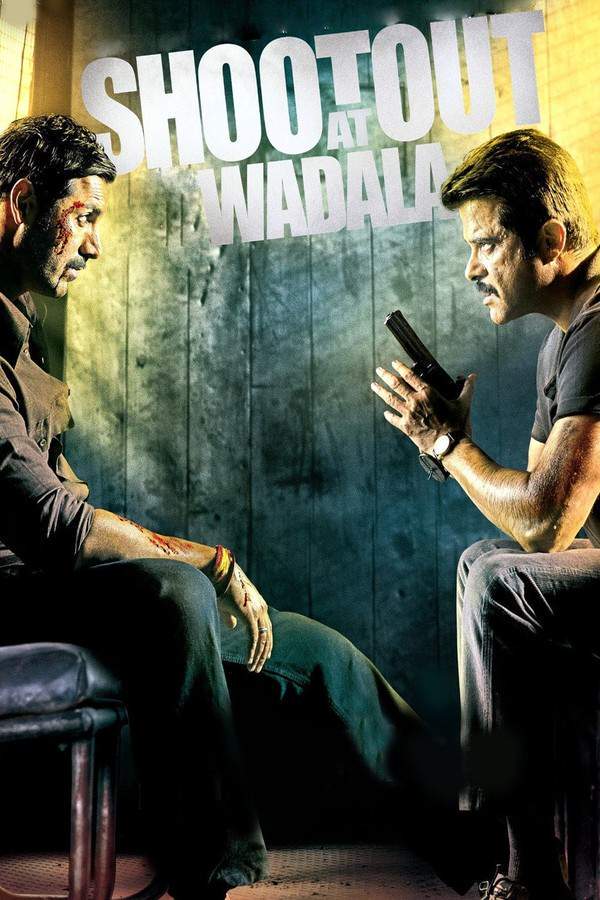
Shootout at Lokhandwala (2007) movie poster

Timeline

Shootout at Lokhandwala (2007) Timeline Explained – Every Event in Order

Release, runtime and language
2007 · 145 mins · Hindi
Directed by
Apoorva Lakhia
Starring
Neha Dhupia, Sanjay Dutt, Amitabh Bachchan, Arbaaz Khan, Amrita Singh, Abhishek Bachchan

Set in the summer of 1991, five criminals—including Maya and Dilip—were hoarding ₹70 lakh in flat 32 B of the Lokhandwala Complex. ACP Khan led 286 police officers who sealed the building. A fierce gun battle erupted, lasting six hours, seizing the nation’s attention and becoming one of the most discussed daylight shootouts in Indian policing history as suburban Mumbai turned into a war zone.

On this page (6)
  1. 1 Where to watch
  2. 2 Events in order (14)
  3. 3 Timeline questions answered
  4. 4 Movie threads
  5. 5 Movies like Shootout at Lokhandwala
  6. 6 Every angle

Where to watch

Where to Watch Shootout at Lokhandwala (2007)

Where can you watch Shootout at Lokhandwala? Stream, rent or buy it in the US, including on Fawesome and Amazon Video: current JustWatch availability with up-to-date prices.

Streaming availability powered by JustWatch

14 events in order · contains spoilers

Shootout at Lokhandwala Timeline: Events in Chronological Order

Every key event of Shootout at Lokhandwala (2007) in order, scene by scene, with when and where it takes place. Use it to untangle flashbacks, time jumps and parallel storylines, to refresh your memory before the sequel or to find the exact scene you are thinking of.

  1. Blue Star aftermath drives action in Bombay

    Following Operation Blue Star in 1984, Sikh extremists flee to Bombay and violence and extortion surge in the city. The death of Khan's best officer at the hands of the attackers spurs him to act, and he seeks clearance from the police commissioner to confront those responsible. This sets the stage for a targeted crackdown on organized crime in the city.

    When
    1984
    Where
    Bombay
  2. ATS formed and elite unit recruited

    To counter the rising threats, Khan forms the ATS by hand-picking 27 of Bombay Police's best enlisted men, inspired by the LAPD SWAT concept. He believes a focused, elite unit can tackle organized crime and terrorism more effectively. He presents the plan to the police commissioner to secure the necessary support and authority.

    When
    1984-85
    Where
    Bombay
  3. Clearance to confront the criminals obtained

    To confront the criminals responsible for his officer's death, Khan obtains formal clearance from Police Commissioner Krishnamurthy, giving the ATS its mandate. This authorization legitimizes their upcoming operations against the syndicate. The unit prepares for a high-stakes confrontation with armed criminals in the city.

    When
    late 1980s
    Where
    Bombay
  4. Meeta Mattoo brought in to cover the crackdown

    Khan asks journalist Meeta Mattoo to cover the impending operation to deter future violence and bring public attention to the crackdown on crime. Her presence adds a media dimension to the ATS's actions and the city’s response. The intention is to pressure criminal networks through public scrutiny.

    When
    early 1990s
    Where
    Bombay
  5. Maya rises within Dawood Ibrahim’s network

    Maya, the second-in-command of Dawood Ibrahim's syndicate, runs the gang's operations in Bombay while seeking independence from Dubai and greater control over the city. His ambitions put him at odds with the police and the growing push to curb gang violence. The conflict with the ATS becomes a central focus of the crackdown.

    When
    early 1990s
    Where
    Bombay
  6. Informant ties Maya’s gang to a string of murders

    An informant connects a string of murders in the city to Maya's gang, drawing the ATS’s attention and signaling a direct threat to public safety. The linkage justifies intensifying surveillance and raids against the gang’s operations. The investigation narrows to Maya’s network as the primary target.

    When
    early 1990s
    Where
    Bombay
  7. ATS confronts a gang member; retaliation escalates

    The ATS closes in on a gang member, triggering Maya to retaliate by killing the informant’s relative. The violence underscores the brutal stakes of the confrontation and the risk to officers working to dismantle the network. Tensions between law enforcement and the gang escalate rapidly.

    When
    early 1990s
    Where
    Bombay
  8. Families targeted; threats and bribes intensify

    The ATS reaches out to the gang members’ families to persuade surrender, but Maya’s crew escalates the conflict by threatening officers and attempting to bribe them. The exchange reveals the gang’s willingness to deploy pressure beyond the battlefield. Public safety considerations become a central concern for the crackdown.

    When
    early 1990s
    Where
    Bombay
  9. Tip-off locates Maya’s flat in Lokhandwala

    An informant tips off authorities that Maya's gang is located in a flat in Swati building, Lokhandwala Complex, Andheri, triggering a focused police operation. The tip creates a concrete target for the ATS’s siege plan. The city watches as the noose tightens around the gang.

    When
    November 1991
    Where
    Swati building, Lokhandwala Complex, Andheri, Bombay
  10. Siege on the flat begins

    In November 1991, the ATS lays siege to the flat with a large force, intending to overwhelm Maya’s group. The operation draws on the unit’s training and planning to neutralize the threat with minimal collateral damage. The tense standoff showcases the city’s direct confrontation with organized crime.

    When
    November 1991
    Where
    Swati building, Lokhandwala Complex
  11. Wadhwani’s son is killed during the siege

    Wadhwani’s son is killed during the operation, an outcome the police contest and Maya’s persistence seems to justify. Maya had allowed the child to leave to see if any occupants would surrender, but tragedy still strikes. The event underscores the human cost of the confrontation.

    When
    November 1991
    Where
    Swati building
  12. Maya’s escape attempts and distraction tactics

    The gang tries to escape by various means, including contacting Dubai and bribing a senior officer, and even firing a rocket-propelled grenade as a distraction. Despite these efforts, the siege tightens, and escape becomes increasingly unlikely. The standoff tests both sides’ resolve and endurance.

    When
    November 1991
    Where
    Swati building
  13. Maya and the gang are killed

    Ultimately, Maya and every member of his gang are killed in the siege, bringing a violent chapter in Bombay’s crime war to a close. The operation eliminates the primary threat to the city’s safety from this network. The city breathes a sigh of relief as the immediate danger dissolves.

    When
    November 1991
    Where
    Swati building
  14. Inquiries and acquittals frame the aftermath

    During the inquiry, Dhingra defends Khan and the ATS, arguing that such officers are necessary to safeguard the public. In court, Khan and the ATS are acquitted, highlighting the ongoing debate between strict policing and civil liberties. The case cements the narrative that bold, controversial measures can be vindicated over time.

    When
    1992
    Where
    Bombay / court

Last updated: October 09, 2025 at 16:42

Was this helpful?

Timeline questions answered

Shootout at Lokhandwala Timeline Explained: Your Questions Answered

When does it happen, and why in that order? The questions people ask about the chronology of Shootout at Lokhandwala (2007): time jumps, flashbacks, cause and effect between scenes and the correct order of events, each answered with spoilers.

Q1

Why did ACP Khan need special clearance from the police commissioner to confront the criminals?

Khan needed clearance because his best officer had been killed by Sikh extremists who had fled to Bombay after Operation Blue Star in 1984. Without formal authorization from Police Commissioner Krishnamurthy, the ATS would not have the legal authority to conduct targeted operations against organized crime networks. This clearance gave Khan the mandate to pursue the specific criminals responsible for his officer's death.

Foreshadowing: Earlier context establishes Khan's personal motivation: the death of his best officer at the hands of the extremists.

  • ats clearance
  • police commissioner krishnamurthy
  • operation blue star
  • sikh extremists
  • khan's officer killed
Q2

Why does Maya want to break away from Dawood Ibrahim and take over Bombay?

Maya's ambition to control Bombay is fueled by his mother Amrita Singh, who pushes him to assert his independence from Dubai. Rather than operating under Dawood's orders, Maya wants to establish himself as the primary crime lord in Bombay, which leads him to refuse paying protection money to Dubai and demand direct control over the city's criminal operations.

Foreshadowing: Maya's rise within Dawood's network is established early, with his mother's influence hinted at as a driving force.

  • maya
  • dawood ibrahim
  • ambition
  • amrita singh
  • bombay crime lord
Q3

Why was Wadhwani's son being held in Maya's flat at Lokhandwala?

Maya kidnapped Wadhwani's son when the city builder refused to pay Rs. 40 million in protection money, insisting instead on dealing directly with Dubai. When the boss ordered Maya to return the child, Maya refused and increased his demands, wanting control of Bombay. The boy remained in the flat as a bargaining chip and leverage.

Foreshadowing: Wadhwani's refusal to pay sets the kidnapping in motion, creating the hostage situation.

  • wadhwani son
  • kidnapping
  • protection money
  • rupees 40 million
  • lokhandwala flat
Q4

How did the police find Maya's exact location at Lokhandwala Complex?

An informant tipped off Khan that Maya's gang was located in a flat in Swati building, Lokhandwala Complex, Andheri. Dhingra later alleges the informant called from Dubai. This tip-off allowed the ATS to lay siege to the specific location rather than conducting a broader, less focused operation.

Foreshadowing: The timeline shows earlier attempts by the ATS to pressure the gang through family contact and investigation.

  • informant tip
  • dubai call
  • lokhandwala complex
  • andheri
  • swati building
Q5

What happened to Wadhwani's son during the siege and who was responsible?

Wadhwani's son was killed during the police siege. Maya had allowed the child to leave the flat to test whether any occupants would be allowed to surrender. The police killed the boy, an outcome that Maya's persistence seemed to justify. The exact circumstances of who fired the fatal shot remained contested between police and the gang.

Foreshadowing: Maya's decision to release the child as a test creates the tragic outcome.

  • wadhwani son killed
  • siege death
  • hostage
  • maya decision
  • lokhandwala shooting
Q6

What escape attempts did Maya's gang make during the six-hour siege?

Maya's gang made multiple escape attempts: they contacted Dubai for backup, tried to bribe a senior police officer to intervene on their behalf, and even fired a rocket-propelled grenade as a distraction. Despite these efforts, the police siege held and all escape routes were blocked.

Foreshadowing: Earlier threats and bribes against ATS officers show the gang's desperation.

  • escape attempt
  • rpg
  • bribe senior officer
  • dubai
  • rocket propelled grenade
  • siege
Q7

What was the outcome of the 1992 inquiry into the ATS officers?

In the 1992 inquiry, former chief justice Dhingra defended Khan and the ATS officers. While he was critical of their methods throughout the interviews, he argued in court that officers like Khan are necessary to safeguard the public against dangerous criminals. Khan and the ATS were ultimately acquitted.

Foreshadowing: The film opens with this inquiry, establishing it as the framing device for the entire narrative.

  • 1992 inquiry
  • dhingra
  • acquittal
  • ats court case
  • legal outcome
Q8

Why does the film use a 1992 inquiry as a framing device?

The inquiry with former chief justice Dhingra serves as a narrative framing device to present the events leading up to the Lokhandwala encounter. This structure allows the film to justify the ATS's controversial methods while simultaneously questioning them, creating a legal and ethical debate that runs throughout the story.

Foreshadowing: The opening scene establishes Dhingra interviewing the three ATS officers.

  • framing device
  • dhingra interview
  • inquiry structure
  • amitabh bachchan
  • 1992
Q9

Why did the ATS specifically target Maya's gang after the police informant's discovery?

The ATS focused on Maya's gang because an informant connected them to a string of murders in Bombay. This linkage provided legal justification for intensifying surveillance and launching operations against Maya's network, marking them as the primary threat to public safety requiring immediate action.

Foreshadowing: Earlier timeline events show the ATS forming and recruiting elite officers.

  • ats operation
  • informant murders
  • maya gang
  • bombay ats
  • police crackdown
Q10

Why did Maya kill the informant's relative as retaliation?

Maya retaliated by killing the informant's relative after the ATS confronted one of his gang members. This brutal response demonstrated the gang's willingness to escalate violence against anyone connected to law enforcement, underscoring the deadly stakes of the confrontation.

Foreshadowing: The ATS had been closing in on gang members, triggering Maya's violent reaction.

  • informant relative killed
  • retaliation
  • ats confrontation
  • maya violence
  • gang escalation
Q11

Why did ACP Khan involve journalist Meeta Mattoo in the operation?

Khan asked journalist Meeta Mattoo to cover the impending operation to deter future violence and bring public attention to the crackdown on crime. By involving media, Khan intended to pressure criminal networks through public scrutiny and discourage similar activities in the future.

Foreshadowing: This decision adds a media dimension to the police operation from early on.

  • meeta mattoo
  • journalist
  • media coverage
  • deterrence
  • police media strategy

Movie threads

More Movies Like Shootout at Lokhandwala, by Mood & Story

Curated lists built around what makes Shootout at Lokhandwala tick: the same mood, the same kind of story or the same emotional payoff. Each list explains why these movies belong together.

Urban siege movies like Shootout at Lokhandwala

Stories where a contained location becomes a tense, explosive battleground. If you enjoyed the tense, building-long confrontation in Shootout at Lokhandwala, explore similar movies about high-stakes urban sieges. These films often feature criminals cornered by law enforcement, tense hostage situations, and explosive action set within a single, claustrophobic location.

  • tense
  • claustrophobic
  • nerve-wracking
  • relentless
  • high-stakes
  • gritty
  • Tone: tense, relentless, gritty
  • Pacing: fast, escalating
Why these movies?

The story pattern: These narratives typically begin with a group—criminals, terrorists, or fugitives—barricading themselves in a location, leading to a standoff with authorities. The plot focuses on the escalating tactics, negotiations, and eventual violent resolution, often exploring the moral compromises made by both sides under extreme pressure.

Why they belong together: This thread groups films that share the specific narrative structure and high-tension atmosphere of a prolonged siege. They are united by a claustrophobic setting, a fast-paced countdown to a violent climax, and a focus on the strategic and psychological warfare of a confined battle.


Morally complex police stories like Shootout at Lokhandwala

Crime stories where the line between cop and criminal becomes dangerously blurred. Fans of the ethical ambiguity and police methods in Shootout at Lokhandwala will appreciate these morally gray cop dramas. Discover movies that question the price of justice, featuring tough detectives, corrupt systems, and violent action that challenges who the real heroes are.

  • gritty
  • morally ambiguous
  • tense
  • heavy
  • corrupt
  • brutal
  • Tone: gritty, tense, bleak
  • Pacing: steady, driving
Why these movies?

The story pattern: The narrative follows law enforcement officers or units who bend or break the rules to take down dangerous criminals. The journey often involves a descent into morally questionable tactics, leading to a climax where violent justice is delivered, followed by a resolution that leaves the victory feeling hollow or ethically troubling.

Why they belong together: These films are grouped by their central theme of moral ambiguity within police work. They share a heavy emotional weight, a tense and gritty tone, and a focus on the conflict between achieving results and upholding the law, resulting in a bittersweet or bleak conclusion.

If you liked this

Movies Like Shootout at Lokhandwala

Similar movies to Shootout at Lokhandwala: the same genre, themes or kind of story. Each one comes with its own plot summary, timeline and ending explained.

Browse all movie summaries

Every angle

Shootout at Lokhandwala (2007) Explained: Plot, Timeline & Characters

Everything about Shootout at Lokhandwala in one place: what happens in the plot summary, the timeline in chronological order, the characters and meaning and a spoiler-free summary. What's After the Movie adds the cast, box office and post-credit scenes.

Coming soon on iOS and Android

The Plot Explained Movie Summary App

Plot summaries, endings explained and timelines on your phone. Catch up on any movie in minutes, save your favorites and never miss a twist again.

Be the first to know when we launch. Your email stays private, always.

Learn more about the app