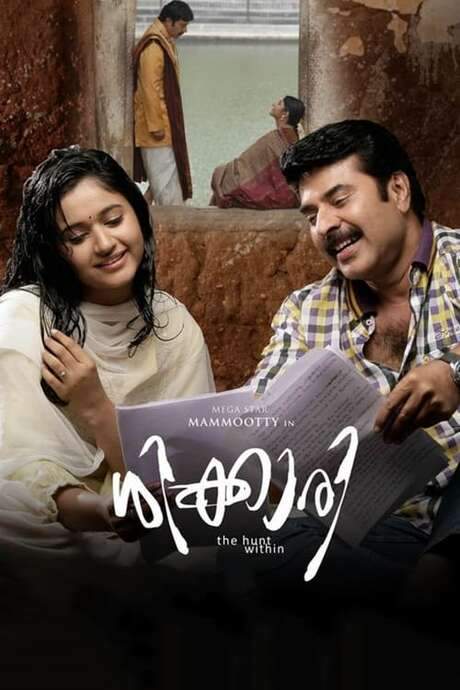
Abijit (Abhilash in Malayalam) is a software professional who finds himself drawn into the world of a novel written by Gopinath Shindhe (Gopinatha Pillai in Malayalam). When the manuscript reveals missing pages, his curiosity deepens, and he travels to the tranquil, green-tinged village of Manjinadka to uncover the truth behind the story’s fragments. There, he approaches the writer’s house, which is perilously close to being sold off by the writer’s daughter, a woman named Nandita who carries her own hidden echoes from the past.
As the boundaries between fiction and reality blur, Abijit finds himself projecting Nandita as Renuka, the character from the novel, and he explains his need to know what happened next. The narrative starts to breathe through the shifting timelines, moving from present-day investigations into a long-ago era marked by British rule. The village’s life is shadowed by forces both natural and social—a tiger that menaces the people, and a mysterious, unsettling figure described as a mad man who unsettles Abijit’s sense of certainty.
The more Abijit digs, the more the lines between the book and his own reality begin to crumble. A pivotal moment arrives when the final clue to the past is cremated, leaving behind a void that forces the truth to surface in unexpected ways. It is in this space that Nandita finally reveals a startling connection: after she realizes that Aruna is the way Abijit sees her, she concedes that she’s been weaving additional links to the past to shape the story—and perhaps her own fate within it.
The result is a delicate, patient unraveling where memory, myth, and motive intersect. The story suggests that the past is not a static relic but a living influence, shaping present decisions and future possibilities. In the end, Nandita’s motive emerges with a quiet, poignant clarity: she is alone, and her longing for companionship becomes intertwined with the past she has helped to sculpt. The film leaves audiences with a contemplative view of how desire, loyalty, and the desire to belong can drive people to rewrite history, even when doing so risks distorting what is true.
Throughout, the pacing blends reflective narration with vivid landscapes and a sense of foreboding that lingers after each revelation. The central relationship—between Abijit and the woman who may hold both the key and the trap to the village’s hidden history—keeps the tension taut while allowing moments of introspection, memory, and moral ambiguity to breathe. The result is a story that invites viewers to consider how much of the past we choose to carry forward, and how the stories we tell ourselves can reshape the people we become.