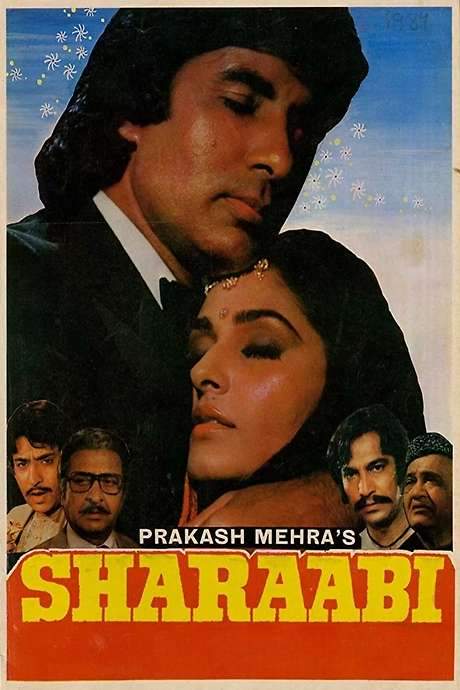
Vicky Kapoor is the sole son of billionaire Ammarnath Kapoor, a man whose business empire keeps him preoccupied and often emotionally distant from his child. This distance nudges Vicky toward self-destructive habits, and he slips into alcoholism from a young age. His loyal caretaker Munshi Phoolchand sticks by him, trying to offer guidance and affection in a world that seems to move too fast. A turning point arrives when Amarnath accuses Munshi of influencing Vicky’s downward spiral, while Munshi counters that Vicky’s issue runs deeper—rooted in a dying wife and a husband who didn’t show up when it mattered most. These tensions set the stage for a quieter, more compassionate evolution: Vicky, despite his flaws, quietly dedicates himself to helping those who have little or nothing, especially an orphan named Anwar who recently lost his mother. Vicky’s generosity persists as he entrusts Anwar’s schooling to a capable principal and to Munshi, effectively laying the foundation for a surprising, lifelong bond that will repay him in ways he cannot yet imagine. As years pass, Anwar grows into a capable police inspector, and Vicky’s secret angelic support remains a guiding force behind the man he becomes.
Meena, Meena, is a professional dancer whose life unfolds on a modest stage far from Vicky’s glittering world. She comes from a humble background, the daughter of a poor man who cannot see the world clearly because of his blindness, a reality that shapes her compassion and resilience. Vicky is drawn to her warmth and strength, and their bond quickly becomes central to the story. Meena’s life, however, is complicated by Natwar, a calculating agent who is more interested in extracting wealth than safeguarding love. Natwar’s greed brushes up against Meena’s ambitions and the small, stubborn pride of her blind father, and the tension between money and affection fuels a mounting conflict that grows louder with every encounter. The couple’s hopes are tested when Amarnath, wary of Vicky’s resources and past, frames a harsh judgment that a poor girl could never be a worthy match for his son. The family rifts widen as Vicky’s pride clashes with his father’s expectations, and their disagreements threaten to pull them apart in front of friends, business partners, and their own fears.
As the plot thickens, Natwar betrays trust and orchestrates trouble that leaves Vicky isolated from his wealth and status. A cruel ruse frames him for another liaison, prompting Amarnath to estrange himself from his son and seal off his fortune. Munshi Phoolchand remains a steadfast ally, but even his loyalty cannot shield Vicky from the consequences of a world that loves money more than mercy. Natwar’s machinations escalate when he abducts Meena, testing the limits of loyalty and courage. Anwar invites the pair to take shelter at his home, a gesture that marks a turning point: Vicky refuses at first, but compassion ultimately wins out, and the lovers find some shelter and solace in a modest, shared life that begins on a difficult path. On the way, Munshi Phoolchand faces a fatal accident while trying to secure a livelihood that will sustain them all, a loss that hardens Vicky’s resolve and pushes him toward a decisive vow to win back those he loves.
The villainous alliance between Govardhandas, Natwar, and others who long to seize power over Amarnath’s fortune intensifies as the pressure mounts. Abdul, a friend whom Vicky once aided, discovers his own boy hasgone missing, and Natwar uses the moment to coerce Abdul into a deadly trap: kill Meena. Abdul reveals the body of Meena to the kidnappers, and the tragedy reverberates through the tense, interconnected networks of love, loyalty, and power. Vicky learns of Meena’s alleged death, and his anger erupts in a fierce confrontation with Natwar. In this upheaval, Anwar and the police work together to dismantle the menacing web of conspirators; Natwar and Govardhandas are ultimately brought to justice, while the courageous spirit of those who have stood by Vicky’s side—the poor, the forgotten, and the generous—rallies to him in his moment of need.
Amid the turmoil, Abdul returns with Meena’s body, or Meena’s presence, and this act becomes a poignant reminder of the ties that bind them all. Vicky’s love is tested, but his supporters and Anwar’s steadfast presence help him face the consequences with quiet dignity. Amarnath, confronted with his earlier misjudgments, begins to recognize the error of his ways and gradually accepts the truth of Vicky’s heart. He welcomes Meena into the family, signaling a reconciliation that honors the sacrifices of those who stood by Vicky. In the final act, Vicky channels his energy into something lasting and meaningful for the community: he opens a housing complex for the poor and homeless, naming it Munshi Phoolchand Nagar in memory of the loyal caretaker who believed in him when no one else did. This philanthropic gesture embodies the transformation at the story’s core—a life that once wandered through excess and neglect becomes a beacon of hope and responsibility for those who were once left behind.