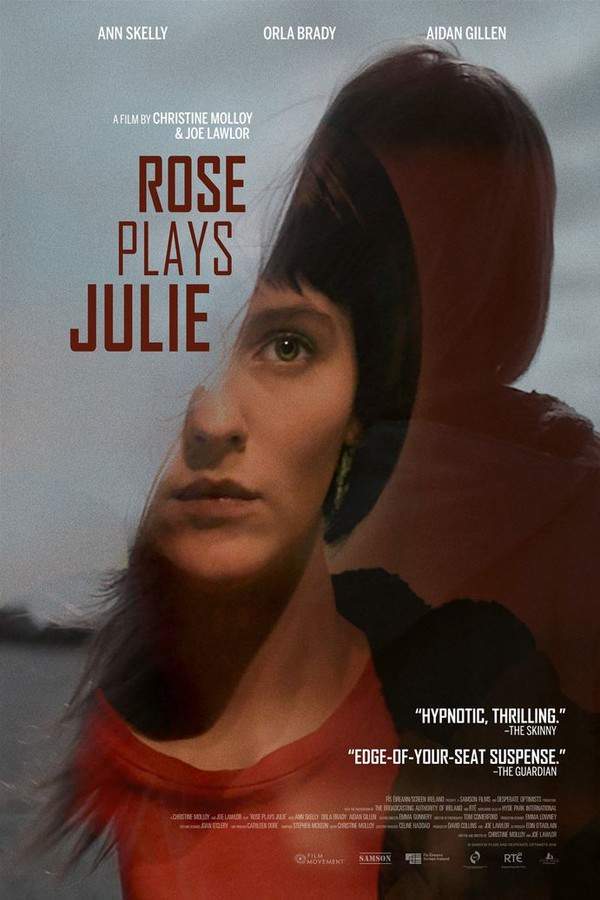
Rosy, Ellie Moon, is a 25-year-old bank teller who aged out of the foster care system at 18, building a quiet, sometimes lonely life. She dresses like a much younger girl and subsists on the simple comfort of Kraft Dinner, a small ritual that hints at deeper yearning for a family she never fully had.
After a restorative yoga class ends abruptly when the instructor tries to reposition her while she is swaddled, Rosy begins to question what kinds of support might truly suit her. Her coworker, Helen, Leah Doz, who is very close to her own mother, suggests she consider finding an older adult to adopt her, offering a glimmer of possibility in a world she has learned to navigate alone.
Rosy reconnects with Nola, Chelsea Muirhead, with whom she once lived in a group home, when Nola calls the bank to transfer money to her "new family." The money is meant to join a church-run arrangement, and the account appears to be a business-facing bank setup rather than a straightforward donation. This observation unsettles Rosy and makes her suspect that something unusual, perhaps even dangerous, is going on within the circle she’s being drawn into.
Through a website that matches younger adults seeking parental roles with older adults willing to adopt, Rosy meets Mark, Jeremy Ferdman, who responds with warmth and openness but quickly reveals a more complicated motive: he is also hoping for a dating relationship rather than a familial bond. At the same time, Rosy encounters Brian, Michael Healey, whose presence on the site seems friendly at first, but soon hints at a desire for romance rather than a protective role.
Rosy also encounters Jane, Rebecca Northan, a high school teacher who is estranged from her own daughter. After glimpsing Jane on a date with another young woman, Rosy reaches out—calling and emailing—only to be met with silence and unanswered messages, leaving her to wonder about the boundaries and debts of human connection.
As tensions rise, Rosy learns that Nola has been trying to reach her as well, and a dangerous-looking man arrives, pressing for Rosy to complete the money transfer to the church. The pressure intensifies, and Rosy feels emotionally overwhelmed, reaching out to multiple people and testing the limits of the relationships she depends on.
In a stark turning point, Rosy acts to protect Nola, rescuing her from the looming danger of the cult-like situation. Jane finally answers a call and invites Rosy to visit, but when the two meet, Rosy finds Jane drunk, sparking a wrenching exchange that reveals not only Jane’s limits but Rosy’s own humanity and resilience in equal measure. The moment underscores that family bonds can be fragile, yet real connection remains possible.
Seeking grounding, Rosy attempts to reestablish ordinary life—she exchanges a genuine, if tentative, conversation with the owner of the coffeeshop in her building and reaches out to Helen to begin mending the rifts that have formed. She returns to her yoga practice, this time allowing the instructor to reposition her with a sense of cautious renewal, signaling a small but meaningful reclaiming of control over her life.
Throughout this journey, the film paints a quiet portrait of longing, accountability, and the messy, imperfect work of building a chosen family. It threads themes of vulnerability and trust with the daily rituals that anchor a person’s sense of belonging, illustrating how one finds steadiness in the face of confusion, danger, and heartbreak.



















|Dhar Mann-imzu_51ppvUwRg.jpg)


