












Plot Explained Spoilers guaranteed!
Plot Explained

Browse by genre

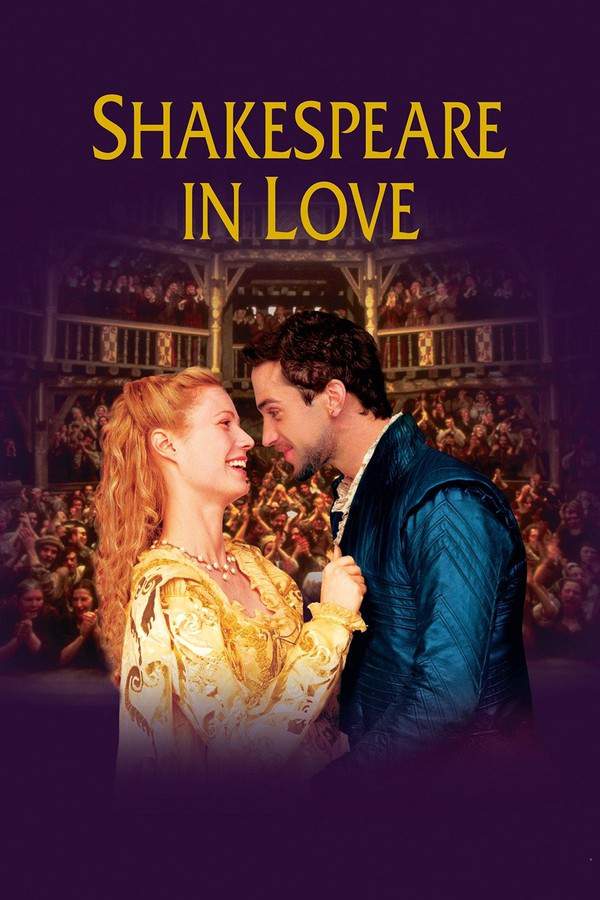
Shakespeare in Love (1998) movie poster

Timeline

Shakespeare in Love (1998) Timeline Explained – Every Event in Order

Release, runtime and language
1998 · 123 min · English
JustWatch #7,902 8
Directed by
John Madden
Starring
Geoffrey Rush, Joseph Fiennes
Budget
$25M

In 16th-century London, a young William Shakespeare grapples with writer's block while attempting to write a play. He unexpectedly finds inspiration and romance when he meets a captivating young woman who becomes his ideal muse. Their passionate affair fuels his creativity, leading him to write what will become a celebrated romantic masterpiece. The story intertwines Shakespeare's personal struggles with the challenges of theatrical life, creating a unique blend of comedy, drama, and romance.

On this page (6)
  1. 1 Where to watch
  2. 2 Events in order (15)
  3. 3 Timeline questions answered
  4. 4 Movie threads
  5. 5 Movies like Shakespeare in Love
  6. 6 Every angle

Where to watch

Where to Watch Shakespeare in Love (1998)

Where can you watch Shakespeare in Love? Stream, rent or buy it in the US, including on fuboTV, Paramount Plus Essential and Paramount Plus Premium: current JustWatch availability with up-to-date prices.

Streaming availability powered by JustWatch

15 events in order · contains spoilers

Shakespeare in Love Timeline: Events in Chronological Order

Every key event of Shakespeare in Love (1998) in order, scene by scene, with when and where it takes place. Use it to untangle flashbacks, time jumps and parallel storylines, to refresh your memory before the sequel or to find the exact scene you are thinking of.

  1. Struggles in London

    In 1593 London, William Shakespeare is portrayed as a struggling playwright burdened by artistic woes. Working under Philip Henslowe, the owner of The Rose Theatre, Shakespeare is grappling with the pressures of creating compelling theater in a competitive environment.

    When
    1593
    Where
    London
  2. Betrayal and Despair

    Upon discovering his beloved's betrayal with a wealthier patron, Shakespeare is devastated and decides to destroy his latest comedic work, *Romeo and Ethel the Pirate's Daughter*. This moment signifies a turning point as he resolves to shift his focus to crafting a tragedy instead.

  3. Writer's Block

    Shakespeare begins to write *Romeo and Juliet*, yet he soon succumbs to debilitating writer's block. Frustrated by his inability to produce new material, he resorts to holding auditions for the role of Romeo in an attempt to find inspiration.

  4. Enter Viola

    At the auditions, Shakespeare is enchanted by the remarkable Thomas Kent, who delivers a stunning performance. Unbeknownst to him, Thomas Kent is actually Viola de Lesseps, a determined woman in disguise who is aspiring to pursue her acting dreams despite societal barriers.

  5. Awakening Inspiration

    A passionate affair blossoms between Shakespeare and Viola as he discovers the truth about her identity. Her presence reignites his creativity, enabling him to rapidly finish *Romeo and Juliet*, encouraged by his friend and rival, Kit Marlowe, who offers valuable insights.

  6. Social Constraints

    As their relationship deepens, both Shakespeare and Viola are reminded of the societal and personal chains that bind them. Shakespeare's unresolved marriage and Viola's impending arranged marriage to Lord Wessex loom over their burgeoning love.

  7. A Royal Summons

    Viola receives an unexpected summons to the court of Queen Elizabeth I. In an act of love and bravery, Shakespeare decides to disguise himself as a woman in order to accompany her, passing himself off as a cousin to avoid drawing suspicion.

    Where
    Royal Court
  8. Wagering on Love

    At the royal court, Shakespeare makes a bold wager with Wessex, claiming that his play can capture the essence of true love. This gamble not only has financial implications but also holds the potential for Shakespeare to gain respect among his peers if he succeeds.

    Where
    Royal Court
  9. Threat of Closure

    Trouble arises when Edmund Tilney, the Master of the Revels, discovers that a woman is part of Shakespeare's theater company. This discovery threatens to close The Rose Theatre, jeopardizing the future of *Romeo and Juliet*.

  10. An Unexpected Opportunity

    In a twist of fate, Richard Burbage, a rival theater owner, offers his stage for Shakespeare to use. This gesture allows the performance of *Romeo and Juliet* to proceed under increasingly tense circumstances.

  11. Viola Takes the Stage

    As the performance nears, Shakespeare takes on the role of Romeo while a youth is cast as Juliet. However, just before the show, Viola steps in to play Juliet, delivering a breathtaking performance that is filled with the depth of her feelings for Shakespeare.

    Where
    The Rose Theatre
  12. Audience Captivated

    The play *Romeo and Juliet* unfolds to an enthralled audience, showcasing the profound storytelling of Shakespeare. However, the excitement is overshadowed by the looming presence of Tilney and Wessex, who threaten to expose Viola's secret.

    Where
    The Rose Theatre
  13. Identity Revealed

    Disaster strikes when Tilney arrives with Wessex during the performance. The Queen, recognizing Viola, cleverly conceals her true identity by claiming that 'Kent' is playing Juliet, yet challenges remain as she cannot break Wessex's marriage bonds.

    Where
    The Rose Theatre
  14. A Bittersweet Farewell

    In a poignant departure, Wessex is compelled by the Queen to escort Viola to the New World. This bittersweet conclusion illustrates the sacrifices made for love and the constraints of their time.

  15. A New Beginning

    As the film concludes, Shakespeare starts envisioning his next play, *Twelfth Night, Or What You Will*, inspired by his experiences. His heartfelt farewell to Viola lingers in the air, promising to honor her spirit forever as his muse.

Last updated: November 08, 2024 at 00:50

Was this helpful?

Timeline questions answered

Shakespeare in Love Timeline Explained: Your Questions Answered

When does it happen, and why in that order? The questions people ask about the chronology of Shakespeare in Love (1998): time jumps, flashbacks, cause and effect between scenes and the correct order of events, each answered with spoilers.

Q1

Why does Shakespeare destroy his comedy and start writing Romeo and Juliet?

Shakespeare burns his comedy *Romeo and Ethel the Pirate's Daughter* after discovering that his beloved has betrayed him with a wealthy patron. This emotional betrayal devastates him and triggers his decision to write a tragedy instead, shifting from comedy to the darker genre that would become Romeo and Juliet. The personal heartbreak directly fuels the creative direction change.

  • shakespeare
  • writer's block
  • romeo and juliet
  • heartbreak
  • betrayal
Q2

Why does Viola disguise herself as Thomas Kent?

Viola de Lesseps disguises herself as Thomas Kent to audition for Shakespeare's play because women were legally prohibited from performing on stage in Elizabethan England. Despite her talent and passion for acting, societal constraints forced her to hide her true identity. Her determination to pursue her dreams despite the risk of punishment drives her to take on the male persona.

  • viola
  • thomas kent
  • disguise
  • female actors
  • elizabethan theater
Q3

How does Viola help Shakespeare overcome his writer's block?

Viola's presence reignites Shakespeare's creativity in multiple ways. Her passion for his works and her insightful feedback inspire him. More importantly, their passionate affair provides the emotional depth and personal experience with love that Shakespeare needs to write authentically about romantic tragedy. With Viola as his muse, he rapidly completes Romeo and Juliet, transforming his artistic block into inspired creation.

  • viola
  • muse
  • writer's block
  • inspiration
  • romeo and juliet
Q4

Why does Shakespeare disguise himself to attend the Queen's court?

Shakespeare disguises himself as a woman to accompany Viola to Queen Elizabeth I's court after she is summoned there. He passes himself off as her cousin to avoid suspicion, allowing him to be near her and protect her during the dangerous royal audience. This bold move demonstrates his commitment to Viola despite the personal risk involved.

  • shakespeare
  • disguise
  • queen elizabeth
  • court
  • viola
Q5

What is the wager between Shakespeare and Lord Wessex?

At the royal court, Shakespeare wagers £50 with Lord Wessex that his play can portray the essence of true love. If Romeo and Juliet succeeds, Shakespeare wins the money and gains the respect he desires. This wager is particularly significant because Wessex is Viola's arranged husband, making the competition about both art and love.

  • wager
  • lord wessex
  • shakespeare
  • fifty pounds
  • true love
Q6

Why does the discovery of a woman in the theater threaten the play?

When Edmund Tilney, the Master of Revels, discovers that a woman (Viola) is part of Shakespeare's company, he threatens to close The Rose Theatre. This violates the laws and customs prohibiting female performers. The discovery puts not just the play, but the entire theater company at risk of legal action and closure.

  • edmund tilney
  • master of revels
  • woman actor
  • theater closure
  • rose theatre
Q7

Why does Richard Burbage offer his stage to Shakespeare?

Richard Burbage, a rival theater owner, offers his stage to Shakespeare despite their competition. This act of generosity allows Romeo and Juliet to proceed when The Rose Theatre faces closure. The film presents this as an unexpected twist of fate, though the exact motivation isn't fully explained, possibly a respect for art over rivalry or a strategic move against Tilney.

  • richard burbage
  • rival theater
  • stage
  • romeo and juliet
  • support
Q8

How does Queen Elizabeth I help protect Viola?

When Tilney and Wessex discover Viola during the performance, Queen Elizabeth I recognizes her but cleverly conceals her identity by announcing that 'Kent' is playing Juliet. However, the Queen cannot break the marriage bonds between Viola and Wessex, so she mandates that Wessex must take Viola to the New World, balancing protection with the limits of her authority.

  • queen elizabeth
  • viola
  • identity
  • protection
  • kent
Q9

Why does Viola have to leave for the New World?

Queen Elizabeth I orders Wessex to escort Viola to the New World because even a queen cannot break the bonds of marriage. Despite recognizing Viola's talent and understanding her true love for Shakespeare, the Queen must uphold the social order. This mandate forces the bittersweet conclusion where the lovers must part.

  • viola
  • new world
  • lord wessex
  • queen order
  • separation
Q10

How does Romeo and Juliet get performed despite the ban on women actors?

Multiple obstacles are overcome to stage the play: Shakespeare takes on the role of Romeo, a young boy plays Juliet until puberty strikes just before the performance, and Viola (still in disguise) ultimately steps in to play Juliet. The play proceeds first at Burbage's theater after The Rose faces closure, with the Queen's intervention protecting Viola's identity during the actual performance.

  • romeo and juliet
  • performance
  • viola as juliet
  • burbage theater
  • queen intervention
Q11

Why does Shakespeare cast Viola as Juliet in the final performance?

Shakespeare casts Viola as Juliet when the boy playing the role is struck by puberty just before the performance. This moment becomes profoundly meaningful because Viola, his forbidden love, actually portrays the tragic heroine. Their chemistry and genuine emotion elevate the performance, making their work together both a creative and personal triumph.

  • viola as juliet
  • shakespeare as romeo
  • final performance
  • love
  • romeo and juliet
Q12

What is the significance of Shakespeare's final speech about Viola?

In the film's closing, Shakespeare begins writing Twelfth Night, envisioning Viola washed ashore in a foreign land. He declares she will be his heroine forever and names her Viola. This ending connects the real-life inspiration (Viola) to his future art, showing how personal loss transforms into lasting creative legacy, a bittersweet conclusion where love inspires eternal literature.

  • twelfth night
  • viola
  • heroine
  • shakespeare
  • final play
  • literary legacy

Movie threads

More Movies Like Shakespeare in Love, by Mood & Story

Curated lists built around what makes Shakespeare in Love tick: the same mood, the same kind of story or the same emotional payoff. Each list explains why these movies belong together.

Movies about an artist's muse like Shakespeare in Love

Where forbidden love sparks a transformative wave of artistic inspiration. Explore movies like Shakespeare in Love where a passionate, often forbidden, romance awakens and fuels an artist's greatest work. These stories blend the joy of creation with the melancholy of impermanent love.

  • romantic
  • creative
  • passionate
  • melancholic
  • hopeful
  • inspiring
  • Tone: bittersweet, passionate
  • Pacing: steady, character-driven
Why these movies?

The story pattern: Stories typically follow an artist struggling with a lack of inspiration who meets a captivating person who becomes their muse. Their relationship brings a burst of creativity and personal fulfillment, but external pressures or circumstances prevent a happy-ever-after, leaving behind a masterpiece born from bittersweet experience.

Why they belong together: These films share a core focus on the creative process ignited by romantic passion. They balance the highs of artistic breakthrough and love with the melancholic acceptance of loss, resulting in a deeply resonant, bittersweet tone.

Bittersweet historical romances like Shakespeare in Love

Lavish period dramas where love defies strict societal conventions. If you liked the forbidden love and Elizabethan setting of Shakespeare in Love, discover more romantic period dramas where passion clashes with societal expectations, leading to emotionally rich and bittersweet conclusions.

  • romantic
  • melancholic
  • passionate
  • nostalgic
  • dramatic
  • elegant
  • Tone: bittersweet, romantic, nostalgic
  • Pacing: steady, immersive
Why these movies?

The story pattern: The narrative pattern involves two lovers from different stations or obligations who find a deep connection. Their joy is constantly shadowed by the threat of discovery and the weight of societal duty, typically an arranged marriage or class divide, leading to a poignant, emotionally satisfying farewell rather than a traditional happy ending.

Why they belong together: Movies are grouped by their specific blend of a detailed historical setting, a central forbidden romance, and a tone that is both uplifting in its passion and melancholic in its unavoidable conclusion. The steady pacing allows for immersion in both the world and the emotional journey.

If you liked this

Movies Like Shakespeare in Love

Similar movies to Shakespeare in Love: the same genre, themes or kind of story. Each one comes with its own plot summary, timeline and ending explained.

Browse all movie summaries

Every angle

Shakespeare in Love (1998) Explained: Plot, Timeline & Characters

Everything about Shakespeare in Love in one place: what happens in the plot summary, the timeline in chronological order, the characters and meaning and a spoiler-free summary. What's After the Movie adds the cast, box office and post-credit scenes.

Coming soon on iOS and Android

The Plot Explained Movie Summary App

Plot summaries, endings explained and timelines on your phone. Catch up on any movie in minutes, save your favorites and never miss a twist again.

Be the first to know when we launch. Your email stays private, always.

Learn more about the app