Plot Explained Spoilers guaranteed!
Plot Explained

Browse by genre

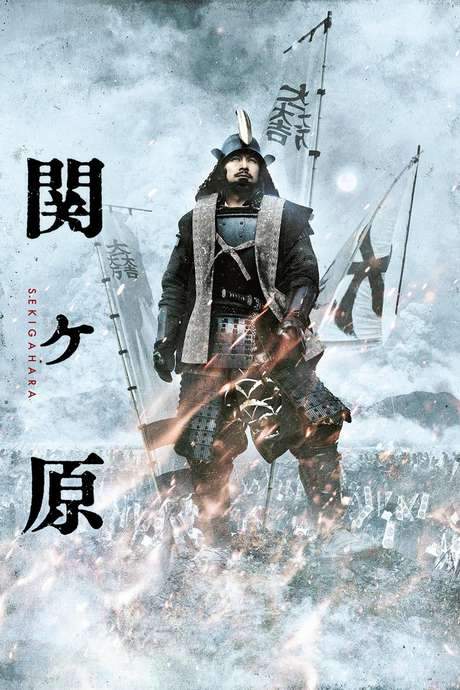
Sekigahara (2017) movie poster

Timeline

Sekigahara (2017) Timeline Explained – Every Event in Order

Release, runtime and language
2017 · 150 mins · Japanese
Directed by
Masato Harada
Starring
Kasumi Arimura, Junichi Okada, Ken Yamamura, Masahiro Higashide, Takehiro Hira, Yukiya Kitamura

This film portrays the events leading up to and during the pivotal Battle of Sekigahara in 1600. It depicts the clash between Tokugawa Ieyasu’s Eastern Army and Ishida Mitsunari’s Western Army, a battle that determined the future of Japan. The story explores the complex web of alliances, betrayals, and shifting loyalties among samurai, family members, and retainers as they navigate a time of great political upheaval and uncertain destiny.

On this page (5)
  1. 1 Events in order (15)
  2. 2 Timeline questions answered
  3. 3 Movie threads
  4. 4 Movies like Sekigahara
  5. 5 Every angle

15 events in order · contains spoilers

Sekigahara Timeline: Events in Chronological Order

Every key event of Sekigahara (2017) in order, scene by scene, with when and where it takes place. Use it to untangle flashbacks, time jumps and parallel storylines, to refresh your memory before the sequel or to find the exact scene you are thinking of.

  1. Hideyoshi recruits Sakichi and changes his fate

    In 1570, Toyotomi Hideyoshi meets a young temple acolyte named Sakichi and is impressed by his impertinence. He recruits him into his service, and Sakichi later renames himself Ishida Mitsunari, gaining wealth, lands and prestige.

    When
    1570
  2. Mitsunari rises under Hideyoshi’s banner

    Sakichi grows within the Toyotomi household and earns the trust needed to shape his own career. He becomes Ishida Mitsunari, increasingly aligned with Hideyoshi and poised for a future leadership role.

  3. Hideyoshi unifies Japan and orders invasions of Korea

    Hideyoshi completes the unification of most of Japan and takes the title taikō. He launches expensive invasions of Korea to expand his influence, strains his treasury, and tests the loyalty of his vassals.

    When
    late 1590s
    Where
    Japan and Korea
  4. 1595: Hideyori is born; the beheading is ordered

    In 1595 Hideyori is born after years of Hideyoshi's infertility. Soon after, Hideyoshi orders the execution of his appointed heir and his entire family, under the pretext of treason. Mitsunari pleads for mercy but cannot move Hideyoshi.

    When
    1595
    Where
    Hideyoshi court, Japan
  5. Hatsume becomes a spy after the executions

    During the executions, loyal maids attack Mitsunari’s men. Mitsunari is impressed by their loyalty and spares them, recruiting Hatsume to serve as a spy. This marks the start of Hatsume’s dangerous double life.

    When
    1595
    Where
    Execution grounds, Japan
  6. Mitsunari recruits Sakon after a hesitant start

    Mitsunari meets Shima Sakon, a former respected general who despises Toyotomi. He offers Sakon half of his earnings if he serves as a samurai, but Sakon initially turns him down. Eventually, he is convinced to join by the promise of a freer rule for Toyotomi’s son.

    When
    1595-1596
  7. Hideyoshi falls ill; Ieyasu plots to seize power

    As Hideyoshi grows old and ill, Mitsunari and Otani Yoshitsugu sense that Tokugawa Ieyasu will try to dominate after Hideyoshi’s death. Tokugawa consolidates power with vassals like Honda Tadakatsu and Ii Naomasa and begins his quiet bid for supremacy.

    When
    late 1590s
    Where
    Kyoto, Japan
  8. Hatsume’s informer network vs. White Snake

    Hatsume uses her connections to keep Mitsunari informed of Tokugawa’s moves, but the White Snake spymaster hinders her and blocks informants in Kyoto from reaching Hatsume. The information war thickens as both sides maneuver for an advantage.

    When
    late 1590s
    Where
    Kyoto, Japan
  9. Hideyoshi dies; the death is kept secret to protect Korea withdrawal

    In 1598, Hideyoshi succumbs to illness. Mitsunari orders the death to be concealed until Korea’s troops have completed their retreat, hoping to avoid chaos. The ruse fuels Tokugawa’s suspicions of Mitsunari’s true intentions.

    When
    1598
    Where
    Japan
  10. Tensions rise as rivals set up charges; Maeda mediates

    Tokugawa plots to accuse Mitsunari of usurping the regency, while Mitsunari counters with accusations against the Seven Spears. Maeda Toshiie negotiates a temporary truce, trying to keep the peace between rivals.

    When
    1599-1600
    Where
    Kyoto, Japan
  11. Maeda dies; Seven Spears plot to kill Mitsunari; Hatsume is captured

    A year after the truce, Maeda Toshiie dies and the Seven Spears plot to assassinate Mitsunari. Mitsunari flees toward his fortress at Sawayama, while Hatsume is ambushed on a road and captured, later sold into slavery.

    When
    1599-1600
    Where
    Sawayama, Japan / road to Sekigahara
  12. Alliances form; Uesugi joins Mitsunari against Tokugawa

    Mitsunari forges an alliance with Uesugi Kagekatsu, and they declare war on Tokugawa. Uesugi’s forces invade Tokugawa’s home province, forcing Tokugawa to march out and confront the threat.

    When
    1600
    Where
    Japan
  13. Sekigahara: the decisive battle begins

    On October 21, 1600, the Battle of Sekigahara opens with a clash between Mitsunari’s and Tokugawa’s factions. Sakon leads a vanguard but is wounded and retreats to the battlefield clinic run by his wife. A crucial betrayal by Kobayakawa turns the tide in Tokugawa’s favor.

    When
    October 21, 1600
    Where
    Sekigahara, Japan
  14. Mitsunari’s retreat and surrender

    As Tokugawa’s forces surge, Mitsunari opts not to commit suicide but flees with the wounded and evacuates those who remain. He eventually surrenders to Tokugawa’s troops after a hard-fought defeat.

    When
    1600
    Where
    Sekigahara, Japan
  15. Mitsunari’s execution and Hatsume’s final gesture

    Mitsunari is imprisoned and eventually executed; Kobayakawa visits him with regret before his demise. Hatsume, having followed his fate, finally locates him and mouths the clan motto: 'If one gives oneself for all, the world will prosper,' to honor his sacrifice.

    When
    Post-1600
    Where
    Tokugawa prison, Japan

Last updated: October 09, 2025 at 15:59

Was this helpful?

Timeline questions answered

Sekigahara Timeline Explained: Your Questions Answered

When does it happen, and why in that order? The questions people ask about the chronology of Sekigahara (2017): time jumps, flashbacks, cause and effect between scenes and the correct order of events, each answered with spoilers.

Q1

Why did Kobayakawa Hideaki betray Ishida Mitsunari at Sekigahara?

Kobayakawa Hideaki betrayed Mitsunari after being enticed or pressured by Tokugawa Ieyasu's emissaries. During the battle, Kobayakawa's troops pivot against Mitsunari's army, a crucial defection that turns the tide in Tokugawa's favor. This betrayal directly leads to Otani Yoshitsugu's death and the collapse of Mitsunari's forces.

Foreshadowing: Earlier political tensions and Tokugawa's persistent efforts to gather allies foreshadow Kobayakawa's eventual switch sides.

  • kobayakawa hideaki
  • betrayal
  • sekigahara
  • ishida mitsunari
  • tokugawa
Q2

Why did Toyotomi Hideyoshi order the execution of his designated heir?

In 1595, after conceiving a son named Hideyori, Hideyoshi ordered the execution of his previously designated heir and the entire family on a pretext of treason. This was aimed at securing a new lineage for the throne. Mitsunari pleaded for mercy but failed to move his aging master, who sought to eliminate any potential rivals to his newborn son's future rule.

Foreshadowing: This brutal act of eliminating potential rivals sets the stage for the power vacuum that drives the later conflict.

  • toyotomi hideyoshi
  • hideyori
  • execution
  • heir
  • treason
Q3

Why was Hideyoshi's death kept secret after he died in 1598?

Mitsunari ordered Hideyoshi's death to be concealed until the Korean campaign concluded and troops completed their retreat. The goal was to avoid political upheaval during the withdrawal. When the truth eventually surfaced, Tokugawa used it to frame Mitsunari as someone attempting to seize control of the Regency Council, effectively turning the situation against his rival.

Foreshadowing: This secret-keeping fuels Tokugawa's accusations of Mitsunari's ambition later in the film.

  • hideyoshi death
  • korea campaign
  • secret
  • regency council
  • tokugawa
Q4

What was Hatsume's role as a spy in Mitsunari's network?

After witnessing the loyalty of maids during the executions of 1595, Mitsunari recruited Hatsume as an informant. She used bribes and covert channels to feed Mitsunari crucial intelligence about Tokugawa's movements, becoming a vital thread in his schemes. Her information network competed against the White Snake, a formidable spymaster working against her.

Foreshadowing: Hatsume's intelligence work is repeatedly mentioned as crucial to Mitsunari's political maneuvering throughout the film.

  • hatsume
  • spy
  • mitsunari
  • white snake
  • intelligence
Q5

Why was Maeda Toshiie's death significant to the conflict?

Maeda Toshiie was a respected mediator who brokered a fragile truce between Mitsunari and Tokugawa in 1599-1600. His death shifted the balance of power and intensified the conflict, as the Seven Spears immediately plotted to assassinate Mitsunari. With Maeda gone, there was no neutral figure capable of keeping the peace between the two factions.

Foreshadowing: The temporary truce established while Maeda lived highlights how his death removes the last check on open warfare.

  • maeda toshiie
  • truce
  • death
  • seven spears
  • mediator
Q6

How did the Battle of Sekigahara begin in 1600?

On October 21, 1600, the Battle of Sekigahara erupted as the culmination of the political conflict between Tokugawa Ieyasu's Eastern Army and Ishida Mitsunari's Western Army. Mitsunari had forged an alliance with Uesugi Kagekatsu, and their combined forces pushed toward Sekigahara. The battle began with Sakon leading a small elite force against Tokugawa's vanguard, while ninja attempted to assassinate Tokugawa.

Foreshadowing: Earlier events of political maneuvering and alliance-building directly lead to this military confrontation.

  • sekigahara battle
  • 1600
  • eastern army
  • western army
  • uesugi kagekatsu
Q7

Why did Mitsunari choose to surrender instead of committing suicide?

As Tokugawa's forces surged and defeat became certain, Mitsunari chose not to commit suicide but instead fled with the wounded and evacuated those who remained. He eventually surrendered to Tokugawa's troops. This decision contrasts with traditional samurai expectations and becomes a point of regret for Kobayakawa, who visited the imprisoned Mitsunari urging him to survive.

Foreshadowing: Mitsunari's earlier confession to Hatsume about his obligations and duty suggests his complex relationship with honor and survival.

  • mitsunari surrender
  • seppaku
  • defeat
  • prison
  • kobayakawa
Q8

What happened to Hatsume after she was captured?

Hatsume was ambushed on a road and captured by Tokugawa's forces, then sold into slavery as the winds of war turned harsher. Despite this, her loyalty to Mitsunari remained unbroken. She later made her way toward Sekigahara carrying crucial intelligence, and after Mitsunari's imprisonment, she located him and mouthed the clan motto: 'If one gives oneself for all, the world will prosper' as her final gesture.

Foreshadowing: Earlier scenes establish Hatsume's deep personal loyalty to Mitsunari despite their inability to be together.

  • hatsume captured
  • slavery
  • loyalty
  • sekigahara
  • mitsunari
Q9

Why did the Seven Spears of Shizugatake plot to kill Mitsunari?

The Seven Spears of Shizugatake were Tokugawa's elite warriors whom Tokugawa had cultivated to challenge Mitsunari's influence. After Maeda Toshiie's death, the Seven Spears plotted to assassinate Mitsunari, forcing him to retreat to his castle at Sawayama. Tokugawa had previously provoked the Seven Spears to file formal complaints against Mitsunari, claiming insubordination and a bid for supremacy.

Foreshadowing: Tokugawa's earlier cultivation of the Seven Spears as his personal force creates the weapon used against Mitsunari.

  • seven spears
  • assassination
  • shizugatake
  • tokugawa
  • sawayama
Q10

Why did Ishida Mitsunari want Shima Sakon to join his cause?

Mitsunari recruited Shima Sakon, a ronin once held in high esteem who despised the Toyotomi regime, by offering him half of his earnings if he would serve as a samurai. Mitsunari hoped that after Toyotomi's death, they could together shepherd fairer governance for Toyotomi's son Hideyori. Sakon was eventually swayed by this vision of a more just rule.

Foreshadowing: Sakon's role leading the vanguard at Sekigahara demonstrates the importance of Mitsunari's recruitment efforts.

  • shima sakon
  • mitsunari
  • ronin
  • recruitment
  • toyotomi
Q11

What triggered the rivalry between Mitsunari and Tokugawa Ieyasu?

As Hideyoshi's health declined, Mitsunari and his ally Otani Yoshitsugu grew wary that Tokugawa Ieyasu, the wealthiest lord in the realm, would seize power after the ruler's death. Tokugawa's plotting with vassals Honda Tadakatsu and Ii Naomasa aimed to secure a Regency Council that could override Mitsunari's influence. Both men maneuvered to control the post-Hideyoshi political landscape.

Foreshadowing: The film establishes early that these two figures are destined to clash over Japan's future.

  • tokugawa ieyasu
  • mitsunari
  • rivalry
  • regency council
  • power
Q12

What was the White Snake's role in the conflict?

The White Snake was a formidable spymaster working against Mitsunari's intelligence network. While Hatsume used her connections to keep Mitsunari informed of Tokugawa's moves through bribes and covert channels, the White Snake actively tried to blunt their network and blocked informants in Kyoto from reaching Hatsume. This created an ongoing information war between the two sides.

Foreshadowing: The espionage battle between Hatsume and the White Snake highlights the covert dimension of the conflict.

  • white snake
  • spy
  • hatsume
  • network
  • kyoto

Movie threads

More Movies Like Sekigahara, by Mood & Story

Curated lists built around what makes Sekigahara tick: the same mood, the same kind of story or the same emotional payoff. Each list explains why these movies belong together.

Movies about political betrayal and shifting alliances like Sekigahara

Stories where intricate alliances shatter under the pressure of a looming conflict. If you enjoyed the complex web of political intrigue and betrayal in Sekigahara, explore these movies. This list features similar historical dramas and war films where allegiances are tested, and the fate of nations hinges on secret deals and personal loyalties.

  • tense
  • claustrophobic
  • grim
  • sobering
  • anxious
  • fatalistic
  • Tone: tense, grim, fatalistic
  • Pacing: fast, strategic
Why these movies?

The story pattern: Narratives in this thread typically involve a large cast of characters representing competing factions. The plot is driven by strategic maneuvering, secret meetings, and inevitable betrayals, building towards a climactic confrontation. Character arcs often explore the conflict between personal honor, duty, and survival.

Why they belong together: These movies are grouped together because they share a focus on the psychological and strategic elements of conflict, rather than just the spectacle of battle. They create a tense, claustrophobic atmosphere where trust is a liability and the political landscape is as dangerous as the battlefield.

Grim and tragic historical epic movies similar to Sekigahara

Sweeping historical narratives where noble efforts culminate in devastating defeat. For viewers who appreciated the fatalistic tone and tragic ending of Sekigahara, this collection highlights other epic historical films. Discover movies like Sekigahara that portray doomed campaigns, fallen heroes, and the heavy emotional weight of history's turning points.

  • grim
  • fatalistic
  • melancholic
  • sobering
  • tragic
  • epic
  • Tone: grim, melancholic, sobering
  • Pacing: fast-paced, epic
Why these movies?

The story pattern: The narrative pattern follows a rise-and-fall structure, building up to a climactic event that seals the fate of the central characters. The journey is marked by a sense of inevitable doom, exploring themes of honor, duty, and the often-cruel hand of fate. The ending is typically unambiguous and sad, leaving a lasting melancholic impression.

Why they belong together: These films are united by their shared mood of grim fatalism and their focus on historical tragedy. They offer a sobering viewing experience, emphasizing the human cost behind grand historical events and often leaving the audience with a profound sense of melancholy.

If you liked this

Movies Like Sekigahara

Similar movies to Sekigahara: the same genre, themes or kind of story. Each one comes with its own plot summary, timeline and ending explained.

Browse all movie summaries

Every angle

Sekigahara (2017) Explained: Plot, Timeline & Characters

Everything about Sekigahara in one place: what happens in the plot summary, the timeline in chronological order, the characters and meaning and a spoiler-free summary. What's After the Movie adds the cast, box office and post-credit scenes.

Coming soon on iOS and Android

The Plot Explained Movie Summary App

Plot summaries, endings explained and timelines on your phone. Catch up on any movie in minutes, save your favorites and never miss a twist again.

Be the first to know when we launch. Your email stays private, always.

Learn more about the app