Plot Explained Spoilers guaranteed!
Plot Explained

Browse by genre

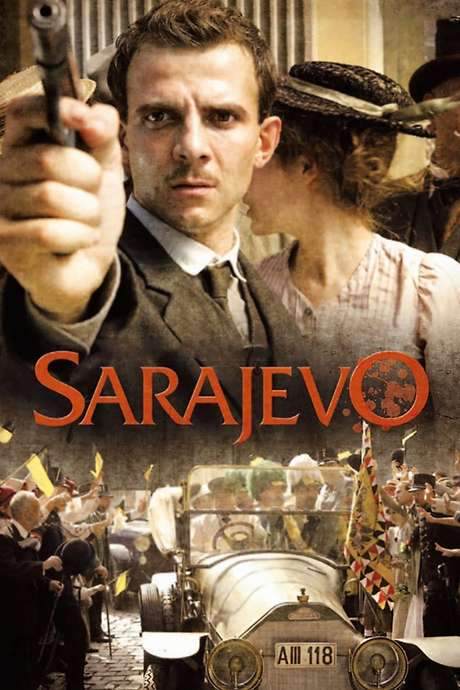
Sarajevo (2014) movie poster

Timeline

Sarajevo (2014) Timeline Explained – Every Event in Order

Release, runtime and language
2014 · 98 mins · German
Loading streaming availability…
Directed by
Andreas Prochaska
Starring
Florian Teichtmeister, Heino Ferch, Edin Hasanović, Erwin Steinhauer, Friedrich von Thun, Melika Foroutan

In June 1914, Sarajevo becomes the stage for a gripping thriller. Examining magistrate Dr. Leo Pfeffer, portrayed by Florian Teichtmeister, investigates the assassination of Archduke Franz Ferdinand amidst a city rife with lawlessness and violence. As he strives to uphold justice and protect his loved ones—his sweetheart, Marija, and her father, a respected Serbian merchant—he uncovers a web of intrigues and betrayals. The escalating events ultimately trigger a chain reaction that leads to the outbreak of the Great War.

On this page (5)
  1. 1 Where to watch
  2. 2 Events in order (13)
  3. 3 Timeline questions answered
  4. 4 Movie threads
  5. 5 Every angle
Loading streaming availability…

13 events in order · contains spoilers

Sarajevo Timeline: Events in Chronological Order

Every key event of Sarajevo (2014) in order, scene by scene, with when and where it takes place. Use it to untangle flashbacks, time jumps and parallel storylines, to refresh your memory before the sequel or to find the exact scene you are thinking of.

  1. Opening life in wartime Sarajevo (June 1914)

    June 1914 finds Sarajevo under Austrian occupation, with life continuing beneath the shadow of empire. The city feels tense, yet daily routines persist as rumors swirl about politics and looming conflicts. This setting frames the upcoming royal procession and the assassination that will ripple outward.

    When
    June 1914
    Where
    Sarajevo
  2. Dr. Leo Pfiffer is tasked with interrogations

    Dr. Leo Pfiffer, a district magistrate for the Austrian government, is assigned to interrogate the six young assassins. He is an ethnically Hungarian and Jewish official navigating loyalty and suspicion in a contested city. Initially, he believes the Serbian government orchestrated the plot to reclaim territory, but his investigation begins to fracture that belief.

    When
    Early June 1914
    Where
    Sarajevo
  3. Initial belief: Serbian government behind the plot

    Pfiffer's early theory pins the murder on Belgrade's orders to push Serbia's influence and redraw borders. The notion frames the assassination as a state-directed strike rather than a random act. This belief drives his early questions and interrogations.

    When
    Early June 1914
    Where
    Sarajevo
  4. Gaps in the confessions reveal unspoken parts

    During interrogations, the six men cannot recount their journeys from Serbia across the mountains into Sarajevo. The missing, unspoken parts of their stories cast doubt on the official account. Pfiffer suspects a cover story hiding a different motive.

    When
    Mid-June 1914
    Where
    Sarajevo
  5. Questions about security and the parade route

    He asks why there were only 36 policemen on the royal procession day and why the parade route was published in newspapers. These details reveal a potential premeditated exposure of the route. The questions hint at deeper planning and local scheming rather than a simple foreign directive.

    When
    Mid-June 1914
    Where
    Sarajevo
  6. Encounters with shadowy figures from Austria and Germany

    As the investigation deepens, Pfiffer encounters shadowy figures from both Austria and Germany. These interactions pull him toward a broader conspiracy with powerful, unseen hands. He begins to suspect a domestic nationalist movement woven into continental schemes.

    When
    Mid to Late June 1914
    Where
    Sarajevo
  7. The localist explanation gains traction

    Pfiffer gradually concludes the assassins were acting as pawns of a local nationalist group, not direct agents of the Serbian government. The idea that a small clique pulled the strings grows stronger, yet proof remains elusive. The thread of truth widens to a murkier battlefield of interests.

    When
    Late June 1914
    Where
    Sarajevo
  8. Industrialists' Berlin-Baghdad railroad plan emerges

    Across the murk, Pfiffer learns of a plan by wealthy industrialists to build a railroad from Berlin to Baghdad through Serbia. The murder becomes a tool in a larger scheme to reshape regional power and economic routes. The vision hints at motives beyond national politics, involving control of resources and strategic transit.

    When
    June 1914
    Where
    Serbia
  9. Austria and Germany use the event to secure Serbia

    Austria and Germany leverage the assassination’s narrative to secure Serbia as a buffer against Russia and to advance their aims in the Balkans. The plot shows how economic and strategic interests steer political actions beneath official statements. The investigation threads crime, commerce, and empire together.

    When
    June 1914
    Where
    Sarajevo
  10. Germany plans to overtake Paris come into view

    In a chilling turn, a German military doctor informs Pfiffer that Germany intends to overtake Paris within a month. The revelation reframes the assassination as a catalyst for a broader war plan. It underscores how personal loyalties and imperial maneuvering intersect with the onset of global conflict.

    When
    Late June 1914
    Where
    Sarajevo
  11. Romance blooms amid the political storm

    Pfiffer begins a romance with a wealthy Serbian heiress living in Sarajevo. The affair brings warmth amid tension but becomes complicated by her status and loyalties. She learns she is married to a man in Paris, adding personal stakes to the unfolding political drama.

    When
    June 1914
    Where
    Sarajevo
  12. Escape to Paris as the German army advances

    Fearing the advancing German army, the heiress and her father return to Paris to seek safety. The romance is sidelined as personal danger takes precedence and Paris becomes their refuge. The move ties intimate lives to the looming continental conflict.

    When
    Late June 1914
    Where
    Paris
  13. Closing implications and lingering questions

    The film closes with lingering questions about who truly pulled the strings and how deeply powers manipulated events in Sarajevo. Pfiffer's journey exposes a web of conspiracy, ambition, and impending war. The audience is left to interpret responsibility within a rapidly evolving European crisis.

    When
    Late June 1914
    Where
    Sarajevo

Last updated: December 27, 2025 at 11:31

Was this helpful?

Timeline questions answered

Sarajevo Timeline Explained: Your Questions Answered

When does it happen, and why in that order? The questions people ask about the chronology of Sarajevo (2014): time jumps, flashbacks, cause and effect between scenes and the correct order of events, each answered with spoilers.

Q1

Why were there only 36 police officers guarding Archduke Franz Ferdinand's procession?

The film highlights this minimal security detail as highly suspicious. Dr. Pfiffer questions why such a small force protected the royal procession in a city known for political tension. The inadequate police presence suggests either gross incompetence or deliberate exposure of the Archduke to danger, raising the possibility that powerful forces wanted the assassination to succeed.

Foreshadowing: Earlier scenes establish Sarajevo as volatile with rising nationalism, making the weak security seem even more out of place.

  • archduke franz ferdinand
  • sarajevo security
  • police
  • assassination
  • parade route
Q2

Why was the parade route published in newspapers before the assassination?

Publishing the exact route in advance exposed the Archduke's movements to potential attackers. The film uses this detail to suggest premeditation beyond the official narrative. Pfiffer recognizes this as evidence that someone wanted the assassination to be possible, pointing to a deeper conspiracy rather than a spontaneous act.

Foreshadowing: The newspaper publication contrasts with the tight security that should have surrounded a royal visit.

  • parade route
  • newspaper
  • franz ferdinand
  • assassination
  • conspiracy
Q3

Why did Dr. Pfiffer stop believing the Serbian government ordered the assassination?

During interrogations, Pfiffer notices the assassins struggle to explain their journey from Serbia into Sarajevo, with inconsistencies in their accounts. He also observes that the six young men seem more driven by local nationalist fervor than by directives from Belgrade. These gaps lead him to question whether the official story blaming Serbia was a simplification serving larger powers.

Foreshadowing: Early in the film, Pfiffer initially accepts the Serbian government theory, but the investigation progressively reveals the holes in this explanation.

  • leo pfiffer
  • serbian government
  • conspiracy
  • assassins
  • interrogation
Q4

What is the Berlin-Baghdad railroad plan and why does it matter?

The film reveals wealthy industrialists were planning a railroad from Berlin to Baghdad passing through Serbia. This economic project represents a major strategic interest. According to the film's interpretation, Austria and Germany used the assassination as a pretext to seize control of Serbia, ensuring the railroad route would fall under their influence rather than be blocked by Serbian opposition.

Foreshadowing: The railroad plan connects to the shadowy figures Pfiffer encounters who represent powerful economic interests manipulating events.

  • berlin-baghdad railroad
  • industrialists
  • serbia
  • economic interests
  • conspiracy
Q5

What does the German military doctor mean when he says Germany intends to overtake Paris within a month?

This chilling revelation shows the assassination was part of a broader war plan. The German military doctor, whom Pfiffer had trusted, reveals that Germany was already prepared to launch a major offensive against France. The assassination of Archduke Ferdinand provided the political catalyst Germany needed to execute its pre-existing military strategy, demonstrating how the event was manipulated to justify a larger conflict.

Foreshadowing: Earlier encounters with German figures hint at their military ambitions, but this conversation makes their intentions explicitly clear.

  • germany
  • paris
  • military doctor
  • war
  • world war i
Q6

Why does Marija Jeftanović flee to Paris with her father?

Marija and her father escape to Paris seeking safety as the German army advances toward Sarajevo. Their departure is driven by fear of the approaching military conflict. Additionally, Marija discovers she is already married to a man in Paris, which complicates her relationship with Pfiffer and forces her to return to that existing marriage, ending their romance.

Foreshadowing: The romance subplot develops throughout the film, with their growing intimacy contrasting against the mounting political tensions.

  • marija jeftanovic
  • paris
  • flee
  • leo pfiffer
  • romance
Q7

According to the film, who really benefits from Archduke Franz Ferdinand's assassination?

The film argues that Austria and Germany benefit most from the assassination. Rather than being a victory for Serbian nationalism, the murder provides these powers with the justification they needed to attack Serbia. The film suggests Germany's military leadership saw the event as an opportunity to implement their war plans, including the quick conquest of Paris, while securing Serbia as a buffer against Russia.

Foreshadowing: Throughout the investigation, Pfiffer encounters figures from both Austria and Germany who seem to be manipulating events from behind the scenes.

  • benefits
  • assassination
  • austria
  • germany
  • serbia
  • conspiracy
Q8

Why does Dr. Pfiffer's investigation reveal a larger conspiracy beyond the six assassins?

Pfiffer's methodical interrogation uncovers inconsistencies that point beyond the official story. The assassins cannot convincingly explain their movements, the security was deliberately weak, and powerful industrial and military interests had motives for wanting conflict. These clues lead Pfiffer to conclude the six young men were pawns in a broader scheme orchestrated by Austria and Germany to reshape the Balkans and advance their geopolitical ambitions.

Foreshadowing: The investigation itself follows a procedural format that progressively reveals deeper layers of the conspiracy.

  • leo pfiffer
  • investigation
  • conspiracy
  • assassins
  • official account
Q9

Why do Austria and Germany want to control Serbia according to the film?

The film presents multiple reasons: Serbia serves as a strategic buffer against Russian expansion into the Balkans, and controlling Serbia ensures the success of the Berlin-Baghdad railroad project. The assassination gives Austria and Germany the political cover to act against Serbia, transforming what could have been a regional incident into a casus belli for broader territorial and economic ambitions.

Foreshadowing: The railroad plan emerges as a key economic motive, connecting to Germany's broader imperial strategy.

  • austria
  • germany
  • serbia
  • buffer
  • russia
  • railroad
  • imperialism
Q10

Why does Dr. Pfiffer continue investigating when he knows the truth won't stop the war?

Despite discovering the conspiracy, Pfiffer cannot prevent the inevitable conflict. The film depicts his investigation as a moral imperative even when futile. His discoveries expose how powerful nations manipulated events, but these revelations come too late to change the trajectory toward World War I. The tragedy lies in his knowledge of the truth being powerless against the machinery of war already set in motion.

Foreshadowing: The closing scenes emphasize the bleak outcome where Pfiffer's efforts cannot alter the historical outcome.

  • leo pfiffer
  • investigation
  • truth
  • war
  • moral dilemma

Movie threads

More Movies Like Sarajevo, by Mood & Story

Curated lists built around what makes Sarajevo tick: the same mood, the same kind of story or the same emotional payoff. Each list explains why these movies belong together.

Historical Conspiracy Thrillers like Sarajevo

Investigate the secret plots and political machinations that changed the world. If you enjoyed the methodical investigation and high-stakes political intrigue of Sarajevo, you'll find similar tension in these movies. This list features historical thrillers where a lone figure uncovers a conspiracy with world-altering consequences, perfect for fans of procedural depth and geopolitical drama.

  • conspiratorial
  • tense
  • historical
  • gripping
  • somber
  • urgent
  • Tone: dark, tense, paranoid
  • Pacing: steady, procedural
Why these movies?

The story pattern: The narrative typically follows a determined investigator—a journalist, magistrate, or academic—who pieces together clues that challenge the official story of a major historical event. Their personal journey is often one of growing paranoia and moral conviction as they confront powerful, shadowy forces, leading to a conclusion where the truth is learned but is often powerless to change the tragic outcome.

Why they belong together: These movies are grouped by their shared focus on historical revisionism through a thriller lens. They create a specific, tense mood by combining the weight of real history with the suspense of a conspiracy being uncovered, resulting in a sobering yet gripping viewing experience.
Bleak Political Procedurals with a tone like Sarajevo

Where the pursuit of justice meets the inevitability of tragedy. For viewers who appreciated the methodical investigation and dark, hopeless atmosphere of Sarajevo, this list highlights similar movies. These films feature a steady, detail-oriented plot where the main character's quest for truth is overshadowed by a grim, unavoidable outcome, delivering a heavy emotional experience.

  • somber
  • tense
  • procedural
  • futile
  • gripping
  • political
  • Tone: dark, bleak, somber
  • Pacing: steady, methodical
Why these movies?

The story pattern: The plot follows a clear, step-by-step inquiry, providing a sense of forward momentum. However, the narrative arc is defined by its tragic irony: the closer the protagonist gets to the truth, the more they realize their powerlessness against the larger geopolitical or social forces at play. The ending is typically bittersweet or bleak, emphasizing the cost of knowledge in the face of inevitability.

Why they belong together: These films share a unique combination of a steady, investigative pacing with a profoundly dark and heavy tone. The similarity lies in the emotional experience of watching a competent individual piece together a puzzle, only for the solution to reveal a truth that offers no victory, only a deeper understanding of loss.

Every angle

Sarajevo (2014) Explained: Plot, Timeline & Characters

Everything about Sarajevo in one place: what happens in the plot summary, the timeline in chronological order, the characters and meaning and a spoiler-free summary. What's After the Movie adds the cast, box office and post-credit scenes.

Coming soon on iOS and Android

The Plot Explained Movie Summary App

Plot summaries, endings explained and timelines on your phone. Catch up on any movie in minutes, save your favorites and never miss a twist again.

Be the first to know when we launch. Your email stays private, always.

Learn more about the app