Plot Explained Spoilers guaranteed!
Plot Explained

Browse by genre

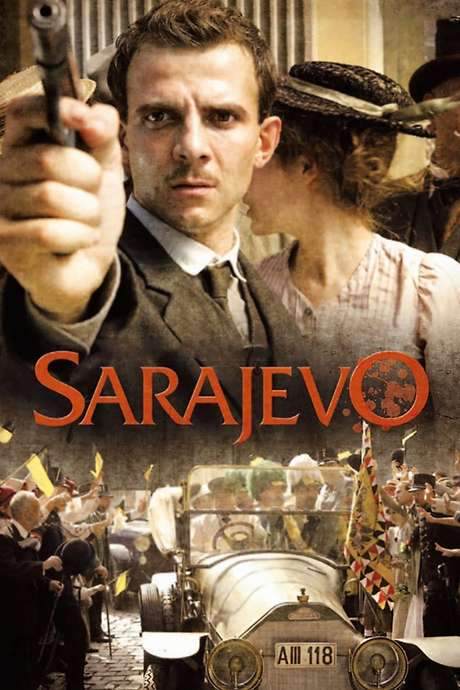
Sarajevo (2014) movie poster

Characters & Themes

Sarajevo (2014) Characters, Setting & Themes Explained

Release, runtime and language
2014 · 98 mins · German
Loading streaming availability…
Directed by
Andreas Prochaska
Starring
Florian Teichtmeister, Heino Ferch, Edin Hasanović, Erwin Steinhauer, Friedrich von Thun, Melika Foroutan

In June 1914, Sarajevo becomes the stage for a gripping thriller. Examining magistrate Dr. Leo Pfeffer, portrayed by Florian Teichtmeister, investigates the assassination of Archduke Franz Ferdinand amidst a city rife with lawlessness and violence. As he strives to uphold justice and protect his loved ones—his sweetheart, Marija, and her father, a respected Serbian merchant—he uncovers a web of intrigues and betrayals. The escalating events ultimately trigger a chain reaction that leads to the outbreak of the Great War.

On this page (7)
  1. 1 Where to watch
  2. 2 Characters explained (8)
  3. 3 Where & when it takes place
  4. 4 Themes & meaning (4)
  5. 5 Character & meaning questions
  6. 6 Movie threads
  7. 7 Every angle
Loading streaming availability…

8 main characters · contains spoilers

Sarajevo Characters Explained: Who Is Who

The main characters of Sarajevo (2014), heroes and villains: what drives them, how they change over the course of the story and what each of them reveals about the film's bigger ideas.

  • Leo Pfeffer (Florian Teichtmeister)

    A district magistrate for the Austrian government in Sarajevo, ethnically Hungarian and Jewish. He is tasked with interrogating the assassins but gradually questions the official narrative. As he probes, he uncovers ties between local nationalist actors and broader imperial schemes, complicating his view of guilt and responsibility.

    • 🕵️ Investigation
    • 🧭 Moral conflict
    • 🏛️ Authority
  • Danilo Ilic (Edin Hasanović)

    One of the six young assassins, part of a local nationalist impulse. He and his companions cannot fully explain their journey into Sarajevo, hinting at a deeper, orchestrated plan. His participation exposes how ordinary youths can be drawn into a much larger political game.

    • ⚖️ Youth
    • 🇷🇸 Nationalism
    • 🔀 Manipulation
  • Dr. Herbert Sattler (Heino Ferch)

    A German military doctor who befriends Pfeffer and supplies crucial insights about German aims. He reveals that Berlin’s plans extend beyond Sarajevo, framing the assassination as a pretext for broader expansion. His perspective accelerates Pfeffer’s unraveling of the conspiracy.

    • 🩺 Ally
    • 🧭 Secret knowledge
    • 🌍 Geopolitics
  • Oskar Potiorek (Erwin Steinhauer)

    A senior Austrian official in Bosnia who embodies imperial authority. His presence and decisions reflect the orchestration of occupation and governance in the region. He serves as a link between local administration and the larger imperial agenda at play.

    • 🏛️ Authority
    • 🧭 Policy
    • 🔗 Power
  • Sektionsrat Wiesner (Friedrich von Thun)

    A high-ranking security official within the Austrian system, involved in the interrogation process and the political machinery surrounding the investigation. He represents the bureaucratic side of empire that seeks to control the narrative around the events.

    • 🗝️ Security
    • 🧭 Bureaucracy
    • 🕵️ Power plays
  • Marija Jeftanović (Melika Foroutan)

    A wealthy Serbian heiress living in Sarajevo who becomes Pfeffer’s lover. Her relationship adds a personal dimension to the political tension and foreshadows how private loyalties are tested by the encroaching conflict.

    • 💎 Social status
    • ❤️ Romance
    • 🗺️ Cross-cultural ties
  • Stojan Jeftanović (Juraj Kukura)

    Marija’s father, a wealthy Serbian figure whose presence underscores the regional rivalries at the heart of Sarajevo’s social fabric. His status and decisions reflect the push-and-pull between Serbian interests and Austro-Hungarian authority.

    • 💰 Elite
    • 🇷🇸 Nationalism
    • 🧭 Influence
  • Schimpf (Martin Leutgeb)

    An Austrian officer/police figure involved in the local investigation, illustrating the enforcement arm of the occupying power. His role hints at the friction between law, order, and the political manipulation surrounding the events.

    • 👮 Police
    • 🛡️ Enforcement
    • 🔍 Investigation

Last updated: December 27, 2025 at 11:28

Was this helpful?

Setting

Where and When Does Sarajevo Take Place?

The setting of Sarajevo (2014): the year and time period, the places and locations, and how they shape the characters, the mood and the tension of the story.

Time period

June 1914

The film is anchored in the heat of June 1914, just before the outbreak of World War I. It situates a society on edge, with the Archduke’s procession and the surrounding rumors shaping every interaction. The June timeframe highlights the collision of personal lives with imperial strategies and dangerous political gambits.

Location

Sarajevo, Bosnia and Herzegovina (then part of the Austrian Empire)

The story unfolds in Sarajevo, a city under Austrian occupation after annexation of parts of Bosnia. The urban backdrop blends imperial bureaucracy with local streets, where officials interrogate suspects while ordinary life goes on. The period is defined by imperial maneuvering, nationalist fervor, and the looming question of where power truly lies.

  • 🏛️ Occupied city
  • 🕰️ Early 20th century
  • 🎯 Political tension

Last updated: December 27, 2025 at 11:28

Was this helpful?

4 major themes

Sarajevo Meaning: Themes & Message Explained

What is Sarajevo (2014) really about? The emotional, social and philosophical themes the film keeps returning to, its symbolism and the message beneath the surface.

  • Conspiracy

    The narrative threads a web of interests—industrialists, states, and clandestine networks—whose actions suggest the assassination is more than a local act of violence. Private profit and imperial ambitions intertwine to create a pretext for larger strategic moves. As the investigation deepens, the line between truth and manipulation becomes increasingly blurred.

  • Nationalism

    Local nationalist passions drive the six young assassins, yet their actions appear to be leveraged by broader agendas. The film probes how raw ethnic pride can be harnessed by powerful actors to destabilize borders and advance geopolitical goals. Individual loyalties clash with the pressure of a larger, impersonal game.

  • Truth vs Narrative

    Dr. Leo Pfeffer seeks an alternative to the official version of events, uncovering gaps and inconsistencies in the proclaimed justifications for the assassination. The pursuit of truth pushes him to question who benefits from presenting a simplified story. The plot reveals how narratives can be manufactured to serve imperial interests.

  • Romance

    A romance develops between Pfeffer and a wealthy Serbian heiress living in Sarajevo, adding emotional complexity to the political tumult. Their relationship is tested by hidden marriages and the encroaching German advance, highlighting how personal lives collide with historic upheaval. The affair complicates loyalties as the city braces for war.

Last updated: December 27, 2025 at 11:28

Was this helpful?

Character & theme questions

Sarajevo Characters & Meaning: Your Questions Answered

The questions people ask about Sarajevo (2014): who the characters really are, their relationships, what the symbols mean, where it takes place and what the movie is really about. Each answer contains spoilers.

Q1

What city is the movie set in and why is it significant?

The movie is set in Sarajevo, the capital of Bosnia and Herzegovina, which in June 1914 was under Austrian occupation following the 1908 annexation. This occupied city serves as the stage for the assassination of Archduke Franz Ferdinand, making it the flashpoint where local tensions collide with imperial power. The urban backdrop blends imperial bureaucracy with ordinary street life, creating an atmosphere where nationalist fervor simmers beneath the surface of officialdom.

Foreshadowing: The opening scenes establish Sarajevo as a city divided, where Austrian officials interrogate suspects while local Serbs navigate the complexities of living under foreign rule.

  • sarajevo
  • bosnia
  • austria-hungary
  • occupied city
  • 1914
Q2

When does the story take place and what makes this time period critical?

The story unfolds in June 1914, specifically in the weeks leading up to the Archduke's assassination. This timeframe is historically significant as it marks the immediate prelude to World War I. The June setting places the narrative at a moment when European powers are engaged in delicate diplomatic maneuvering, and the Archduke's presence in Sarajevo represents both a provocation and an opportunity for various nationalist and imperial actors.

Foreshadowing: The heat of June creates an oppressive atmosphere that mirrors the mounting political tension, with rumors of the Archduke's visit shaping every interaction in the city.

  • june 1914
  • world war i
  • archduke franz ferdinand
  • historical context
Q3

Who is Leo Pfeffer and what is his role in the story?

Dr. Leo Pfeffer is a district magistrate for the Austrian government in Sarajevo, ethnically Hungarian and Jewish. He is tasked with interrogating the assassins of Archduke Franz Ferdinand but gradually begins to question the official narrative. As he investigates, he uncovers connections between local nationalist actors and broader imperial schemes, forcing him to confront complex questions of guilt, responsibility, and who truly benefits from the assassination.

Foreshadowing: Pfeffer's initial compliance with the official investigation early in the film sets up his later transformation into a skeptical truth-seeker.

  • leo pfeffer
  • magistrate
  • austrian government
  • investigator
Q4

What is the conspiracy theme in the movie about?

The conspiracy theme explores how the assassination of Archduke Franz Ferdinand is revealed to be more than a local act of violence. The narrative shows how industrialists, states, and clandestine networks manipulate events, with private profit and imperial ambitions intertwining to create a pretext for larger strategic moves. As Pfeffer's investigation deepens, the line between truth and manipulation becomes increasingly blurred, revealing how powerful actors exploit local nationalism for geopolitical ends.

Foreshadowing: Early interrogation scenes hint at inconsistencies in the official story, with suspects unable to fully explain who orchestrated their actions.

  • conspiracy
  • assassination
  • imperialism
  • manipulation
  • cover-up
Q5

How does the movie portray nationalism in Sarajevo?

The film portrays nationalism as a powerful but manipulable force. Local nationalist passions drive the six young assassins, yet their actions appear to be leveraged by broader geopolitical agendas. The movie probes how raw ethnic pride can be harnessed by powerful actors to destabilize borders and advance imperial goals. Individual loyalties clash with the pressure of a larger, impersonal political game where ordinary youths are drawn into events far beyond their understanding.

Foreshadowing: The assassins' passionate but vague motivations early in the film hint at deeper orchestration behind their actions.

  • nationalism
  • serbian
  • bosnia
  • assassins
  • ethnic tension
Q6

What does the movie say about truth and manufactured narratives?

The film examines how narratives are manufactured to serve imperial interests. Dr. Pfeffer seeks an alternative to the official version of events, uncovering gaps and inconsistencies in the proclaimed justifications for the assassination. His pursuit of truth pushes him to question who benefits from presenting a simplified story. The movie reveals how those in power construct historical narratives to justify their actions, and how the pursuit of actual truth can be both dangerous and ultimately futile against entrenched political machinery.

Foreshadowing: Pfeffer's growing skepticism is seeded through small inconsistencies he notices during early interrogations.

  • truth
  • narrative
  • cover-up
  • historical record
  • investigation
Q7

Who is Marija Jeftanović and what role does she play?

Marija Jeftanović is a wealthy Serbian heiress living in Sarajevo who becomes the love interest of Magistrate Leo Pfeffer. Her relationship with Pfeffer adds emotional complexity to the political tumult surrounding the assassination. The romance is tested by hidden marriages and the encroaching German advance, highlighting how personal lives collide with historic upheaval. Her background as a Serbian elite in occupied Bosnia complicates Pfeffer's loyalties as the city braces for war.

Foreshadowing: Their relationship begins amid the political tension, foreshadowing how their personal connection will be tested by the unfolding crisis.

  • marija jeftanović
  • romance
  • serbian heiress
  • leo pfeffer
Q8

Who is Danilo Ilic and why is he significant?

Danilo Ilic is one of the six young assassins who carry out the assassination of Archduke Franz Ferdinand. He represents the local nationalist impulse driving the plot. Significantly, he and his companions cannot fully explain their journey into Sarajevo, hinting at a deeper, orchestrated plan beyond their individual motivations. His participation exposes how ordinary youths can be drawn into a much larger political game, serving as a reminder that the assassination was both a local act and a catalyst for global conflict.

Foreshadowing: Ilic's presence among the assassins early establishes the local dimension of what will become an international crisis.

  • danilo ilic
  • assassin
  • nationalism
  • young assassins
Q9

What was the political situation in Sarajevo under Austrian rule?

Sarajevo in 1914 existed under Austrian occupation following the 1908 annexation of Bosnia and Herzegovina. The city was a crucible of imperial maneuvering, nationalist fervor, and bureaucratic control. Austrian officials like Oskar Potiorek embodied imperial authority, while security officials like Sektionsrat Wiesner managed the political machinery surrounding the investigation. The setting reflects a society on edge, where the Archduke's procession and surrounding rumors shaped every interaction, and where ordinary citizens navigated the complex power dynamics of foreign rule.

Foreshadowing: The opening scenes establish the tension between Austrian authority and local Serbian populations.

  • austrian occupation
  • bosnia-herzegovina
  • empire
  • annexation
  • political tension
Q10

Who is Dr. Herbert Sattler and what does he reveal about German intentions?

Dr. Herbert Sattler is a German military doctor who befriends Pfeffer during the investigation. He supplies crucial insights about German aims in the region, revealing that Berlin's plans extend far beyond Sarajevo. His perspective accelerates Pfeffer's unraveling of the conspiracy by framing the assassination as a pretext for broader imperial expansion. Sattler represents the international dimension of the crisis, showing how the local event in Sarajevo is connected to larger strategic calculations by European powers.

Foreshadowing: Sattler appears as a seemingly helpful ally but gradually reveals information that complicates the official narrative.

  • herbert sattler
  • german
  • military doctor
  • berlin
  • expansion
Q11

Why is the Archduke's assassination significant in the movie?

The assassination of Archduke Franz Ferdinand serves as the central event that triggers the movie's investigation and ultimately leads to World War I. The film examines this historic moment through the perspective of Magistrate Pfeffer, exploring not just the act itself but the web of conspiracies and manipulations surrounding it. The assassination becomes a lens through which the movie examines themes of nationalism, imperial ambition, and the manufacturing of historical narratives.

Foreshadowing: The anticipation of the Archduke's visit permeates early scenes, building tension throughout the city.

  • archduke franz ferdinand
  • assassination
  • world war i
  • history

Movie threads

More Movies Like Sarajevo, by Mood & Story

Curated lists built around what makes Sarajevo tick: the same mood, the same kind of story or the same emotional payoff. Each list explains why these movies belong together.

Historical Conspiracy Thrillers like Sarajevo

Investigate the secret plots and political machinations that changed the world. If you enjoyed the methodical investigation and high-stakes political intrigue of Sarajevo, you'll find similar tension in these movies. This list features historical thrillers where a lone figure uncovers a conspiracy with world-altering consequences, perfect for fans of procedural depth and geopolitical drama.

  • conspiratorial
  • tense
  • historical
  • gripping
  • somber
  • urgent
  • Tone: dark, tense, paranoid
  • Pacing: steady, procedural
Why these movies?

The story pattern: The narrative typically follows a determined investigator—a journalist, magistrate, or academic—who pieces together clues that challenge the official story of a major historical event. Their personal journey is often one of growing paranoia and moral conviction as they confront powerful, shadowy forces, leading to a conclusion where the truth is learned but is often powerless to change the tragic outcome.

Why they belong together: These movies are grouped by their shared focus on historical revisionism through a thriller lens. They create a specific, tense mood by combining the weight of real history with the suspense of a conspiracy being uncovered, resulting in a sobering yet gripping viewing experience.
Bleak Political Procedurals with a tone like Sarajevo

Where the pursuit of justice meets the inevitability of tragedy. For viewers who appreciated the methodical investigation and dark, hopeless atmosphere of Sarajevo, this list highlights similar movies. These films feature a steady, detail-oriented plot where the main character's quest for truth is overshadowed by a grim, unavoidable outcome, delivering a heavy emotional experience.

  • somber
  • tense
  • procedural
  • futile
  • gripping
  • political
  • Tone: dark, bleak, somber
  • Pacing: steady, methodical
Why these movies?

The story pattern: The plot follows a clear, step-by-step inquiry, providing a sense of forward momentum. However, the narrative arc is defined by its tragic irony: the closer the protagonist gets to the truth, the more they realize their powerlessness against the larger geopolitical or social forces at play. The ending is typically bittersweet or bleak, emphasizing the cost of knowledge in the face of inevitability.

Why they belong together: These films share a unique combination of a steady, investigative pacing with a profoundly dark and heavy tone. The similarity lies in the emotional experience of watching a competent individual piece together a puzzle, only for the solution to reveal a truth that offers no victory, only a deeper understanding of loss.

Every angle

Sarajevo (2014) Explained: Plot, Timeline & Characters

Everything about Sarajevo in one place: what happens in the plot summary, the timeline in chronological order, the characters and meaning and a spoiler-free summary. What's After the Movie adds the cast, box office and post-credit scenes.

Coming soon on iOS and Android

The Plot Explained Movie Summary App

Plot summaries, endings explained and timelines on your phone. Catch up on any movie in minutes, save your favorites and never miss a twist again.

Be the first to know when we launch. Your email stays private, always.

Learn more about the app