Plot Explained Spoilers guaranteed!
Plot Explained

Browse by genre

The Kremlin Letter (1970) movie poster

Timeline

The Kremlin Letter (1970) Timeline Explained – Every Event in Order

Release, runtime and language
1970 · 120 mins · English
Starring
Orson Welles, John Huston, Bibi Andersson, Niall MacGinnis, Max von Sydow, George Sanders

World War III is threatened by a single envelope. After a rogue letter falsely indicating U.S. support for a Russian assault on China arrives in Moscow, a former naval officer assembles a covert team to recover the incriminating document. Their mission unravels when a shrewd politician assaults their hideout, forcing them to confront a deeper political conspiracy.

On this page (6)
  1. 1 Where to watch
  2. 2 Events in order (15)
  3. 3 Timeline questions answered
  4. 4 Movie threads
  5. 5 Movies like The Kremlin Letter
  6. 6 Every angle

Where to watch

Where to Watch The Kremlin Letter (1970)

Where can you watch The Kremlin Letter? Stream, rent or buy it in the US, including on YouTube TV, Amazon Video and Apple TV Store: current JustWatch availability with up-to-date prices.

Streaming availability powered by JustWatch

15 events in order · contains spoilers

The Kremlin Letter Timeline: Events in Chronological Order

Every key event of The Kremlin Letter (1970) in order, scene by scene, with when and where it takes place. Use it to untangle flashbacks, time jumps and parallel storylines, to refresh your memory before the sequel or to find the exact scene you are thinking of.

  1. Recruitment and formation of the team

    In 1969, The Highwayman recruits Charles Rone and four new operatives for a covert operation. The recruits are Janis, 'The Whore'; The Warlock; and B.A., a thief. They form a tight-knit team drawn from a shadowy postwar network to retrieve a dangerous letter.

    When
    1969
  2. The letter's origin and the high-stakes payoff

    The letter promises United States aid to the Soviet Union to destroy Chinese atomic weapons plants. It is solicited by a high-level Soviet official through Dmitri Polyakov, who has sold Soviet secrets to the U.S. In response, U.S. and British authorities plan to buy back the letter, but Polyakov dies under pressure from Soviet counterintelligence led by Colonel Kosnov.

  3. Blackmail to secure a Moscow safehouse

    To secure a vacant apartment in Moscow, the team blackmails Captain Potkin, the Soviet head of counterintelligence in the U.S. They threaten his family to coerce permission for the use of his Moscow residence. Potkin agrees to cooperate, effectively providing a base for their operation inside the Soviet Union.

    Where
    Moscow
  4. Entrance to the Soviet Union and the Highwayman's sacrifice

    The team arrives in the Soviet Union to begin the operation. The Highwayman, terminally ill, sacrifices his life to divert the attention of Soviet counterintelligence away from the rest of the group. His death clears the path for the mission but marks a turning point in the operation.

    Where
    Soviet Union
  5. Janis pursues a Kitai lead via a brothel network

    Janis partners with a brothel operator who hints at a Chinese spy known as 'The Kitai' as a potential source for names of officials and others to whom he can sell heroin. Janis plans to keep prostitutes addicted to ensure control and leverage. This pursuit widens the web around the letter and its contacts.

  6. Warlock infiltrates an intellectual circle

    The Warlock integrates into a community of intellectual homosexuals and begins an affair with a university professor. One of the professor's students reveals Polyakov had a relationship with Vladimir Bresnavitch, tying Polyakov to high-level Soviet connections. The infiltration expands the network surrounding the letter.

    Where
    Academic circles
  7. Bresnavitch vs. Kosnov: the old guard fractures

    Years earlier, Bresnavitch sought to oust Kosnov in favor of Robert Sturdevant, a primary operator in The Highwayman's old group. Kosnov betrays Sturdevant to protect his own position, and Sturdevant disappears, presumed dead or driven to suicide. The rivalries set the stage for later betrayals connected to the letter.

    When
    Years before
    Where
    Soviet counterintelligence world
  8. Paris connections: Bresnavitch, Polyakov and Ward

    Bresnavitch used Polyakov to fence stolen artworks in Paris, and Ward travels there to follow leads. The Paris detour draws Ward deeper into the net of double-crosses behind the letter. This detour widens the search beyond the initial operation.

    When
    Years earlier
    Where
    Paris
  9. USSR raid begins: Potkin informs Bresnavitch

    On the day of the operation, Potkin reaches the Soviet Union and informs Bresnavitch about Rone's plan. Janis, B.A., and Ward are apprehended, while Warlock commits suicide rather than be captured. Rone escapes and attempts to arrange a re-purchase of the letter with the Kitai, who responds with hostility.

    Where
    Soviet Union
  10. The Kitai encounter: the letter is in Chinese hands

    Rone tries to bargain with the Kitai to repurchase the letter, but the Chinese spy attacks him. Rone deduces that the Kitai and his network hold the letter, not his allies. The confrontation reveals the scale of the Chinese involvement in the operation.

    Where
    Kitai's location
  11. Erika Beck reveals Bresnavitch's machinations

    Rone turns to Erika Beck, Kosnov's wife, with whom he has been having an affair. Erika later reports that B.A. has taken poison and is expected to die. Rone realizes Bresnavitch orchestrated the raid without Kosnov's knowledge, signaling Bresnavitch as Polyakov's traitorous Soviet official contact.

    Where
    Erika Beck's residence
  12. Rone presses for Ward's release

    Rone threatens to expose Bresnavitch unless Ward is released. Bresnavitch agrees, attempting to preserve his own position in the web of counterintelligence. The confrontation tests loyalties among the surviving operatives.

  13. Erika is killed by Ward

    Ward proceeds to eliminate Erika Beck by shooting her after Bresnavitch's agreement to release him. The killing removes a potential complicating factor for Ward and deepens the rift between the protagonists.

    Where
    Somewhere in the operation area
  14. Ward cripples Kosnov and the power shift begins

    Ward confronts Kosnov and begins listing agents betrayed by Kosnov, then shoots Kosnov in the kneecap. Kosnov's scream signals the collapse of his control and the destabilization of the counterintelligence machinery around the mission.

    Where
    Kosnov's location
  15. Revelations at the edge of departure

    While heading for a plane to leave the country, Rone learns that Ward is actually Sturdevant and intends to stay, having struck a deal with Bresnavitch to lead counterintelligence. Ward then reveals that B.A. is alive and hands Rone a note threatening Potkin's family as a coercive bargain: 'Kill Potkin's wife and daughters or I kill the girl.'

    Where
    On the way to departure

Last updated: October 09, 2025 at 12:40

Was this helpful?

Timeline questions answered

The Kremlin Letter Timeline Explained: Your Questions Answered

When does it happen, and why in that order? The questions people ask about the chronology of The Kremlin Letter (1970): time jumps, flashbacks, cause and effect between scenes and the correct order of events, each answered with spoilers.

Q1

Why was the falsified letter such a dangerous threat?

The letter falsely promised United States military support to the Soviet Union for destroying Chinese atomic weapons plants. If the Soviet leadership believed America supported such an attack, it could have triggered a catastrophic chain reaction: the USSR might have launched a preemptive strike against China, potentially drawing the U.S. into nuclear conflict with both communist powers. The document essentially served as a match that could ignite World War III.

  • falsified letter
  • World War III
  • Soviet Union
  • China
  • nuclear threat
  • political conspiracy
Q2

Who is Ward really?

Ward is actually Robert Sturdevant, a primary operator from The Highwayman's old WWII spy network. Years earlier, Kosnov betrayed Sturdevant's trust to protect his own position, capturing his agents and forcing Sturdevant into hiding, presumed dead. Sturdevant survived under the alias Ward and reemerged as part of Rone's crew, ultimately striking a deal with Bresnavitch to take over Soviet counterintelligence himself.

Foreshadowing: Earlier references to Sturdevant's disappearance and presumed suicide hint at his survival.

  • Ward
  • Robert Sturdevant
  • identity reveal
  • Kosnov
  • betrayal
  • counterintelligence
Q3

Why did The Warlock choose to commit suicide?

The Warlock killed himself rather than be captured by Soviet authorities. As a culturally sophisticated homosexual who had infiltrated academic circles, he faced exposure and interrogation. Given the brutal nature of Soviet counterintelligence and the likely consequences for a spy caught in such circumstances, he chose to take his own life rather than risk betraying his teammates under torture or being publicly humiliated.

  • The Warlock
  • suicide
  • capture
  • homosexual
  • courage
Q4

Why did The Highwayman sacrifice himself?

The Highwayman, who was terminally ill, deliberately drew the attention of Soviet counterintelligence away from his teammates to allow them to complete their mission. By making himself a visible target, he created a distraction that enabled Rone, Janis, Warlock, B.A., and Ward to enter the Soviet Union undetected and pursue their objective of recovering the letter.

  • The Highwayman
  • sacrifice
  • distraction
  • terminal illness
  • team survival
Q5

What was the conflict between Kosnov, Bresnavitch, and Sturdevant?

Years before the main events, Bresnavitch of the Soviet Central Committee tried to oust Colonel Kosnov in favor of Robert Sturdevant, who operated across territories that Kosnov controlled. To save his position, Kosnov betrayed Sturdevant's trust by capturing his agents, causing Sturdevant to disappear. This created a deep personal vendetta that later motivated both Bresnavitch and the seemingly-returning Sturdevant to maneuver against Kosnov.

  • Kosnov
  • Bresnavitch
  • Sturdevant
  • rivalry
  • counterintelligence
  • Soviet Central Committee
Q6

Why did Ward kill Erika Beck?

Ward killed Erika Beck, the wife of Colonel Kosnov with whom Rone had been having an affair, because he disapproved of Rone's plan to help her escape to the West. With Bresnavitch having agreed to release Ward, Erika represented a loose end and potential complication. Her death also served to further destabilize Kosnov and remove a character who could complicate Ward's new position.

  • Erika Beck
  • Ward
  • killing
  • Kosnov
  • affair
  • escape
Q7

What did the final threatening note mean?

At the airport, Ward handed Rone a note warning: 'Kill Potkin's wife and daughters or I kill the girl.' This meant Rone had to murder Potkin's family, whom the team had previously blackmailed to secure their Moscow safehouse, in exchange for B.A.'s survival. The note revealed B.A. was still alive but being held hostage, forcing Rone into an impossible moral choice that would define the film's bleak ending.

  • Potkin
  • family
  • threat
  • B.A.
  • hostage
  • final choice
  • compromise
Q8

How did the letter end up with the Chinese?

The letter came into Chinese hands through Dmitri Polyakov, who had obtained it while acting as a go-between for the Soviet official. After Polyakov's suicide under Soviet pressure, the letter's fate became unclear until Rone discovered the Kitai, a Chinese spy, had acquired it. The Chinese intelligence operation had obtained the document, making it impossible for Rone's team to simply repurchase it.

  • letter
  • Chinese
  • Kitai
  • Polyakov
  • acquisition
  • recovery
Q9

Why did Bresnavitch orchestrate the raid without Kosnov's knowledge?

Bresnavitch conducted the raid on Rone's team without informing Kosnov because he was Polyakov's contact and needed to eliminate the operation before Kosnov discovered his treachery. By striking first, Bresnavitch hoped to cover his tracks and prevent his role in the original letter scheme from being exposed to Soviet counterintelligence leadership.

  • Bresnavitch
  • raid
  • Kosnov
  • treason
  • exposure
  • counterintelligence
Q10

Why couldn't Rone successfully rescue Erika Beck?

Rone's plan to help Erika escape to the West failed because Ward, disapproving of the rescue, killed her first. Rone had used Erika to gather intelligence about Bresnavitch's machinations and had promised her safe passage, but Ward's intervention removed her before the escape could occur, leaving Rone's promises unfulfilled.

  • Rone
  • Erika
  • rescue
  • failed
  • Ward
  • killing

Movie threads

More Movies Like The Kremlin Letter, by Mood & Story

Curated lists built around what makes The Kremlin Letter tick: the same mood, the same kind of story or the same emotional payoff. Each list explains why these movies belong together.

Complex Cold War spy stories like The Kremlin Letter

Stories of agents navigating a treacherous web of lies and shifting allegiances. If you enjoyed the intricate deceptions of The Kremlin Letter, explore more movies like it. This collection features complex spy thrillers filled with political intrigue, double agents, and morally compromised missions set against the tense backdrop of the Cold War.

  • paranoid
  • claustrophobic
  • treacherous
  • suspenseful
  • morally grey
  • cold war
  • Tone: tense, dark, cynical
  • Pacing: fast, intricate
Why these movies?

The story pattern: Narratives in this thread are defined by their complexity, often featuring a large cast of characters with obscured motives. The plot unfolds as a puzzle, where each revelation deepens the mystery and raises the stakes, typically culminating in a moment of profound betrayal or moral downfall.

Why they belong together: Movies are grouped here for their shared focus on the labyrinthine nature of intelligence work, a pervasive atmosphere of paranoia, and stories where the political mission often destroys the individual's moral compass.
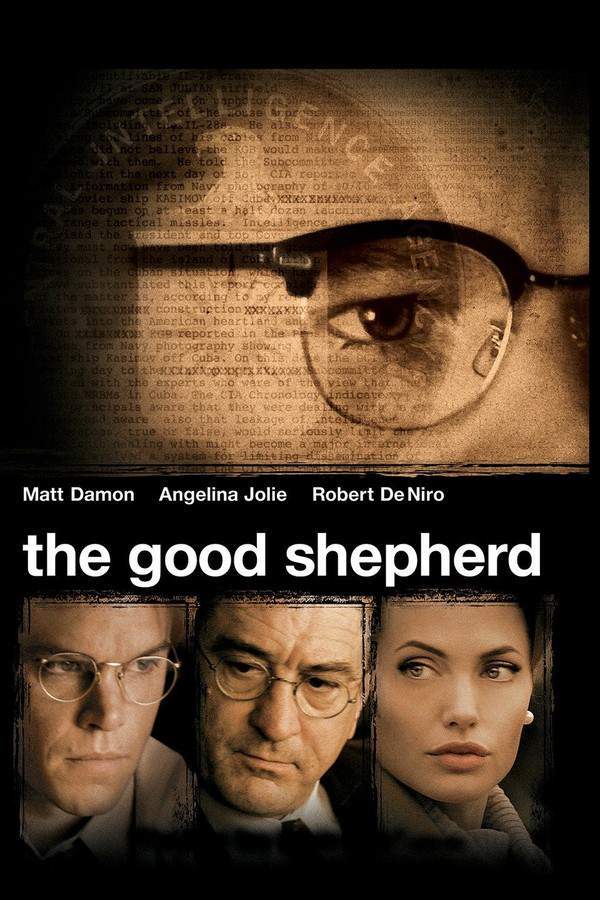
Bleak stories of moral compromise like The Kremlin Letter

Journeys where survival requires a devastating sacrifice of one's principles. Fans of the devastating ending of The Kremlin Letter will find similar movies here. These are heavy dramas and thrillers about missions that end in moral ruin, where characters must make horrific choices to survive in a corrupt or ruthless world.

  • bleak
  • morally grey
  • treacherous
  • heavy
  • dark
  • ruthless
  • Tone: dark, bleak, cynical
  • Pacing: fast, relentless
Why these movies?

The story pattern: The defining pattern is a protagonist gradually forced into increasingly heinous acts for a cause that may be futile or corrupt. The journey is emotionally heavy, focusing on the psychological cost of survival, and culminates in a bleak ending where the protagonist is irreparably damaged.

Why they belong together: These films are united by a shared narrative arc of moral decay, a dark and cynical tone, and an emotionally heavy viewing experience that leaves the audience with a sense of profound loss rather than catharsis.

If you liked this

Movies Like The Kremlin Letter

Similar movies to The Kremlin Letter: the same genre, themes or kind of story. Each one comes with its own plot summary, timeline and ending explained.

Browse all movie summaries

Every angle

The Kremlin Letter (1970) Explained: Plot, Timeline & Characters

Everything about The Kremlin Letter in one place: what happens in the plot summary, the timeline in chronological order, the characters and meaning and a spoiler-free summary. What's After the Movie adds the cast, box office and post-credit scenes.

Coming soon on iOS and Android

The Plot Explained Movie Summary App

Plot summaries, endings explained and timelines on your phone. Catch up on any movie in minutes, save your favorites and never miss a twist again.

Be the first to know when we launch. Your email stays private, always.

Learn more about the app