Plot Explained Spoilers guaranteed!
Plot Explained

Browse by genre

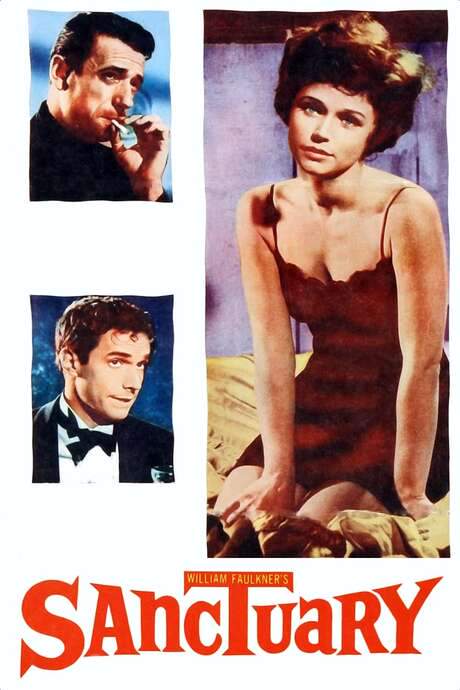
Sanctuary (1961) movie poster

Characters & Themes

Sanctuary (1961) Characters, Setting & Themes Explained

Release, runtime and language
1961 · 90 mins · English
Directed by
Tony Richardson
Starring
Yves Montand, Strother Martin, Lee Remick, Howard St. John, Bradford Dillman, Marge Redmond

In 1920s rural Mississippi, servant Nancy Mannigoe is sentenced to death for murdering the infant of Temple Drake, the governor’s daughter. Temple begs her father to exonerate Nancy, saying she acted hastily to stop Temple from resuming an affair with a roguish Cajun named Candy Man. As she pleads for mercy, Temple’s sordid past emerges.

On this page (7)
  1. 1 Characters explained (5)
  2. 2 Where & when it takes place
  3. 3 Themes & meaning (3)
  4. 4 Character & meaning questions
  5. 5 The book behind the movie
  6. 6 Movie threads
  7. 7 Every angle

5 main characters · contains spoilers

Sanctuary Characters Explained: Who Is Who

The main characters of Sanctuary (1961), heroes and villains: what drives them, how they change over the course of the story and what each of them reveals about the film's bigger ideas.

  • Temple Drake (Lee Remick)

    A once-spirited college girl whose flirtations turn into dangerous entanglements with Candy Man and a dull marriage to Gowan Stevens. Her arc centers on moral ambiguity, denial, and the search for salvation amid societal pressure. She seeks escape from a life she finds unsatisfying, only to be drawn back into peril.

    • 🎭 Tangled desires
    • 🕊️ Self-discovery
    • 🏛️ Domestic life
  • Nancy Mannigoe (Odetta)

    Temple’s Black maid who acts with fierce loyalty and ultimately makes the sacrificial choice of smothering the infant to save Temple. Her decision exposes the cost of protection within a racist system and foreshadows Temple’s own awakening. Her quiet strength underlines a moral center at the story’s core.

    • 🎭 Loyal
    • 💪 Sacrifice
    • 🧼 Servant life
  • Gowan Stevens (Bradford Dillman)

    Temple’s husband, a man whose life is comfortable but emotionally unfulfilling. He embodies the moral ambiguities of a relationship built on status and routine, setting up a contrast with Temples’s past passions and the danger she seeks.

    • 💍 Marriage
    • 🧭 Turbulence
    • 💬 Tension
  • Gov. Drake (Howard St. John)

    Temple’s father and the governor, a figure of political authority who must weigh clemency against law. His inability to grant a pardon highlights the limitations of power within the justice system and the personal conflicts that arise from it.

    • 🏛️ Politics
    • 👑 Authority
    • ⚖️ Justice
  • Candy Man (uncredited)

    A Cajun bootlegger who catalyzes Temple’s descent into the New Orleans underworld. His presence triggers the sequence of events that binds Temple and Nancy to a ruinous past.

    • 🚬 Crime
    • 🕳️ Danger
    • 🗝️ Secret life

Last updated: October 04, 2025 at 15:33

Was this helpful?

Setting

Where and When Does Sanctuary Take Place?

The setting of Sanctuary (1961): the year and time period, the places and locations, and how they shape the characters, the mood and the tension of the story.

Time period

1928

The narrative is anchored in 1928 Mississippi during the Jim Crow era, with important flashbacks to Temple Drake’s youth and the New Orleans brothel. The eve of Nancy Mannigoe’s execution frames the present timeline, while earlier events unfold in memory as the past returns to confront the characters.

Location

Yoknapatawpha County, Mississippi, New Orleans, Louisiana

The story unfolds across Yoknapatawpha County in rural Mississippi, with significant sequences in New Orleans. The setting foregrounds the rural South's social hierarchies, racial tensions, and political power. The juxtaposition of a quiet county town and the city’s underworld helps drive the film’s moral conflicts.

  • 🏛️ Southern Gothic
  • 🗺️ Setting
  • 🧭 Regional Drama

Last updated: October 04, 2025 at 15:33

Was this helpful?

3 major themes

Sanctuary Meaning: Themes & Message Explained

What is Sanctuary (1961) really about? The emotional, social and philosophical themes the film keeps returning to, its symbolism and the message beneath the surface.

  • Guilt

    Guilt permeates the story as Nancy sacrifices the infant to save Temple, forcing both women to confront the consequences of desire and betrayal. The film traces how guilt reshapes identity, loyalty, and forgiveness. Redemption emerges not from punishment, but from mutual recognition between the two violated women.

  • Power Dynamics

    The narrative exposes how race, class, and gender shape power in the Jim Crow South. Nancy’s status as a Black maid contrasts with Temple’s white privilege and the governor’s authority, highlighting the gulf between law and humanity. The characters maneuver within a system that excuses violence and exploits vulnerability.

  • Love Consequences

    The film centers on tangled loves and coercive relationships, from Temple’s flirtations and coerced experiences to her later marriage and escape attempts. Desire is depicted as both captivating and dangerous, with consequences that outlive the moment of passion. The story suggests that love, when misused or misunderstood, can trap people in destructive cycles.

Last updated: October 04, 2025 at 15:33

Was this helpful?

Character & theme questions

Sanctuary Characters & Meaning: Your Questions Answered

The questions people ask about Sanctuary (1961): who the characters really are, their relationships, what the symbols mean, where it takes place and what the movie is really about. Each answer contains spoilers.

Q1

Where is Sanctuary set?

The story takes place primarily in Yoknapatawpha County, rural Mississippi, with significant scenes set in New Orleans, Louisiana. This contrast between a quiet Southern county town and the city's underworld drives the film's moral conflicts.

  • yoknapatawpha county
  • mississippi
  • new orleans
  • setting
  • southern gothic
Q2

What time period does the movie take place in?

The narrative is set in 1928 Mississippi during the Jim Crow era. The present-day timeline centers on the eve of Nancy Mannigoe's execution, while extended flashbacks reveal events from Temple Drake's youth that led to the tragic circumstances.

  • 1928
  • jim crow era
  • mississippi
  • time period
  • 1920s
Q3

What kind of world does the movie depict?

The setting foregrounds the rural South's social hierarchies, racial tensions, and political power under Jim Crow. The divide between Yoknapatawpha County's conservative values and New Orleans' underworld exposes a world where law and humanity often collide.

  • social hierarchy
  • racial tension
  • power
  • rural south
  • jim crow
Q4

What are the main themes of Sanctuary?

The film explores three major themes: Guilt and redemption, as both Temple and Nancy confront the consequences of desire and betrayal; Power Dynamics, examining how race, class, and gender shape authority in the Jim Crow South; and Love Consequences, showing how tangled relationships and coerced encounters trap characters in destructive cycles.

  • guilt
  • redemption
  • power dynamics
  • love consequences
  • themes
Q5

Who is Temple Drake?

Temple Drake is the governor's daughter, a once-spirited college girl whose flirtations lead her into dangerous entanglements with a Cajun bootlegger called Candy Man. Her arc centers on moral ambiguity, denial, and her search for salvation amid societal pressure, as she seeks escape from an unsatisfying life only to be drawn back into peril.

  • temple drake
  • governor's daughter
  • main character
Q6

Who is Nancy Mannigoe?

Nancy Mannigoe is Temple's Black maid, whose fierce loyalty leads her to make the sacrificial choice of smothering the infant to save Temple. Her decision exposes the cost of protection within a racist system, and her quiet strength serves as the moral center of the story.

  • nancy mannigoe
  • maid
  • sacrifice
  • moral center
Q7

What is the relationship between Temple and Nancy?

Temple and Nancy share a complex bond that transcends typical employer-servant dynamics. Nancy's sacrificial act, killing the infant to save Temple, creates a connection built on loyalty, protection, and mutual violation. Their relationship becomes the vehicle through which both women seek redemption and mutual recognition.

  • temple drake
  • nancy mannigoe
  • relationship
  • loyalty
Q8

What does the movie say about guilt and redemption?

Guilt permeates the story as Nancy sacrifices the infant to save Temple, forcing both women to confront the consequences of desire and betrayal. Redemption emerges not from punishment, but from mutual recognition between the two violated women, a grace found through sacrifice rather than justice.

  • guilt
  • redemption
  • sacrifice
  • forgiveness
  • salvation
Q9

How does the movie portray power dynamics in the Jim Crow South?

The narrative exposes how race, class, and gender shape power in the Jim Crow era. Nancy's status as a Black maid contrasts sharply with Temple's white privilege and the governor's authority, highlighting the gulf between law and humanity. The characters maneuver within a system that excuses violence and exploits vulnerability.

  • race
  • class
  • gender
  • power
  • jim crow
  • privilege
Q10

What role does Gov. Drake play in the story?

Gov. Drake is Temple's father and the embodiment of political authority in Mississippi. He must weigh clemency for Nancy against the law, ultimately unable to grant a pardon. His inability to exercise executive mercy highlights the limitations of power within the justice system and the personal conflicts that arise from his dual role as father and governor.

  • governor drake
  • father
  • political authority
  • clemency
Q11

What is New Orleans' role in the story?

New Orleans represents the moral underworld that pulls Temple into danger. The city's brothel and criminal elements serve as the backdrop for her descent and the events that bind her to Nancy through a ruinous past. The contrast between the rural Southern town and the city's vice creates the film's central moral conflict.

  • new orleans
  • brothel
  • underworld
  • vice
  • corruption
Q12

What is the tone and atmosphere of the movie?

The film carries a Southern Gothic tone characterized by moral decay, sin, and heavy themes of trauma. The atmosphere is consistently dark and emotionally intense due to the subject matter, an impending execution, recollections of violence, and infanticide. However, it is not entirely bleak, as the theme of salvation through sacrifice provides a note of grace despite the tragic circumstances.

  • southern gothic
  • tone
  • atmosphere
  • dark
  • tragedy

Movie threads

More Movies Like Sanctuary, by Mood & Story

Curated lists built around what makes Sanctuary tick: the same mood, the same kind of story or the same emotional payoff. Each list explains why these movies belong together.

Southern Gothic moral decay movies like Sanctuary

Slow-burning dramas about sin, guilt, and decay in the American South. If you were captivated by the heavy, intimate atmosphere of Sanctuary, explore more Southern Gothic movies. These films share a similar slow pacing, dark tone, and focus on moral compromise, guilt, and the haunting consequences of history in a richly textured Southern setting.

  • somber
  • gloomy
  • heavy
  • stark
  • melancholic
  • oppressive
  • Tone: dark, melancholic
  • Pacing: slow, deliberate
Why these movies?

The story pattern: Stories in this thread often unfold through confession or revelation, peeling back layers of a sordid past to expose the rot beneath genteel surfaces. The journey is typically one of moral reckoning, where characters face the bleak consequences of their desires and actions, often within a framework of rigid social and racial hierarchies.

Why they belong together: These films are grouped by their shared Southern Gothic setting, which acts as a character itself, and their intense focus on dark, morally complex themes. They deliver a similarly heavy, somber viewing experience through slow pacing and an unflinching look at human frailty.

Movies with confessional flashback narratives like Sanctuary

Stories where a present-day plea unveils a tragic past through extended flashbacks. If you liked the narrative structure of Sanctuary, where a present-day plea for clemency unveils a sordid past, you'll appreciate these movies. They share a similar moderate complexity, using flashbacks to connect timelines and deliver a bittersweet, emotionally heavy conclusion.

  • heavy
  • melancholic
  • intimate
  • reflective
  • tragic
  • redemptive
  • Tone: dark, bittersweet
  • Pacing: slow, measured
Why these movies?

The story pattern: The narrative pattern involves two timelines intricately connected. The present acts as a frame of judgment or consequence, while the past, revealed in detailed flashbacks, provides the context for the characters' desperate actions. The climax comes from the collision of these two timelines, leading to an ending that is tragic yet infused with a note of redemption or acceptance.

Why they belong together: These films are united by their specific plot structure and emotional arc. The combination of a high-stakes present, a dark past revealed through memory, and a bittersweet resolution creates a uniquely powerful and emotionally draining viewing experience focused on reckoning with history.

Every angle

Sanctuary (1961) Explained: Plot, Timeline & Characters

Everything about Sanctuary in one place: what happens in the plot summary, the timeline in chronological order, the characters and meaning and a spoiler-free summary. What's After the Movie adds the cast, box office and post-credit scenes.

Coming soon on iOS and Android

The Plot Explained Movie Summary App

Plot summaries, endings explained and timelines on your phone. Catch up on any movie in minutes, save your favorites and never miss a twist again.

Be the first to know when we launch. Your email stays private, always.

Learn more about the app