Plot Explained Spoilers guaranteed!
Plot Explained

Browse by genre

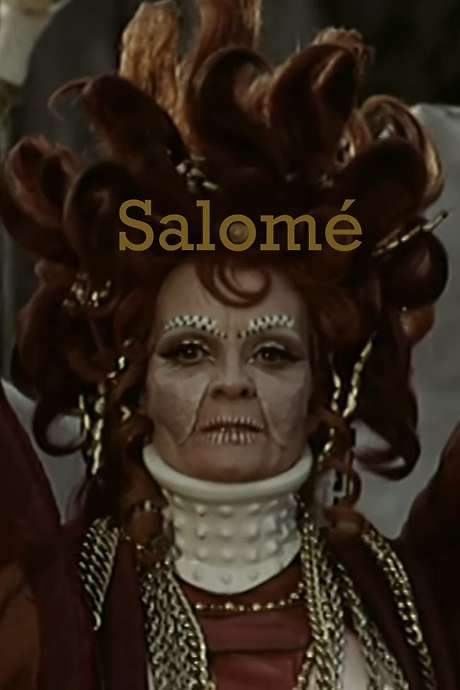
Salome’s Last Dance (1988) movie poster

Characters & Themes

Salome’s Last Dance (1988) Characters, Setting & Themes Explained

Release, runtime and language
1988 · 89 mins · English
Loading streaming availability…
Starring
Douglas Hodge, Glenda Jackson, Ken Russell, Tim Potter, Imogen Claire, Stratford Johns

On Guy Fawkes Night, 5 November 1892, Oscar Wilde and his lover Lord Alfred Douglas slip into a luxurious London brothel. Its proprietor, Alfred Taylor, has prepared an unexpected private staging of the playwright’s banned work Salome, casting himself and the establishment’s eccentric patrons to perform for the celebrated author.

On this page (8)
  1. 1 Where to watch
  2. 2 Characters explained (5)
  3. 3 Where & when it takes place
  4. 4 Themes & meaning (4)
  5. 5 Character & meaning questions
  6. 6 Movie threads
  7. 7 Movies like Salome’s Last Dance
  8. 8 Every angle
Loading streaming availability…

5 main characters · contains spoilers

Salome’s Last Dance Characters Explained: Who Is Who

The main characters of Salome’s Last Dance (1988), heroes and villains: what drives them, how they change over the course of the story and what each of them reveals about the film's bigger ideas.

  • Oscar Wilde (Nickolas Grace)

    A celebrated, controversial playwright whose wit and daring reputation set the tone for the evening. He orchestrates the clandestine staging of Salome within the brothel walls, challenging social norms. His presence intensifies the tension between art, desire, and public morality, and his arrest marks a brutal collapse of his precarious position.

    • 🎭 Playwright
    • 🗣️ Public figure
    • 🔥 Scandal
  • John the Baptist / Bosey (Douglas Hodge)

    A stern prophet figure who condemns moral hypocrisy in the play-within-a-play. His public censure of Herod and Salome heightens the stakes of the sexual and political intrigue. He embodies moral rigidity that contrasts with the brothel's hedonistic ambience.

    • ✝️ Religious figure
    • ⚖️ Moral authority
    • 🔥 Provocation
  • Herod (Herod/Alfred Taylor) (Stratford Johns)

    A ruler who tries to balance power with desire, easily swayed by Salome's seduction. His promises and posturing reveal political fragility beneath regal bravado. His complicity in the moral drama accelerates the tragic turn of events.

    • 👑 Ruler
    • ⚖️ Power
    • 🔥 Desire
  • Herodias (Glenda Jackson)

    The sharp-witted mother-figure who challenges Herod's authority and guards Salome's vulnerability. She is protective, calculating, and acutely aware of social reputations. Her presence frames the family and courtly interference at the heart of the drama.

    • 👑 Queen
    • 🧭 Authority
    • 💬 Maternal
  • Salome (Salome / Rose) (Imogen Millais Scott)

    Herod's stepdaughter, a young woman who uses seduction as a tool to exert power. She dances to force Herod's generosity and ultimately to demand John the Baptist's head. Her choices illuminate themes of desire, manipulation, and the peril of allure.

    • 💃 Seductress
    • 🧭 Ambition
    • 🔥 Manipulation

Last updated: February 18, 2026 at 23:06

Was this helpful?

Setting

Where and When Does Salome’s Last Dance Take Place?

The setting of Salome’s Last Dance (1988): the year and time period, the places and locations, and how they shape the characters, the mood and the tension of the story.

Time period

1892

Late Victorian England, 1892, a period of strict public morality and cultural censorship. Public performances of controversial works like Salome faced legal and social challenges under censorship laws and the Lord Chamberlain's office. The events unfold during a celebrated scandal surrounding Wilde's life, culminating in his arrest.

Location

Alfred Taylor's brothel, England

Set inside Alfred Taylor's brothel on Guy Fawkes Day, 1892. The space doubles as a stage for Wilde's Salome, blending brothel reality with theatre. The intimate, clandestine atmosphere highlights the era's strict social mores and the tension between art and morality.

  • 🏚️ Victorian brothel
  • 🕰️ 1892 England
  • 🎭 Theatrical staging

Last updated: February 18, 2026 at 23:06

Was this helpful?

4 major themes

Salome’s Last Dance Meaning: Themes & Message Explained

What is Salome’s Last Dance (1988) really about? The emotional, social and philosophical themes the film keeps returning to, its symbolism and the message beneath the surface.

  • Censorship

    The film centers on the suppression of Wilde's Salome by the Lord Chamberlain, underscoring how art clashes with moral authority. The brothel setting becomes a private stage where forbidden ideas surface away from public scrutiny. Wilde's arrest at the end reinforces the real-world consequences of censorship and scandal in late 19th-century England.

  • Desire

    Desire drives power dynamics among Herod, Salome, and John the Baptist, as sensual requests collide with religious and political authority. The dance and the head-craving promise reveal how longing can corrupt judgment and ignite dangerous bargains. The characters’ private ambitions clash with public reputations, intensifying the drama.

  • Theatre Within

    The tale repeatedly blurs lines between performance and reality as actors play both brothel clients and biblical figures. The staging mirrors Wilde’s own theatrical life, using role-switching to critique hypocrisy and spectacle. This meta-layer highlights how theatre can expose, distort, or magnify moral anxieties of the era.

  • Duality

    Characters inhabit dual roles, balancing public personas with private impulses. The double exposure of life on the brothel floor and the biblical drama echoes the double standards of Victorian society. The play probes how appearance and reality diverge, revealing hidden desires beneath propriety.

Last updated: February 18, 2026 at 23:06

Was this helpful?

Character & theme questions

Salome’s Last Dance Characters & Meaning: Your Questions Answered

The questions people ask about Salome’s Last Dance (1988): who the characters really are, their relationships, what the symbols mean, where it takes place and what the movie is really about. Each answer contains spoilers.

Q1

Where is Salome's Last Dance set?

The film takes place inside Alfred Taylor's brothel in London on Guy Fawkes Night, 5 November 1892. This Victorian brothel serves a dual purpose as both a luxurious establishment and an intimate private theatre where Wilde's banned play is staged.

  • london brothel
  • victorian england
  • setting
  • alfred taylor
Q2

What historical period does the movie depict?

The movie is set in late Victorian England in 1892, a time of strict public morality and cultural censorship. This period saw controversial works like Wilde's Salome face legal challenges from the Lord Chamberlain's office, and the film unfolds during the scandal that would later lead to Wilde's arrest.

  • victorian era
  • 1892
  • historical period
  • late 19th century
Q3

Why is the brothel setting significant to the story?

The brothel setting creates a private, clandestine space where forbidden art can be performed away from public scrutiny. It blends brothel reality with theatrical performance, highlighting the tension between art and morality that defines the film's central conflict.

  • brothel
  • censorship
  • private staging
  • art vs morality
Q4

What are the main themes explored in the film?

The film explores four major themes: Censorship, which examines how art clashes with moral authority; Desire, which drives dangerous power dynamics; Theatre Within, which blurs lines between performance and reality; and Duality, which shows characters inhabiting public and private personas.

  • censorship
  • desire
  • duality
  • theatre
  • themes
Q5

How does the film address censorship?

The film centers on the suppression of Wilde's Salome by the Lord Chamberlain, showing how forbidden ideas surface in private spaces away from public scrutiny. Wilde's arrest at the end reinforces the real-world consequences of censorship and scandal in late Victorian England.

  • censorship
  • lord chamberlain
  • salome banned
  • victorian censorship
Q6

What does Theatre Within mean in this film?

Theatre Within refers to the film's meta-layer where actors play both brothel patrons and biblical figures from Wilde's Salome. This role-switching critiques the hypocrisy of Victorian society, showing how theatre can expose, distort, or magnify moral anxieties.

  • play within a play
  • meta theatre
  • performance
  • role switching
Q7

How is duality portrayed in the movie?

Characters balance public personas with private impulses, and the double exposure of brothel life alongside the biblical drama mirrors Victorian society's double standards. The play probes how appearance and reality diverge, revealing hidden desires beneath strict propriety.

  • duality
  • public vs private
  • appearance vs reality
  • victorian hypocrisy
Q8

Who is Oscar Wilde in the story?

Oscar Wilde is the celebrated, controversial playwright whose wit and daring set the tone for the evening. He orchestrates the clandestine staging of Salome within the brothel, challenging social norms. His presence intensifies the tension between art, desire, and public morality.

  • oscar wilde
  • playwright
  • character role
  • wilde
Q9

Who is Salome in the film?

Salome is Herod's stepdaughter, depicted as a young woman who uses seduction as a tool to exert power. She dances to force Herod's generosity and ultimately demands John the Baptist's head, illuminating themes of desire, manipulation, and the peril of allure.

  • salome
  • herod
  • stepdaughter
  • seduction
Q10

How does desire drive the story's conflicts?

Desire drives power dynamics among Herod, Salome, and John the Baptist, as sensual requests collide with religious and political authority. The dance and the head-craving promise reveal how longing can corrupt judgment and ignite dangerous bargains.

  • desire
  • power dynamics
  • seduction
  • corruption
Q11

How does the film portray Victorian society's attitudes?

The film depicts Victorian England as a period of strict social mores where public morality clashed with private impulses. The brothel becomes a microcosm of this tension, where forbidden art is performed secretly while society's double standards are exposed through the play-within-a-play structure.

  • victorian society
  • social mores
  • hypocrisy
  • public morality

Movie threads

More Movies Like Salome’s Last Dance, by Mood & Story

Curated lists built around what makes Salome’s Last Dance tick: the same mood, the same kind of story or the same emotional payoff. Each list explains why these movies belong together.

Meta-theatrical movies like Salome’s Last Dance

Stories where art imitates life through clever theatrical framing devices. If you enjoyed the playful meta-theatricality of Salome’s Last Dance, explore other films that feature plays-within-plays and self-referential artistic performances. These movies cleverly blur the lines between the stage and reality.

  • meta-theatrical
  • performative
  • playful
  • self-referential
  • artistic
  • intellectual
  • Tone: whimsical, intellectual
  • Pacing: steady, deliberate
Why these movies?

The story pattern: Narratives in this thread often revolve around a performance unfolding for an audience, either literal or implied. The story structure frequently comments on itself, creating layers of meaning where the characters' real lives intersect with the roles they are playing.

Why they belong together: These films are grouped by their shared exploration of performance and artifice. They possess a self-aware, intellectual tone, and a steady pacing that allows the viewer to appreciate the clever construction of the narrative and its thematic layers.
Movies with eccentric historical gatherings like Salome’s Last Dance

Whimsical period pieces centered around unconventional social gatherings. Fans of the bohemian brothel setting in Salome’s Last Dance will enjoy these other films centered around unusual historical soirées and gatherings of artists, writers, and free spirits. Discover stories of secret salons and decadent parties.

  • historical
  • eccentric
  • gathering
  • sensual
  • bohemian
  • decadent
  • Tone: whimsical, sensual
  • Pacing: steady, conversational
Why these movies?

The story pattern: The narrative typically unfolds within a single, intimate setting over a short period, focusing on the interactions and performances of a curated group of characters. Conflict arises from clashing personalities and taboo subjects rather than large-scale action.

Why they belong together: These movies share a specific vibe: a light, whimsical tone set in a historical period, with a steady pace that luxuriates in dialogue, atmosphere, and the sensual details of an unconventional social event. The emphasis is on character and mood over complex plot twists.

If you liked this

Movies Like Salome’s Last Dance

Similar movies to Salome’s Last Dance: the same genre, themes or kind of story. Each one comes with its own plot summary, timeline and ending explained.

Browse all movie summaries

Every angle

Salome’s Last Dance (1988) Explained: Plot, Timeline & Characters

Everything about Salome’s Last Dance in one place: what happens in the plot summary, the timeline in chronological order, the characters and meaning and a spoiler-free summary. What's After the Movie adds the cast, box office and post-credit scenes.

Coming soon on iOS and Android

The Plot Explained Movie Summary App

Plot summaries, endings explained and timelines on your phone. Catch up on any movie in minutes, save your favorites and never miss a twist again.

Be the first to know when we launch. Your email stays private, always.

Learn more about the app