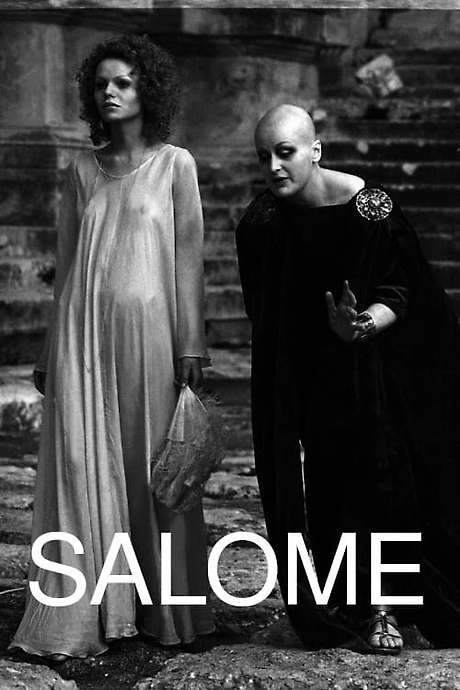
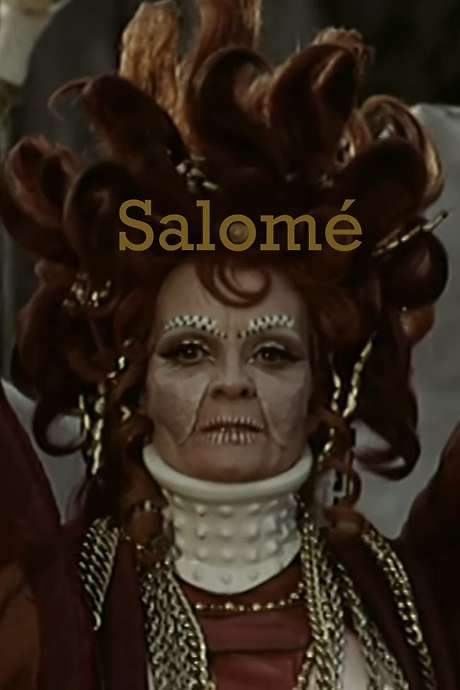
Oscar Wilde and his lover Alfred Taylor arrive late on Guy Fawkes Day in 1892 at their friend’s brothel, where they are treated to a surprise staging of Wilde’s play Salome, which had just been banned for public performances in England by the Lord Chamberlain’s office. The room hums with anticipation as the evening’s guests settle in, and the mood blends satire with danger as the otherwise discreet conversations give way to a bold, meta-theatrical spectacle. In this world, the play Salome unfolds as a theatrical piece performed by the very people who populate the brothel, turning each encounter into a crossfade between performance and real life, between art and desire.
In the midst of the room’s dim light, the staging reveals its rule: all roles are played by prostitutes or their clients, and every participant (except Wilde) doubles, taking one role in the brothel and another in the play. This double-casting creates a continuous echo between the two spaces, where flirtation, power, and art collide in rapid, mirrored shifts. The mood is charged with challenge and wit as the actors juggle dual identities, weaving Wilde’s presence into the fabric of the performance and the brothel’s intimate politics into the narrative.
Within the play, Herod begs his young stepdaughter Salome to dance for him, promising to grant her anything she desires, much to the irritation of her mother, Herodias. Salome ignores him, turning her attention to John the Baptist, who is kept prisoner by Herod. John speaks out, condemning both Herod and Salome in the name of God, a moment that heightens the tension between sacred judgment and worldly appetite. The atmosphere thickens as Salome agrees to dance for Herod, but on the condition that she be given anything she asks for. Herod grants the wish, and the consequence is drastic and fatal: Salome asks for the head of John the Baptist on a platter. The room seems to hold its breath as Herod hesitates, then yields to the demand, realizing the terrible price of ambition and desire. The double-layered scenes—part brothel drama, part biblical tableau—play out with a cruel grandeur, underscored by Wilde’s own conspicuous, escalating exploitation of his surroundings.
As the night progresses, the play’s imagery remains interwoven with glimpses of Wilde’s exploits at the brothel, a sly, subversive parallel that casts the literary icon as both observer and participant in a world of salacious performances. The boundary between genuine scandal and staged spectacle blurs, creating a nocturnal portrait of a century’s edge between art and morality. By the end, the fusion of onstage and offstage life culminates in a stark denouement: Wilde is arrested, his fate sealed by a night that could only exist in the margins where theatre and reality collide. The final image lingers: a writer’s legend tangled with a provocative ritual, leaving the audience to ponder where performance ends and truth begins.