Plot Explained Spoilers guaranteed!
Plot Explained

Browse by genre

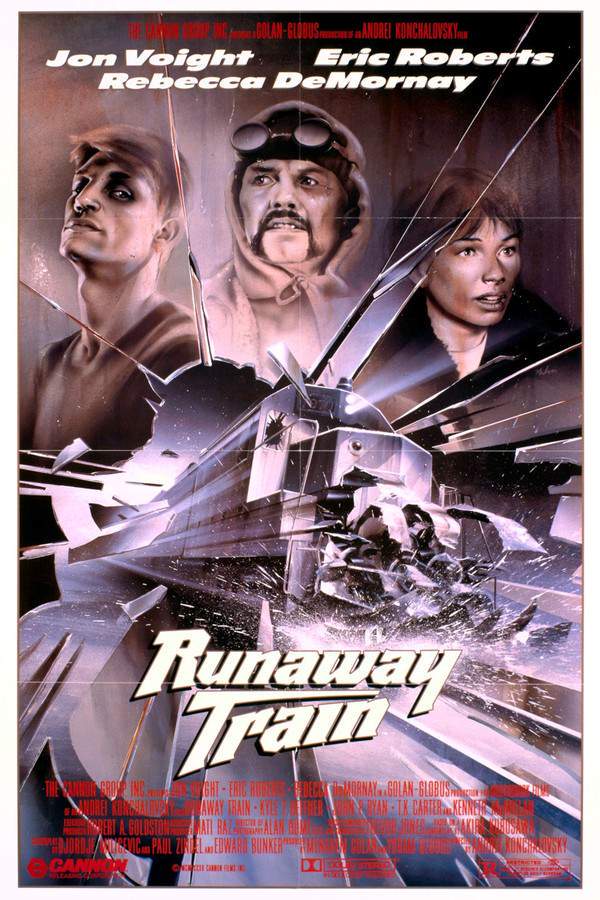
Runaway Train (1986) movie poster

Plot Summary

Runaway Train (1986) Plot Summary Explained

Release, runtime and language
1986 · 111 min · English
JustWatch #7,011 10
Directed by
Andrei Konchalovsky
Starring
Jon Voight, Kenneth McMillan, Rebecca De Mornay, John P. Ryan, T.K. Carter, Edward Bunker

A runaway diesel train speeds uncontrollably through the harsh Alaskan wilderness. Aboard are two escaped convicts: Mike, a hardened loner, and Manny, a clever and persuasive mastermind. Their fight for survival becomes even more complicated when a young girl, Sara, unexpectedly joins them as they try to navigate the dangerous journey and evade authorities.

On this page (7)
  1. 1 Where to watch
  2. 2 What happens: full plot
  3. 3 Plot questions answered
  4. 4 Movie threads
  5. 5 Movies like Runaway Train
  6. 6 Categories
  7. 7 Every angle

Where to watch

Where to Watch Runaway Train (1986)

Where can you watch Runaway Train? Stream, rent or buy it in the US, including on History Vault, Tubi TV and YouTube Free: current JustWatch availability with up-to-date prices.

Streaming availability powered by JustWatch

Full plot summary · contains spoilers

What Happens in Runaway Train: Full Plot Summary

The whole story of Runaway Train (1986) explained, from the opening scene to the final frame: every key event, every twist and what it all adds up to. Read it as a quick recap before the sequel, to check a scene you missed, or to finally understand what really happened.

In this intense narrative, Oscar "Manny" Manheim, portrayed by Jon Voight, is a clever bank robber revered as a folk hero by fellow inmates in Alaska's Stonehaven Maximum Security Prison. After enduring three grueling years in solitary confinement, Manny is unexpectedly released. Although suffering from a stab wound to his hand and pressured to expedite his escape, he remains resilient and enlists the aid of Buck McGeehy, a young inmate determined to help.

Together, this unlikely pair bravely navigates through a sewer tunnel, embarking on a hazardous journey across the country that leads them to a switchyard. There, they don railroad attire and hijack a massive train composed of four locomotives, marking a pivotal moment in their daring escape.

However, the situation escalates rapidly when Al, the elderly engineer, experiences a sudden heart attack, rendering the train unmanned and hurtling down the tracks with alarming speed. Dispatchers Dave Prince and Frank Barstow are alerted, with Barstow making the critical decision to let the train continue while clearing the tracks ahead. This precarious choice results in a catastrophic collision with another train, damaging the lead locomotive and jamming its front door.

As the authorities close in, the train’s horn blares, signaling trouble. Manny, Buck, and those nearby become increasingly aware of the imminent danger. Eddie McDonald, Barstow’s superior, suggests derailing the train to prevent disaster, but Barstow defies orders, leading to escalating tension about the fate of the runaways. Warden Ranken suspects Manny and Buck’s plan to escape by rail, causing even more urgency.

Meanwhile, Sara, a locomotive hostler, stumbles upon the fugitives and realizes the futility of jumping from the moving train without consequences. In a gripping challenge, Manny and Buck must risk everything to reach the lead engine and activate its kill switch. But a jammed front door and the lack of a catwalk complicate their mission.

In a daring act, they cleverly disconnect the multi-unit cables on the third and fourth locomotives, steering toward a high-stakes climax that tests their resolve as they struggle to regain control. The train speeds uncontrollably toward a treacherous curve near a chemical plant, where a derailment could lead to an environmental disaster.

Desperate to avert crisis, the dispatchers reroute the runaway train onto a dead-end branch line, sealing a grim fate for Barstow and his colleagues, all in an effort to prevent an ecological catastrophe.

At the same time, Ranken's accomplice attempts an aerial rescue with a helicopter, but disaster strikes when their parachute fails, leading to a chaotic descent towards the train. Seizing the moment, Manny defies authority, as Buck fights for control of the locomotive's cab. Sara steps in to aid Buck, resulting in a gripping standoff fraught with emotional turmoil.

As tensions escalate, Ranken boards the lead engine via helicopter, only to confront Manny, who handcuffs him and is resolved to ensure neither of them will return to prison. With the train on a relentless path toward destruction, Buck's desperate cries to halt the locomotive go unheard. In a moment of profound sacrifice, Manny uncouples the lead engine, bringing it to an abrupt stop while bidding a poignant farewell to Buck and Sara as they disappear into the night.

In the aftermath of their fateful actions, Buck and Sara's fellow inmates mourn their loss, left wrestling with the tragic end of their journey. As the solitary engine fades into darkness, a haunting quote from William Shakespeare's Richard III appears on screen, encapsulating the tragedy of what has transpired.
Last updated: November 22, 2024 at 18:21

Was this helpful?

Plot questions answered

Runaway Train Plot Explained: Your Questions Answered

The questions people ask most about Runaway Train (1986): what happens in the confusing scenes, why the characters do what they do, the twists, hidden details and what the ending means. Each answer contains spoilers.

Q1

Why is Manny released from prison if he's a famous bank robber?

Manny is unexpectedly released from Stonehaven Maximum Security Prison after serving three grueling years in solitary confinement. Although he's a legendary bank robber revered as a folk hero among inmates, the film doesn't fully explain the legal reasoning behind his release, he simply receives his freedom, bearing a stab wound to his hand. This surprise liberation becomes the catalyst for his daring escape attempt with Buck.

Foreshadowing: The film establishes Manny's reputation early, making his release feel both surprising and inevitable.

  • manny release
  • prison
  • famous bank robber
  • stonehaven prison
Q2

Why do the dispatchers let the runaway train keep going instead of stopping it?

Dispatcher Frank Barstow makes the controversial decision to let the train continue moving while they clear the tracks ahead, rather than attempting to stop it immediately. Barstow believes they can safely guide the train by removing obstacles from its path. This risky choice leads to a catastrophic collision with another train, causing massive damage and jamming the lead locomotive's front door, which creates an even more dangerous situation.

Foreshadowing: This decision is presented as a critical error in judgment that immediately escalates the crisis.

  • dispatcher
  • runaway train
  • tracks
  • collision
  • frank barstow
Q3

Why does Sara stay on the runaway train instead of jumping off?

Sara, a locomotive hostler, discovers Manny and Buck aboard the runaway train and initially considers jumping off to escape. However, she realizes that jumping from a moving train at such high speed would likely kill her or cause severe injury. Instead, she chooses to stay and help the convicts try to reach the kill switch in the lead engine, understanding that stopping the train is the only way to save everyone aboard.

Foreshadowing: Her decision to stay highlights the impossible odds all characters face.

  • sara
  • jump
  • locomotive hostler
  • escape
  • helper
Q4

What happens to the dispatchers who made the controversial decision?

When the dispatchers reroute the runaway train onto a dead-end branch line in a desperate attempt to prevent an environmental disaster at the chemical plant, this decision seals a grim fate for Barstow and his colleagues. The train is intentionally sent to a track with no exit, effectively condemning those on board to a fatal collision. This sacrifice is made to avoid a larger catastrophe that would harm many more people.

Foreshadowing: The escalation of the dispatchers' decisions shows how one choice leads to increasingly tragic consequences.

  • dispatchers
  • barstow
  • reroute
  • dead-end
  • branch line
  • sacrifice
Q5

Why does Manny handcuff Warden Ranken when he arrives by helicopter?

When Warden Ranken attempts an aerial rescue by helicopter, he boards the lead engine intending to take control of the situation and capture Manny and Buck. However, Manny resists arrest and handcuffs Ranken to the train, resolved that neither he nor the warden will return to prison. Manny's act represents his final defiance of authority, he would rather die free than be captured again.

Foreshadowing: This moment represents the culmination of Manny's philosophy of choosing death over imprisonment.

  • manny
  • warden ranken
  • handcuff
  • helicopter
  • capture
  • defiance
Q6

Why does Manny uncouple the lead engine to stop the train?

As the train speeds toward destruction with the lead engine carrying Manny, Buck, Sara, and the handcuffed warden, Manny realizes the only way to save Buck and Sara is to uncouple the lead engine. This action brings the lead locomotive to an abrupt stop while the rest of the train continues onward. Manny chooses to sacrifice himself, accepting that he will never escape or be free, allowing Buck and Sara to survive and escape into the night.

Foreshadowing: Manny's final choice mirrors his earlier statement that he would rather die than return to prison.

  • manny
  • uncouple
  • lead engine
  • sacrifice
  • save buck
  • sara
  • death
Q7

Do Buck and Sara survive and escape at the end?

Yes, Buck and Sara survive. When Manny uncouples the lead engine, he brings it to a stop and tells Buck and Sara to run and escape while he remains behind with the handcuffed warden. They disappear into the night, finally free. However, the film's ending is bittersweet, while Buck and Sara escape, Manny's sacrifice means he doesn't survive or experience freedom himself.

Foreshadowing: This outcome fulfills Manny's goal of giving Buck a chance at freedom, even at his own expense.

  • buck
  • sara
  • escape
  • survive
  • manny sacrifice
  • end
  • freedom
Q8

Why does the helicopter rescue attempt fail?

Warden Ranken's accomplice attempts an aerial rescue using a helicopter to reach the runaway train. However, disaster strikes when their parachute fails, causing a chaotic descent toward the train. This failed rescue attempt adds to the mounting chaos and ultimately forces Ranken to attempt boarding the train alone, which leads to his confrontation with Manny.

Foreshadowing: The failed helicopter rescue underscores the film's theme that escape from the unstoppable train seems impossible.

  • helicopter
  • rescue
  • parachute
  • warden ranken
  • fail
  • attempt
Q9

What causes the train's front door to get jammed?

The lead locomotive's front door becomes jammed as a result of the catastrophic collision with another train. When the dispatchers' decision to keep the train moving leads to a collision, the impact damages the lead locomotive specifically, jamming its front door. This mechanical failure prevents Manny and Buck from easily accessing the cab and activating the kill switch, forcing them to take increasingly desperate measures.

Foreshadowing: This jammed door complicates their plan from the moment they realize they need to reach the front engine.

  • door jam
  • collision
  • lead locomotive
  • cab
  • kill switch
  • mechanical failure
Q10

Why do the authorities reroute the train onto a dead-end track?

The dispatchers reroute the runaway train onto a dead-end branch line to prevent a potential environmental disaster. The train is speeding toward a dangerous curve near a chemical plant, where a derailment could cause toxic chemicals to leak and harm many people. By sending the train to the dead-end, they sacrifice those on board to save potentially hundreds of lives elsewhere.

Foreshadowing: This desperate measure shows how the situation has spiraled beyond anyone's control.

  • reroute
  • dead-end
  • chemical plant
  • environmental disaster
  • tracks
  • sacrifice
Q11

What is the Shakespeare quote shown at the end of the movie?

The film ends with a quote from William Shakespeare's Richard III: 'Even in that the heavens had not spoken / Till the pit of death be filled withal.' This haunting quote encapsulates the tragic nature of Manny's sacrifice, it's too late to change what has transpired, and only death has filled the void left by his loss. The quote reinforces the film's fatalistic tone and the sense that some fates cannot be undone.

Foreshadowing: The quote mirrors the film's dark, tragic conclusion where Manny's sacrifice is both heroic and heartbreaking.

  • shakespeare
  • richard iii
  • quote
  • ending
  • death
  • fate
  • tragedy
Q12

Why do Manny and Buck disconnect the multi-unit cables between locomotives?

Facing a jammed front door and no direct way to reach the lead engine's cab, Manny and Buck take the desperate measure of disconnecting the multi-unit cables that link the locomotives together. By severing these cables on the third and fourth locomotives, they hope to regain some steering control and prevent the train from taking a deadly curve. This risky maneuver is their last hope before the situation becomes completely uncontrollable.

Foreshadowing: This act of mechanical ingenuity shows their determination to survive against impossible odds.

  • cables
  • disconnect
  • locomotives
  • control
  • desperate
  • steering

Movie threads

More Movies Like Runaway Train, by Mood & Story

Curated lists built around what makes Runaway Train tick: the same mood, the same kind of story or the same emotional payoff. Each list explains why these movies belong together.

Thrillers about runaway vehicles like Runaway Train

High-stakes survival stories set aboard out-of-control vehicles or machines. If you liked the relentless danger of Runaway Train, these movies also feature high-intensity survival stories set on out-of-control trains, planes, or ships. They capture a similar feeling of being trapped in a moving vessel of chaos, where the machine itself is the primary antagonist and escape seems impossible.

  • claustrophobic
  • desperate
  • thrilling
  • fatalistic
  • anxious
  • high-stakes
  • Tone: tense, desperate, grim
  • Pacing: fast, relentless
Why these movies?

The story pattern: The narrative typically begins with a catastrophic failure or loss of control, turning a vehicle into a deadly, unstoppable force. Characters, often a mix of antagonists and civilians forced together, must navigate the mechanical crises while contending with their own conflicts, leading to a desperate and often tragic struggle for survival.

Why they belong together: These films are grouped by their central, high-concept premise of an inescapable moving threat. They share a tense, fast-paced tone, high intensity, and a claustrophobic atmosphere where characters are pitted against both the machine and each other in a fight against time.

Grim and fatalistic action dramas like Runaway Train

Stories where characters fight a seemingly preordained, tragic outcome. For viewers who appreciated the heavy emotional weight and fatalistic mood of Runaway Train, this collection features movies where characters battle against an indifferent universe or a seemingly predetermined tragic fate. These stories share a bleak tone, high stakes, and endings that are bittersweet or deeply resonant.

  • fatalistic
  • grim
  • desperate
  • heavy
  • tragic
  • sacrifice
  • Tone: grim, fatalistic, heavy
  • Pacing: fast or steady, with rising dread
Why these movies?

The story pattern: The narrative follows characters who are swept up by forces beyond their control, often as a consequence of their own past actions. Their struggle is as much philosophical as it is physical, questioning free will and meaning in the face of impending doom. The climax typically involves a significant sacrifice or a hard-won but costly redemption.

Why they belong together: These films are united by a pervasive mood of fatalism and a heavy emotional weight. They explore themes of sacrifice, defiance against impossible odds, and the bittersweet nature of survival, creating a powerful and often haunting viewing experience.

If you liked this

Movies Like Runaway Train

Similar movies to Runaway Train: the same genre, themes or kind of story. Each one comes with its own plot summary, timeline and ending explained.

Browse all movie summaries

Categories

Movie Lists Featuring Runaway Train

Runaway Train appears in these hand-built movie categories. Each one groups movies by a specific mood, theme or story type, with their plot summaries and endings explained.

View all movie categories

Every angle

Runaway Train (1986) Explained: Plot, Timeline & Characters

Everything about Runaway Train in one place: what happens in the plot summary, the timeline in chronological order, the characters and meaning and a spoiler-free summary. What's After the Movie adds the cast, box office and post-credit scenes.

Coming soon on iOS and Android

The Plot Explained Movie Summary App

Plot summaries, endings explained and timelines on your phone. Catch up on any movie in minutes, save your favorites and never miss a twist again.

Be the first to know when we launch. Your email stays private, always.

Learn more about the app