Plot Explained Spoilers guaranteed!
Plot Explained

Browse by genre

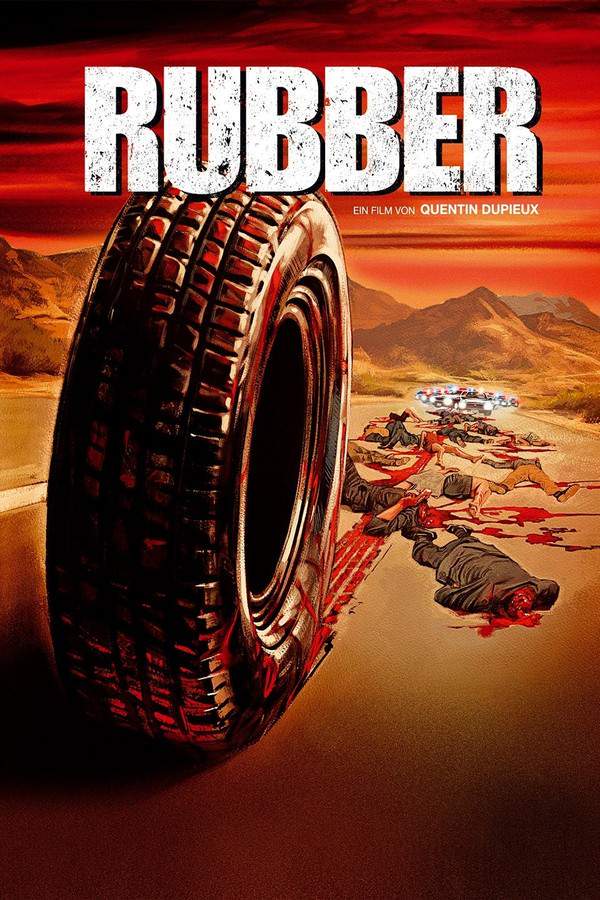
Rubber (2011) movie poster

Characters & Themes

Rubber (2011) Characters, Setting & Themes Explained

Release, runtime and language
2011 · 85 min · English
Loading streaming availability…
Directed by
Quentin Dupieux

In the desolate desert, a tire mysteriously comes to life and develops a deadly ability to kill anything in its path. Initially targeting small animals and inanimate objects, the sentient tire, named Robert, soon sets his sights on humans. His destructive journey leads him to an enigmatic woman who becomes the focus of his attention. As he rolls through the harsh landscape, Robert leaves a trail of chaos and devastation, becoming an unlikely agent of destruction.

On this page (8)
  1. 1 Where to watch
  2. 2 Characters explained (4)
  3. 3 Where & when it takes place
  4. 4 Themes & meaning (2)
  5. 5 Character & meaning questions
  6. 6 Movie threads
  7. 7 Movies like Rubber
  8. 8 Every angle
Loading streaming availability…

4 main characters · contains spoilers

Rubber Characters Explained: Who Is Who

The main characters of Rubber (2011), heroes and villains: what drives them, how they change over the course of the story and what each of them reveals about the film's bigger ideas.

  • Chad (Stephen Spinella)

    Chad is the sheriff who oscillates between participating in the narrative and serving as a commentator on the absurdity of the events. He embodies the chaotic response of authority to inexplicable circumstances. His role reflects an awareness of the randomness of cinema and life.

    • 👮‍♂️ Sheriff
    • 📽️ Commentary
  • The Tire (Robert)

    The tire, known as Robert, is the film's central character, bringing life to inanimate objects and displaying unpredictable behavior. Its evolution from a simple tire to a sentient being capable of destruction underlines the film's absurd premise. The tire's actions challenge traditional narratives and provoke contemplation on the nature of existence.

    • 🛞 Sentient
    • 💣 Destructive
  • The Accountant (Jack Plotnick)

    The accountant is a peculiar character who orchestrates the audience's engagement with the film. His attempts to manipulate the narrative through poison reflect a desire to control chaos but ultimately result in his own demise. He symbolizes the absurd lengths one might go to in pursuit of entertainment.

    • 💼 Manipulator
    • 🎭 Absurd
  • The Woman (Roxane Mesquida)

    The woman becomes the object of the tire's obsession, representing the arbitrary focus of desire in the film. Her reactions to the tire's presence drive part of the narrative, illustrating how the unpredictable nature of life intertwines with personal experiences. She embodies the randomness that permeates the storyline.

    • 👩‍🦰 Desire
    • 🎬 Sought-after

Last updated: May 04, 2025 at 18:49

Was this helpful?

Setting

Where and When Does Rubber Take Place?

The setting of Rubber (2011): the year and time period, the places and locations, and how they shape the characters, the mood and the tension of the story.

Time period

Late 1990s

Set in the late 1990s, this period reflects a time of experimental cinema and a cultural shift towards embracing absurdity in storytelling. The late 90s were characterized by a blend of traditional narrative and unconventional plots, making it a fitting era for a film like 'Rubber'. This timeframe serves as a commentary on the evolution of film and its relationship with reality.

Location

California desert

The movie takes place in a desolate California desert, known for its arid landscape and endless horizons. This setting creates a surreal atmosphere, making it an ideal backdrop for the absurd events that unfold. The isolation of the desert enhances the themes of randomness and the unexpected occurrences in life.

  • 🏜️ Desert
  • 🎬 Filmmaking

Last updated: May 04, 2025 at 18:49

Was this helpful?

2 major themes

Rubber Meaning: Themes & Message Explained

What is Rubber (2011) really about? The emotional, social and philosophical themes the film keeps returning to, its symbolism and the message beneath the surface.

  • Absurdity

    The film explores the theme of absurdity, showcasing how randomness can lead to unexpected events. Through the sentient tire, it highlights the nonsensical nature of existence and the bizarre happenings that can occur without reason. This theme resonates throughout the narrative as characters react to the unpredictable chaos around them.

  • Violence

    Violence is a recurring theme, depicted through the tire's lethal abilities as it wreaks havoc on unsuspecting victims. The film satirizes the concept of violence in cinema, drawing attention to its often arbitrary nature. This theme questions the audience's perception of morality and the consequences of disregard for life.

Last updated: May 04, 2025 at 18:49

Was this helpful?

Character & theme questions

Rubber Characters & Meaning: Your Questions Answered

The questions people ask about Rubber (2011): who the characters really are, their relationships, what the symbols mean, where it takes place and what the movie is really about. Each answer contains spoilers.

Q1

Where is the movie set?

The movie takes place in a desolate California desert. This arid, isolated landscape creates a surreal atmosphere that serves as the ideal backdrop for the film's absurd events. The endless horizons and emptiness emphasize the themes of randomness and unexpected occurrences.

  • california desert
  • setting
  • location
  • desert
  • sci-fi horror
Q2

When does the story take place?

The story is set in the late 1990s, a period characterized by experimental cinema and a cultural shift toward embracing absurdity in storytelling. This timeframe was chosen as a commentary on the evolution of film and its relationship with reality.

  • 1990s
  • time period
  • era
  • late 1990s
  • setting
Q3

What is the main theme of absurdity in the film?

Absurdity is the central theme, exploring how randomness leads to unexpected events without any meaningful reason. Through the sentient tire named Robert, the film highlights the nonsensical nature of existence and the bizarre happenings that can occur without explanation. This theme resonates as characters react to unpredictable chaos.

  • absurdity
  • theme
  • nonsense
  • randomness
  • existence
Q4

How does the film handle the theme of violence?

Violence appears throughout the film as the tire uses its lethal abilities to kill victims, but the movie satirizes violence in cinema by depicting it as arbitrary and meaningless. The film questions the audience's perception of morality and critiques how violence is often disregard in storytelling without proper consequences.

  • violence
  • theme
  • satire
  • killing
  • critique
Q5

Who is the main character Robert?

Robert is the sentient tire who serves as the film's central character. Initially targeting small animals and objects, he develops deadly abilities and eventually turns his attention to humans. His evolution from a simple tire to a destructive, conscious being underscores the film's absurd premise and challenges traditional narrative structures.

  • robert
  • the tire
  • main character
  • sentient tire
  • killer tire
Q6

Who is Sheriff Chad in the movie?

Sheriff Chad is the law enforcement figure who oscillates between participating in the narrative and serving as a commentator on the absurdity unfolding around him. He embodies the chaotic response of authority to inexplicable circumstances and demonstrates an awareness of the randomness inherent in both cinema and life.

  • chad
  • sheriff
  • authority
  • character
  • law enforcement
Q7

Why does the tire focus on the woman?

The woman becomes the object of the tire's obsession, representing the arbitrary focus of desire in an absurd universe. Her presence drives part of the narrative, illustrating how the unpredictable nature of life intertwines with personal experiences. This attachment exemplifies the randomness that permeates the entire storyline.

  • the woman
  • obsession
  • desire
  • roxane mesquida
  • attachment
Q8

What is the role of The Accountant character?

The Accountant is a peculiar character who orchestrates the audience's engagement with the film, attempting to manipulate the narrative through poison. He represents the absurd lengths people will go to in pursuit of entertainment and control over chaos, though his efforts ultimately result in his own demise.

  • the accountant
  • jack plotnick
  • character
  • audience manipulation
Q9

Why is the desert setting significant?

The isolated desert setting emphasizes the film's themes of randomness and unexpected occurrences. The harsh, empty landscape creates a surreal environment where absurd events can unfold without the constraints of a familiar, structured world. This isolation amplifies the sense that anything can happen without reason.

  • desert isolation
  • setting significance
  • arid landscape
  • environment
Q10

What does the film say about filmmaking?

The film uses its meta-narrative structure, including characters who comment on the action and break the fourth wall, to explore cinematic convention and the arbitrariness of narrative. The repeated phrase 'no reason' serves as a statement about how stories can exist without traditional plot logic, questioning why films need logical explanations.

  • filmmaking
  • cinema
  • meta narrative
  • fourth wall
  • film within film
Q11

Why is the film described as whimsical?

The film maintains a whimsical, playful tone despite its horror premise by treating the subject of murder with deadpan comedic absurdity rather than genuine dread. This approach, combined with the variable pacing and light emotional weight created through satire, prevents the violent sequences from feeling truly stressful while maintaining intellectual distance from the content.

  • tone
  • whimsical
  • comedy
  • absurd humor
  • satire

Movie threads

More Movies Like Rubber, by Mood & Story

Curated lists built around what makes Rubber tick: the same mood, the same kind of story or the same emotional payoff. Each list explains why these movies belong together.

Meta-Horror Satire and Self-Referential Movies like Rubber

Films that deconstruct horror tropes with a clever, self-aware sense of humor. Discover a collection of films that break the fourth wall and cleverly deconstruct genre tropes, similar to the meta-narrative style of Rubber. These movies are perfect for viewers who enjoy self-aware horror-comedies, satirical commentary on cinema, and stories that playfully question the nature of storytelling itself.

  • self-referential
  • satirical
  • meta
  • bizarre
  • quirky
  • deadpan
  • Tone: whimsical, satirical, deadpan
  • Pacing: variable, with deliberate pauses
Why these movies?

The story pattern: Stories in this thread often feature a layered narrative structure, such as a 'film within a film' or characters who comment directly on the action. The plot serves as a vehicle for exploring themes of cinematic convention, audience expectation, and the arbitrariness of narrative, rather than solely focusing on a traditional, high-stakes conflict.

Why they belong together: These movies are grouped together because they share a distinct, self-referential tone that prioritizes witty commentary over straightforward horror. They use absurdity and deadpan humor to undercut tension, creating a shared vibe of intellectual playfulness and a celebration of the bizarre mechanics of storytelling.
Whimsically Absurd and Unpredictable Movies like Rubber

Quirky tales where logic is optional and the journey is delightfully strange. If you enjoyed the quirky, illogical charm of Rubber, you'll love these films that celebrate whimsical absurdity. This list features movies with unpredictable plots, bizarre characters, and a light-hearted embrace of the strange, perfect for fans of unique, vibe-driven storytelling.

  • absurd
  • quirky
  • bizarre
  • unpredictable
  • whimsical
  • surreal
  • Tone: whimsical, quirky, bizarre
  • Pacing: variable, meandering
Why these movies?

The story pattern: The narrative pattern here is less about a tight, causal plot and more about a series of eccentric encounters or events. The protagonist, often an unusual or inanimate object given life, embarks on a journey that feels more like a surreal dream than a traditional story, leading to an ambiguous or cyclical conclusion.

Why they belong together: These films are connected by their shared commitment to a whimsical and absurd mood. They prioritize creating a peculiar, memorable feeling over emotional depth or high stakes, resulting in a viewing experience that is intellectually stimulating, gently humorous, and consistently surprising.

If you liked this

Movies Like Rubber

Similar movies to Rubber: the same genre, themes or kind of story. Each one comes with its own plot summary, timeline and ending explained.

Browse all movie summaries

Every angle

Rubber (2011) Explained: Plot, Timeline & Characters

Everything about Rubber in one place: what happens in the plot summary, the timeline in chronological order, the characters and meaning and a spoiler-free summary. What's After the Movie adds the cast, box office and post-credit scenes.

Coming soon on iOS and Android

The Plot Explained Movie Summary App

Plot summaries, endings explained and timelines on your phone. Catch up on any movie in minutes, save your favorites and never miss a twist again.

Be the first to know when we launch. Your email stays private, always.

Learn more about the app