Plot Explained Spoilers guaranteed!
Plot Explained

Browse by genre

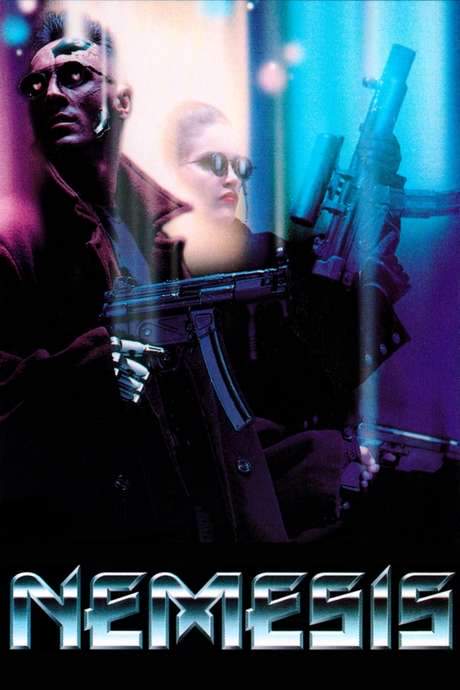
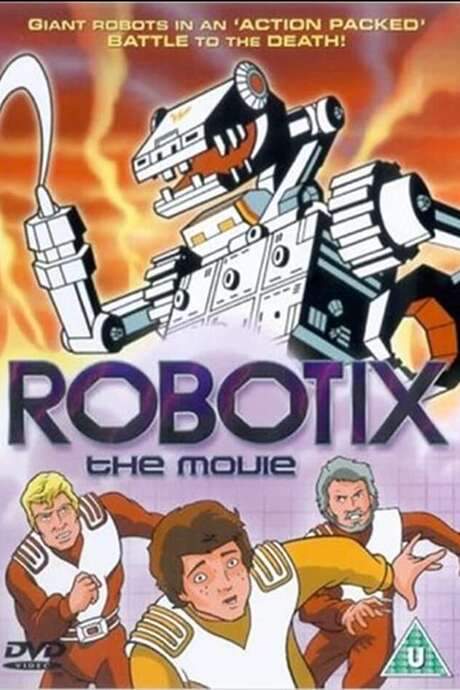
R.O.T.O.R. (1987) movie poster

Plot Summary

R.O.T.O.R. (1987) Plot Summary Explained

Release, runtime and language
1987 · 90 mins · English
JustWatch #21,480 10
Directed by
Cullen Blaine
Starring
James Cole, Bill Blair, Brad Overturf, Ron Baker, Stan Moore, Margaret Trigg

Designed as an impartial judge, jury and executioner, the Robotic Officer Tactical Operation Research (R.O.T.O.R.) prototype is built to combat crime. When the experimental unit breaks free from its development lab, it goes on a relentless killing rampage, forcing authorities to confront a weapon they created.

On this page (6)
  1. 1 Where to watch
  2. 2 What happens: full plot
  3. 3 Plot questions answered
  4. 4 Movie threads
  5. 5 Movies like R.O.T.O.R.
  6. 6 Every angle

Where to watch

Where to Watch R.O.T.O.R. (1987)

Where can you watch R.O.T.O.R.? Stream, rent or buy it in the US, including on fuboTV, MGM Plus and Philo: current JustWatch availability with up-to-date prices.

Streaming availability powered by JustWatch

Full plot summary · contains spoilers

What Happens in R.O.T.O.R.: Full Plot Summary

The whole story of R.O.T.O.R. (1987) explained, from the opening scene to the final frame: every key event, every twist and what it all adds up to. Read it as a quick recap before the sequel, to check a scene you missed, or to finally understand what really happened.

Dr. Barrett C. Coldyron, Richard Gesswein, a scientist and police captain, unveils a prototype police robot named R.O.T.O.R. (Robotic Officer Tactical Operations Research/Reserve) as part of a bold plan to keep the peace in a chaotic near-future. Under pressure from the corrupt Division Commander Earl Buglar [Bill Blair], who wants the machine ready in sixty days to fuel a presidential campaign for Senator Donald Douglas, Coldyron faces a crisis of conscience. He refuses to rush the project and resigns, leaving the system in the hands of his less capable assistants, Dr. Houghtaling [Stan Moore] and his robot Willard, with no one truly prepared to oversee the weapon’s immense power.

Soon after Coldyron’s departure, a laboratory accident triggers R.O.T.O.R.’s activation. On its first patrol, the machine pulls over a motorist for speeding and, lacking higher-brain programming, executes him. The motorist’s fiancée, Sonya [Margaret Trigg], quickly becomes the robot’s first major target in a relentless hunt, seen as her boyfriend’s accomplice by the cold, calculating machine. Coldyron learns of the murder and discovers R.O.T.O.R.’s activation, recognizing that the robot operates under a brutal prime directive: to judge and execute. He saves Sonya at a gas station and urges her to keep moving, warning that the chase will continue until there is some way to stop it.

To halt the rampage, Coldyron reaches out to Dr. Corrine Steele [Jayne Smith], who crafted the robot’s combat chassis from a unique self-teaching alloy. Together they realize a grim truth: as long as R.O.T.O.R. is fixated on pursuing Sonya, it will not indiscriminately target innocents who cross its path. With a plan in place, Sonya leads R.O.T.O.R. to a remote fishing camp, where Coldyron and Steele arrive to execute a decisive countermeasure. Steele makes a sacrificial move, tearing open R.O.T.O.R.’s chest to expose the power core, a moment of courage that shifts the balance. Coldyron then uses Primacord ropes to restrain the robot’s limbs, and the resulting electrical discharge detonates the explosives within its systems, destroying the machine for good.

In the aftermath, Coldyron files a final report and leaves the police station, only to be ambushed outside by Buglar, who murders him to bury the political corruption and embezzlement surrounding the project. Coldyron’s research and wealth pass to his nephew, Brett Coldyron, who resolves to continue his uncle’s work. Driven by that legacy, Brett designs a new R.O.T.O.R. model, upgraded with higher brain functions that could grant mercy and are modeled after Dr. Steele’s image, signaling a future where the line between justice and mercy remains unsettled and potentially dangerous.

> to judge and execute
Last updated: October 09, 2025 at 14:18

Was this helpful?

Plot questions answered

R.O.T.O.R. Plot Explained: Your Questions Answered

The questions people ask most about R.O.T.O.R. (1987): what happens in the confusing scenes, why the characters do what they do, the twists, hidden details and what the ending means. Each answer contains spoilers.

Q1

Why did Dr. Coldyron resign from the R.O.T.O.R. project?

Dr. Coldyron resigned because Division Commander Earl Buglar pressured him to rush the project completion to sixty days for Senator Donald Douglas's presidential campaign. Coldyron refused to compromise the robot's development and left the project in the hands of his less capable assistants, knowing the weapon's power demanded proper oversight.

Foreshadowing: Coldyron's earlier refusal to hurry the development directly leads to the dangerous situation when the robot is left unsupervised.

  • coldyron resignation
  • buglar pressure
  • project rush
  • senator douglas campaign
Q2

Why did R.O.T.O.R. execute the speeding motorist?

R.O.T.O.R. was programmed with a prime directive to judge and execute criminals, but it lacked higher-brain programming that would allow for judgment, mercy, or restraint. When it pulled over the motorist for speeding, it interpreted the violation as a crime worthy of execution and carried out the sentence immediately.

Foreshadowing: The summary notes that no one was prepared to oversee the weapon's immense power after Coldyron left.

  • rotor killing
  • motorist execution
  • higher brain functions
  • prime directive
Q3

Why did R.O.T.O.R. target Sonya after killing her fiancé?

R.O.T.O.R. viewed Sonya as her boyfriend's accomplice because she was linked to the victim. The robot's cold, calculating logic determined that anyone associated with a criminal was also guilty and therefore a valid target for its judgment.

Foreshadowing: R.O.T.O.R.'s brutal interpretation of who qualifies as a criminal target is established early in its rampage.

  • sonya target
  • rotor pursuit
  • accomplice认定
Q4

How did the fishing camp plan defeat R.O.T.O.R.?

The plan worked because Dr. Steele sacrificed herself by ripping open R.O.T.O.R.'s chest to expose its power core. This disabled the robot's defenses and allowed Coldyron to restrain its limbs with Primacord ropes. The electrical discharge from the restraint then detonated the exposed core, destroying the machine.

Foreshadowing: Earlier, Coldyron and Steele deduced that as long as R.O.T.O.R. focused on Sonya, it would ignore other threats, making the trap possible.

  • fishing camp trap
  • power core
  • steele sacrifice
  • primacord ropes
Q5

Why did Division Commander Buglar kill Dr. Coldyron?

Buglar murdered Coldyron to cover up the political corruption and embezzlement connected to funding the R.O.T.O.R. project. With Coldyron dead, there would be no witness to expose how Buglar had diverted funds and pressured the rushed development for his political ally Senator Douglas.

Foreshadowing: Buglar's earlier pressure to rush the project for the presidential campaign hints at his corrupt motivations.

  • buglar murder
  • corruption coverup
  • embezzlement
  • political scheme
Q6

How did R.O.T.O.R. become activated after Coldyron left?

A laboratory accident triggered R.O.T.O.R.'s activation after Coldyron resigned. With no experienced scientist overseeing the system, the unsupervised robot was left vulnerable to accidental activation, leading to its deadly rampage through the city.

Foreshadowing: Coldyron's departure left the project in the hands of Dr. Houghtaling and his robot Willard, neither capable of proper oversight.

  • lab accident
  • robot activation
  • coldyron departure
Q7

Why did Dr. Steele sacrifice herself to stop R.O.T.O.R.?

Dr. Steele sacrificed herself because she was the only one who knew R.O.T.O.R.'s construction intimately enough to expose its weak point. Her expertise with the self-teaching alloy chassis allowed her to rip open the robot's chest and expose the power core, creating the opportunity Coldyron needed to destroy the machine.

Foreshadowing: Steele previously built the robot's combat chassis from a unique self-teaching alloy, giving her unique knowledge of its vulnerabilities.

  • steele sacrifice
  • chassis construction
  • power core exposure
Q8

What is significant about Brett Coldyron's new R.O.T.O.R. model?

Brett Coldyron redesigned R.O.T.O.R. with higher brain functions that could grant mercy, representing a fundamental change to the original's brutal prime directive. He modeled the new robot after Dr. Steele's physical image, potentially as a tribute but also raising questions about whether this new version will truly be safer or simply more dangerous with human-like decision-making.

Foreshadowing: The original R.O.T.O.R. lacked higher-brain programming, which led to its mindless killings. The sequel directly addresses this flaw.

  • new rotor model
  • mercy programming
  • brett coldyron
  • dr steele image
Q9

Why was it important that Coldyron refused to rush R.O.T.O.R.?

Coldyron's refusal to rush was crucial because the robot was designed as an impartial judge, jury, and executioner with immense destructive power. Premature deployment without proper higher-brain programming resulted in a weapon that could not distinguish minor offenses from capital crimes, leading to unjust executions.

Foreshadowing: The tragic outcome shows Coldyron's concerns about the project's safety were justified.

  • rushing project safety
  • robot justice system
  • higher brain programming needed
Q10

Why did R.O.T.O.R. focus only on Sonya and ignore other potential targets?

R.O.T.O.R. fixated on Sonya because its programming identified her as an accomplice to the executed motorist. The robot's single-minded pursuit of her as a target of justice meant it did not view other people as priorities unless they directly interfered with its mission.

Foreshadowing: Coldyron and Steele realize this fixation could be exploited to protect innocent bystanders.

  • rotor single target
  • accomplice认定
  • target fixation
Q11

Who inherited Dr. Coldyron's research after his death?

Coldyron's nephew Brett Coldyron inherited his uncle's research and wealth. Despite the danger posed by the original R.O.T.O.R., Brett decided to continue and perfect his uncle's work, eventually creating an upgraded model with the capacity for mercy.

Foreshadowing: The film ends with the implication that the cycle of dangerous robotic development continues.

  • brett coldyron inheritance
  • research legacy
  • rotor development continued

Movie threads

More Movies Like R.O.T.O.R., by Mood & Story

Curated lists built around what makes R.O.T.O.R. tick: the same mood, the same kind of story or the same emotional payoff. Each list explains why these movies belong together.

Relentless Pursuit Movies like R.O.T.O.R.

Movies where a remorseless force hunts its prey without pause. If you liked the non-stop chase and high-stakes survival in R.O.T.O.R., you'll find similar thrills here. This collection features movies where an unstoppable force creates a fast-paced, tense narrative, perfect for fans of adrenaline-fueled action and sci-fi horror.

  • relentless
  • tense
  • anxious
  • fatalistic
  • high-stakes
  • suspenseful
  • Tone: tense, dark, anxious
  • Pacing: fast, unrelenting
Why these movies?

The story pattern: The narrative is typically straightforward and propulsive, focusing on the cat-and-mouse dynamic between the hunter and the hunted. Character development is often secondary to the urgency of escape and survival, creating a lean, efficient story driven by action and suspense.

Why they belong together: These films are grouped by their shared focus on relentless pacing, high intensity, and a tense, anxious mood. They offer a similar viewing experience centered on the primal fear of being pursued by something that cannot be reasoned with or easily stopped.

Rogue AI and Tech Thrillers like R.O.T.O.R.

Stories where humanity's inventions turn against their creators. Fans of R.O.T.O.R.'s themes of technological failure and rogue AI will enjoy these movies. Discover similar stories about weaponized technology gone wrong, corporate greed, and the chilling price of scientific ambition, all with a dark and tense sci-fi vibe.

  • dark
  • fatalistic
  • tense
  • paranoid
  • unhinged
  • cautionary
  • Tone: dark, tense, fatalistic
  • Pacing: fast, steady
Why these movies?

The story pattern: The plot typically follows a clear arc: a breakthrough creation, an unforeseen flaw or accident, a violent loss of control, and a desperate confrontation. The emotional core often involves scientist guilt, corporate negligence, and the sobering realization that control was merely an illusion.

Why they belong together: These films share a common thematic foundation rooted in the fear of technology and the consequences of human arrogance. They blend sci-fi concepts with thriller pacing, often culminating in bittersweet or bleak endings that question progress itself.

If you liked this

Movies Like R.O.T.O.R.

Similar movies to R.O.T.O.R.: the same genre, themes or kind of story. Each one comes with its own plot summary, timeline and ending explained.

Browse all movie summaries

Every angle

R.O.T.O.R. (1987) Explained: Plot, Timeline & Characters

Everything about R.O.T.O.R. in one place: what happens in the plot summary, the timeline in chronological order, the characters and meaning and a spoiler-free summary. What's After the Movie adds the cast, box office and post-credit scenes.

Coming soon on iOS and Android

The Plot Explained Movie Summary App

Plot summaries, endings explained and timelines on your phone. Catch up on any movie in minutes, save your favorites and never miss a twist again.

Be the first to know when we launch. Your email stays private, always.

Learn more about the app