Plot Explained Spoilers guaranteed!
Plot Explained

Browse by genre

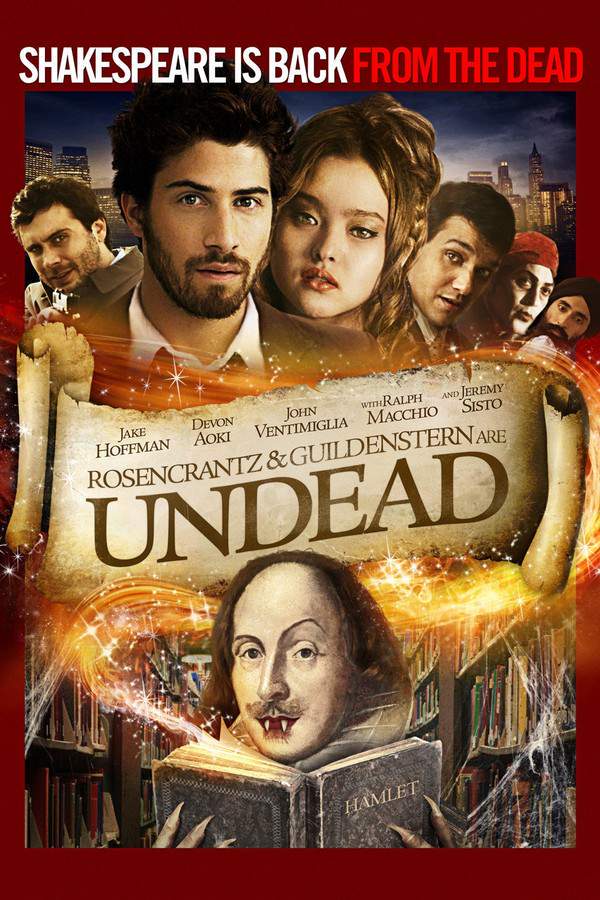
Rosencrantz and Guildenstern Are Undead (2010) movie poster

Timeline

Rosencrantz and Guildenstern Are Undead (2010) Timeline Explained – Every Event in Order

Release, runtime and language
2010 · 89 min · English
Loading streaming availability…
Directed by
Jordan Galland

A struggling director named Julian achieves unexpected success with a strange Hamlet adaptation penned by the mysterious Theo, a centuries-old vampire. Theo is driven by a long-standing feud concerning Shakespeare's Ophelia. The production is filled with eccentric personalities, including a clueless detective, and features a brief appearance by Sean Lennon. As Julian grapples with a complicated love life, he finds himself entangled in the secrets of Theo’s undead existence and the origins of their unusual connection to Shakespeare.

On this page (6)
  1. 1 Where to watch
  2. 2 Events in order (15)
  3. 3 Timeline questions answered
  4. 4 Movie threads
  5. 5 Movies like Rosencrantz and Guildenstern Are Undead
  6. 6 Every angle
Loading streaming availability…

15 events in order · contains spoilers

Rosencrantz and Guildenstern Are Undead Timeline: Events in Chronological Order

Every key event of Rosencrantz and Guildenstern Are Undead (2010) in order, scene by scene, with when and where it takes place. Use it to untangle flashbacks, time jumps and parallel storylines, to refresh your memory before the sequel or to find the exact scene you are thinking of.

  1. Julian Marsh's Unemployment

    Young lothario Julian Marsh is struggling with unemployment after being unable to find a suitable acting job. His father, a doctor, pressures him to accept a job opportunity that he initially resists but eventually has to take.

  2. Julian Accepts Directing Job

    Julian Marsh reluctantly agrees to direct an off-Broadway play titled Rosencrantz and Guildenstern Are Undead. The play is an unusual adaptation of Hamlet, which piques Julian's curiosity despite his reservations.

  3. Introduction of Theo Horace

    The mysterious playwright Theo Horace, described as a pallid Romanian, is revealed to have a dark secret—he is a vampire who has just killed someone. His eerie presence adds an unsettling atmosphere as the rehearsal begins.

  4. Casting Decisions

    With openings approaching, Julian casts his best friend Vince in the role of Hamlet, hoping to impress his ex-girlfriend Anna, who is drawn into the drama. Anna has her own complications, having begun a relationship with the shady businessman Bobby Bianchi.

  5. Anna Cast as Ophelia

    Anna is cast as Ophelia in Theo’s play, finding herself increasingly attracted to the enigmatic Theo. This attraction complicates her relationship with Bobby and heightens the underlying tension of the production.

  6. Carlo and Mickey Join the Cast

    Carlo and Mickey, self-absorbed actors who take the roles of Rosencrantz and Guildenstern, join the production. Their comedic incompetence and arrogance provide both humor and chaos, setting the stage for further complications.

  7. Opening Night Approaches

    As the play’s opening night looms closer, the atmosphere grows increasingly tense and perilous. Mysterious deaths begin to occur around the production, which leaves the cast feeling uneasy and paranoid.

  8. Detectives Arise

    Two bumbling detectives from New York City get involved to investigate the strange occurrences surrounding the play. Their comedic antics contrast sharply with the fear gripping the cast and crew.

    Where
    New York City
  9. Theo's Dark Secret Revealed

    The nature of Theo's character and his obsessive quest for the Holy Grail unfolds, revealing his plans to turn Ophelia into a vampire. This dark ambition heightens the stakes of the play and intensifies the conflict among the actors.

  10. Vampiric Elements Unravel

    Scenes from Theo's adaptation are shown, where Horatio, played by Theo, tries to turn Hamlet and his friends into vampires. The surreal blending of the play's narrative with real events blurs the lines of reality for Julian and the cast.

  11. The Development of the Curse

    Julian learns about the curse affecting the characters in the play where vampires can battle each other without one being able to kill another. The urgency to retrieve the Holy Grail grows, as it becomes their only hope against the impending doom.

  12. The Search for the Grail

    Horatio's obsession with finding the Grail leads to more chaos both on and off stage. The clash between Theo and Julian’s production mirrors the centuries-old battle in the play, engulfing everyone in darkness and uncertainty.

  13. Rehearsals Intensify

    With the increased desperation for success, rehearsals become more frantic as cast members confront Theo about their safety. The tension escalates as they uncover the reality of the threat posed by Theo’s character.

  14. Final Confrontation

    As opening night draws near, the final confrontation between Julian, Theo, and the dark forces behind the play becomes inevitable. The intertwining fates of the characters lead to a dramatic climax that pits the living against the undead.

  15. Opening Night

    On the fateful night of the performance, the blurred boundaries of reality and the script culminate. Julian and his cast must navigate the chaos and horrors unfolding both on stage and in their lives, leading to an explosive conclusion.

Last updated: September 28, 2026 at 10:55

Was this helpful?

Timeline questions answered

Rosencrantz and Guildenstern Are Undead Timeline Explained: Your Questions Answered

When does it happen, and why in that order? The questions people ask about the chronology of Rosencrantz and Guildenstern Are Undead (2010): time jumps, flashbacks, cause and effect between scenes and the correct order of events, each answered with spoilers.

Q1

Who is Theo Horace really in Rosencrantz and Guildenstern Are Undead?

Theo Horace is revealed to be Horatio from Shakespeare's Hamlet, a master vampire over 2,000 years old who once walked the earth in ancient Rome. He has been orchestrating events for centuries, and his pale, mysterious Romanian appearance is just the surface of his true identity. The play he wrote is not just art, it's a deliberate trap.

Foreshadowing: His uncanny pallor and strange knowledge of the Hamlet adaptation hint long before his true nature is confirmed on stage.

  • theo horace
  • horatio
  • vampire
  • hamlet
  • master vampire
  • ancient rome
Q2

Why did Theo write Rosencrantz and Guildenstern Are Undead as bait?

Theo wrote the play to lure the real Hamlet, who is still alive as a vampire centuries after the original story, into a final confrontation. Since vampires cannot kill each other, Theo needs Hamlet to come to him on his own terms. The off-Broadway production is essentially a centuries-old trap dressed up as theater.

Foreshadowing: The play's bizarre script keeps shifting in ways that seem to mirror real events around the cast, hinting that the script is alive with purpose.

  • theo play
  • bait
  • trap
  • hamlet confrontation
  • lure
Q3

Why can't one vampire kill another in the film?

It is a fundamental rule of the curse: vampires are physically incapable of killing each other. This is why the Holy Grail becomes so important, drinking from it is the only way to break the vampiric curse and finally destroy an undead enemy. Without the Grail, Theo and Hamlet's war would be endless.

Foreshadowing: Early sword fights and confrontations in the play-within-the-play always end in stalemates, telegraphing this rule before it is explicitly stated.

  • vampire rule
  • kill
  • curse
  • holy grail
  • immortal
Q4

Why does Ophelia drown herself in the play-within-the-play?

Ophelia's drowning is an act of desperate defiance against Horatio, who is trying to vampirize her. Rather than submit to becoming an undead creature, she chooses death. It is one of the few moments in the centuries-long vampire saga where a mortal successfully resists Horatio's will.

Foreshadowing: Anna's growing unease about Theo's attention while playing Ophelia mirrors the original character's vulnerability to darker forces.

  • ophelia
  • drowning
  • defiance
  • horatio
  • vampirize
Q5

What is the significance of the four interconnected plays in the story?

The four plays represent the progression of Horatio's centuries-long obsession. Shakespeare's Hamlet was written at Horatio's behest, W. S. Gilbert's Rosencrantz and Guildenstern continued the thread in the 19th century, Tom Stoppard's Rosencrantz and Guildenstern Are Dead came in 1964, and Theo's own Rosencrantz and Guildenstern Are Undead is the culmination. Each one contains concealed secrets about the vampire war and the search for the Holy Grail.

Foreshadowing: References to theatrical history and Stoppard's influence appear in dialogue well before the full lineage is laid out.

  • four plays
  • shakespeare
  • gilbert
  • stoppard
  • hamlet lineage
  • literary history
Q6

Why are mysterious deaths happening around the production?

The deaths are connected to Theo, who is revealed early on to have recently killed someone as a vampire. As the play's opening night approaches and Theo's plan accelerates, the body count rises around the cast and crew. The deaths are not random, they are part of Theo's preparation for the centuries-old confrontation he has been engineering.

Foreshadowing: The opening reveals that Theo has just taken a life, establishing a pattern of violence that follows him onto the stage.

  • mysterious deaths
  • killings
  • vampire
  • production
  • body count
Q7

What role does the Holy Grail play in the vampire conflict?

The Holy Grail is the only object capable of breaking the curse of vampirism. Because vampires cannot kill one another, the Grail is the ultimate weapon, drinking from it would free a vampire from their undead state. Both Horatio and Hamlet have spent centuries searching for it, with Horatio wanting to destroy it and Hamlet wanting to use it to finally end his curse.

Foreshadowing: The Grail's significance is hinted at through repeated symbolic references in the play's script and Theo's cryptic dialogue.

  • holy grail
  • curse
  • vampirism
  • weapon
  • centuries
Q8

Why does Theo want to destroy the Holy Grail instead of using it?

Theo views the Holy Grail as a threat because anyone who drinks from it could break free of vampirism and potentially kill him. By destroying the Grail, he ensures that no vampire, including Hamlet, can ever escape the curse or gain the power to end him. It is a scorched-earth strategy born from centuries of paranoid warfare.

Foreshadowing: Theo's obsessive interest in the Grail's location, rather than its power, hints early that his motives are not what they seem.

  • destroy grail
  • theo motive
  • paranoia
  • scorched earth
  • curse
Q9

Why does Julian agree to direct the off-Broadway play?

Julian is unemployed and under pressure from his doctor father to take a steady job, so he reluctantly accepts the directing position. On top of that, casting his best friend Vince as Hamlet and his ex-girlfriend Anna as Ophelia gives him a personal reason to stay involved, he hopes to rekindle his relationship with Anna through the production.

Foreshadowing: His father's medical background becomes ironic later, as the cast finds themselves in danger no doctor could treat.

  • julian
  • director
  • unemployed
  • father pressure
  • anna
Q10

How is Julian connected to Theo and Shakespeare's world?

Julian is drawn into Theo's centuries-old conflict simply by being the director of his play, but the film hints at a deeper, predestined link. As Theo reveals the truth about Horatio and the vampire war, Julian realizes he is not just staging a play, he is participating in a trap that has been set in motion for hundreds of years.

Foreshadowing: Julian's unusual ease in accepting the strange script and his instinctual trust of Theo suggest an unexplained familiarity.

  • julian theo connection
  • shakespeare
  • predestined
  • trap
Q11

Why is Anna drawn to Theo during the production?

Anna is already in a complicated relationship with the shady businessman Bobby Bianchi, so Theo's enigmatic charm and artistic intensity offer a magnetic alternative. As she plays Ophelia, the character Theo is obsessed with, the line between performance and reality blurs, and her attraction mirrors Ophelia's vulnerability to Horatio's influence.

Foreshadowing: Anna's casting as Ophelia places her directly in the role Theo most wants to control, setting up a dangerous parallel.

  • anna theo
  • attraction
  • ophelia role
  • bobby bianchi
Q12

What role do Carlo and Mickey play in the story?

Carlo and Mickey are self-absorbed actors cast as Rosencrantz and Guildenstern, and their foolish, arrogant behavior mirrors the absurdity of their characters. They provide comic relief but also serve a narrative purpose: their incompetence and chaos mirror the original Rosencrantz and Guildenstern's role as hapless bystanders in Hamlet's tragedy.

Foreshadowing: Their constant bickering and self-importance echo the meta-theatrical tradition of doubling roles from Stoppard's original play.

  • carlo mickey
  • rosencrantz guildenstern
  • comic relief
  • meta-theatrical

Movie threads

More Movies Like Rosencrantz and Guildenstern Are Undead, by Mood & Story

Curated lists built around what makes Rosencrantz and Guildenstern Are Undead tick: the same mood, the same kind of story or the same emotional payoff. Each list explains why these movies belong together.

Meta-theatrical storytelling like in Rosencrantz and Guildenstern Are Undead

Stories where the stage, the page, and the frame blur into playful, layered chaos. If you loved the layered, play-within-a-play chaos of Rosencrantz and Guildenstern Are Undead, discover more movies like it that blend Shakespearean wordplay, off-Broadway production energy, and self-aware storytelling. Expect backstage absurdity, theatrical framing devices, and literary humor that turns every scene into a stage.

  • meta
  • theatrical
  • playful
  • literary
  • absurd
  • layered
  • Tone: whimsical, playful
  • Pacing: variable, shifting rhythms
Why these movies?

The story pattern: Stories in this thread typically follow a creator or troupe entangled in a performance that spirals beyond their control. Layers of performance stack on layers of reference, with the boundary between rehearsal and reality dissolving. Characters wrestle with authorship, identity, and the scripts handed down to them, often discovering that the 'real' plot was hidden inside the staged one all along.

Why they belong together: These films share a whimsical, theatrical energy and a willingness to fold genre, classic literature, and stagecraft into a single playful experience. They lean on variable pacing that shifts between rehearsal, performance, and investigation, and they reward viewers who enjoy spotting literary references layered atop absurd situations.

Literary supernatural comedies like Rosencrantz and Guildenstern Are Undead

Vampires, monsters, and immortals who fall in love with words as much as blood. Looking for movies like Rosencrantz and Guildenstern Are Undead? Explore supernatural comedies that mix vampire lore, gothic romance, and detective intrigue with literary flair. These quirky horror romps treat fangs and immortality as springboards for clever wordplay, eccentric characters, and absurd love stories.

  • vampire
  • gothic
  • literary
  • romantic
  • quirky
  • campy
  • Tone: whimsical, gothic-tinged
  • Pacing: variable, conversational
Why these movies?

The story pattern: Stories here usually center on an immortal or undead figure whose centuries of existence intersect with a present-day mortal caught up in art, love, or mystery. Romance, suspicion, and an investigation thread weave together as secrets about the creature's past, lineage, and grudges are uncovered. The horror remains soft, the stakes emotional rather than visceral, and the resolution leans into wit rather than dread.

Why they belong together: These films share a campy, gothic sensibility that blends vampire mythology with literary sensibilities and romantic comedy rhythms. They treat death lightly, lean on eccentric supporting casts, and use supernatural lore as a vehicle for humor, layered references, and unconventional love stories that feel more curious than chilling.

If you liked this

Movies Like Rosencrantz and Guildenstern Are Undead

Similar movies to Rosencrantz and Guildenstern Are Undead: the same genre, themes or kind of story. Each one comes with its own plot summary, timeline and ending explained.

Browse all movie summaries

Every angle

Rosencrantz and Guildenstern Are Undead (2010) Explained: Plot, Timeline & Characters

Everything about Rosencrantz and Guildenstern Are Undead in one place: what happens in the plot summary, the timeline in chronological order, the characters and meaning and a spoiler-free summary. What's After the Movie adds the cast, box office and post-credit scenes.

Coming soon on iOS and Android

The Plot Explained Movie Summary App

Plot summaries, endings explained and timelines on your phone. Catch up on any movie in minutes, save your favorites and never miss a twist again.

Be the first to know when we launch. Your email stays private, always.

Learn more about the app