Plot Explained Spoilers guaranteed!
Plot Explained

Browse by genre

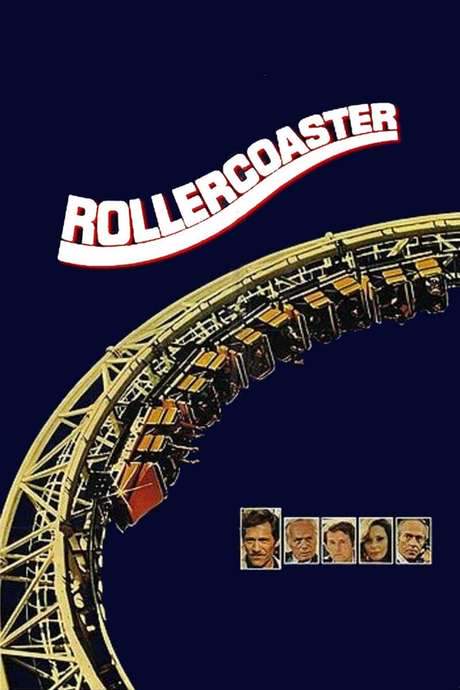
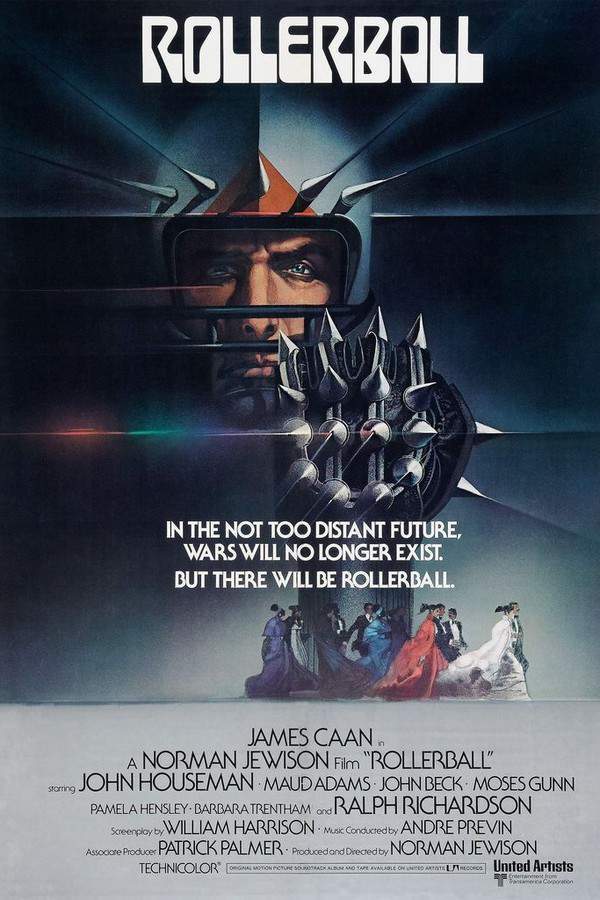
Rollerball (1975) movie poster

Plot Summary

Rollerball (1975) Plot Summary Explained

Release, runtime and language
1975 · 125 min · English
Loading streaming availability…
Directed by
Norman Jewison
Starring
James Caan, Burt Kwouk, John Beck, John Houseman, Barbara Trentham, John Normington

In a dystopian future, rollerball has evolved into a brutal, highly popular sport. Star player Jonathan finds himself increasingly troubled by the game's violent nature and the manipulative control of its creator, Petrovich. Alongside teammates Marcus and Aurora, Jonathan must navigate the intense pressure and escalating danger as Petrovich orchestrates the sport for maximum entertainment, pushing the players to their limits and threatening their survival.

On this page (6)
  1. 1 Where to watch
  2. 2 What happens: full plot
  3. 3 Plot questions answered
  4. 4 Movie threads
  5. 5 Movies like Rollerball
  6. 6 Every angle
Loading streaming availability…

Full plot summary · contains spoilers

What Happens in Rollerball: Full Plot Summary

The whole story of Rollerball (1975) explained, from the opening scene to the final frame: every key event, every twist and what it all adds up to. Read it as a quick recap before the sequel, to check a scene you missed, or to finally understand what really happened.

It is the year 2018, and the world has transformed into a place devoid of wars, poverty, and violence. Instead, people channel their frustrations through the thrilling experience of Rollerball games. In a thrilling matchup, the Houston team triumphs over Madrid, with their standout player, Jonathan E, showcasing his exceptional scoring skills. Despite the brutality of the game, the players revel in it, celebrating their victory alongside corporate executives led by the arrogant Mr. Bartholomew.

When Jonathan is summoned to meet Bartholomew the following day, he learns that the Energy Corporation is pressuring him to retire. Resistant to this directive, Jonathan returns home via helicopter to his secluded ranch in East Texas, accompanied by a young woman assigned to him by the corporation, along with his friend and trainer, Clete. However, the woman soon departs for Indianapolis on a whim, leaving Jonathan to focus solely on training the Rollerball team, which includes new members.

In his quest for information about the Energy Corporation, Jonathan visits a library in downtown Houston, but the clerk informs him that the books he seeks are classified and cannot be issued. Meanwhile, back at his ranch, he encounters another young woman, Daphne, also sent by the corporation. The team's training takes an unexpected turn when they learn of new rules that eliminate penalties, a change imposed because of Jonathan's refusal to retire.

During a television interview designed to herald his retirement, it becomes clear that Bartholomew orchestrated the entire segment, aiming to pressure Jonathan further. As the Rollerball team continues their rigorous training, they dismiss warnings from a coach representing the Tokyo team and confidently proclaim their superiority. The story unfolds at a lavish cocktail party where affluence and excess are rampant, and whispers circulate that the players are robots. Bartholomew's insistence for Jonathan to quit is met with defiance, as Jonathan grapples with the pressures around him.

As they travel to Tokyo, the Rollerball team faces a brutal onslaught from their opponents, leading to dire consequences for team member Moonpie. When Moonpie ends up in a coma, a Japanese doctor urges Jonathan to allow life support to be removed, but he steadfastly refuses. Meanwhile, Bartholomew and the Energy Corporation executives discuss Jonathan's removal from the game in a tense video conference, aiming to restore Rollerball to its original spirit.

Jonathan's journey takes him to Geneva, Switzerland, where he seeks information about corporate warfare at the world's largest computer bank, but the system fails to provide clarity. In a poignant visit, his ex-wife Ella arrives at his ranch, attempting to convince him that the corporation had good reasons for their actions. However, Jonathan ultimately erases all traces of their past together, symbolizing his determination to fight against the corporation's manipulations.

As the Rollerball team competes in New York City under the oppressive new rules, calamity strikes as players suffer severe injuries or even death. Amidst the chaos, Jonathan continues to score, and as the crowd chants his name, Bartholomew’s anger reaches a boiling point. The final sequence captures Jonathan skating endlessly, freezing the frame just as the credits roll, leaving viewers on the edge of their seats.
Last updated: November 03, 2024 at 14:28

Was this helpful?

Plot questions answered

Rollerball Plot Explained: Your Questions Answered

The questions people ask most about Rollerball (1975): what happens in the confusing scenes, why the characters do what they do, the twists, hidden details and what the ending means. Each answer contains spoilers.

Q1

Why does the Energy Corporation want Jonathan to retire from Rollerball?

The Energy Corporation views Jonathan as a threat to their control over the sport. His popularity and refusal to comply make him dangerous because he could inspire other players to question the system. Bartholomew explicitly states the corporation wants to restore Rollerball to its original spirit, which means eliminating players who become too influential or independent. Jonathan's individual fame contradicts the corporation's goal of keeping the sport about corporate entertainment rather than individual glory.

Foreshadowing: Early in the film, Jonathan celebrates his victory publicly with corporate executives, establishing his prominence.

  • jonathan retired
  • energy corporation
  • bartholomew
  • corporate control
  • rollerball rules
Q2

What are the new Rollerball rules and why were they implemented?

The new rules eliminate all penalties from the game, making it infinitely more dangerous. These rules were imposed specifically because Jonathan refused to retire when ordered. The corporation's logic is that without penalties, the game becomes more violent and entertaining for viewers, while also being a direct response to Jonathan's defiance, essentially forcing him to either comply or risk deadly consequences every time he plays.

Foreshadowing: Bartholomew's pressure to retire escalates immediately after Jonathan refuses the order.

  • rollerball rules
  • penalties removed
  • violence
  • corporate punishment
Q3

What happens to Moonpie in Tokyo and why does Jonathan refuse to let him die?

In the Tokyo match, Moonpie suffers critical injuries during the brutal game and ends up in a coma. A Japanese doctor asks Jonathan to authorize removing life support, but Jonathan refuses, insisting on keeping Moonpie alive. This decision reflects Jonathan's defiance of the corporation's dehumanizing values, he refuses to abandon a teammate even when doing so would serve the system's interests. It also demonstrates his belief that individual life has value beyond entertainment.

Foreshadowing: The Tokyo team coach warns Houston about the violent nature of their opponents before the match.

  • moonpie coma
  • tokyo match
  • injury
  • team loyalty
  • life support
Q4

Why does the Energy Corporation send women to Jonathan's ranch?

The corporation sends young women to Jonathan as a form of surveillance and control. They are assigned to monitor his activities and report back to Bartholomew. The first woman leaves spontaneously for Indianapolis, but the second, Daphne, remains. This reflects the corporation's practice of maintaining constant oversight over their star players, using personal relationships as another tool to manage and manipulate them.

Foreshadowing: Jonathan is told a woman will accompany him to his ranch immediately after meeting with Bartholomew.

  • daphne
  • corporate surveillance
  • women ranch
  • monitoring
Q5

Why does Jonathan visit a library and the Geneva computer bank to find information?

Jonathan attempts to research the Energy Corporation's history and true purpose, seeking to understand the system controlling his life. At the Houston library, he discovers the books he needs are classified, showing the corporation actively suppresses information. In Geneva, he visits what he believes is the world's largest computer bank to find data on corporate warfare, but the system provides no clear answers. These scenes illustrate how the corporation maintains power by controlling knowledge and keeping its operations opaque.

Foreshadowing: Jonathan's initial meeting with Bartholomew establishes the corporation's authority over his career.

  • geneva computer bank
  • library classified
  • corporate secrets
  • information control
Q6

Why does Jonathan's ex-wife Ella visit his ranch and what does she want?

Ella visits Jonathan to convince him that the Energy Corporation had good intentions and valid reasons for their actions. She represents the corporation's attempt to psychologically break Jonathan by sending someone from his past who might sway his perspective. Jonathan responds by erasing all traces of their shared past, photographs, memories, symbolizing his complete rejection of the corporation's narrative and his determination to fight against their manipulation.

Foreshadowing: Ella's arrival is unexpected, and she appears to be acting on the corporation's behalf.

  • ella ex-wife
  • ranch visit
  • corporate persuasion
  • manipulation
Q7

What does the ending mean, does Jonathan win by continuing to skate?

The ending is intentionally ambiguous. Jonathan keeps skating endlessly as the frame freezes on him, symbolizing both his victory and his futility. He survives and continues to resist the corporation, but the system itself remains unchanged. The endless skating represents his perseverance against overwhelming power, yet the fact that it never ends suggests his struggle may never truly succeed, the corporation endures, and he remains trapped in their sport. The crowd chanting his name shows he's won their support, but not the system's surrender.

Foreshadowing: Throughout the film, Jonathan repeatedly defies Bartholomew's orders, building toward this final act of resistance.

  • ending frozen frame
  • victory
  • futility
  • resistance
  • corporate system
Q8

Who created Rollerball and why is it so violent?

Rollerball was created by Petrovich, the architect of this future society. The sport exists as a controlled outlet for frustrations that would otherwise lead to wars, poverty, and violence. By channeling aggression into brutal entertainment, the corporation maintains peace at the cost of individual freedom. The violence is intentional, it's designed to satisfy the public's need for conflict while keeping real violence out of society. The corporation orchestrates it for maximum entertainment, pushing players to deadly limits.

Foreshadowing: The opening narration explains how the world transformed into this peaceful-but-controlled state.

  • petrovich created
  • sport violence
  • corporate entertainment
  • controlled society
Q9

Why does Bartholomew become so angry during the final New York match?

Bartholomew's anger stems from Jonathan's refusal to be eliminated despite the corporation's efforts. Under the new deadly rules designed to kill him, Jonathan not only survives but thrives, he keeps scoring while others die around him. His continued success publicly defies the corporation's power and exposes the system as unable to control one rebellious individual. The crowd's growing support for Jonathan also threatens the corporation's grip on the sport's narrative, making Bartholomew furious that his manipulation has backfired.

Foreshadowing: Bartholomew's earlier video conference discusses removing Jonathan to restore the game's spirit.

  • bartholomew anger
  • final match
  • corporate failure
  • defiance
Q10

Why do so many players die in the final New York match?

The new rules that eliminate penalties directly cause the deaths. Without penalties, there are no consequences for the most violent attacks, so the game becomes a free-for-all where players can be seriously injured or killed without recourse. The corporation implemented these rules partly to force Jonathan out through danger, but the result is widespread carnage. The match demonstrates the deadly consequences of a system that prioritizes entertainment over human life.

Foreshadowing: The new rules are announced during training at Jonathan's ranch, changing the game's nature.

  • player deaths
  • new rules fatal
  • brutal match
  • no penalties

Movie threads

More Movies Like Rollerball, by Mood & Story

Curated lists built around what makes Rollerball tick: the same mood, the same kind of story or the same emotional payoff. Each list explains why these movies belong together.

Dystopian Sports Movies like Rollerball

Futuristic sports where brutal games are tools of societal oppression and control. Explore a collection of movies like Rollerball, where brutal future sports are spectacles of corporate or state control. If you enjoyed the themes of dehumanization and defiance within a deadly game, these similar dystopian stories and sci-fi thrillers will captivate you.

  • dystopian
  • brutal
  • defiant
  • oppressive
  • anxious
  • sport
  • Tone: dark, oppressive
  • Pacing: steady, escalating
Why these movies?

The story pattern: The narrative typically follows a celebrated athlete who achieves success within a brutally violent sport, only to discover the game is a carefully orchestrated tool for social control. Their journey becomes one of awakening defiance, pitting their individual will against an overwhelming, manipulative system, often leading to a crisis of survival and identity.

Why they belong together: These films are grouped by their shared high-concept premise of sport as a dystopian mechanism. They blend high-intensity action with heavy themes of control and rebellion, creating a tense, dark, and intellectually provocative viewing experience centered on a central, defiant hero.

Movies about Futile Dystopian Struggle like Rollerball

Stories of individuals fighting oppressive systems where victory is ambiguous and costly. Find more movies like Rollerball that explore the heavy theme of defiant individuals against unstoppable oppressive systems. These similar dystopian thrillers and dramas share a somber mood, ambiguous endings, and a focus on the existential cost of resistance.

  • oppressive
  • somber
  • futile
  • defiant
  • existential
  • dystopian
  • Tone: somber, dark, anxious
  • Pacing: steady, methodical
Why these movies?

The story pattern: The narrative arc centers on a character's growing awareness of their oppression within a controlling society. Their defiance is met with escalating manipulation and violence. The story is less about overthrowing the system and more about the personal cost of resistance, often culminating in an ambiguous ending that highlights the protagonist's symbolic victory against the backdrop of the system's enduring power.

Why they belong together: These movies are united by their exploration of rebellion's limits. They share a dark tone, heavy emotional weight, and a steady pacing that builds dread. The experience is defined by a consistent mood of anxiety and somber reflection on the price of individual freedom.

If you liked this

Movies Like Rollerball

Similar movies to Rollerball: the same genre, themes or kind of story. Each one comes with its own plot summary, timeline and ending explained.

Browse all movie summaries

Every angle

Rollerball (1975) Explained: Plot, Timeline & Characters

Everything about Rollerball in one place: what happens in the plot summary, the timeline in chronological order, the characters and meaning and a spoiler-free summary. What's After the Movie adds the cast, box office and post-credit scenes.

Coming soon on iOS and Android

The Plot Explained Movie Summary App

Plot summaries, endings explained and timelines on your phone. Catch up on any movie in minutes, save your favorites and never miss a twist again.

Be the first to know when we launch. Your email stays private, always.

Learn more about the app