Plot Explained Spoilers guaranteed!
Plot Explained

Browse by genre

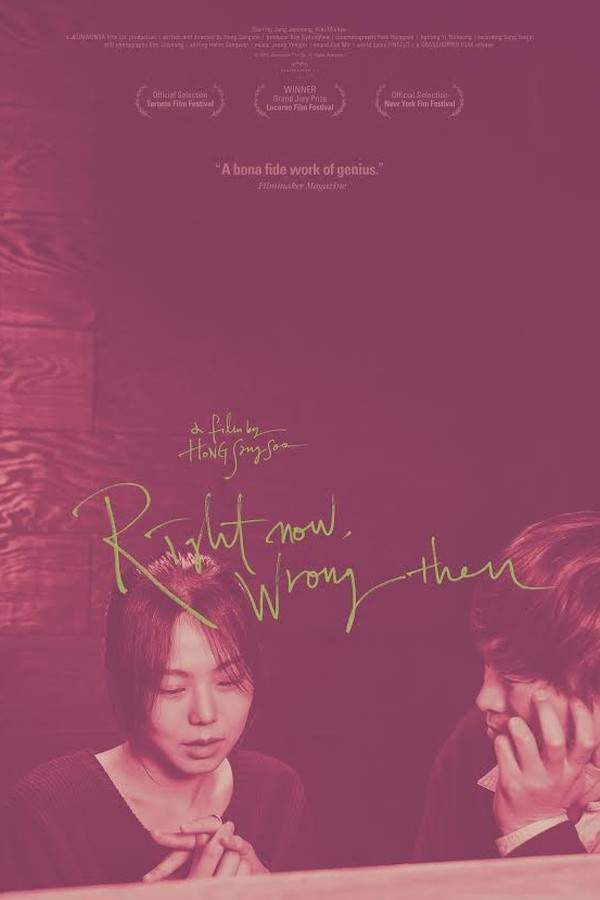
Right Now, Wrong Then (2016) movie poster

Characters & Themes

Right Now, Wrong Then (2016) Characters, Setting & Themes Explained

Release, runtime and language
2016 · 121 min · Korean
Loading streaming availability…
Directed by
Sang-soo Hong

A celebrated film director unexpectedly finds himself in a new city before his scheduled visit. There, he meets a captivating artist and her workspace, sparking a connection through shared passions for art, delicious meals, and conversation. As their bond deepens, the director grapples with the conflict between his public image and his growing feelings. However, the course of their relationship takes an unforeseen and dramatic turn, altering their lives in unexpected ways.

On this page (7)
  1. 1 Where to watch
  2. 2 Characters explained (2)
  3. 3 Where & when it takes place
  4. 4 Themes & meaning (3)
  5. 5 Character & meaning questions
  6. 6 Movie threads
  7. 7 Every angle
Loading streaming availability…

2 main characters · contains spoilers

Right Now, Wrong Then Characters Explained: Who Is Who

The main characters of Right Now, Wrong Then (2016), heroes and villains: what drives them, how they change over the course of the story and what each of them reveals about the film's bigger ideas.

  • Ham Cheon-soo

    Cheon-soo is a contemplative arthouse film director who finds himself captivated by Heejung's creative spirit. He is portrayed as both charming and flawed, struggling with feelings of infatuation and the complications of his marriage. His journey reflects a man's search for meaningful connection amid personal turmoil.

    • 🎬 Director
    • 💔 Infatuation
    • 🥃 Vulnerability
  • Yoon Heejung

    Heejung is a former model who has transitioned into painting, seeking fulfillment beyond superficial success. She embodies resilience while confronting her loneliness and yearning for deeper relationships. Her passion for art and desire for authentic connection drive her interactions with Cheon-soo.

    • 🎨 Artist
    • 🌟 Resilience
    • 😔 Loneliness

Last updated: October 22, 2024 at 21:39

Was this helpful?

Setting

Where and When Does Right Now, Wrong Then Take Place?

The setting of Right Now, Wrong Then (2016): the year and time period, the places and locations, and how they shape the characters, the mood and the tension of the story.

Time period

The movie unfolds in a contemporary setting, highlighting the complexities of modern relationships and the pressures of personal and professional lives. It captures the essence of present-day societal dynamics, particularly centering around issues of superficiality and emotional isolation.

Location

Suwon, Seoul, Temple

Suwon is a historic city known for its rich cultural heritage and scenic landscapes, including the impressive Hwaseong Fortress. The temple serves as a serene backdrop for pivotal encounters in the film, embodying moments of reflection and connection. Seoul, the capital of South Korea, represents a bustling urban environment where Cheon-soo navigates his life as a filmmaker.

  • 🏙️ City
  • 🕌 Temple

Last updated: October 22, 2024 at 21:39

Was this helpful?

3 major themes

Right Now, Wrong Then Meaning: Themes & Message Explained

What is Right Now, Wrong Then (2016) really about? The emotional, social and philosophical themes the film keeps returning to, its symbolism and the message beneath the surface.

  • Loneliness

    Loneliness is a central theme as both main characters grapple with their emotional voids. Heejung feels isolated despite her past fame, while Cheon-soo confronts his feelings of disconnection due to his marital status. Their interactions reveal how loneliness can stem from both personal choices and societal expectations.

  • Art and Expression

    The film explores the theme of artistic expression, particularly through Heejung's journey as a painter. Her transition from modeling to painting signifies a deeper search for identity and authenticity. The dynamic between Cheon-soo and Heejung highlights how art can serve as both a sanctuary and a medium for vulnerability.

  • Connections

    Connections form and dissolve throughout the movie, illustrating the nuances of human relationships. The serendipitous encounters between Cheon-soo and Heejung suggest a deeper intertwining of fates, while the complexities of their interactions invite viewers to reflect on the fragility and depth of emotional bonds.

Last updated: October 22, 2024 at 21:39

Was this helpful?

Character & theme questions

Right Now, Wrong Then Characters & Meaning: Your Questions Answered

The questions people ask about Right Now, Wrong Then (2016): who the characters really are, their relationships, what the symbols mean, where it takes place and what the movie is really about. Each answer contains spoilers.

Q1

Where does the story take place?

The movie is set in South Korea, primarily in the historic city of Suwon and the capital Seoul. Suwon provides the intimate, reflective settings including a temple that serves as a backdrop for key encounters between the main characters, while Seoul represents the bustling urban environment where the director navigates his professional life.

Foreshadowing: The temple scenes early in their meeting establish the contemplative, reflective tone that carries through their interactions.

  • suwon
  • seoul
  • south korea
  • setting
  • locations
  • temple
Q2

What time period is the film set in?

The movie takes place in contemporary, present-day South Korea. It reflects modern relationship dynamics and addresses current issues of superficiality and emotional isolation in today's society, rather than being anchored to a specific historical era.

  • contemporary
  • modern
  • present day
  • time period
Q3

Who is Ham Cheon-soo?

Ham Cheon-soo is a contemplative arthouse film director who becomes captivated by Heejung's creative spirit. He is portrayed as both charming and flawed, struggling with feelings of infatuation and the complications of his marriage. His journey reflects a man's search for meaningful connection amid personal and professional turmoil.

  • ham cheon-soo
  • director
  • protagonist
  • film director
  • married
Q4

Who is Yoon Heejung?

Yoon Heejung is a former model who has transitioned into painting, seeking fulfillment beyond superficial success. She embodies resilience while confronting her loneliness and yearning for deeper relationships. Her passion for art and desire for authentic connection drive her interactions with Cheon-soo.

  • yoon heejung
  • painter
  • artist
  • former model
  • protagonist
Q5

What are the main themes of the film?

The film explores several interconnected themes including loneliness as both characters grapple with emotional voids stemming from personal choices and societal expectations; artistic expression through Heejung's journey from modeling to painting as a search for identity and authenticity; and the fragile nature of human connections, examining how serendipitous encounters can reveal deeper fates.

  • themes
  • loneliness
  • art
  • expression
  • connections
  • relationships
Q6

How does the movie explore loneliness?

Loneliness is a central theme as both main characters confront their emotional isolation. Heejung feels disconnected despite her past fame as a model, while Cheon-soo struggles with feelings of separation due to his marital status and the pressures of his public image. Their interactions reveal how loneliness can arise from both personal decisions and societal expectations.

  • loneliness
  • emotional isolation
  • emptiness
  • connection
Q7

What role does art play in the movie?

Art and artistic expression serve as a central motif through Heejung's journey as a painter. Her transition from modeling to painting represents a deeper search for identity and authentic self-expression. The dynamic between Cheon-soo and Heejung highlights how art can function as both a sanctuary and a medium for vulnerability and emotional connection.

  • art
  • painting
  • artistic expression
  • creativity
  • painter
Q8

What is the significance of the temple in the film?

The temple in Suwon serves as a serene backdrop for pivotal encounters between Cheon-soo and Heejung. It embodies moments of reflection and connection, providing an intimate space where both characters can be vulnerable with each other away from the urban bustle of Seoul. The setting reinforces the film's contemplative tone.

  • temple
  • suwon
  • setting
  • location
  • reflection
Q9

What is the nature of the relationship between Cheon-soo and Heejung?

Their relationship develops through shared passions for art, delicious meals, and deep conversation. As their bond deepens, Cheon-soo grapples with the conflict between his public image as a celebrated director and his growing genuine feelings for Heejung. The connection explores themes of authenticity versus performance in relationships.

  • relationship
  • romance
  • connection
  • cheon-soo
  • heejung
Q10

What is the emotional tone of the film?

The film has a melancholic and reflective tone, with slow pacing that emphasizes long conversations and lingering on characters' internal states. While it deals with themes of loneliness and missed connections, it avoids traumatic depths, instead sitting in a space of quiet regret and poignant intellectual consolation.

  • tone
  • mood
  • melancholy
  • reflective
  • emotional
  • bittersweet
Q11

How is the film's narrative structure unique?

The film features a complex, surreal repeating-day premise that allows for nuanced exploration of how different choices and levels of honesty alter the same fundamental encounter. This structure enables the story to examine the same relationship from multiple angles, revealing how small differences in authenticity can change the trajectory of human connection.

  • narrative structure
  • repeating day
  • story structure
  • hong sang-soo

Movie threads

More Movies Like Right Now, Wrong Then, by Mood & Story

Curated lists built around what makes Right Now, Wrong Then tick: the same mood, the same kind of story or the same emotional payoff. Each list explains why these movies belong together.

Movies about bittersweet artist encounters like Right Now, Wrong Then

Stories of serendipitous meetings between artists that lead to quiet, transformative connections. If you liked the delicate connection between the director and artist in Right Now, Wrong Then, you'll enjoy these movies about similar serendipitous meetings. This list features films where creative individuals find each other, sharing moments of artistic passion and conversation that leave a lasting, bittersweet mark.

  • artistic
  • melancholic
  • serendipitous
  • reflective
  • lonely
  • contemplative
  • Tone: melancholic, reflective
  • Pacing: slow, contemplative
Why these movies?

The story pattern: These narratives often begin with a chance meeting between two artists from different worlds. Their connection unfolds through shared interests, long conversations, and artistic appreciation, creating a powerful but often fleeting bond. The story explores the tension between personal desire and professional life, usually culminating in a separation that is sad yet enriched by the artistic inspiration left behind.

Why they belong together: Movies are grouped here for their shared focus on the unique, introspective dynamic between artists. They possess a melancholic, reflective tone, a slow, observant pace that savors creative moments, and a central theme exploring how brief encounters can profoundly influence an artist's work and perspective, even if the relationship itself is transient.

Quietly awkward relationship dramas like Right Now, Wrong Then

Dramas that explore the subtle awkwardness and emotional vulnerability of human connection. For fans of the painfully honest and awkward interactions in Right Now, Wrong Then, this list features similar movies that study relationships with a slow, observant eye. These films capture the subtle discomfort and emotional vulnerability of connecting with others, often leading to bittersweet or reflective conclusions.

  • awkward
  • uncomfortable
  • introspective
  • melancholic
  • reflective
  • lonely
  • Tone: melancholic, uncomfortable
  • Pacing: slow, deliberate
Why these movies?

The story pattern: The narrative pattern revolves around characters attempting to connect but being hindered by their own insecurities, social anxieties, or inability to be fully honest. Scenes are built around extended, realistic dialogue where subtext is paramount. Key moments often involve social discomfort or public humiliation, forcing characters to confront the gap between their intended selves and reality, leading to a conclusion that is more contemplative than cathartic.

Why they belong together: These films are grouped by their shared commitment to portraying relationships with unflinching realism and a specific pace. They feature a slow, deliberate rhythm that allows awkward moments to breathe, a melancholic or bittersweet tone, and a medium emotional weight focused on vulnerability rather than high-stakes drama.

Every angle

Right Now, Wrong Then (2016) Explained: Plot, Timeline & Characters

Everything about Right Now, Wrong Then in one place: what happens in the plot summary, the timeline in chronological order, the characters and meaning and a spoiler-free summary. What's After the Movie adds the cast, box office and post-credit scenes.

Coming soon on iOS and Android

The Plot Explained Movie Summary App

Plot summaries, endings explained and timelines on your phone. Catch up on any movie in minutes, save your favorites and never miss a twist again.

Be the first to know when we launch. Your email stays private, always.

Learn more about the app