Plot Explained Spoilers guaranteed!
Plot Explained

Browse by genre

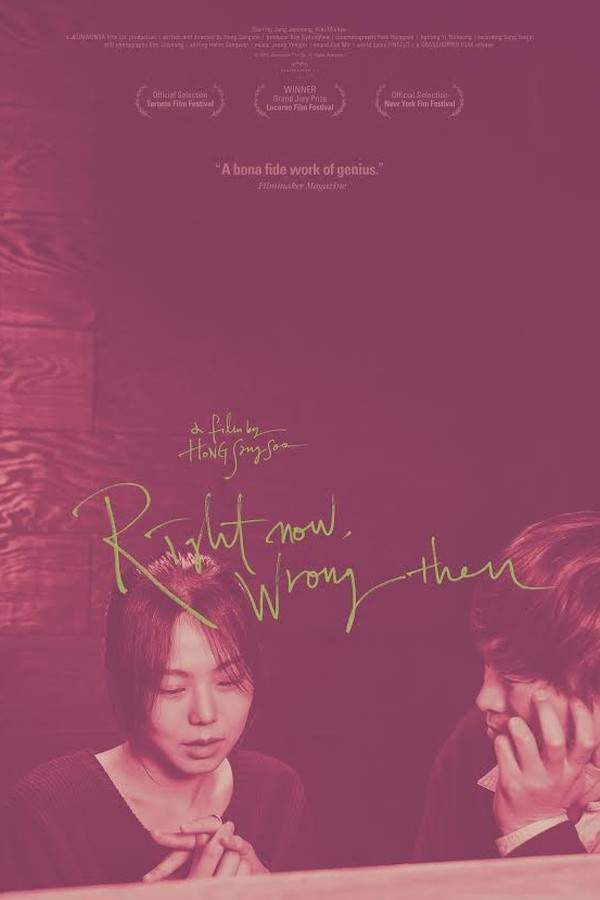
Right Now, Wrong Then (2016) movie poster

Plot Summary

Right Now, Wrong Then (2016) Plot Summary Explained

Release, runtime and language
2016 · 121 min · Korean
Loading streaming availability…
Directed by
Sang-soo Hong

A celebrated film director unexpectedly finds himself in a new city before his scheduled visit. There, he meets a captivating artist and her workspace, sparking a connection through shared passions for art, delicious meals, and conversation. As their bond deepens, the director grapples with the conflict between his public image and his growing feelings. However, the course of their relationship takes an unforeseen and dramatic turn, altering their lives in unexpected ways.

On this page (5)
  1. 1 Where to watch
  2. 2 What happens: full plot
  3. 3 Plot questions answered
  4. 4 Movie threads
  5. 5 Every angle
Loading streaming availability…

Full plot summary · contains spoilers

What Happens in Right Now, Wrong Then: Full Plot Summary

The whole story of Right Now, Wrong Then (2016) explained, from the opening scene to the final frame: every key event, every twist and what it all adds up to. Read it as a quick recap before the sequel, to check a scene you missed, or to finally understand what really happened.

In a serendipitous encounter, the arthouse film director Ham Cheon-soo finds himself captivated by a young woman named Yoon Heejung during his visit to Suwon. Their paths cross yet again at a temple, where an innocent conversation grows into an impromptu coffee date. As they enjoy their time, Heejung opens up about her past as a model, expressing the emptiness and superficiality that accompanied her success despite its financial rewards. She has since rediscovered joy through painting, leading Cheon-soo to be intrigued by her passion for creativity.

With a rare moment of free time on his hands, Cheon-soo accompanies Heejung to her studio, where he is entranced by her artistic process. As they share sushi and indulge in some soju, their discussion takes on a flirtatious tone, with Cheon-soo praising Heejung not only as an artist but as a woman as well. However, when he drunkenly confesses his feelings, the mood shifts; Heejung solemnly reveals her loneliness, lamenting the fact that she lacks friends with whom to share her experiences.

The next night, Heejung extends an invitation for Cheon-soo to join her at a friend's birthday party. Unfortunately, the evening takes a bleak turn when her friends confront Cheon-soo, revealing that his compliments about her art are not unique to her, accompanied by unsettling whispers about his reputation as a womanizer and his marriage. Retreating to recover from the chaos of the evening, Heejung faces a disappointed mother who chastises her for overindulgence.

As the sun rises, Cheon-soo awakens with a throbbing hangover while attending a post-film discussion after screening one of his films. A friend of Heejung arrives with a book of her writing, intensifying Cheon-soo's emotional turmoil. His departure marks the end of his stay in Suwon as he heads back to Seoul.

Miraculously, the day appears to repeat itself—a surreal twist of fate allows Cheon-soo to once again encounter Heejung at the temple. This time, their conversation probes deeper into her life, unveiling the truth that she resides with her mother and has been estranged from her father since the divorce. As Cheon-soo steps into her atelier, he offers a candid critique of her artwork, acknowledging its technical prowess while urging her to embrace bolder creative risks. However, this honesty comes with unintended consequences, causing Heejung to bristle and prompting Cheon-soo to seek air outside.

Undeterred, he circles back to the atelier and launches into a heartfelt confession, expressing his admiration for her beauty. Heejung, curious, presses him on his motivations, to which he candidly reveals his own marital status, confessing his deep infatuation with her. This revelation stirs a whirlpool of emotions for Heejung, challenging her previously stable emotional state. As the night deepens, she invites him to a gathering of her friends, allowing Cheon-soo's rough edges to soften and unveil a like-minded spirit beneath.

However, the flowing drinks lead Cheon-soo to abandon his inhibitions altogether, culminating in an unexpected and embarrassing incident when he strips off his clothes before Heejung's shocked friends, trying to play it off as a joke. This escapade leads to a swift exit on his part, leaving Heejung alone to process her feelings.

Walking home under the shimmering stars, Heejung gets a call from her mother, who humorously recounts Cheon-soo's antics, causing her to burst into laughter. Meanwhile, Cheon-soo stands outside her home, waiting for her return, yearning to continue their heartfelt exploration. Ultimately, Heejung decides against rejoining him, leaving him in solitude, with only the thoughts of connection lingering in the cool night air.

In the wake of a successful screening, Cheon-soo basks in the satisfaction that comes with achievement, taking a moment to engage in light-hearted conversation with fellow film cohort members. Just when everything seems bright, Heejung unexpectedly appears, her eyes radiating warmth. They share a poignant goodbye, filled with words of encouragement, before she retreats back into the festival's vibrant allure.

Yet, Cheon-soo is reluctant to part ways just yet. He seeks out the theatre once more, spurred by a desire to bid Heejung farewell properly. In those quiet moments, just before their paths diverge, she unveils her promise: from this moment onward, every film featuring his name will be under her attentive watch, signifying the profound connection between storytelling and the artists who craft it.
Last updated: November 22, 2024 at 19:02

Was this helpful?

Plot questions answered

Right Now, Wrong Then Plot Explained: Your Questions Answered

The questions people ask most about Right Now, Wrong Then (2016): what happens in the confusing scenes, why the characters do what they do, the twists, hidden details and what the ending means. Each answer contains spoilers.

Q1

Why does the same day repeat in the movie?

The repeating day functions as a narrative device that allows the film to explore how different choices lead to different outcomes. In the first version, Cheon-soo is more guarded and romantic with Heejung, but events unfold poorly. The second version shows him being more honest about his flaws, including his marital status, which creates a different dynamic between them.

  • repeating day
  • time loop
  • alternate outcomes
  • Hong Sang-soo style
Q2

Why does Heejung get upset when Cheon-soo critiques her painting?

Heejung is sensitive about her art because painting represents her new identity after leaving modeling. When Cheon-soo acknowledges her technical skill but urges her to take bolder creative risks, she interprets this as rejection of her current work, which threatens the new sense of self she has built through painting.

  • art critique
  • Heejung painter
  • creative identity
  • sensitivity
Q3

Why does Cheon-soo strip his clothes at the party?

Cheon-soo has been drinking heavily and loses his inhibitions. His behavior appears to be an attempt to be entertaining or memorable, but it crosses into inappropriate territory. This embarrassing incident represents his inability to control his impulses and maintain the composed persona he projects.

  • public humiliation
  • drunk behavior
  • party scene
  • Cheon-soo actions
Q4

Why do Heejung's friends confront Cheon-soo at the birthday party?

Heejung's friends reveal that Cheon-soo's compliments about her art are not unique, he gives the same praise to many women. They also mention his reputation as a womanizer and the fact that he is married. This confrontation exposes the discrepancy between his charming words and his actual character.

  • confrontation
  • Heejung friends
  • reputation
  • womanizer
  • married
Q5

Why don't Cheon-soo and Heejung end up together?

Their relationship cannot work because Cheon-soo is married and cannot commit to Heejung beyond this brief encounter. Additionally, his embarrassing behavior at the party and his pattern of charming women without genuine connection make a lasting relationship impossible. They exist in different worlds, he returns to Seoul and his career.

  • romance ending
  • married director
  • impossible love
  • parting
Q6

How do the two versions of their meeting differ?

In the first version, Cheon-soo is more romantic but less honest, he does not disclose his marriage. The encounter ends badly after the birthday party confrontation. In the second version, he is more candid about his marital status and his flaws, which creates more tension but also a deeper, more authentic connection before they part ways.

  • two versions
  • alternate ending
  • Hong Sang-soo structure
  • different choices
Q7

Why does Heejung laugh when her mother calls about Cheon-soo?

After Cheon-soo's embarrassing naked incident at the party, Heejung's mother calls to tell her what happened. The humor of the situation, the respectable director behaving absurdly, breaks the tension and makes Heejung laugh, showing how she can find lightness even in awkward moments involving Cheon-soo.

  • mother call
  • comedy
  • awkward situation
  • Heejung laughter
Q8

What does Heejung's promise to watch all his films mean?

At their farewell, Heejung promises to watch every film Cheon-soo makes from then on. This promise represents an enduring, albeit distant, connection, they cannot be together, but she will remain connected to his work. It symbolizes how art can create lasting bonds between creator and audience, offering bittersweet consolation.

  • film promise
  • ending meaning
  • artistic connection
  • bittersweet
Q9

Why does Cheon-soo hide his marriage in the first encounter?

Cheon-soo initially hides his marital status to pursue his attraction to Heejung without consequences. His pattern of charming women despite being married is exactly what Heejung's friends expose at the birthday party. In the second version, he eventually admits his marriage, showing growth in honesty.

  • married
  • hidden marriage
  • deception
  • Cheon-soo honesty
Q10

Why does Heejung decide not to see Cheon-soo again at the end?

After Cheon-soo's embarrassing behavior and the revelation of his marriage, Heejung chooses to say goodbye rather than continue their connection. While she appreciates their genuine moments, she recognizes that a relationship with a married man who behaves irresponsibly is not viable. Her final promise to watch his films is both an act of closure and a lasting tribute.

  • rejection
  • goodbye
  • final scene
  • Heejung choice
Q11

Why does Heejung mention her past as a model?

Heejung shares that she was a financially successful model but felt empty and superficial in that career. She describes painting as her way of rediscovering genuine joy and creative fulfillment. This backstory explains why she values authenticity and why she reacts strongly when she suspects someone is being insincere about her art.

  • model past
  • emptiness
  • artistic passion
  • Heejung background
Q12

Why do Cheon-soo and Heejung keep meeting at the temple?

The temple serves as a symbolic meeting point that represents chance and fate. Both encounters begin there, the first by accident, the second as a surreal repetition. The temple setting suggests that some connections are meant to happen, even if they cannot last, and provides a neutral, contemplative space where their conversations can begin.

  • temple scene
  • fate
  • meeting place
  • Suwon setting

Movie threads

More Movies Like Right Now, Wrong Then, by Mood & Story

Curated lists built around what makes Right Now, Wrong Then tick: the same mood, the same kind of story or the same emotional payoff. Each list explains why these movies belong together.

Movies about bittersweet artist encounters like Right Now, Wrong Then

Stories of serendipitous meetings between artists that lead to quiet, transformative connections. If you liked the delicate connection between the director and artist in Right Now, Wrong Then, you'll enjoy these movies about similar serendipitous meetings. This list features films where creative individuals find each other, sharing moments of artistic passion and conversation that leave a lasting, bittersweet mark.

  • artistic
  • melancholic
  • serendipitous
  • reflective
  • lonely
  • contemplative
  • Tone: melancholic, reflective
  • Pacing: slow, contemplative
Why these movies?

The story pattern: These narratives often begin with a chance meeting between two artists from different worlds. Their connection unfolds through shared interests, long conversations, and artistic appreciation, creating a powerful but often fleeting bond. The story explores the tension between personal desire and professional life, usually culminating in a separation that is sad yet enriched by the artistic inspiration left behind.

Why they belong together: Movies are grouped here for their shared focus on the unique, introspective dynamic between artists. They possess a melancholic, reflective tone, a slow, observant pace that savors creative moments, and a central theme exploring how brief encounters can profoundly influence an artist's work and perspective, even if the relationship itself is transient.

Quietly awkward relationship dramas like Right Now, Wrong Then

Dramas that explore the subtle awkwardness and emotional vulnerability of human connection. For fans of the painfully honest and awkward interactions in Right Now, Wrong Then, this list features similar movies that study relationships with a slow, observant eye. These films capture the subtle discomfort and emotional vulnerability of connecting with others, often leading to bittersweet or reflective conclusions.

  • awkward
  • uncomfortable
  • introspective
  • melancholic
  • reflective
  • lonely
  • Tone: melancholic, uncomfortable
  • Pacing: slow, deliberate
Why these movies?

The story pattern: The narrative pattern revolves around characters attempting to connect but being hindered by their own insecurities, social anxieties, or inability to be fully honest. Scenes are built around extended, realistic dialogue where subtext is paramount. Key moments often involve social discomfort or public humiliation, forcing characters to confront the gap between their intended selves and reality, leading to a conclusion that is more contemplative than cathartic.

Why they belong together: These films are grouped by their shared commitment to portraying relationships with unflinching realism and a specific pace. They feature a slow, deliberate rhythm that allows awkward moments to breathe, a melancholic or bittersweet tone, and a medium emotional weight focused on vulnerability rather than high-stakes drama.

Every angle

Right Now, Wrong Then (2016) Explained: Plot, Timeline & Characters

Everything about Right Now, Wrong Then in one place: what happens in the plot summary, the timeline in chronological order, the characters and meaning and a spoiler-free summary. What's After the Movie adds the cast, box office and post-credit scenes.

Coming soon on iOS and Android

The Plot Explained Movie Summary App

Plot summaries, endings explained and timelines on your phone. Catch up on any movie in minutes, save your favorites and never miss a twist again.

Be the first to know when we launch. Your email stays private, always.

Learn more about the app