Year: 1991
Runtime: 98 mins
Language: Japanese
Director: Akira Kurosawa
An elderly hibakusha, whose husband perished among the 80,000 victims of the 1945 Nagasaki atomic bombing, spends a summer caring for her four grandchildren. Amid tears, laughter, and quiet innocence, she discovers a long‑lost brother, Suzujiro, living in Hawaii, who asks her to visit before he dies.
Get a spoiler-free look at Rhapsody in August (1991) with a clear plot overview that covers the setting, main characters, and story premise—without revealing key twists or the ending. Perfect for deciding if this film is your next watch.
In the gentle heat of a Japanese summer, an elderly hibakusha tends to the lively chaos of her four grandchildren, her days marked by the soft cadence of laughter and the quiet weight of memory. The house, perched near the lingering shadows of Nagasaki, becomes a place where past and present brush against each other, the scent of pine and sea mingling with the faint echo of a tragedy that still shapes the family’s rhythm.
Kane carries the ache of a husband lost to the 1945 atomic bombing, a sorrow that subtly guides her interactions with each generation. Her children, living in the rhythm of post‑war Japan, navigate the delicate balance between honoring that loss and moving forward, while the grandchildren, full of curiosity, begin to sense the depth of the story that underpins their everyday world. The film’s tone is tender and reflective, allowing moments of humor and tenderness to coexist with an ever‑present, unspoken grief.
The arrival of news from across the ocean introduces a new thread: a brother, Suzujiro, who has spent a lifetime far from the islands of his birth, now lives in Hawaii. His request that Kane visit before his own time ends offers a quiet invitation to bridge the distance between continents, cultures, and the lingering pain of history. Alongside him, his American‑born son, Clark, embodies a blend of East and West, hinting at the complex ties that bind families across seas.
As the summer unfolds, the family’s everyday rituals become a canvas for subtle exploration—questions about memory, identity, and the lingering afterglow of a distant fire. The story moves with a measured, lyrical pace, inviting viewers to feel the pull of history, the warmth of kinship, and the quiet courage required to face both remembrance and the promise of an unknown journey.
Last Updated: December 03, 2025 at 23:34
Discover curated groups of movies connected by mood, themes, and story style. Browse collections built around emotion, atmosphere, and narrative focus to easily find films that match what you feel like watching right now.
Stories where personal and family histories are reshaped by past collective trauma.If you liked Rhapsody in August's exploration of the Nagasaki bombing's legacy, you'll find similar stories here. These movies connect personal family dramas to larger historical wounds, showing how trauma echoes across generations. They share a focus on memory, quiet reflection, and the bittersweet task of understanding a painful past.
Stories in this thread often center on a character, frequently elderly, who is a living vessel of a traumatic historical event. Their memories, sometimes fading, impact younger family members who must navigate this inherited grief. The plot involves a gradual uncovering or revisiting of the past, leading to emotional confrontations and a deeper, often sorrowful, understanding of family and history.
Movies are grouped here for their shared focus on the intersection of personal family history and large-scale historical trauma. They share a melancholic, reflective tone, a slow, character-driven pace, and a heavy emotional weight centered on grief, memory, and the quiet, lasting impact of violence on the human psyche.
Slow-paced, reflective dramas that find profound beauty in sadness and memory.For viewers seeking movies with the same quiet, somber, and reflective mood as Rhapsody in August. These films share a slow pacing, a melancholic tone, and a heavy emotional focus on themes like memory, loss, and ageing. They are perfect for when you want a deeply moving, thoughtful cinematic experience.
The narrative pattern here is less about a propulsive plot and more about an emotional journey. Scenes unfold slowly, allowing the viewer to sit with the characters' feelings. The conflict is often internal—a character wrestling with grief, regret, or fading memories. The journey is one of quiet contemplation, leading to a poignant, often bittersweet or sad, conclusion that emphasizes emotional truth over narrative resolution.
These films are united by a specific mix of mood, tone, and pacing. The core similarity is a deeply melancholic and reflective atmosphere, achieved through slow pacing, a focus on quiet moments, and narratives that explore heavy themes like loss and memory with a sense of reverence and poetic beauty.
Don't stop at just watching — explore Rhapsody in August in full detail. From the complete plot summary and scene-by-scene timeline to character breakdowns, thematic analysis, and a deep dive into the ending — every page helps you truly understand what Rhapsody in August is all about. Plus, discover what's next after the movie.
Read a complete plot summary of Rhapsody in August, including all key story points, character arcs, and turning points. This in-depth recap is ideal for understanding the narrative structure or reviewing what happened in the movie.
Track the full timeline of Rhapsody in August with every major event arranged chronologically. Perfect for decoding non-linear storytelling, flashbacks, or parallel narratives with a clear scene-by-scene breakdown.
Discover the characters, locations, and core themes that shape Rhapsody in August. Get insights into symbolic elements, setting significance, and deeper narrative meaning — ideal for thematic analysis and movie breakdowns.
Visit What's After the Movie to explore more about Rhapsody in August: box office results, cast and crew info, production details, post-credit scenes, and external links — all in one place for movie fans and researchers.
Discover movies like Rhapsody in August that share similar genres, themes, and storytelling elements. Whether you’re drawn to the atmosphere, character arcs, or plot structure, these curated recommendations will help you explore more films you’ll love.
Rhapsody in August (1991) Scene-by-Scene Movie Timeline
Rhapsody in August (1991) Movie Characters, Themes & Settings
Rhapsody in August (1991) Spoiler-Free Summary & Key Flow
Movies Like Rhapsody in August – Similar Titles You’ll Enjoy
Tokyo Sonata (2009) Plot Summary & Ending Explained
In This Corner of the World (2017) Story Summary & Characters
Grave of the Fireflies (2005) Movie Recap & Themes
War and Youth (1991) Full Movie Breakdown
Children of Nagasaki (1983) Plot Summary & Ending Explained
The Ballad of Narayama (1983) Film Overview & Timeline
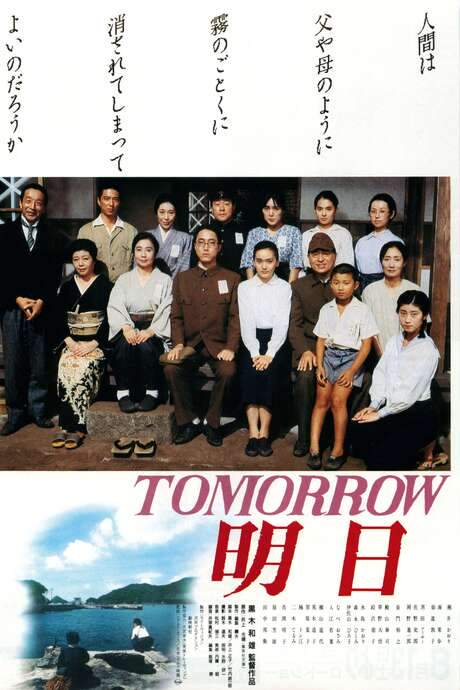
Tomorrow (1988) Ending Explained & Film Insights
Late Autumn (1960) Movie Recap & Themes
Tokyo Story (1953) Full Summary & Key Details
Hiroshima (1000) Complete Plot Breakdown
No Regrets for Our Youth (1946) Film Overview & Timeline
A Japanese Tragedy (1953) Full Summary & Key Details
Hiroshima Mon Amour (1959) Film Overview & Timeline
Children of Hiroshima (1952) Spoiler-Packed Plot Recap
Hiroshima (1953) Story Summary & Characters