Plot Explained Spoilers guaranteed!
Plot Explained

Browse by genre

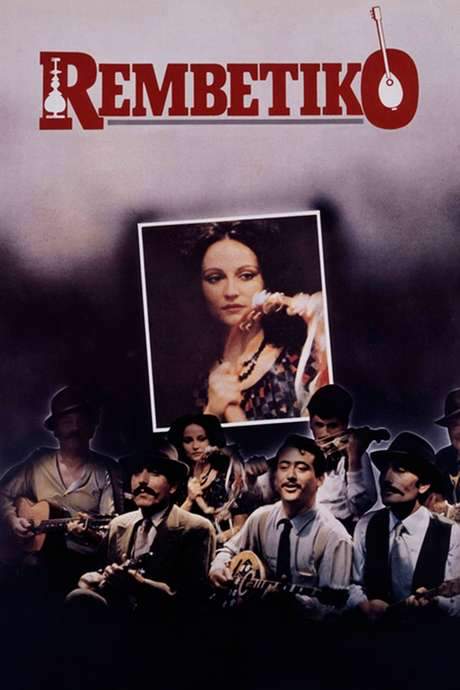
Rembetiko (1983) movie poster

Characters & Themes

Rembetiko (1983) Characters, Setting & Themes Explained

Release, runtime and language
1983 · 110 mins · Greek
Loading streaming availability…
Starring
Joseph, Konstantinos Tzoumas, Themis Bazaka, Nikos Kalogeropoulos, Vicky Vanita, Nikos Fronimopoulos

Set in the early decades of the 20th century, the film portrays a community of Rembetes—Greek singers and musicians whose folk style is the country's counterpart to the blues. Their lives and music are observed through the eyes of a young female vocalist, who serves as the story’s narrator and guide.

On this page (8)
  1. 1 Where to watch
  2. 2 Characters explained (5)
  3. 3 Where & when it takes place
  4. 4 Themes & meaning (3)
  5. 5 Character & meaning questions
  6. 6 Movie threads
  7. 7 Movies like Rembetiko
  8. 8 Every angle
Loading streaming availability…

5 main characters · contains spoilers

Rembetiko Characters Explained: Who Is Who

The main characters of Rembetiko (1983), heroes and villains: what drives them, how they change over the course of the story and what each of them reveals about the film's bigger ideas.

  • Marika

    played by Sotiria Leonardou

    The central figure, a powerful singer whose life mirrors the turbulence of 20th-century Greece. Her career rises in the nightclub scene, she endures tragedy and political upheaval, and her personal relationships test her professionally. She embodies resilience, ambition, and a willingness to push through adversity for art.

    • 🎭 Drama
    • 🎶 Music
    • 💔 Love
  • Matina

    played by Lina Babatsia

    A younger singer who captivates audiences and ultimately challenges Marika’s status. Her rise creates competition and intergenerational shift within the Greek music world. Matina represents a new generation and the evolving sound of the era.

    • 🎶 Music
    • 🌟 Generation
    • 💖 Ambition
  • Babis

    played by Nikos Kalogeropoulos

    A bouzouki player and romantic focal point, whose relationship with Marika weaves through the film’s emotional landscape. His artistry and loyalties are tested by fame, jealousy, and changing times. He embodies the musician’s viewpoint on love, craft, and spectacle.

    • 🎶 Music
    • 💘 Romance
    • 🥁 Bouzouki
  • Roza

    played by Vicky Vanita

    A rival or colleague singer whose fate becomes a catalyst for the story’s darker moments. Her tragedy amplifies the film’s themes of competition, danger in show business, and the cost of success. Roza's arc comments on female agency within the era’s musical scene.

    • 🎶 Music
    • 💔 Tragedy
    • 🕊️ Sacrifice
  • Thomas (Yorgos)

    played by Giorgos Zorbas

    Marika’s childhood friend and a fellow musician who experiences exile for political reasons. Their bond reflects the era’s political tensions and the personal costs of upheaval. His path intersects with Marika’s career, influencing both her life decisions and artistic direction.

    • 🎭 Drama
    • 🕊️ Exile
    • 🎶 Music

Last updated: October 04, 2025 at 13:42

Was this helpful?

Setting

Where and When Does Rembetiko Take Place?

The setting of Rembetiko (1983): the year and time period, the places and locations, and how they shape the characters, the mood and the tension of the story.

Time period

1917–1950s

The narrative spans roughly four decades, from Marika’s birth in 1917 through interwar Greece, World War II, and the postwar era. It uses these eras to show how politics, migration, and social change shape a musician’s career. The period is defined by upheaval, resilience, and the rise of rebetiko as a national sound.

Location

Smyrna (Izmir, Asia Minor), Greece, United States

The story begins in Smyrna, Asia Minor, and follows the family’s deportation to Greece after 1917. It relocates to Greek nightclub culture and later takes the characters to America during a touring period. The settings reflect displacement, cultural exchange, and the evolving Greek musical scene across continents.

  • 🎭 Drama
  • 🎶 Music
  • ✈️ Migration

Last updated: October 04, 2025 at 13:42

Was this helpful?

3 major themes

Rembetiko Meaning: Themes & Message Explained

What is Rembetiko (1983) really about? The emotional, social and philosophical themes the film keeps returning to, its symbolism and the message beneath the surface.

  • Love & Betrayal

    Marika’s passions anchor the emotional arc, with complicated relationships driving both personal longing and professional tension. Rivalries and unfulfilled love complicate her friendships, especially with Babis and Yorgos. The death of a rival singer and the strains of fame underscore the cost of devotion and ambition. The theme examines how intimate bonds collide with public life.

  • Music & Identity

    Rebetiko clubs and the Greek music scene are the heartbeat of the film, shaping Marika’s ascent and public image. Music serves as both livelihood and cultural language for a diaspora navigating exile and belonging. The soundtrack traces how sound mirrors shifting loyalties, eras, and personal transformation. It portrays music as a force that sustains identity amid upheaval.

  • Exile & Migration

    From Smyrna’s upheaval to a touring life in America, migration drives the narrative and personal choices. The movement between places highlights opportunity, loss, and the struggle to maintain roots. Exile becomes a catalyst for artistic reinvention and intergenerational change. The theme underscores how displacement reshapes both life and art.

Last updated: October 04, 2025 at 13:42

Was this helpful?

Character & theme questions

Rembetiko Characters & Meaning: Your Questions Answered

The questions people ask about Rembetiko (1983): who the characters really are, their relationships, what the symbols mean, where it takes place and what the movie is really about. Each answer contains spoilers.

Q1

What locations does the film cover?

The film begins in Smyrna (modern-day Izmir, Asia Minor), follows Marika’s family’s deportation to Greece after 1917, and later takes the characters to America during a touring period. This trajectory reflects displacement and cultural exchange across continents, moving from the collapse of Smyrna to Greek nightclub culture and eventually to the United States.

Foreshadowing: The opening in Smyrna establishes the themes of loss and migration that will define the entire narrative.

  • smyrna
  • greece
  • america
  • asia minor
  • migration
  • setting
Q2

What time period does the movie cover?

The narrative spans roughly four decades, beginning with Marika’s birth in 1917 and continuing through the interwar period, World War II, and the postwar era up to the 1950s. This extended timeframe shows how politics, migration, and social change shape a musician’s career across fundamentally different eras.

  • 1917
  • 1950s
  • interwar
  • world war ii
  • postwar
  • era
  • timeline
Q3

What is rebetiko music?

Rebetiko is a Greek folk music style that emerged in the early 20th century, often described as Greece’s counterpart to the blues. It originated among urban working-class populations and refugees, expressing themes of poverty, love, drugs, and migration. In the film, rebetiko serves as both the characters’ livelihood and a cultural language for a diaspora navigating exile and belonging.

  • rebetiko
  • greek music
  • blues
  • folk music
  • bouzouki
Q4

What are the main themes of the film?

The film explores three interconnected themes: Music & Identity, where music serves as a force that sustains cultural identity amid upheaval; Exile & Migration, showing how displacement between Smyrna, Greece, and America reshapes both life and art; and Love & Betrayal, examining how intimate relationships collide with public life and ambition in the competitive music scene.

  • music
  • identity
  • exile
  • migration
  • love
  • betrayal
  • themes
Q5

Who is Marika and what is her role?

Marika (real name Sotiria Leonardou) is the central figure and narrator of the film, a powerful singer whose life mirrors the turbulence of 20th-century Greece. Her career rises in the nightclub scene amid tragedy and political upheaval, and her personal relationships constantly test her professionally. She embodies resilience, ambition, and a willingness to push through adversity for art.

  • marika
  • sotiria leonardou
  • singer
  • protagonist
  • narrator
Q6

Who is Matina in the film?

Matina (real name Lina Babatsia) is a younger singer who captivates audiences and ultimately challenges Marika’s status in the Greek music world. Her rise creates professional competition and represents an intergenerational shift within the era’s musical scene. Matina symbolizes the evolving sound and fresh competition that threatens Marika’s position.

  • matina
  • lina babatsia
  • younger singer
  • competition
  • rival
Q7

Who is Babis and what is his relationship with Marika?

Babis (real name Nikos Kalogeropoulos) is a bouzouki player and Marika’s romantic focal point throughout the film. His relationship with Marika weaves through the story’s emotional landscape, and his artistry and loyalties are tested by fame, jealousy, and the changing times. He represents the musician’s perspective on love, craft, and the spectacle of performance.

  • babis
  • nikos kalogeropoulos
  • bouzouki
  • musician
  • romance
  • love interest
Q8

Who is Roza and why is she important?

Roza (real name Vicky Vanita) is a rival or colleague singer whose fate becomes a catalyst for the story’s darker moments. Her tragedy amplifies the film’s themes of competition, danger in show business, and the high cost of success. Roza’s arc comments on female agency within the era’s restrictive musical scene and the vulnerabilities faced by women in the entertainment industry.

  • roza
  • vicky vanita
  • rival singer
  • tragedy
  • competition
  • female agency
Q9

Who is Thomas (Yorgos) in the story?

Thomas, also called Yorgos (real name Giorgos Zorbas), is Marika’s childhood friend and fellow musician who experiences exile for political reasons. Their bond reflects the era’s political tensions and the personal costs of upheaval. His path intersects with Marika’s career, influencing both her life decisions and artistic direction as political circumstances shape their interconnected destinies.

  • thomas
  • yorgos
  • giorgos zorbas
  • childhood friend
  • exile
  • politics
Q10

What does the film say about exile and migration?

The film portrays exile and migration as central forces that drive both the narrative and personal choices. The movement between Smyrna, Greece, and America highlights opportunity, loss, and the constant struggle to maintain roots in unfamiliar places. Exile becomes a catalyst for artistic reinvention, showing how displacement reshapes both life and art across generations.

Foreshadowing: The family’s deportation from Smyrna to Greece establishes migration as an inescapable reality that shapes every character’s trajectory.

  • exile
  • migration
  • displacement
  • diaspora
  • refugees
  • america
Q11

How does the film connect music to identity?

The film portrays music as the heartbeat of Greek cultural identity, especially for communities navigating displacement. Rebetiko clubs and the Greek music scene shape Marika’s ascent and public image, while the soundtrack traces how sound mirrors shifting loyalties, eras, and personal transformation. Music serves as both livelihood and cultural language for a diaspora, sustaining identity amid the chaos of exile and political upheaval.

  • music
  • identity
  • culture
  • rebetiko
  • greek music
  • cultural identity
Q12

How does World War II factor into the story?

The film uses the interwar period, World War II, and the postwar era as a backdrop to show how politics and social change shape a musician’s career. These historical upheavals directly impact the characters’ lives, forcing difficult choices about loyalty, survival, and artistic expression. The era’s instability creates the conditions for both artistic flourishing and personal tragedy.

  • world war ii
  • politics
  • war
  • historical context
  • 1940s
  • occupation

Movie threads

More Movies Like Rembetiko, by Mood & Story

Curated lists built around what makes Rembetiko tick: the same mood, the same kind of story or the same emotional payoff. Each list explains why these movies belong together.

Melancholic Artist Biopics like Rembetiko

Epic, soulful films tracing the painful lives of musicians and artists. For viewers who appreciated the soulful tragedy of Rembetiko, this list features movies like it that explore the painful, passionate lives of musicians and artists. These similar biographical dramas use art as a lens for grief, loss, and resilience against a backdrop of historical upheaval.

  • melancholic
  • tragic
  • soulful
  • autobiographical
  • gritty
  • oppressive
  • Tone: melancholic, tragic, soulful
  • Pacing: steady, epic
Why these movies?

The story pattern: Stories in this thread typically span decades, following an artist's rise against a harsh world, with their talent providing both escape and further suffering. The arc is often a downward spiral or a bittersweet legacy, where artistic triumph is shadowed by profound personal loss.

Why they belong together: Movies are grouped here for their shared focus on the artist's life as a source of both beauty and despair, a consistently melancholic tone, and a narrative structure that uses art to process trauma and historical change.
Historical Epics of Displacement like Rembetiko

Sweeping stories where personal tragedy is entwined with political upheaval. If you liked Rembetiko's portrayal of personal grief amidst political chaos, explore these similar movies. This collection features sweeping historical dramas where characters grapple with displacement, loss, and survival, mirroring the heavy, melancholic feel of Rembetiko's decades-spanning narrative.

  • oppressive
  • tragic
  • gritty
  • melancholic
  • epic
  • nostalgic
  • Tone: melancholic, tragic, gritty
  • Pacing: steady, expansive
Why these movies?

The story pattern: The narrative pattern follows characters across a significant period of history, using their personal struggles—displacement, loss of loved ones, cultural erosion—to illuminate larger political events. The journey is one of endurance rather than victory, marked by a steady accumulation of sorrow.

Why they belong together: These films share a high emotional weight, a melancholic tone, and a core theme of how political upheaval irrevocably scars individual lives. They are united by a steady pacing that allows for a deep, immersive, and ultimately heartbreaking experience.

If you liked this

Movies Like Rembetiko

Similar movies to Rembetiko: the same genre, themes or kind of story. Each one comes with its own plot summary, timeline and ending explained.

Browse all movie summaries

Every angle

Rembetiko (1983) Explained: Plot, Timeline & Characters

Everything about Rembetiko in one place: what happens in the plot summary, the timeline in chronological order, the characters and meaning and a spoiler-free summary. What's After the Movie adds the cast, box office and post-credit scenes.

Coming soon on iOS and Android

The Plot Explained Movie Summary App

Plot summaries, endings explained and timelines on your phone. Catch up on any movie in minutes, save your favorites and never miss a twist again.

Be the first to know when we launch. Your email stays private, always.

Learn more about the app