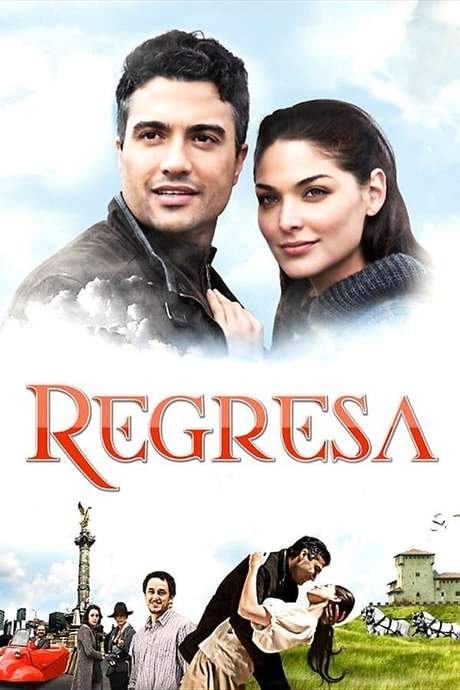
Ernesto del Valle Jaime Camil and his wife Maria González Blanca Soto are a married couple who yearn for the warmth of their early love, even as the pressures of daily life pull them apart. Their circle of friends—Pato and Isabel—spend time debating the quirks of life and what keeps a relationship alive, and the conversations eventually turn toward a bold idea: to explore Maria’s past in search of answers about their future. Isabel Menéndez Mariana Peñalva voices concern but also curiosity, while Maria herself agrees to see a certified therapist, Dr. Olga Limantur Mónica Huarte, in the hope of uncovering memories that might explain the distance that has grown between her and Ernesto.
The trio—Pato, Isabel, and Maria—travels on horseback, their ride taking them back toward a symbolic “castle” of memory as they pursue a session that promises revelation. The therapy unfolds with a mix of tenderness and tension: Maria enters the session with a mix of resistance and desperation, and as the doctor listens, the boundary between present life and remembered identity begins to blur. After the session ends, Maria does not return to the world she knows. The doctor grows anxious as Maria’s absence stretches on, and soon it becomes clear that something more than a simple memory lapse is at play.
In the hours that follow, Maria’s dreams grow more vivid, revealing a sensual, almost tangible side of herself that seems to fit strangely with the everyday life she leads with Ernesto. Ernesto himself becomes preoccupied with the possibility that Maria’s feelings have shifted, wondering if she harbors a new attraction toward him or if her attractions lie elsewhere entirely. Isabel attempts to reach Maria’s husband, but the lines of communication falter, leaving the group unsettled and the hospital staff puzzled by Maria’s sudden changes. What the doctors document during her fits of screaming hints at a language fragment that some interpret as Basque, adding an aura of mystery to the medical mystery.
Amid the personal drama, Adolfo Menéndez [Víctor Huggo Martin], Isabel’s husband, crosses paths with Ernesto in a meeting that threads the past with the present. Their discussion touches on long-ago royalty and the memory of Spain’s imperial era, setting the stage for a surprising turn: their visit to the Spanish Embassy to seek a translator leads them to Inaki Landaburu [Javier Tolosa], a chef who doubles as a liaison and interpreter. Inaki’s presence shifts the mood from formal diplomacy to a more intimate, almost fateful exchange as they work to understand Maria’s experiences.
Then a startling revelation emerges: Maria discloses herself as a princess from the Kingdom of Navarre, a 15th-century realm, and she speaks of an impending marriage to a prince. The modern world—with its electronic gadgets and rapid tempo—feels alien and threatening to her, as if some witch had cast her forward in time. The shock of modernity is palpable, and the fear she feels at seeing everyday devices underscores the gulf between her ancestral world and the one she now inhabits. The film threads this revelation with the emotional tremors in Ernesto’s heart, who is torn between the life they built together and the extraordinary destiny that Maria remembers.
Seeking safety and a path back to stability, Ernesto escorts Maria to a village setting and directs the removal of electronic items from their surroundings, a symbolic stripping away of modern influence in favor of grounding and tradition. The act marks a turning point: the couple begins to confront the deeper question of whether their love can endure across eras, across identities, and across the boundaries between memory and reality. Inaki, with his translator skills and practical empathy, becomes a bridge between two worlds, helping to interpret what Maria experiences and what it could mean for their relationship.
As the story unfolds, the tension between past and present intensifies, yet there is a quiet hope. With Inaki’s support, Ernesto pursues a renewed attempt to win Maria back, not by forcing her into a single narrative, but by embracing the complex layers of who she is—both the woman she has become in the present and the princess she remembers from a distant time. The film keeps its focus on human connection, the fragility of memory, and the resilience of love when faced with extraordinary circumstances, suggesting that even the most improbable histories can coexist with the lives we build today. The final arc emphasizes patience, understanding, and careful navigation of the emotional currents that flow between spouses, friends, and those who help them interpret the stories that haunt or heal them.