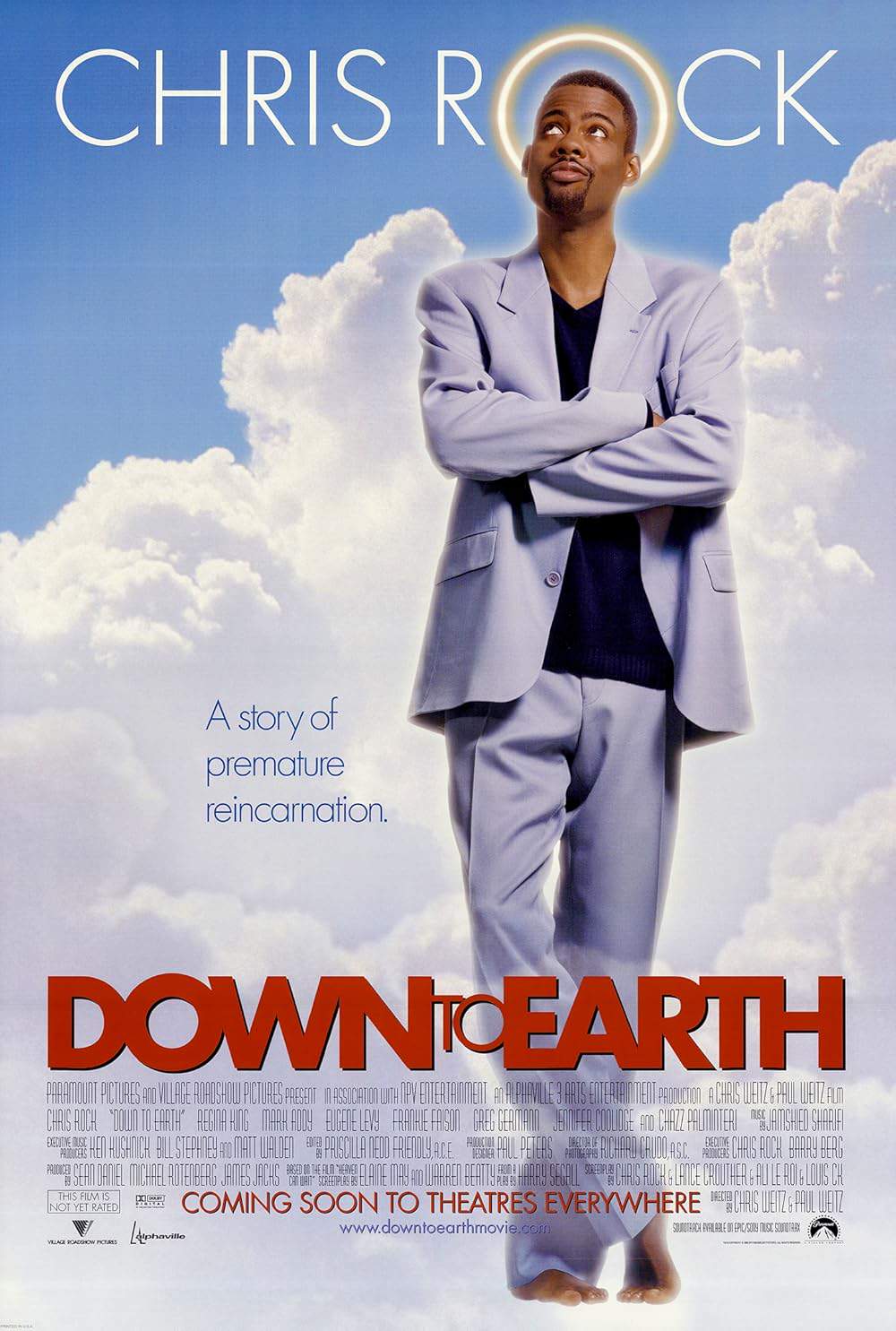
Lance Barton is a struggling, witty stand-up comedian who exudes confidence in his personality but struggles to translate that talent onto a live stage. After a night of boos and near-misses on stage, he learns about a final, high-stakes chance at proving himself at the Apollo Theater’s farewell show, a venue famous for turning unknowns into legends if they can truly connect with a real audience. On his ride home, a distraction from Sontee Jenkins pulls him off the road, and a truck strike ends his life in an instant.
In the hereafter, Lance ascends to Heaven and meets two angels, King and Keyes, who reveal that his time was cut far too short. Although his body was destroyed in the crash, they offer a peculiar solution: a temporary body swap that allows him to return to Earth. After reviewing a number of bodies, they choose Charles Wellington III, an incredibly wealthy businessman who has just drowned in his bathtub, a fate tied to his wife and a loyal assistant, Winston Sklar, who is also having an affair with Charles’s wife. Lance is horrified by the setup, but his curiosity about Sontee—who is protesting Charles by handcuffing herself to a coffee table in his penthouse—persuades him to strike a deal: he will temporarily inhabit Charles’s body until a more suitable vessel can be found.
Charles returns to life with Lance’s sharp wit, but to everyone else he appears as the middle-aged, affluent owner, a stark contrast to the man Lance inhabits. The reawakening shocks Winston and his wife, who had killed Charles, and Lance uses a feigned police summons to unsettle them, then laughs off the ruse. He also helps Sontee, who has misplaced the key to the handcuffs, yet when he attempts to connect through his humor, she perceives him as cruelly mocking her and leaves.
Charles’s transformation becomes evident as the public and close allies notice a change in personality. Gone is the snobbish billionaire; in his place stands a more affable, joke-loving philanthropist who believes in people over profit. He starts making gestures that humanize him—like giving the maid Wanda a raise—and pushes reforms that emphasize care for others. He also unsettles his board of directors by inviting media into a hospital board meeting at which Charles owns the facility, promising that future medical treatment will be available to all, regardless of the ability to pay. The board, already wary, blames Winston for the upheaval and speculates that Winston’s affair may have unlocked this transformation.
Meanwhile, Lance stubbornly pursues his original dream through Charles, reconnecting with his old manager Whitney and insisting that he is Lance reincarnated. The ensuing comic episodes and misadventures provide humor while also allowing Sontee to grow closer to the reimagined Charles. She recognizes a familiar spark behind the charm and admits that there feels like a sense of recognition when she looks into his eyes. The wife’s attempt to seduce Lance is quickly rebuffed by the newly embodied Charles, who tells her that divorce is an option and wishes her well, leaving her momentarily stunned but unbowed.
Yet the path to happiness remains precarious. The board’s influence and the financial leverage it wields drive the narrative toward a brutal conclusion: an assassin is hired to kill Charles. His murder fulfills the original deal struck with the angels, and Lance is sent back to Earth under a fresh guise—Joe Guy, a brilliant comedian who will eventually die in a car accident. Joe emerges from the crash unscathed, now carrying Lance’s soul within him.
After delivering a triumphant Apollo performance and rekindling his connection with Whitney, King and Keyes reveal that Lance’s memory of them—and of his past lives—won’t endure beyond their next conversation. They offer a playful, if unsettling, lesson: reincarnation preserves the core of who you are, even if the memories fade. The angels depart, leaving Joe Guy to move forward without recall of their guidance. He still recalls a resonance with Whitney and, in a bittersweet twist, meets Sontee again in the theater after the show, seemingly voicing Lance’s exact phrasing and cadence, a sign that Lance’s essence persists in Joe even as memory fades.