Plot Explained Spoilers guaranteed!
Plot Explained

Browse by genre

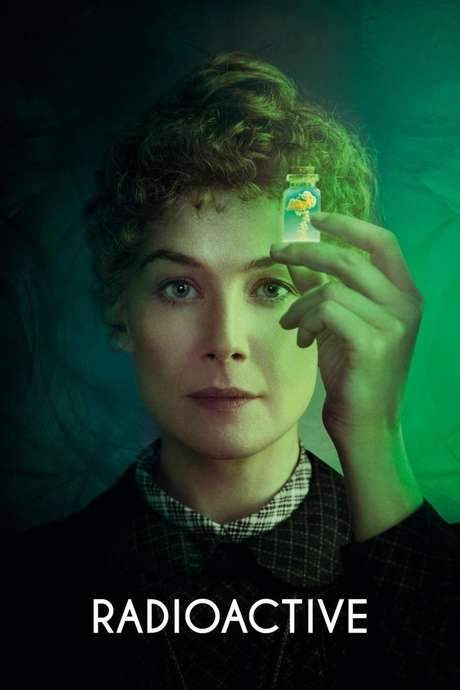
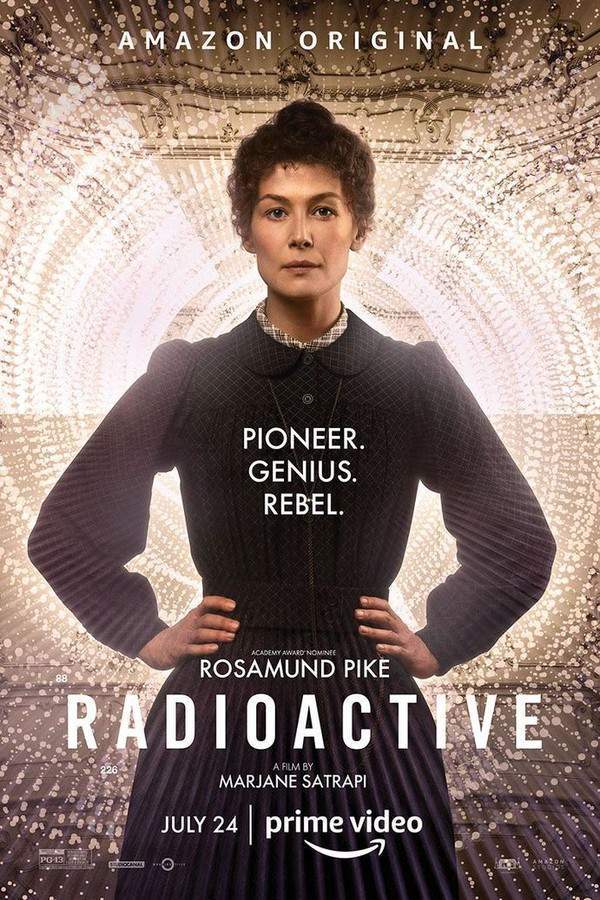
Radioactive (2019) movie poster

Characters & Themes

Radioactive (2019) Characters, Setting & Themes Explained

Release, runtime and language
2019 · 111 mins · English
Echo score 63
Loading streaming availability…
Directed by
Marjane Satrapi
Starring
Corey Johnson, Aneurin Barnard, Sam Riley, Jennifer White, Simon Russell Beale, Rosamund Pike
Budget
$20M

A look at the life of Marie Curie, the pioneering physicist and chemist who conducted groundbreaking research on radioactivity. The film explores her remarkable scientific achievements and the profound impact of her discoveries alongside her husband, Pierre. Their work with radium revolutionized the 20th century, forever changing science and medicine, while also revealing the personal sacrifices and challenges they faced.

On this page (9)
  1. 1 Where to watch
  2. 2 Characters explained (3)
  3. 3 Character relationship map
  4. 4 Where & when it takes place
  5. 5 Themes & meaning (3)
  6. 6 Character & meaning questions
  7. 7 Movie threads
  8. 8 Movies like Radioactive
  9. 9 Every angle
Loading streaming availability…

3 main characters · contains spoilers

Radioactive Characters Explained: Who Is Who

The main characters of Radioactive (2019), heroes and villains: what drives them, how they change over the course of the story and what each of them reveals about the film's bigger ideas.

  • Marie Curie

    played by Rosamund Pike

    Marie Curie is portrayed as a brilliant yet conflicted scientist battling societal prejudice and personal loss. Her determination to pursue her scientific passion often clashes with the expectations placed upon her as a woman in a male-dominated field. As the film progresses, she evolves from an ambitious researcher to a significant figure emblematic of both scientific progress and the emotional toll of such a journey.

    • 👩‍🔬 Scientist
    • ❤️ Passion
    • 💔 Grief
  • Pierre Curie

    played by Sam Riley

    Pierre Curie is depicted as a supportive yet troubled husband as he grapples with his own health issues and struggles against societal norms regarding recognition in science. His partnership with Marie is both a source of strength and a point of contention, particularly regarding their shared legacy and the Nobel Prize. His untimely death profoundly impacts Marie, shaping her work and emotional state.

    • 🔬 Pioneer
    • 💔 Supportive
    • ⚖️ Conflict
  • Paul Langevin

    played by Aneurin Barnard

    Paul Langevin enters Marie's life as a colleague and later as a romantic interest, highlighting her vulnerability amidst personal tragedy. His character brings depth to the themes of love and betrayal, representing the complicated nature of her relationships during moments of profound loss and media scrutiny. Langevin's role contrasts with the legacy of Pierre, creating tension around Marie's choices.

    • 💔 Affair
    • 🧫 Colleague
    • 🔍 Scrutiny

Last updated: October 23, 2026 at 22:18

Was this helpful?

5 characters · 8 connections · contains spoilers

Radioactive Character Relationship Map

Who is connected to whom in Radioactive: family, love, friendships, rivalries and hidden ties, colour-coded. Pick a character to see their side of the story, or a connection to see what brings two characters together.

MCMarie CurieRosamund PikePCPierre CurieSam RileyPLPaul LangevinAneurin BarnardICIrène CurieLFLoie Fuller

Last updated: October 23, 2026 at 22:18

Was this helpful?

Setting

Where and When Does Radioactive Take Place?

The setting of Radioactive (2019): the year and time period, the places and locations, and how they shape the characters, the mood and the tension of the story.

Time period

1893 - 1986

The movie spans a vital period from 1893, when Marie Curie struggles for recognition, to 1986, showcasing the long-term effects of her scientific contributions. This era includes significant events such as her discoveries of polonium and radium, her experiences during World War I, and the catastrophic developments related to nuclear energy, including Hiroshima, Nagasaki, and the Chernobyl disaster. The shifts in societal attitudes toward women in science and the evolution of nuclear research also shape the narrative across these decades.

Location

Paris, Poland, Western Front, Cleveland, Hiroshima, Nagasaki, Nevada, Chernobyl

The film primarily takes place in Paris, where Marie Curie conducts her groundbreaking research. Poland also plays a significant role, serving as Marie's homeland and a base for her memories. The Western Front during World War I is depicted as a critical location where Marie applies her X-ray techniques, while Cleveland appears as a center for modern medical advancements influenced by her discoveries. Additionally, the historical contexts of Hiroshima, Nagasaki, Nevada, and Chernobyl illustrate the profound impact of her work on nuclear science.

  • 🏙️ City
  • 🌍 Country
  • ⚔️ War Zone
  • 🏥 Hospital
  • 💣 Historical Event

Last updated: October 23, 2026 at 22:18

Was this helpful?

3 major themes

Radioactive Meaning: Themes & Message Explained

What is Radioactive (2019) really about? The emotional, social and philosophical themes the film keeps returning to, its symbolism and the message beneath the surface.

  • Science

    At its core, 'Radioactive' explores the theme of scientific discovery and innovation. Marie Curie's groundbreaking research leads to the revelation of radioactivity, fundamentally changing the fields of physics and chemistry. The film delves into the moral dilemmas faced by scientists as they navigate the potential consequences of their discoveries, particularly as they relate to public health and warfare.

  • Loss

    The theme of loss permeates the narrative, seen through Marie's struggles with personal tragedies, including the death of her mother and husband. This profound sense of grief also extends to the ramifications of her scientific work, as she grapples with the unintended consequences of her discoveries on human health and life. Her emotional journey reflects the intersection of personal grief with the broader implications of scientific advancement.

  • Legacy

    The film highlights the theme of legacy, illustrating how Marie Curie's contributions extend far beyond her lifetime. Her pioneering work has lasting implications on medicine, physics, and the societal role of women in science. The narrative frames her achievements within the context of historical events that followed, reminding viewers of the weight of legacy borne by those who innovate and challenge societal norms.

Last updated: October 23, 2026 at 22:18

Was this helpful?

Character & theme questions

Radioactive Characters & Meaning: Your Questions Answered

The questions people ask about Radioactive (2019): who the characters really are, their relationships, what the symbols mean, where it takes place and what the movie is really about. Each answer contains spoilers.

Q1

Where is the movie primarily set?

Radioactive is primarily set in Paris, where Marie Curie conducts her groundbreaking research at institutions like the Sorbonne. Poland also plays a significant role as Marie's homeland and the place she reflects on throughout her life. The Western Front during World War I appears as a critical location where Marie applies her X-ray techniques, while Cleveland represents modern medical advancements influenced by her discoveries. Brief but powerful sequences also take place at Hiroshima, Nagasaki, Nevada, and Chernobyl to illustrate the long-term consequences of her work.

  • paris
  • poland
  • western front
  • cleveland
  • setting
  • locations
Q2

What time period does the movie span?

The film covers nearly a century of history, stretching from 1893, when Marie Curie struggles for recognition as a scientist, to 1986. This timeline includes her discoveries of polonium and radium, her service during World War I, and her own death from radiation exposure. It also extends into flash-forwards depicting the atomic bombings of Hiroshima and Nagasaki, nuclear weapons testing in Nevada, and the Chernobyl disaster. The expansive time frame allows the movie to connect Marie's individual journey to the sweeping historical consequences of her discoveries.

  • time period
  • 1893
  • 1986
  • world war 1
  • hiroshima
  • chernobyl
Q3

Who is Marie Curie in the film?

In Radioactive, Marie Curie is portrayed as a brilliant and determined scientist who battles societal prejudice and profound personal loss throughout her life. She navigates a male-dominated scientific establishment while pursuing her research on radioactivity, often facing skepticism despite the revolutionary nature of her work. Her character evolves from an ambitious young researcher into an iconic figure whose discoveries reshape physics, chemistry, medicine, and the role of women in science. The film frames her as both a pioneer of modern science and a tragic figure whose own work contributes to her decline.

  • marie curie
  • protagonist
  • scientist
  • radioactivity
  • women in science
Q4

What role does Pierre Curie play in the story?

Pierre Curie serves as both Marie's scientific partner and her husband, providing intellectual and emotional support during her most productive years. The film depicts him as a thoughtful but troubled figure who shares Marie's passion for research yet also struggles with his own health issues and questions about recognition in the scientific community. His partnership with Marie is a source of strength but also tension, particularly regarding shared credit and the Nobel Prize. His sudden death becomes a pivotal emotional event that deeply shapes Marie's subsequent life and work.

  • pierre curie
  • husband
  • scientific partner
  • nobel prize
  • death
Q5

Who is Paul Langevin in the film?

Paul Langevin enters Marie Curie's life as a scientific colleague before becoming a romantic interest following Pierre's death. His character introduces themes of love, vulnerability, and betrayal during a period when Marie faces intense media scrutiny and public judgment. The film uses Langevin's role to contrast Marie's emotional needs with the enduring legacy of her relationship with Pierre, creating tension around her personal choices. He represents the complicated nature of intimacy and reputation for a woman whose scientific fame makes her private life a public spectacle.

  • paul langevin
  • affair
  • romantic interest
  • betrayal
  • scandal
Q6

Why does the film include scenes from Hiroshima and Chernobyl?

The inclusion of Hiroshima, Nagasaki, Nevada, and Chernobyl serves to illustrate the far-reaching and devastating consequences of Marie Curie's discoveries about radioactivity. These flash-forward sequences draw a direct line from her pioneering research on radium to the development of nuclear weapons and later nuclear disasters. Radioactive uses these images to emphasize the dual nature of scientific progress, showing how the same knowledge that advanced medicine and physics also enabled catastrophic destruction. The film uses these locations to remind viewers that scientific breakthroughs carry responsibilities that extend far beyond the laboratory.

  • hiroshima
  • chernobyl
  • nuclear
  • consequences
  • radioactivity
  • dual use
Q7

What are the main themes of the movie?

The film explores science and discovery, loss, and legacy as its three central themes. It treats scientific discovery as a double-edged force capable of both extraordinary benefit and profound harm, particularly through the lens of radioactivity. Loss runs through Marie's personal tragedies and the unintended human costs of her work, including her own eventual decline. Legacy frames the entire narrative, asking how a single scientist's achievements ripple across decades and reshape history in ways both triumphant and terrible.

  • themes
  • science
  • loss
  • legacy
  • meaning
  • interpretation
Q8

What does the movie say about scientific discovery?

Radioactive presents scientific discovery as a double-edged force whose consequences cannot always be foreseen or controlled. While Marie Curie's research on radioactivity led to revolutionary advances in physics, chemistry, and medicine, the film insists that this same knowledge ultimately enabled nuclear weapons and environmental disasters. The narrative raises moral questions about the responsibilities scientists bear for the long-term effects of their work, suggesting that innovation and peril are inseparable. It positions Marie as both a visionary whose discoveries transformed the world and a cautionary figure whose success illustrates the ethical complexity of scientific progress.

  • scientific discovery
  • morality
  • responsibility
  • radioactivity
  • consequences
Q9

How does the film portray Marie Curie's personal losses?

Loss is a recurring emotional thread that begins with the death of Marie's mother and culminates in Pierre's sudden death in a Paris street accident. These personal tragedies are deliberately intertwined with the broader losses caused by Marie's scientific discoveries, including the eventual health consequences of radiation exposure on herself and others. The film suggests that Marie channeled her grief into her work, even as that work silently contributed to her own physical decline. By weaving private sorrow with public consequence, Radioactive portrays Marie's emotional journey as inseparable from the human cost of her achievements.

  • grief
  • loss
  • pierre curie death
  • radiation exposure
  • tragedy
Q10

What legacy does Marie Curie leave behind in the film?

The film portrays Marie Curie's legacy as vast and deeply complicated, extending well beyond her lifetime into modern medicine, physics, and the role of women in science. Her discoveries of polonium and radium transformed scientific understanding, while her wartime X-ray work saved countless soldiers on the Western Front. Radioactive emphasizes that this legacy is inseparable from the destructive applications of nuclear energy that emerged later, presenting Marie as both a celebrated pioneer and a sobering example of how innovation reshapes civilization. Her story is framed as a turning point that opened doors for future generations of women scientists while also unleashing forces humanity would struggle to control.

  • legacy
  • polonium
  • radium
  • x-ray
  • women in science
  • nobel prize
Q11

Is the movie told in chronological order?

No, Radioactive uses a nonlinear structure that opens with Marie Curie's collapse in 1934 and weaves together scenes from different decades. It intercuts her personal and scientific journey with flash-forwards to events like the Hiroshima bombing, nuclear testing in Nevada, and the Chernobyl disaster. This fragmented approach mirrors the long-term impact of her work, allowing the film to move fluidly between intimate biography and sweeping historical consequence. The result is a contemplative rhythm rather than a straightforward narrative, inviting viewers to reflect on connections across time.

  • nonlinear
  • structure
  • timeline
  • flash-forward
  • storytelling
Q12

How does the film depict the challenges women faced in science?

The film highlights the systemic barriers Marie Curie faced as a woman in a male-dominated scientific establishment, beginning with her struggles as a young immigrant student in Paris. It shows how she had to fight for access to education, laboratory space, and academic recognition despite producing work that would earn two Nobel Prizes. Radioactive frames her eventual success not just as a personal triumph but as a turning point that expanded possibilities for future generations of women in science. Yet the film also makes clear that even at the height of her fame, Marie remained subject to gendered scrutiny, particularly around her personal life.

  • gender barriers
  • women in science
  • nobel prize
  • recognition
  • sexism

Movie threads

More Movies Like Radioactive, by Mood & Story

Curated lists built around what makes Radioactive tick: the same mood, the same kind of story or the same emotional payoff. Each list explains why these movies belong together.

Movies like Radioactive where genius meets its dark mirror

Brilliant minds whose world-changing discoveries cast an unforgettable shadow. If you liked Radioactive, explore these biographical dramas about pioneering scientists and thinkers whose world-changing work carried devastating consequences. Similar films follow brilliant minds through scientific discovery, personal sacrifice, and the moral weight of innovation that reshaped history in unexpected ways, blending intimate romance with epic historical stakes.

  • contemplative
  • bittersweet
  • epic
  • melancholic
  • morally complex
  • reflective
  • Tone: bittersweet, contemplative, heavy
  • Pacing: variable, reflective, expansive
Why these movies?

The story pattern: These films follow a visionary protagonist whose relentless pursuit of knowledge leads to a breakthrough that changes the world. The narrative often traces how their personal life becomes entangled with their work, and the story expands to show the long, sometimes catastrophic shadow of their discovery. The arc typically moves from intimate obsession to epic consequence, ending on a note that refuses to celebrate or condemn cleanly.

Why they belong together: Movies grouped here share a contemplative, heavy tone that balances intimate human drama with grand historical stakes. They tend to feature complex protagonists, expanding timelines, and a willingness to sit with moral ambiguity about whether progress was worth its cost. Pacing is variable and reflective rather than suspenseful, and the emotional weight runs deep.
Non-linear biographical epics like Radioactive

Biographical epics that jump across decades to capture a life and its long aftermath. Movies like Radioactive that use non-linear storytelling to trace a life across decades. These sweeping biographical dramas move between intimate personal moments and historical flash-forwards, weaving romance, grief, and legacy into a contemplative portrait of a person whose influence echoes far beyond their own lifetime, ending on bittersweet notes.

  • dreamlike
  • wistful
  • epic
  • contemplative
  • non-linear
  • romantic
  • Tone: bittersweet, melancholic, wistful
  • Pacing: variable, non-linear, dreamlike
Why these movies?

The story pattern: The narrative typically begins near the end of the protagonist's life or in a moment of crisis, then jumps backward to show formative years before leaping forward to reveal how their actions echoed through history. The structure feels dreamlike and essayistic, prioritizing emotional truth over chronology, and often folding in moments of transcendence, memory, and imagined reunion.

Why they belong together: These films share variable pacing, complex narrative structures, and a willingness to let scenes breathe in contemplative silence. They tend to be heavy in emotional weight with bittersweet endings, and they balance intimate character study with epic historical sweep through inventive time-shifting.

If you liked this

Movies Like Radioactive

Similar movies to Radioactive: the same genre, themes or kind of story. Each one comes with its own plot summary, timeline and ending explained.

Browse all movie summaries

Every angle

Radioactive (2019) Explained: Plot, Timeline & Characters

Everything about Radioactive in one place: what happens in the plot summary, the timeline in chronological order, the characters and meaning and a spoiler-free summary. What's After the Movie adds the cast, box office and post-credit scenes.

Coming soon on iOS and Android

The Plot Explained Movie Summary App

Plot summaries, endings explained and timelines on your phone. Catch up on any movie in minutes, save your favorites and never miss a twist again.

Be the first to know when we launch. Your email stays private, always.

Learn more about the app