Plot Explained Spoilers guaranteed!
Plot Explained

Browse by genre

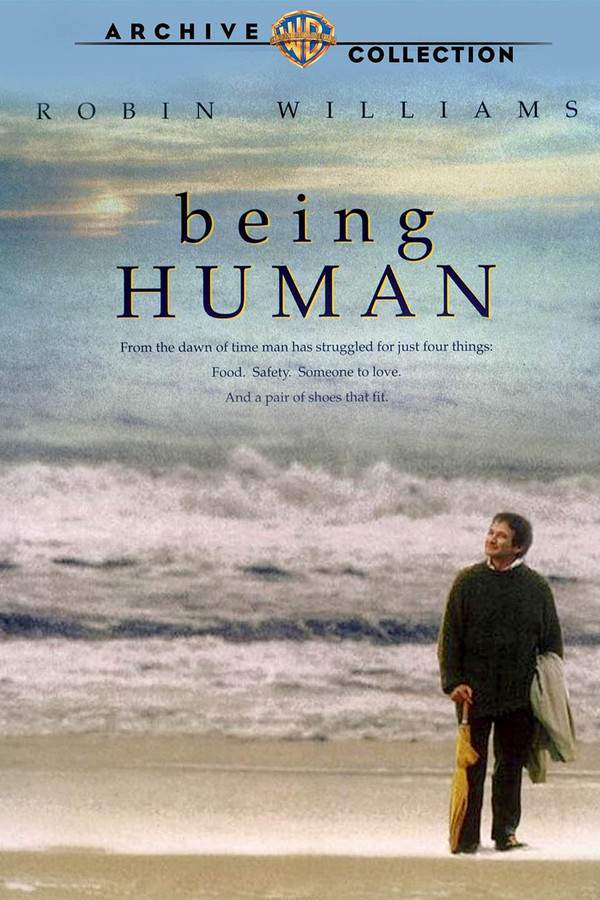
Being Human (1994) movie poster

Plot Summary

Being Human (1994) Plot Summary Explained

Release, runtime and language
1994 · 122 min · English
Loading streaming availability…
Directed by
Bill Forsyth
Starring
Robin Williams
Budget
$40M

A spirited soul, embodied by Robin Williams, journeys through five distinct eras, from ancient Celtic times to contemporary New York. As Hector, he experiences reincarnation, repeatedly forming relationships and confronting recurring mistakes across his various lives. This mesmerizing journey explores themes of love, loss, and redemption, ultimately leading him to a profound understanding of the human experience.

On this page (7)
  1. 1 Where to watch
  2. 2 What happens: full plot
  3. 3 Plot questions answered
  4. 4 Movie threads
  5. 5 Movies like Being Human
  6. 6 Categories
  7. 7 Every angle
Loading streaming availability…

Full plot summary · contains spoilers

What Happens in Being Human: Full Plot Summary

The whole story of Being Human (1994) explained, from the opening scene to the final frame: every key event, every twist and what it all adds up to. Read it as a quick recap before the sequel, to check a scene you missed, or to finally understand what really happened.

Across five lifetimes, a single soul named Hector confronts the consequences of cowardice and indecision, spanning eras from a prehistoric dawn to a modern New York.

In the first incarnation, a caveman’s family is torn from him by raiders, a brutal consequence of his own hesitation and fear. Before his wife is taken, she cries out, > Don't lose the children! The moment lingers as a haunting test of resolve, echoing across the ages and shaping the choices that will follow.

In the second incarnation, in ancient Rome, the slave [Hector] is bound to a foolish master who loses his fortune and is driven by creditors to kill himself, with the master ordering Hector to join him. The slave longs for the freedom to reunite with the children and wife he had before slavery, but a new love blossoms with another slave, and the memory of his waiting family begins to blur as desire and destiny pull him in a new direction.

In the third incarnation, Hector becomes a Scottish crusader traveling home to his children. The soul of the master from the Roman life now appears as a crusader who wrestles with whether to embrace a priestly path. They journey together until Hector encounters a soul mate from the Rome life, a widow who wishes to join her family with him, yet his responsibilities to his children in Scotland pull him toward home.

In the fourth incarnation, Hector is a Portuguese man in the Renaissance, shipwrecked on the coast of Africa. He is the master in this life, with his wife from the first incarnation surfacing as his spurned lover, and the raider who spirited her away standing by as her steadfast friend. The decisions he makes here test the limits of courage and commitment, and the bonds between lovers, friends, and captors become increasingly tangled.

In the fifth incarnation, Hector is a modern man in New York, facing the consequences of his lifelong indecision and finding the strength to address the children he lost across lifetimes. He is joined in this life by his master/slave/friend/soul mate, and ex-wife Janet, and her husband/raider from past lifetimes. They offer support while each of them wrestles with their own paths, trying to chart a way forward just as they did in the long-ago cycles.

Last updated: February 17, 2026 at 19:58

Was this helpful?

Plot questions answered

Being Human Plot Explained: Your Questions Answered

The questions people ask most about Being Human (1994): what happens in the confusing scenes, why the characters do what they do, the twists, hidden details and what the ending means. Each answer contains spoilers.

Q1

Why does Hector keep failing his family throughout his five lifetimes?

Hector's repeated failures stem from a fundamental flaw: cowardice and indecision. In the first caveman life, he hesitates when raiders attack, allowing his family to be taken. This core weakness, his inability to act decisively when it matters most, carries forward into each incarnation. Even when he forms genuine connections or senses his obligations, he consistently chooses safety or comfort over the difficult but necessary actions required to protect and reunite with his children.

Foreshadowing: The caveman's initial failure sets the pattern that repeats across all five lives, with the wife's desperate cry of 'Don't lose the children!' becoming the spiritual anchor that drives his entire journey.

  • hector cowardice
  • indecision
  • family failure
  • reincarnation cycle
Q2

What is the significance of the 'Don't lose the children' warning?

The warning 'Don't lose the children!' is the emotional core of the entire film. It represents Hector's unfulfilled moral duty that haunts every incarnation. His wife screams this plea as she is taken by raiders in the prehistoric era, and it becomes the memory that transcends all his lives. The phrase serves as both a literal command, to protect his children, and a metaphor for not losing his way spiritually. Every reincarnation tests whether he will finally honor this promise.

Foreshadowing: This warning, established in the first scene, echoes through all five lifetimes, surfacing each time Hector faces a choice between cowardice and courage.

  • don't lose the children
  • warning
  • family
  • protection
  • spiritual duty
Q3

How do the recurring characters across Hector's lifetimes connect to each other?

The film uses a soul reincarnation system where the same spirits appear in different roles across eras. Hector's Roman master becomes a crusader traveling with him in the medieval era. The woman Hector loves in Rome reappears as the widow who wants to join him in Scotland, and later as the spurned lover on his Renaissance voyage. The raider who took his caveman wife becomes her steadfast friend in later lives. In modern New York, these same souls, including Janet and her husband, reunite to support Hector's final transformation.

Foreshadowing: The interconnected souls suggest that each lifetime is a test where the same relationships are重新 configured, with different power dynamics but similar emotional stakes.

  • reincarnation
  • souls
  • recurring characters
  • past lives
  • connected fates
Q4

Why does Hector constantly struggle between love and duty to his children?

Hector's central conflict is his inability to fully commit to either personal happiness or parental responsibility. In Rome, he falls for a fellow slave but abandons his hope of escaping to find his original family. In Scotland, he meets his soulmate from Rome but chooses his existing children over this new love. In every life, his pattern shows him forming deep connections while simultaneously failing to fulfill his most fundamental obligations. This duality represents the film's exploration of whether repeated failure can ever be redeemed.

Foreshadowing: The tension between what Hector wants and what he owes his children establishes itself early, with each incarnation presenting a new variation of the same impossible choice.

  • love vs duty
  • choices
  • children
  • sacrifice
  • emotional conflict
Q5

What finally triggers Hector to change in the modern New York incarnation?

In modern New York, Hector reaches a breaking point where the cumulative weight of his failures becomes unbearable. The presence of his recurring soul connections, his former master, his soulmates, and even his former wife Janet with her husband (the original raider), creates a support circle that encourages him to finally confront his cowardice. Rather than running from his responsibilities, he begins actively seeking out the children he has kept at bay across centuries. The convergence of all these spiritual relationships provides both the catalyst and the moral support needed for transformation.

Foreshadowing: The entire narrative arc builds toward this moment, every previous failure has been preparation for this final test of courage.

  • transformation
  • courage
  • change
  • new york
  • final test
  • redemption
Q6

Why does Hector remain a slave even after his cruel master dies in ancient Rome?

After the master's suicide, Hector remains in Rome rather than escaping to find his original family because he has become emotionally entangled with another slave, a forbidden romance that deepens his attachment to his current circumstances. This new love represents another instance of Hector choosing immediate emotional satisfaction over his long-standing duty to search for the family he lost in the caveman era. His choice illustrates how desire and comfort can override even the most powerful moral obligations.

Foreshadowing: This pattern of choosing romantic attachment over family duty begins here and recurs throughout his subsequent incarnations.

  • rome
  • slavery
  • master
  • choice
  • emotional attachment
  • obligation
Q7

Why does the story span five distinct historical eras?

The five eras, Paleolithic, ancient Rome, medieval Scotland, Renaissance Portugal, and modern New York, represent different stages of human consciousness and relationship to courage and responsibility. Each era presents unique challenges that test Hector's core weakness: from basic survival against violence, through complex social structures like slavery and religious duty, to modern psychological self-examination. This progression allows the film to show how cowardice manifests differently across human development while remaining fundamentally the same inner struggle.

Foreshadowing: The escalating complexity of each era mirrors the deepening layers of Hector's spiritual journey toward self-understanding.

  • five eras
  • historical settings
  • reincarnation
  • human evolution
  • spiritual journey
Q8

What is the significance of Hector becoming a master in the Renaissance incarnation?

In the Renaissance, Hector experiences a role reversal, he becomes the master, while the woman from his first caveman life appears as his spurned lover, and the original raider becomes her loyal friend. This inversion forces Hector to experience power dynamics from the other side, confronting how his own past actions (as a slave) might have affected others. The shipwreck then tests whether he will repeat his old patterns of cowardice or finally demonstrate the courage he previously lacked.

Foreshadowing: The role reversal sets up the dramatic tension of whether power changes Hector's fundamental character or whether his cowardice is independent of his social position.

  • renaissance
  • role reversal
  • master
  • power
  • shipwreck
  • personal growth
Q9

How does the film portray reincarnation as non-linear in the story?

The reincarnation in Being Human is spiritual rather than strictly chronological. Characters from earlier eras appear in later ones but in different roles and time periods, suggesting souls travel through time independently rather than progressing in order. The caveman's wife appears in the Renaissance as a spurned lover; the Roman master becomes a crusader. This non-linear structure emphasizes that the souls are engaged in an eternal collective journey, not individual advancement. Their paths cross and recross through history until they find resolution.

Foreshadowing: The non-linear connections between souls establish early that time operates differently in this spiritual realm than in linear history.

  • reincarnation
  • non-linear
  • spiritual journey
  • souls
  • time
  • eternal
Q10

What do the supporting characters in modern New York represent in Hector's journey?

In modern New York, Hector is surrounded by all the souls who have been part of his journey: his former master/slave/friend, Janet (his ex-wife from one life), and her husband (the original raider). This circle represents accumulated karma, past relationships coming due for resolution. They support his transformation while simultaneously working through their own struggles, showing that each soul in this cosmic arrangement is seeking their own enlightenment. Their presence proves that growth is communal, not solitary.

Foreshadowing: The gathering of all key souls in the final era suggests the narrative is approaching its climax, a collective reckoning that requires everyone's participation.

  • support circle
  • karma
  • collective journey
  • healing
  • spiritual resolution

Movie threads

More Movies Like Being Human, by Mood & Story

Curated lists built around what makes Being Human tick: the same mood, the same kind of story or the same emotional payoff. Each list explains why these movies belong together.

Spiritual Journeys Across Lives like Being Human

Characters seeking redemption and understanding through multiple lifetimes. If you liked the soul-spanning quest in *Being Human*, explore more movies about reincarnation, spiritual growth, and characters learning life lessons across multiple lifetimes. These films blend drama and fantasy to explore the weight of existence.

  • reincarnation
  • spiritual
  • existential
  • cyclic
  • melancholic
  • hopeful
  • Tone: melancholic, reflective, hopeful
  • Pacing: variable, episodic
Why these movies?

The story pattern: These stories follow a cyclical narrative structure, often non-linear, where a character's essence persists through time. Each era or life presents similar challenges and relationships, forcing the protagonist to confront recurring flaws until they achieve a breakthrough in understanding.

Why they belong together: They are grouped by their shared focus on existential questions, the spiritual journey of a soul, and a melancholic yet hopeful tone that finds meaning in the repetition and pain of human experience.

Bittersweet Reflections on Life like Being Human

Emotionally heavy dramas about love, loss, and finding meaning in regret. Discover more movies like *Being Human* that explore the heavy emotional weight of love and loss. These poignant dramas feature complex characters, bittersweet endings, and a reflective tone on the human condition.

  • bittersweet
  • melancholic
  • reflective
  • emotional
  • poignant
  • redemption
  • Tone: melancholic, bittersweet, introspective
  • Pacing: variable, steady
Why these movies?

The story pattern: The narrative often follows a character grappling with profound personal failures, regret, and the pain of separation. The journey is introspective, leading to a conclusion that is not purely happy or sad, but a meaningful, hard-won understanding.

Why they belong together: They share a heavy emotional weight, a melancholic and reflective tone, and a focus on universal themes of human connection, making the viewing experience deeply moving and thought-provoking.

If you liked this

Movies Like Being Human

Similar movies to Being Human: the same genre, themes or kind of story. Each one comes with its own plot summary, timeline and ending explained.

Browse all movie summaries

Categories

Movie Lists Featuring Being Human

Being Human appears in these hand-built movie categories. Each one groups movies by a specific mood, theme or story type, with their plot summaries and endings explained.

View all movie categories

Every angle

Being Human (1994) Explained: Plot, Timeline & Characters

Everything about Being Human in one place: what happens in the plot summary, the timeline in chronological order, the characters and meaning and a spoiler-free summary. What's After the Movie adds the cast, box office and post-credit scenes.

Coming soon on iOS and Android

The Plot Explained Movie Summary App

Plot summaries, endings explained and timelines on your phone. Catch up on any movie in minutes, save your favorites and never miss a twist again.

Be the first to know when we launch. Your email stays private, always.

Learn more about the app