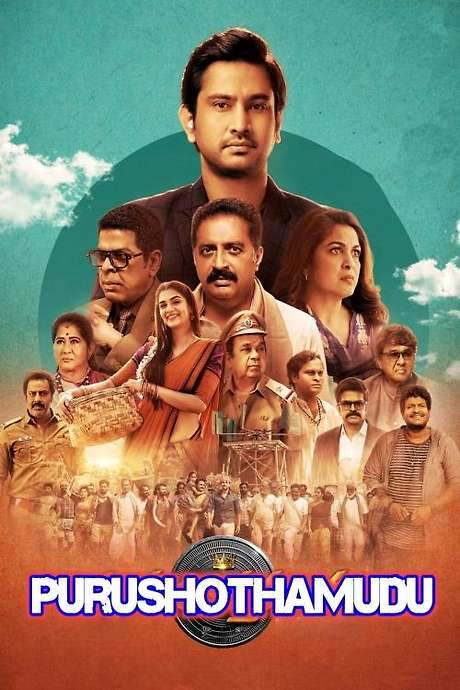
Purushothamudu

Purushothamudu

Year: 2024

Runtime: 122 mins

Language: Telugu

Director: Rom Bhimana

FamilyActionRomance

Rachit Ram, the heir to a vast corporate empire, embarks on a unique and demanding challenge: to live as an ordinary person for 100 days, completely devoid of money and accustomed privileges. He ventures into a remote location to fulfill this daunting task, unaware that his aunt and cousin brother are plotting to ensure his failure. The experience tests his resilience and forces him to confront a world far removed from his privileged upbringing.

Warning: spoilers below!

Haven’t seen Purushothamudu yet? This summary contains major spoilers. Bookmark the page, watch the movie, and come back for the full breakdown. If you're ready, scroll on and relive the story!

Timeline – Purushothamudu (2024)

Trace every key event in Purushothamudu (2024) with our detailed, chronological timeline. Perfect for unpacking nonlinear stories, spotting hidden connections, and understanding how each scene builds toward the film’s climax. Whether you're revisiting or decoding for the first time, this timeline gives you the full picture.

1

Rachit returns to India to claim the family legacy and accept the 100-day test

Rachit Ram, heir to the Parasuramaiah Group, returns to India after completing his education abroad. He learns that the founder’s bylaws require the prospective heir to live 100 days as an ordinary person, without using the family wealth or influence. He accepts the challenge, hoping it will prove his leadership beyond status.

Hyderabad
2

Aunt Vasundhara opposes him; Abhay aims for CEO

Vasundhara Ram, who controls half the family company, schemes to derail Rachit's path to the throne. She wants her son Abhay to become CEO and uses underhanded tactics to sabotage him. The rivaling interests heat up as the clock for the 100 days starts ticking.

Hyderabad
3

Rachit moves to Rayapulanka and begins life as a laborer

He relocates to Rayapulanka, living as an agricultural laborer to fulfill the 100-day condition. He keeps a low profile while observing the villagers’ struggles. The move marks the beginning of his hands-on attempt to understand the community.

Rayapulanka
4

He applies his knowledge to improve irrigation

Drawing on his education and ingenuity, he introduces inexpensive irrigation methods that boost crop yields. The practical improvements win the villagers’ trust and show that wealth isn’t needed to make a difference. He becomes known as a problem-solver rather than a distant heir.

Rayapulanka
5

Ammulu becomes his ally and friend

Rachit befriends Ammulu, a local woman who becomes his ally and confidante. Their growing bond anchors his effort to help the community. He starts seeing the villagers as people with real needs, not just a problem to solve.

Rayapulanka
6

Rachit faces Balaraju and rescues Ammulu

Balaraju, the violent son of the local MLA, confronts Rachit and his supporters. He and his henchmen abduct Ammulu, but Rachit mounts a rescue and pushes back. The incident exposes how the village’s land and resources are controlled by a few powerful families.

Rayapulanka
7

Villagers petition the government for reform

Moved by the unfolding injustice, Rachit helps the villagers organize and petition the government for reform. The campaign draws the attention of authorities in Delhi, widening the scope beyond the village. The action signals a shift from local protest to national scrutiny.

Delhi
8

Public attention grows; pursuit to locate him intensifies

As the 100-day countdown advances, public attention intensifies and Vasundhara and Abhay race to locate him. News outlets pick up the story, turning Rachit into a symbol of reform. The search adds pressure on the family to resolve the situation.

Delhi
9

Ammulu learns Rachit's true identity and their relationship strains

Ammulu learns that Rachit has concealed his true identity as the heir and future CEO. The revelation strains their relationship just as the deadline nears. He questions whether the price of leadership is too steep for personal sacrifices.

Rayapulanka
10

Final assaults threaten the village; Rachit is wounded

Balaraju’s men launch a brutal attack on the villagers’ land, destroying trees and crops. Abhay’s henchmen also attempt to kill Rachit, leaving him severely wounded. He fights to reach the forthcoming committee hearing despite his injuries.

Final day Rayapulanka
11

Rachit speaks at the government committee meeting

Rachit makes it to a government committee meeting and explains the farmers’ grievances in detail. He collapses after delivering his testimony, but his words prompt officials to act. The incident becomes the turning point that drives policy change.

Final day Delhi
12

The committee abolishes the flower-marketing system

Impressed by his perseverance, the committee abolishes the restrictive flower-marketing system, letting farmers sell their produce freely. The reform marks a tangible victory for the village and validates his approach. The move signals a broader shift toward farmer welfare.

Delhi
13

Raghu Ram returns and reconciles with the family

Raghu Ram, who disappeared twenty years earlier, returns and reveals what he learned about poverty and service. He explains that wealth without compassion is empty and reconciles with Aditya and Vasundhara. He declares support for Rachit's succession.

20 years after Hyderabad
14

Rachit is appointed CEO and helps the village

Vasundhara publicly declares Rachit the rightful CEO, and the board unanimously confirms the appointment. Abhay accepts defeat and apologizes to his parents. Rachit then returns to Rayapulanka to help a farmer pay off a debt and to reconcile with Ammulu.

Hyderabad

Last updated: September 03, 2026 at 09:21

Was this helpful?

Purushothamudu (2024) Timeline Questions Answered – Chronology FAQ

Find frequently asked questions about the Purushothamudu (2024) timeline, including chronological order, nonlinear jumps, cause-and-effect links, and scene sequence clarifications. This timeline FAQ helps explain when key events happen, how moments connect, and why the story unfolds in that specific order.

Q1

Why does Rachit have to live as an ordinary person for 100 days?

A.

The 100-day rule is a bylaw created by Rachit's grandfather, the founder of the Parasuramaiah Group of Companies. He believed that a true heir must prove they can lead from experience rather than privilege, so anyone aspiring to head the company must survive 100 days without wealth, influence, or family identity. Aditya suspects this very rule may have contributed to his elder brother Raghu Ram's disappearance two decades earlier.

The grandfather's bylaw is introduced as a tradition, but the later revelation about Raghu Ram retroactively hints that the challenge has a deeper, more painful history in the family.

100 day challengeordinary life ruleparasuramaiah groupfounder bylawheir test
Q2

Why did Raghu Ram disappear 20 years ago?

A.

Raghu Ram was Aditya's elder brother and a former heir who also took on the 100-day challenge. During that time he was exposed to real hardship, poverty, and hunger, which reshaped his understanding of wealth and leadership. Rather than return to the corporate empire, he chose to live among the people he had served, and his absence became the family's unresolved wound until he finally resurfaced.

Aditya's early worry that the bylaw 'might have helped trigger' Raghu Ram's disappearance plants the seed for the later revelation about his voluntary exile.

raghu ramdisappearance20 yearselder brother100 day challenge history
Q3

Why did Rachit hide his real identity from Ammulu?

A.

Rachit concealed his identity because the 100-day condition strictly forbids him from using his name, wealth, or family influence. Revealing that he was the Parasuramaiah heir would have invalidated the challenge and handed his aunt Vasundhara the excuse she needed to block his succession. He chose to keep Ammulu close without breaking the rule, but the secrecy eventually strained their bond.

Rachit's deliberate low-profile behavior in Rayapulanka and his reluctance to talk about his past hint that he is carrying a concealed identity long before Ammulu confronts him.

rachit identityammmuluhidden heirdeceptionsecrecy
Q4

How did Rachit reach the government committee meeting despite being injured?

A.

After Balaraju's men and Abhay's henchmen launched a coordinated assault on the final day, Rachit sustained severe injuries but refused to abandon the farmers' cause. He pushed through the attack, traveled to Delhi, and made it to the committee hearing just in time to testify about the villagers' grievances. He collapsed only after delivering his statement, which was forceful enough to move the officials to act.

Earlier scenes of Rachit quietly enduring physical strain during farm labor foreshadow his ability to push through serious injury when the stakes are highest.

committee meetingdelhiwounded rachitfinal day attackfarmers testimony
Q5

Why did the board accept Rachit's challenge even though he only completed 99 days?

A.

The board announced that Rachit had technically completed only 99 days because he was attacked on the final day. However, they recognized that the spirit of the founder's rule was to test character, resilience, and service to people rather than to enforce a strict calendar count. Given the impact of his reforms and his willingness to risk his life for the farmers, the board voted unanimously to confirm him as CEO.

The grandfather's intent is framed early as a test of leadership, not a literal countdown, which sets up the board's flexibility at the end.

board decision99 daysceo appointmentgrandfather rulespirit of challenge
Q6

What was the flower-marketing system and why was it abolished?

A.

The flower-marketing system was a restrictive trade practice that forced local farmers in and around Rayapulanka to sell their produce through a controlled channel tied to politically connected middlemen. This kept prices low for growers while allowing powerful families like Balaraju's to profit. After hearing Rachit's testimony, the government committee abolished the system so that farmers could sell their crops freely at fair market rates.

Balaraju's grip on land and resources is shown early as the root of the villagers' suffering, hinting that policy change rather than local muscle will ultimately decide the conflict.

flower marketing systemfarmers reformcommittee decisiontrade monopolyabolish policy
Q7

How did Raghu Ram find and save the wounded Rachit?

A.

After living among ordinary people for two decades, Raghu Ram was still moving through the same rural networks that Rachit had been serving. When the final assault left Rachit badly hurt, Raghu Ram reached him in time, tended to his injuries, and helped him survive long enough to make it to the committee hearing. Their reunion also gave Raghu Ram the chance to share what his own 100-day challenge had taught him about poverty and compassion.

Raghu Ram's long absence and Aditya's quiet anxiety suggest he has been close to the family's orbit all along, even though no one has seen him.

raghu ram rescuewounded rachitreconciliationfamily reunion
Q8

Why did Vasundhara finally approve Rachit as CEO?

A.

Vasundhara had spent the entire story trying to install her son Abhay as CEO by sabotaging Rachit's challenge. Her change of heart came after Raghu Ram returned, reconciled with the family, and publicly endorsed Rachit based on his sacrifice and service. With Raghu Ram's moral authority behind him, Vasundhara recognized that blocking Rachit would mean rejecting the very values her brother-in-law had come to embody, and she publicly declared him the rightful CEO.

Vasundhara's obsession with the company is established early as a power play rather than a personal grudge, hinting that she can be persuaded by legitimacy, not by sentiment.

vasundharaceo approvalfamily reconciliationrachit appointment
Q9

Why did Balaraju target Rachit and the village?

A.

Balaraju is the son of the local MLA and uses political muscle to control surrounding farmland and resources. When Rachit began helping farmers improve irrigation and organize against exploitation, he directly threatened Balaraju's grip on the village economy. The abduction of Ammulu and the final-day destruction of crops were attempts to intimidate the villagers and stop Rachit before his campaign reached the national level.

The villagers' reluctance to push back against Balaraju early in the story foreshadows how dangerous he becomes once someone challenges the status quo.

balarajumla sonland grabvillage violencerachit conflict
Q10

Why did Rachit return to the village after becoming CEO?

A.

Even after winning the CEO position, Rachit did not see his time in Rayapulanka as a trial to be left behind. He returned to personally clear a farmer's debt and protect him from losing his land, then reconciled with Ammulu. For Rachit, leadership meant staying connected to the people whose struggles had shaped him, not just managing the company from a distance.

Rachit's quiet remark early on that leadership comes from serving people, not titles, directly predicts his choice to reinvest his wealth in the village.

rachit returnvillage visitfarmer debtreconciliation with ammulu
Q11

What did Raghu Ram learn during his 20 years away?

A.

During his long absence, Raghu Ram lived through poverty, hunger, and the daily struggles of ordinary people. He came to believe that wealth and influence are meaningless unless they are used to help those in need, and that real leadership is built through compassion and service. This philosophy is what he uses to validate Rachit's journey and to push the family toward a more humane vision of the company.

Aditya's fear that the 100-day rule caused harm hints that the experience carries a deeper cost and a deeper lesson than the family originally understood.

raghu rampovertycompassionleadership lesson20 years exile
Q12

How did Rachit help the farmers without using his wealth or identity?

A.

Rachit relied on his education abroad and a practical, problem-solving mindset rather than money or status. He introduced affordable irrigation techniques, helped farmers stretch scarce water, and encouraged them to organize a petition that reached officials in Delhi. His value to the village came from knowledge, effort, and credibility earned through labor, not from the Parasuramaiah name.

Rachit's willingness to physically work in the fields from day one foreshadows that his real contribution will be skills and trust, not capital.

irrigation methodsfarmer supportknowledge over wealthrachit laborvillage reform
Q13

Why did Abhay accept defeat and apologize to his parents?

A.

Abhay's campaign against Rachit was driven by his mother Vasundhara's ambition to make him CEO. Once Rachit's reforms succeeded and the board unanimously backed him, Abhay's path to leadership collapsed. His apology to Aditya and Vasundhara reflects recognition that the scheme had cost the family unity and that Rachit had earned the position through genuine sacrifice rather than manipulation.

Abhay's reliance on hired muscle rather than personal effort foreshadows that his claim to leadership cannot survive comparison with Rachit's hands-on service.

abhay apologyfamily conflictdefeatceo successionremorse
Mobile App Preview

Coming soon on iOS and Android

The Plot Explained Mobile App

From blockbusters to hidden gems - dive into movie stories anytime, anywhere. Save your favorites, discover plots faster, and never miss a twist again.

Sign up to be the first to know when we launch. Your email stays private, always.

Explore Movie Threads

Discover curated groups of movies connected by mood, themes, and story style. Browse collections built around emotion, atmosphere, and narrative focus to easily find films that match what you feel like watching right now.

Rich heir redemption stories like Purushothamudu

A sheltered soul trades luxury for struggle and discovers what truly matters.If you loved Purushothamudu's journey of a privileged corporate heir learning humility in a rural village, explore these character-driven dramas where wealthy protagonists leave their comfort zones, conceal their true identities, and discover purpose through hardship, romance, and the wisdom of ordinary people. Perfect for fans of uplifting transformation tales.

fish out of waterhidden identityrural journeycharacter growthhumble beginningsunlikely romanceself discovery

Narrative Summary

A privileged protagonist, often an heir to wealth or corporate power, voluntarily abandons their comfort to take on a challenge that strips them of status. Thrust into a simpler world, usually a rural village or working-class community, they initially struggle but gradually form bonds, fall in love under a concealed identity, and become catalysts for change. The journey culminates in a triumphant return where their newfound wisdom defeats both external villains and scheming family members, restoring justice and earning love.

Why These Movies?

These films share a similar arc of transformation through deprivation, blending romance, family drama, and community empowerment. They feature heartfelt pacing, hopeful tones, and emotional payoffs where the protagonist's growth is tested by corrupt antagonists and vindictive relatives before resolution arrives in uplifting fashion, often with the protagonist's true identity dramatically revealed.

Rural empowerment and anti-corruption stories like Purushothamudu

Ordinary villagers unite to outwit crooked politicians and reclaim their dignity.Fans of Purushothamudu's battle against corrupt local politics in a rural village will love these movies where farmers and villagers unite against exploitation. Featuring themes of social justice, community resilience, property disputes, and uplifting victories, these films deliver satisfying payoffs where ordinary people outsmart powerful adversaries through unity, courage, and moral conviction.

community empowermentrural settinganti-corruptionsocial justicecollective triumphheartwarminggrassroots heroism

Narrative Summary

Set against the backdrop of rural landscapes and farming communities, these stories introduce a catalyst figure, often an outsider or returning native, who inspires villagers to resist corrupt local politicians or land grabbers. Through dramatic confrontations, acts of sabotage from antagonists, public stands, and moments of solidarity, the community gradually reclaims its dignity and rights. Romance and family subplots weave through the central conflict, leading to triumphant resolutions where collective action defeats systemic exploitation.

Why These Movies?

These movies combine rural settings with themes of political corruption, community empowerment, and social justice, often with romantic subplots and family drama woven in. They share a hopeful tone, steady pacing that builds toward dramatic confrontations, and happy endings where collective action and moral courage overcome entrenched exploitation, creating a deeply satisfying emotional payoff.

Unlock the Full Story of Purushothamudu

Don't stop at just watching - explore Purushothamudu in full detail. From the complete plot summary and scene-by-scene timeline to character breakdowns, thematic analysis, and a deep dive into the ending - every page helps you truly understand what Purushothamudu is all about. Plus, discover what's next after the movie.

Purushothamudu Summary

Read a complete plot summary of Purushothamudu, including all key story points, character arcs, and turning points. This in-depth recap is ideal for understanding the narrative structure or reviewing what happened in the movie.

Purushothamudu Summary

Characters, Settings & Themes in Purushothamudu

Discover the characters, locations, and core themes that shape Purushothamudu. Get insights into symbolic elements, setting significance, and deeper narrative meaning - ideal for thematic analysis and movie breakdowns.

Characters, Settings & Themes in Purushothamudu

Purushothamudu Spoiler-Free Summary

Get a quick, spoiler-free overview of Purushothamudu that covers the main plot points and key details without revealing any major twists or spoilers. Perfect for those who want to know what to expect before diving in.

Purushothamudu Spoiler-Free Summary

More About Purushothamudu

Visit What's After the Movie to explore more about Purushothamudu: box office results, cast and crew info, production details, post-credit scenes, and external links - all in one place for movie fans and researchers.

More About Purushothamudu