









Plot Explained Spoilers guaranteed!
Plot Explained

Browse by genre

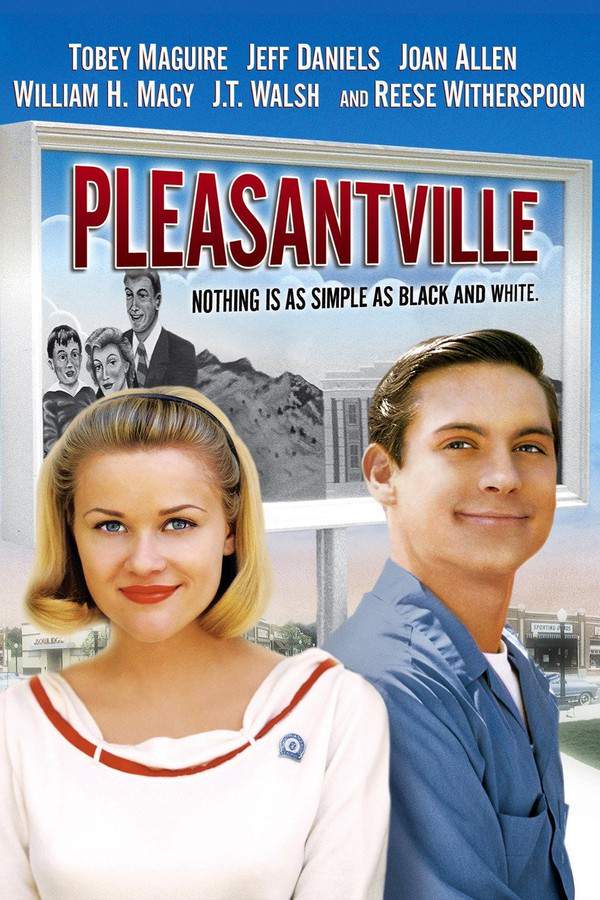
Pleasantville (1998) movie poster

Characters & Themes

Pleasantville (1998) Characters, Setting & Themes Explained

Release, runtime and language
1998 · 124 min · English
Directed by
Gary Ross
Starring
Joan Allen, Tobey Maguire, Jeff Daniels
Budget
$60M

When two 1990s siblings are magically transported into a 1950s sitcom, their arrival disrupts the idyllic, black-and-white world of Pleasantville. As the townspeople begin to experience color and emotion for the first time, they challenge the community’s rigid norms and confront uncomfortable truths. The once-perfect town spirals into unexpected chaos, forcing its residents to examine the meaning of happiness, conformity, and the complexities of human experience.

On this page (9)
  1. 1 Where to watch
  2. 2 Characters explained (3)
  3. 3 Where & when it takes place
  4. 4 Themes & meaning (2)
  5. 5 Character & meaning questions
  6. 6 Movie threads
  7. 7 Movies like Pleasantville
  8. 8 Categories
  9. 9 Every angle

Where to watch

Where to Watch Pleasantville (1998)

Where can you watch Pleasantville? Stream, rent or buy it in the US, including on Kanopy, Plex and YouTube Free: current JustWatch availability with up-to-date prices.

Streaming availability powered by JustWatch

3 main characters · contains spoilers

Pleasantville Characters Explained: Who Is Who

The main characters of Pleasantville (1998), heroes and villains: what drives them, how they change over the course of the story and what each of them reveals about the film's bigger ideas.

  • David (Tobey Maguire)

    David is a thoughtful and introspective teenager who finds himself thrust into the vibrant world of Pleasantville. During his adventures, he straddles his protective instincts for the town while grappling with his feelings of entrapment in a monochromatic life. His growth symbolizes the struggle between conformity and self-discovery.

    • 👦 Teenager
    • 🤔 Introspective
    • 🌈 Catalyst
  • Jennifer (Joan Allen)

    Jennifer is a rebellious spirit who seeks excitement beyond the confines of Pleasantville. Her adventurous nature leads her to challenge the town's traditional values, igniting a colorful revolution. She embodies the journey of self-exploration and the quest for freedom in both personal and societal contexts.

    • 👩 Teenager
    • 🌟 Rebellious
    • 💕 Romantic
  • Bill Johnson (Jeff Daniels)

    Bill is the owner of the local malt shop who experiences a personal crisis as he confronts his monotonous life. With David's guidance, he embarks on a journey of self-discovery that leads to both artistic expression and romantic awakening. His character illustrates the struggle to break free from routine and embrace new opportunities.

    • 👨 Adult
    • 🎨 Artist
    • ❤️ Romantic

Last updated: October 22, 2024 at 22:20

Was this helpful?

Setting

Where and When Does Pleasantville Take Place?

The setting of Pleasantville (1998): the year and time period, the places and locations, and how they shape the characters, the mood and the tension of the story.

Time period

1998

The film transitions from the late 1990s into a nostalgic past, reflecting a time of societal norms and traditional values. During this period, the emergence of modern ideas and challenges to the status quo begin to take root as characters confront their identities and desires. Pleasantville provides a lens through which we can examine the juxtaposition of old-fashioned beliefs and the awakening of new perspectives.

Location

Pleasantville

Pleasantville is an idyllic small town depicted in black-and-white, characterized by its simplistic and conformist lifestyle. Known for its wholesome charm, where the sun shines perpetually and even fire does not exist, it represents an era of innocence before the complexities of modern life take hold. The town serves as a symbol of nostalgia, highlighting the contrast between a monochromatic existence and the vibrant realities beyond its borders.

  • 🏡 Town
  • 📺 Television

Last updated: October 22, 2024 at 22:20

Was this helpful?

2 major themes

Pleasantville Meaning: Themes & Message Explained

What is Pleasantville (1998) really about? The emotional, social and philosophical themes the film keeps returning to, its symbolism and the message beneath the surface.

  • Transformation

    The theme of transformation is central to 'Pleasantville', as characters undergo profound changes in their perspectives and identities. The arrival of David and Jennifer leads to a colorful reawakening in the town, signifying the broader journey from innocence to experience. This evolution challenges the townsfolk to question their long-held beliefs and embrace the complexity of life's emotions.

  • Artistic Freedom

    Artistic freedom emerges as a powerful theme, particularly through David's influence on Bill and the mural they create. This act of defiance against societal norms serves as a catalyst for change, encouraging residents to express themselves and explore their desires. The film underscores the importance of creativity in transforming lives and communities.

Last updated: October 22, 2024 at 22:20

Was this helpful?

Character & theme questions

Pleasantville Characters & Meaning: Your Questions Answered

The questions people ask about Pleasantville (1998): who the characters really are, their relationships, what the symbols mean, where it takes place and what the movie is really about. Each answer contains spoilers.

Q1

Why is Pleasantville depicted in black-and-white?

Pleasantville is portrayed in black-and-white to serve as a visual metaphor for the town's rigid, conformist society. The monochrome aesthetic represents the emotional numbness and lack of individuality that exists in this idealized 1950s setting. As the story progresses and characters experience new emotions and ideas, color gradually spreads through the town, symbolizing their awakening to the complexities of human experience.

Foreshadowing: The black-and-white palette is established from the very first frame, immediately signaling the repressive nature of this world.

  • black and white
  • color metaphor
  • conformity
  • emotional awakening
Q2

What does color represent in the movie?

Color in Pleasantville represents emotional awakening, individuality, and the complexities of human experience that come with breaking free from rigid societal norms. When characters begin to feel genuine emotions, desire, passion, curiosity, and even pain, color appears in their world. The spread of color throughout the formerly monochrome town symbolizes the transformative power of embracing life's full range of feelings rather than living in a state of suppressed humanity.

Foreshadowing: The first hints of color appear when Jennifer challenges the town's strict dating rules, suggesting that defiance triggers emotional liberation.

  • color symbolism
  • emotional awakening
  • individuality
  • transformation
Q3

When does the story take place?

The story operates on two time periods: the late 1990s where siblings David and Jennifer originate, and the nostalgic 1950s-era setting of Pleasantville itself. The film explores what happens when modern attitudes toward individuality and self-expression are introduced into a society stuck in traditional, conformist values. This temporal contrast highlights the tension between progressive thinking and outdated societal norms.

  • time period
  • 1950s
  • 1990s
  • nostalgia
Q4

Where is Pleasantville located?

Pleasantville is depicted as an idyllic small town with a quintessential 1950s American aesthetic. It's characterized by its wholesome charm, consisting of locations like the local malt shop, tree-lined streets, and suburban homes. The setting is deliberately idealized, representing a nostalgic vision of small-town America before the social changes of the 1960s era took hold.

  • setting
  • small town
  • 1950s america
Q5

Who is David and what is his role in the story?

David is the thoughtful, introspective teenage sibling who finds himself transported into the Pleasantville television world. Unlike his adventurous sister, David initially embraces the town's peaceful existence, seeing it as an escape from his complicated modern life. However, his presence catalyzes change in others, particularly Bill, as he helps residents discover their suppressed desires and creativity. David's journey symbolizes the internal struggle between the comfort of conformity and the courage required for self-discovery.

Foreshadowing: David's tendency to quote lines from the original sitcom hints at his deep familiarity with and attachment to this idealized world.

  • david
  • tobey maguire
  • protagonist
  • transformation
Q6

Who is Jennifer and what does she represent?

Jennifer represents rebellion, desire for freedom, and the unstoppable force of self-expression. As a typical modern teenager bored with her life, she brings the energy and restlessness of 1990s youth into the restrictive Pleasantville environment. Her challenge to the town's strict dating customs and her pursuit of excitement ignite the colorful revolution that transforms the entire town. Jennifer embodies the idea that some desires cannot be suppressed, no matter how perfectly controlled a society attempts to be.

Foreshadowing: Her refusal to accept the scripted nature of her 'date' with Skippy signals her role as a catalyst for change.

  • jennifer
  • rebellion
  • freedom
  • change agent
Q7

Who is Bill Johnson and why is his character important?

Bill Johnson is the owner of the local malt shop who represents the trapped, unfulfilled adult in Pleasantville's conformist society. Underneath his friendly, automatic smile lies deep dissatisfaction with his monotonous existence. Through David's influence, Bill discovers artistic expression through painting a mural, a bold act of defiance against community norms. His journey from robotic compliance to creative passion and romantic awakening demonstrates that it's never too late for transformation, making him a powerful example of the film's themes.

Foreshadowing: Bill's initial scene shows him going through the motions of his job with visible emptiness, foreshadowing his eventual awakening.

  • bill johnson
  • jeff Daniels
  • malt shop
  • artistic expression
Q8

What is the main message of Pleasantville?

The film's central message explores the tension between safety through conformity and the essential human need for authentic experience. Pleasantville argues that a perfectly controlled, emotionless existence, while seemingly peaceful, ultimately robs life of meaning and fulfillment. The movie suggests that true happiness requires embracing life's complexities, including pain and conflict, rather than suppressing them through rigid societal rules. Change and growth, though uncomfortable, are necessary for genuine human connection.

  • message
  • theme
  • happiness
  • conformity
  • authenticity
Q9

What does the ending of Pleasantville represent?

The bittersweet ending shows David returning to the real world, now understanding the value of emotional complexity, while Jennifer chooses to stay in the now-colorful Pleasantville. This outcome suggests that transformation is possible but comes with trade-offs, David gains wisdom but loses the world he helped change, while Jennifer finds purpose by remaining to nurture the town's continued growth. The ending acknowledges that progress requires sacrifice and that different people find fulfillment through different paths.

Foreshadowing: The final scenes of color spreading throughout the town foreshadow that change, once started, cannot be undone.

  • ending
  • bittersweet
  • transformation
  • choice
Q10

Is Pleasantville a criticism of society?

Pleasantville functions as an allegory examining how societies control citizens through conformity and the suppression of uncomfortable truths. The 1950s setting represents any era or system that values stability and tradition over individual expression. The film critiques the way communities can become repressive under the guise of maintaining order and wholesomeness, while also acknowledging the genuine appeal and safety such environments can offer. It's less a direct criticism of any specific era and more a meditation on the universal human struggle between security and authenticity.

  • allegory
  • social commentary
  • conformity
  • repression
Q11

How does artistic freedom drive change in Pleasantville?

Artistic freedom serves as the catalyst for transformation through Bill's mural, which depicts a vibrant, colorful world that shouldn't exist according to Pleasantville's rules. When Bill paints this forbidden artwork, he challenges the town's censorship and inspires others to express their hidden desires. The film portrays creativity as inherently subversive, true artistic expression cannot be contained by repressive norms because it gives form to the emotions that authorities attempt to suppress. This artistic breakthrough demonstrates how individual acts of creative courage can ignite broader social revolution.

  • art
  • mural
  • creativity
  • defiance
  • change
Q12

Why do some characters stay black-and-white in Pleasantville?

Characters who remain black-and-white represent those who refuse to accept change and confront their suppressed emotions. Characters like the mayor and other conservative town leaders actively resist the spread of color because it threatens their control and worldview. Their continued monochrome state visually demonstrates that repression is a choice, not an inevitable circumstance. Some characters hover between black-and-white and color while struggling with their identities, reflecting the real psychological difficulty of breaking free from established beliefs.

Foreshadowing: The mayor's immediate opposition to anything novel establishes his role as a defender of the old order.

  • resistance
  • mayor
  • repression
  • choice

Movie threads

More Movies Like Pleasantville, by Mood & Story

Curated lists built around what makes Pleasantville tick: the same mood, the same kind of story or the same emotional payoff. Each list explains why these movies belong together.

Movies about societal awakenings like Pleasantville

Stories where a stagnant, ordered society is shaken by new ideas and emotions. If you enjoyed how Pleasantville used a 1950s sitcom world to explore themes of rebellion and awakening, you'll appreciate these movies. This list gathers films where characters disrupt a perfect, orderly society through art, emotion, or rebellion, leading to profound change for everyone involved, similar to the journey in Pleasantville.

  • awakening
  • rebellious
  • thoughtful
  • liberating
  • symbolic
  • nostalgic
  • Tone: hopeful, thoughtful
  • Pacing: steady, gradual
Why these movies?

The story pattern: The narrative pattern typically involves an outsider or a catalyst entering a static, often idealized world. Their presence introduces conflict and new perspectives, which spread slowly but surely, forcing the inhabitants to question their reality. The central conflict is between the comfort of conformity and the painful, beautiful chaos of individuality and true feeling.

Why they belong together: Movies in this thread are grouped by their shared focus on a collective transformation. They blend allegory with character-driven drama, using their unique settings to comment on universal themes like repression, freedom, and the birth of consciousness. The tone is often hopeful, celebrating liberation even as it acknowledges the losses that come with change.


Metafictional stories with a bittersweet feel like Pleasantville

Characters enter fictional worlds, changing them and themselves in the process. For viewers who loved the clever premise of Pleasantville, where teens enter a black-and-white sitcom, this list highlights similar metafictional journeys. These movies blend comedy and drama as characters interact with and transform a fictional world, often leaving with a bittersweet understanding of both realities, much like the characters in Pleasantville.

  • whimsical
  • thoughtful
  • nostalgic
  • bittersweet
  • inventive
  • fable-like
  • Tone: whimsical, bittersweet
  • Pacing: steady, character-driven
Why these movies?

The story pattern: The narrative follows a 'fish-out-of-water' structure where protagonists act as catalysts in a contained, symbolic world. Their journey is as much about understanding and improving this new world as it is about their own personal growth. The endings are often nuanced, acknowledging that true change is messy and that returning to reality means carrying the weight of the experience.

Why they belong together: These films are united by their innovative premise and their emotional tone. They use their high-concept settings not just for comedy, but to deliver thoughtful commentary on art, life, and human nature. The experience balances whimsy with genuine emotional weight, resulting in a story that is both clever and heartfelt.

If you liked this

Movies Like Pleasantville

Similar movies to Pleasantville: the same genre, themes or kind of story. Each one comes with its own plot summary, timeline and ending explained.

Browse all movie summaries

Categories

Movie Lists Featuring Pleasantville

Pleasantville appears in these hand-built movie categories. Each one groups movies by a specific mood, theme or story type, with their plot summaries and endings explained.

View all movie categories

Every angle

Pleasantville (1998) Explained: Plot, Timeline & Characters

Everything about Pleasantville in one place: what happens in the plot summary, the timeline in chronological order, the characters and meaning and a spoiler-free summary. What's After the Movie adds the cast, box office and post-credit scenes.

Coming soon on iOS and Android

The Plot Explained Movie Summary App

Plot summaries, endings explained and timelines on your phone. Catch up on any movie in minutes, save your favorites and never miss a twist again.

Be the first to know when we launch. Your email stays private, always.

Learn more about the app