Plot Explained Spoilers guaranteed!
Plot Explained

Browse by genre

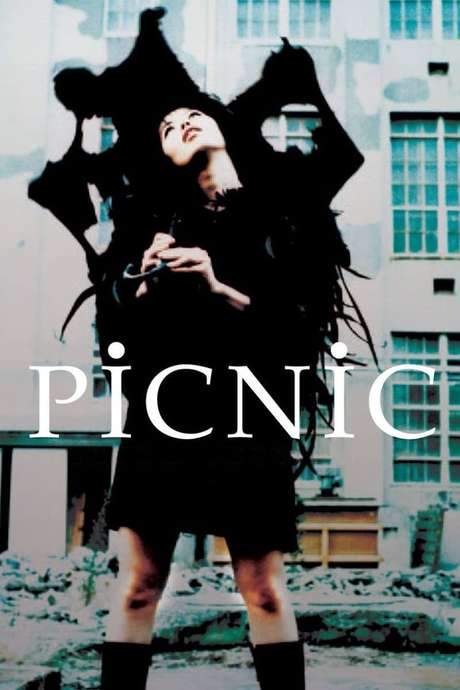
Picnic (1996) movie poster

Timeline

Picnic (1996) Timeline Explained – Every Event in Order

Release, runtime and language
1996 · 72 mins · Japanese
Loading streaming availability…
Directed by
Shunji Iwai
Starring
Tadanobu Asano, Keiichi Suzuki, Naomasa Musaka, Kazue Itō, Chara, Shifumi Yamaguchi

Convinced that the world will end that very day, three institutionalized patients—Coco, Tsumuji and Satoru—embark on a surreal quest through the city. Scaling rooftops and walking along the high walls, they hunt for the perfect picnic spot that offers the best vista from which to watch the final event unfold.

On this page (6)
  1. 1 Where to watch
  2. 2 Events in order (14)
  3. 3 Timeline questions answered
  4. 4 Movie threads
  5. 5 Movies like Picnic
  6. 6 Every angle
Loading streaming availability…

14 events in order · contains spoilers

Picnic Timeline: Events in Chronological Order

Every key event of Picnic (1996) in order, scene by scene, with when and where it takes place. Use it to untangle flashbacks, time jumps and parallel storylines, to refresh your memory before the sequel or to find the exact scene you are thinking of.

  1. Arrival at the asylum

    Coco is dropped off at a mental asylum for young teenagers by her parents. The staff swarm her, and a nurse treats her roughly, confiscating most belongings and adornments except for her crow feather scarf, which she clings to. The harsh reception sets the tone for the inmates' grim environment.

    When
    Morning
    Where
    Mental asylum
  2. First connections in art therapy

    In the art therapy session, Coco meets Tsumuji and his friend Satoru and they gradually become friends. The environment is hostile, but the trio finds a moment of camaraderie through shared drawings and conversations. This bond anchors their later actions.

    When
    Day
    Where
    Art therapy room
  3. Tsumuji's traumatic memory

    While in his cell, Tsumuji hallucinates his grade-school teacher molesting him, revealing the depth of his trauma. The vision leaves him shaken and isolated from the others. The scene foreshadows how abuse shapes the boys' perceptions of safety and trust.

    When
    Night
    Where
    Tsumuji's cell, asylum
  4. Escaping the walls to explore

    After stealing black paint from the storeroom, Coco, Tsumuji, and Satoru scale the asylum walls and gaze out at the road beyond. They explain they won’t get in trouble if they don’t go past the edge, then Coco follows them further along the wall. The act hints at their longing for freedom and a broader world.

    When
    Morning
    Where
    Outside the asylum walls
  5. Church encounter and divine debate

    Coco ventures beyond the wall to a church and they watch a hymn recital. A priest engages them in a discussion about God, and Coco defines birth as the world’s beginning and death as its end, calling her parents her God. The priest gives them a Bible and urges them to read it.

    When
    Afternoon
    Where
    Church vicinity
  6. Return and punishment at the asylum

    Back at the asylum, the trio is restrained and taken to a punishment ward, strapped to beds. That night, a staff nurse rapes Tsumuji, and he hallucinates the teacher taunting and urinating on him. The abuse cements the brutal atmosphere surrounding the children.

    When
    Night
    Where
    Punishment ward, asylum
  7. Bible obsession and the end of the world

    The group grows increasingly absorbed in the Bible, especially passages about the end of the world. They interpret the book’s publication date as the reference point for the apocalypse. Their fixation drives them toward a grand, doomed plan.

    When
    Evening
    Where
    Asylum grounds
  8. Into the city and a dangerous theft

    Excited by their belief in an approaching apocalypse, they go beyond the church into the main city and attract stares. They steal a gun from a pursuing police officer and mock a billboard for a sports drink. The thrill of rebellion grows, trading safety for peril.

    When
    Afternoon
    Where
    Main city streets
  9. Discovery of a severed hand

    In a residential area, Satoru rummages through a discarded trash bag for food and uncovers a severed hand, horrifying the group. He runs away in panic while the others react with shock and fear. The grim find underscores the fragility of life outside the asylum’s walls.

    When
    Afternoon
    Where
    Residential area
  10. Satoru's fall and injury

    While continuing their walk, Satoru slips and falls off a wall, hitting his head on a rock. He drags himself forward, dazed, insisting that he must climb again, before finally losing consciousness from blood loss. The incident marks a violent turn in their journey.

    When
    Late afternoon
    Where
    Outside the asylum walls
  11. Confessions and intimate bond

    Coco confesses that she killed her identical twin Kiki in a game of who-is-fake, and Tsumuji reveals he stabbed his teacher after years of abuse. The two comfort each other and share a brief kiss, momentarily easing the weight of their traumas. The moment deepens their fragile connection.

    When
    Evening
    Where
    Open space near the city edge
  12. At the offshore beacon

    They reach an offshore beacon as the sun sets and open an empty picnic basket, pretending to eat to fill the void. The trio discusses whether shooting the sun with the gun could trigger the predicted event. The scene juxtaposes childish ritual against ominous intention.

    When
    Sunset
    Where
    Offshore beacon
  13. The sun shot attempt

    Tsumuji fires three shots into the sun, but nothing happens, and Coco teases him about his aim. The failed attempt underscores the futility of their plan and the collapse of their earlier bravado. They confront the emptiness of unrealizable apocalyptic fantasies.

    When
    Twilight
    Where
    Offshore beacon
  14. Coco's final act

    Coco shoots herself in the head, ending her world. Feathers from her scarf burst into the air as Tsumuji grasps her body and the empty gun clicks into the sky. The moment is both a literal and symbolic end to their shared illusion and lives.

    When
    Sunset
    Where
    Offshore beacon

Last updated: October 09, 2025 at 10:52

Was this helpful?

Timeline questions answered

Picnic Timeline Explained: Your Questions Answered

When does it happen, and why in that order? The questions people ask about the chronology of Picnic (1996): time jumps, flashbacks, cause and effect between scenes and the correct order of events, each answered with spoilers.

Q1

Why do Coco, Tsumuji, and Satoru believe the world is ending?

They become obsessed with the Bible's apocalyptic visions after receiving it from a priest. They interpret the book's publication date as the reference point for the apocalypse and grow increasingly convinced that the world will end during their picnic. This shared delusion drives their entire quest through the city.

Foreshadowing: The priest encourages them to read the Bible, which later fuels their apocalyptic fixation.

  • apocalypse
  • bible
  • delusion
  • belief
  • end of world
Q2

Why did Tsumuji kill his teacher?

Tsumuji was repeatedly molested by his grade school teacher during childhood. The trauma was so severe that he eventually stabbed his teacher to death on a rainy day. This past act haunts him throughout the film, manifesting in hallucinations where the teacher taunts and humiliates him.

Foreshadowing: Early in the film, Tsumuji hallucinates his grade-school teacher molesting him in his cell, revealing his traumatic past.

  • tsumuji
  • teacher
  • murder
  • abuse
  • childhood trauma
Q3

Why did Coco kill her twin sister Kiki?

Coco killed her identical twin Kiki in a game called "who-is-fake." She reveals this devastating secret to Tsumuji during their intimate confession moment, explaining that the game involved determining which twin was the "fake" - a game that ended in murder.

  • coco
  • kiki
  • twin
  • murder
  • game
Q4

What happens to Tsumuji in the punishment ward?

After being caught beyond the asylum walls, the trio is restrained and sent to the punishment ward where they are strapped to beds. That night, a staff nurse sexually assaults Tsumuji while he is restrained. He then hallucinates his former teacher taunting him and urinating on him, deepening his psychological trauma.

  • tsumuji
  • punishment ward
  • nurse
  • assault
  • abuse
Q5

Why do they steal a gun from a police officer?

The trio steals the gun because they believe shooting the sun might trigger the apocalypse they have been waiting for. Their apocalyptic delusion leads them to take this dangerous action, believing they can hasten the end of the world.

Foreshadowing: Their Bible study and belief in the impending apocalypse builds toward this moment of attempting to trigger the event.

  • gun
  • police
  • apocalypse
  • sun
  • steal
Q6

Why is the picnic basket empty?

The picnic basket is empty, symbolizing the hollowness of their apocalyptic quest and their inability to find fulfillment or meaning. They pretend to eat from it anyway, performing the ritual of a picnic despite having nothing - a poignant display of their desperation and the emptiness of their fantasies.

  • picnic basket
  • empty
  • ritual
  • symbolism
Q7

Why does Coco shoot herself at the end?

After Tsumuji's failed attempt to trigger the apocalypse by shooting the sun, Coco takes the gun and shoots herself in the head. Her suicide represents the ultimate realization of her belief that she can end her own world when the larger apocalypse fails to happen. The act is both a literal and symbolic end to her suffering and illusion.

Foreshadowing: Earlier, Coco defines birth as the world's beginning and death as its end, establishing her willingness to embrace death as a form of conclusion.

  • coco
  • suicide
  • ending
  • sun
  • death
Q8

What is the significance of Coco's crow feather scarf?

The crow feather scarf is Coco's most precious possession - the only item the staff allows her to keep when she arrives at the asylum. She clings to it tightly throughout the film, and at the moment of her death, the feathers burst into the air, symbolizing her fleeting freedom and the release of her spirit.

Foreshadowing: The staff confiscates nearly everything she owns except this scarf, emphasizing its importance from the very beginning.

  • coco
  • crow
  • feather
  • scarf
  • symbol
Q9

Why does Satoru leave the group?

Satoru abandons Coco and Tsumuji after discovering a severed hand in a trash bag while searching for food. The traumatic discovery horrifies him so deeply that he runs away in panic. He later falls off a wall, hits his head on a rock, and loses consciousness from blood loss, separating from the group permanently.

  • satoru
  • severed hand
  • injury
  • separation
Q10

What does the priest give the trio and why does it matter?

The priest gives them a Bible after discussing God with them. Coco declares that birth is the world's beginning and death its end, insisting her parents are her God - rejecting the priest's teachings. However, they become fixated on the Bible's apocalyptic passages, using it as the foundation for their end-of-world belief that drives their entire journey.

  • priest
  • bible
  • god
  • apocalypse
  • church
Q11

Why does Tsumuji keep hallucinating his teacher?

Tsumuji experiences vivid hallucinations of his grade school teacher because of the severe childhood sexual abuse he suffered. These traumatic memories constantly surface throughout the film, haunting him and contributing to his fractured mental state. The abuse fundamentally shaped his reality and perception of trust and safety.

  • tsumuji
  • hallucination
  • teacher
  • abuse
  • trauma
Q12

Why do Coco, Tsumuji, and Satoru escape the asylum walls?

After Coco steals black paint from the storeroom, the three decide to scale the asylum walls to explore the world outside. They explain that they won't get in trouble as long as they stay within the lines of the walls. This act represents their longing for freedom and their rebellion against the confinement of the institution.

  • escape
  • asylum
  • walls
  • freedom
  • rebellion
Q13

What triggers Tsumuji's confession about killing his teacher?

A sudden rainstorm triggers Tsumuji's traumatic memories. The rain reminds him of the day he stabbed his teacher, and overwhelmed by the sensory trigger, he confesses to Coco that years of abuse drove him to kill his teacher on a rainy day. The rain serves as a powerful psychological trigger for his repressed trauma.

  • rain
  • tsumuji
  • confession
  • teacher
  • trauma

Movie threads

More Movies Like Picnic, by Mood & Story

Curated lists built around what makes Picnic tick: the same mood, the same kind of story or the same emotional payoff. Each list explains why these movies belong together.

Movies with shared delusion journeys like Picnic

Characters united by a fragile fantasy face a crumbling reality together. Find movies like Picnic where characters escape trauma through a shared fantasy. These bleak dramas and surreal stories explore fragile mental states and the heartbreak of confronting reality, perfect for fans of heavy psychological narratives.

  • traumatic
  • melancholic
  • dreamlike
  • oppressive
  • tragic
  • fragile
  • Tone: melancholic, tragic, dark
  • Pacing: dreamlike, variable
Why these movies?

The story pattern: The narrative follows characters who construct a collective belief system as a refuge from trauma, mental illness, or unbearable circumstances. The story chronicles their precarious existence within this fantasy, often involving a symbolic quest, until internal or external pressures force a devastating confrontation with the truth.

Why they belong together: They are grouped by their focus on the delicate dynamics of shared delusion, the dreamlike pacing of escapism, and the overwhelmingly bleak emotional tone that comes from the inevitable collapse of a fragile world built on lies.


Surreal psychological odysseys like Picnic

Visionary journeys where a damaged psyche reshapes the world into a haunting landscape. Discover surreal movies similar to Picnic that use dreamlike visuals and disjointed narratives to explore deep trauma. If you liked the haunting journey through a fractured mind, you'll find more complex and intense dramas here.

  • surreal
  • oppressive
  • anxious
  • traumatic
  • dreamlike
  • psychological
  • Tone: dark, oppressive, anxious
  • Pacing: variable, disjointed
Why these movies?

The story pattern: The plot is driven by a character's need to process or escape from severe psychological trauma. Reality becomes subjective and malleable, leading to a non-linear or symbolic quest. The pacing is often variable, shifting between lethargic despair and frantic urgency, building towards a climax that reveals the source of the pain in a devastating way.

Why they belong together: They share a core approach to depicting mental anguish: using surrealism, symbolic settings, and a fractured narrative structure to create an immersive, subjective experience of trauma, characterized by high emotional weight and a dark, complex tone.

If you liked this

Movies Like Picnic

Similar movies to Picnic: the same genre, themes or kind of story. Each one comes with its own plot summary, timeline and ending explained.

Browse all movie summaries

Every angle

Picnic (1996) Explained: Plot, Timeline & Characters

Everything about Picnic in one place: what happens in the plot summary, the timeline in chronological order, the characters and meaning and a spoiler-free summary. What's After the Movie adds the cast, box office and post-credit scenes.

Coming soon on iOS and Android

The Plot Explained Movie Summary App

Plot summaries, endings explained and timelines on your phone. Catch up on any movie in minutes, save your favorites and never miss a twist again.

Be the first to know when we launch. Your email stays private, always.

Learn more about the app