Plot Explained Spoilers guaranteed!
Plot Explained

Browse by genre

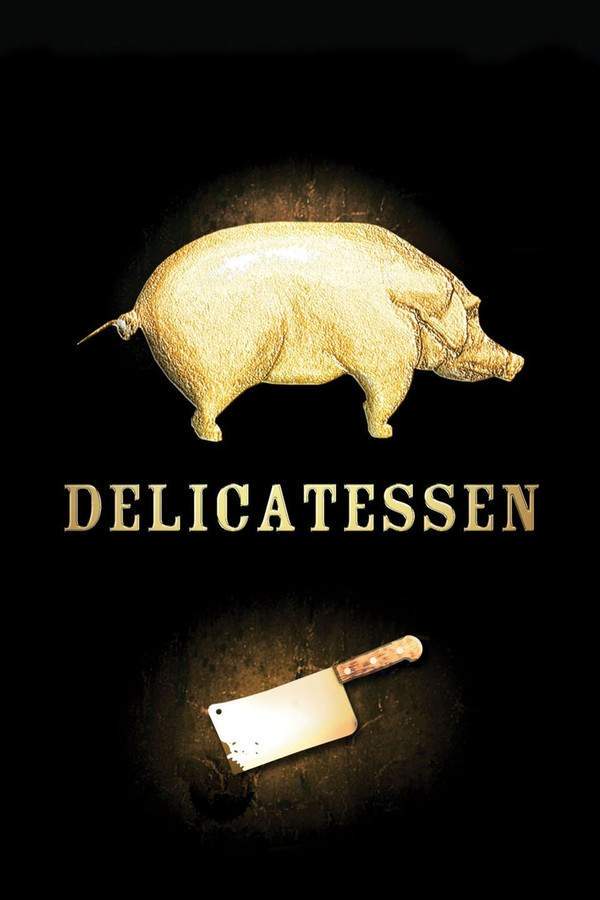
Delicatessen (1992) movie poster

Plot Summary

Delicatessen (1992) Plot Summary Explained

Release, runtime and language
1992 · 99 min · French
JustWatch #15,267 9
Directed by
Jean-Pierre Jeunet, Marc Caro
Starring
Dominique Pinon, Marie-Laure Dougnac

In a post-apocalyptic world ravaged by famine, a former circus performer seeks shelter in a dilapidated apartment building that houses a peculiar delicatessen. Unbeknownst to him, the deli's mysterious owner is a butcher who resorts to desperate measures to feed his tenants. As the newcomer’s life becomes entangled with the butcher’s, the butcher's daughter finds herself conflicted, and devises a surprising plan to stop her father’s disturbing practices.

On this page (6)
  1. 1 Where to watch
  2. 2 What happens: full plot
  3. 3 Plot questions answered
  4. 4 Movie threads
  5. 5 Movies like Delicatessen
  6. 6 Every angle

Where to watch

Where to Watch Delicatessen (1992)

Where can you watch Delicatessen? Stream, rent or buy it in the US, including on Kanopy, Plex and Tubi TV: current JustWatch availability with up-to-date prices.

Streaming availability powered by JustWatch

Full plot summary · contains spoilers

What Happens in Delicatessen: Full Plot Summary

The whole story of Delicatessen (1992) explained, from the opening scene to the final frame: every key event, every twist and what it all adds up to. Read it as a quick recap before the sequel, to check a scene you missed, or to finally understand what really happened.

In a crumbling apartment block in post-apocalyptic France, food is scarce and grain has become a currency of survival. The ground floor hosts a grim butcher’s shop run by the landlord Clapet, a man who screens tenants with newspaper job ads only to murder them for meat, selling it back to those who live in his building. The atmosphere is tense, claustrophobic, and morally rotting, as neighbors hover between fear and dependence on the only source of “food” they can rely on.

Louison, the unemployed circus clown, arrives to apply for the vacant position. Louison, [Dominique Pinon], proves to be an exceptionally capable worker with a spectacular trick knife, and Clapet hesitates to end his life too quickly, entangling them in a tense, wary dynamic. During a routine maintenance period, Louison comes upon a package dropped by a mailman and delivers it to Clapet’s daughter, Julie, [Marie-Laure Dougnac], who claims the package contains confections and invites him to return that evening. A quiet spark grows into a genuine romance between Louison and Julie, even as other tenants watch with a mix of curiosity and concern over the strange, almost magical charm he seems to radiate.

The growing bond unsettles some tenants, who worry that Louison’s presence might endanger them all if their safety—and their meat supply—depends on Clapet’s rule. Clapet warns tenant Marcel Tapioca that his rent is late and that he must surrender his mother-in-law as payment, a brutal reminder of the building’s brutal economy. That night, Julie pleads with her father to release Louison, aware of Clapet’s murderous appetite for tenants. She then discovers a newspaper article about the Troglodistes, a group of vegetarian rebels living underground, and she ventures into the sewers to contact them, hoping they can help rescue Louison.

Following what seems like the butcher’s grim efficiency in disposing of a tenant’s mother-in-law, the Troglodistes infiltrate the sewer network to seize Louison, but their mission goes awry and they accidentally capture Mademoiselle Plusse instead. Meanwhile, Louison and Julie enjoy a quiet moment watching television, as Clapet climbs to the roof and shakes the antenna to lure Louison into a rooftop fix. An attempted kill with a cleaver by Clapet is thwarted by an unexpected electrical explosion that rips through one of the apartments, interrupting the attack.

Clapet, joined by some tenants, storms Louison’s room once more in a bid to murder him. The couple retreats to a bathroom and floods it, wall to wall, in a desperate defense—until Clapet finally opens the door and the rising waters sweep the invaders away. Mademoiselle Plusse, escaping the sewers, finds Louison’s boomerang knife and hands it to Clapet, who hurls it toward Louison but ends up killing himself instead.

With the danger behind them, Louison and Julie ascend to the roof to make music together, the building now quiet and the butcher’s shop closed for good, signaling a fragile, hopeful peace after a harsh and brutal chapter.
Last updated: November 22, 2025 at 15:57

Was this helpful?

Plot questions answered

Delicatessen Plot Explained: Your Questions Answered

The questions people ask most about Delicatessen (1992): what happens in the confusing scenes, why the characters do what they do, the twists, hidden details and what the ending means. Each answer contains spoilers.

Q1

Why doesn't the butcher kill Louison right away?

The butcher Clapet is reluctant to kill Louison immediately because the clown's exceptional skills with a spectacular trick knife make him too valuable as a worker. Unlike previous victims who were killed quickly after being lured in with job ads, Louison proves his worth by demonstrating remarkable abilities, buying Clapet enough time to postpone his fate.

Foreshadowing: Earlier, Louison's knife trick during his job interview earns him wary respect from Clapet, who hesitates to lose such a capable employee.

  • louison
  • clapet
  • butcher
  • job
  • knife trick
  • survival
Q2

Why do the tenants stay in the building knowing the butcher kills people?

The tenants remain trapped in the building because they have no other source of food in the post-apocalyptic world where grain is currency and food is scarce. Clapet's butcher shop provides the only affordable meat in town, creating a brutal economy where survival depends on turning a blind eye to the murders. Leaving would mean starvation.

Foreshadowing: The film establishes early that food is desperately scarce and grain has become a survival currency, making the tenants prisoners of their own hunger.
  • tenants
  • building
  • food scarcity
  • cannibalism
  • survival economy
Q3

How does Louison survive all the murder attempts?

Louison survives through a combination of his valuable circus skills, Julie's warning and protection, and sheer luck. His knife-throwing talent makes him useful enough that Clapet delays killing him. When attacks come, Julie either warns him or helps him defend himself. The final attempt fails because Clapet's own thrown boomerang knife rebounds and kills him instead.
Foreshadowing: Julie discovers her father's murderous plans early and pleads with him to spare Louison, establishing her role as his protector throughout the film.

  • louison
  • julie
  • survival
  • clapet
  • protection
  • knife
Q4

What are the Troglodistes in the movie?

The Troglodistes are a group of vegetarian rebels who live underground in the sewers. Julie discovers them through a newspaper article and ventures into the sewers to seek their help in rescuing Louison. They attempt a rescue mission but mistakenly capture Mademoiselle Plusse instead of Louison, showing their unfamiliarity with the building's residents.

Foreshadowing: Julie finds the newspaper about the Troglodistes after learning her father plans to kill Louison, linking the underground resistance to her desperate attempt at salvation.

  • troglodistes
  • vegetarian rebels
  • sewers
  • underground
  • julie rescue
Q5

Why does Julie help Louison against her father?

Julie helps Louison because she has developed genuine romantic feelings for him and cannot stomach her father's cannibalistic crimes. Despite living in fear and benefiting from the butcher shop, she draws the line at letting the man she loves become prey. Her conscience and love for Louison override her loyalty to Clapet.

Foreshadowing: Julie invites Louison to her apartment after he delivers her package, showing her attraction to him even before she knows the full extent of her father's crimes.

  • julie
  • louison
  • love
  • clapet
  • father
  • rebellion
Q6

How does the butcher die in the end?

Clapet meets his death when he throws Louison's boomerang knife at the clown during the climactic confrontation. The knife arcs back unexpectedly and strikes Clapet himself, killing him with his own weapon. This ironic death occurs after Mademoiselle Plusse escapes the sewers and unknowingly delivers the boomerang knife to Clapet, setting up the fatal moment.

Foreshadowing: The boomerang knife was introduced earlier as Louison's signature circus trick, making its return and fatal trajectory thematically appropriate for the film's absurdist tone.

  • clapet
  • death
  • knife
  • suicide
  • irony
  • climax
Q7

What happens to the butcher shop at the end?

The butcher shop closes permanently after Clapet's death. With the main supplier of meat gone and the threat eliminated, the building enters a period of fragile peace. The final scenes show Louison and Julie playing music together on the roof, the butcher's shop dark and shuttered, symbolizing the end of the brutal cannibalistic economy that defined the building.

Foreshadowing: The building's atmosphere shifts throughout the film as tenants grow increasingly anxious about their food source and safety, culminating in the butcher's removal.

  • butcher shop
  • ending
  • peace
  • roof
  • music
  • closure
Q8

Why does the electrical explosion happen during the rooftop attack?

The electrical explosion occurs unexpectedly in one of the apartments while Clapet attempts to kill Louison on the roof. The exact cause is ambiguous, the film presents it as a random, almost miraculous event that interrupts the attack. This absurdist moment fits the film's darkly comedic tone, where luck and chaos often intervene at crucial moments.

Foreshadowing: The building is established as dilapidated and in disrepair, with faulty electrical systems fitting naturally into the decaying structure.

  • electrical explosion
  • rooftop
  • attack
  • clapet
  • louison
  • absurd
Q9

What is the significance of the boomerang knife?

The boomerang knife is Louison's signature circus prop and trick weapon from his days as a performer. It represents his former life and skills. In the climax, Mademoiselle Plusse finds this knife in the sewers and gives it to Clapet, who throws it at Louison only to have it return and kill him. The weapon becomes the instrument of the butcher's own justice, tying together Louison's circus past with his survival.

Foreshadowing: Louison demonstrates his knife-throwing skills during his job interview, earning Clapet's reluctant respect and setting up the knife's eventual return.

  • boomerang knife
  • circus
  • louison
  • weapon
  • clapet
  • fate
Q10

What does the ending mean for Louison and Julie?

The ending represents a bittersweet victory, Louison and Julie survive and find temporary peace, playing music together on the roof. However, this hope exists against the backdrop of a ravaged post-apocalyptic world where survival remains uncertain. The butcher's shop closing brings relief, but the couple's future in this bleak world remains ambiguous, reflecting the film's tone of fragile, conditional hope.

Foreshadowing: The film establishes early that this is a world where food is currency and morality has corroded, making any peace hard-won and potentially temporary.

  • ending
  • peace
  • roof
  • music
  • louison
  • julie
  • hopeful
  • bittersweet

Movie threads

More Movies Like Delicatessen, by Mood & Story

Curated lists built around what makes Delicatessen tick: the same mood, the same kind of story or the same emotional payoff. Each list explains why these movies belong together.

Absurdist Dystopias with Dark Humor like in Delicatessen

Satirical stories set in bizarre, broken worlds where survival is grotesquely funny. Explore movies like Delicatessen that blend dystopian settings with absurd comedy. If you liked the surreal, darkly funny take on a post-apocalyptic world, you'll find similar stories here where grim realities are punctuated by eccentric characters and bizarre humor.

  • surreal
  • darkly funny
  • absurd
  • dystopian
  • satirical
  • unsettling
  • Tone: dark, humorous, absurd
  • Pacing: steady, character-driven
Why these movies?

The story pattern: Stories in this thread often unfold within a broken society governed by strange, illogical rules. Characters navigate this world with a mix of desperation and ingenuity, with the narrative emphasizing the absurdity of their situation. The plot frequently involves a conflict between individual eccentricity and a corrupt or bizarre systemic power, leading to chaotic and unconventional resolutions.

Why they belong together: Movies are grouped here for their shared tone: a primary DARK mood that is consistently undercut by WHIMSICAL or comedic elements. They share a worldview that finds humor in decay and satire in despair, creating a coherent, off-kilter vibe that balances heavy themes with a light(er) touch.

Claustrophobic Thrillers in Confined Spaces like in Delicatessen

Tense stories where the setting itself becomes a character and a cage. Find movies similar to Delicatessen that master claustrophobic tension. If you liked the feeling of being trapped in the apartment building with its lurking dangers, these stories also use confined settings to build suspense, explore power dynamics, and create an anxious, intimate atmosphere.

  • claustrophobic
  • anxious
  • unsettling
  • tense
  • paranoid
  • suspenseful
  • Tone: dark, tense, anxious
  • Pacing: steady, building dread
Why these movies?

The story pattern: The narrative pattern typically involves an outsider or a group trapped within a single location, such as a building, bunker, or isolated community. Power struggles, hidden secrets, and the threat of internal danger drive the plot. The confined setting forces characters into close quarters, accelerating conflict and amplifying the psychological stakes in a steady, relentless progression.

Why they belong together: These movies are united by their oppressive, confined settings that directly generate the film's HIGH intensity and anxious mood. They share a STEADY pacing that allows dread to build organically within the limited space, focusing on character interactions and the psychological impact of being trapped.

If you liked this

Movies Like Delicatessen

Similar movies to Delicatessen: the same genre, themes or kind of story. Each one comes with its own plot summary, timeline and ending explained.

Browse all movie summaries

Every angle

Delicatessen (1992) Explained: Plot, Timeline & Characters

Everything about Delicatessen in one place: what happens in the plot summary, the timeline in chronological order, the characters and meaning and a spoiler-free summary. What's After the Movie adds the cast, box office and post-credit scenes.

Coming soon on iOS and Android

The Plot Explained Movie Summary App

Plot summaries, endings explained and timelines on your phone. Catch up on any movie in minutes, save your favorites and never miss a twist again.

Be the first to know when we launch. Your email stays private, always.

Learn more about the app