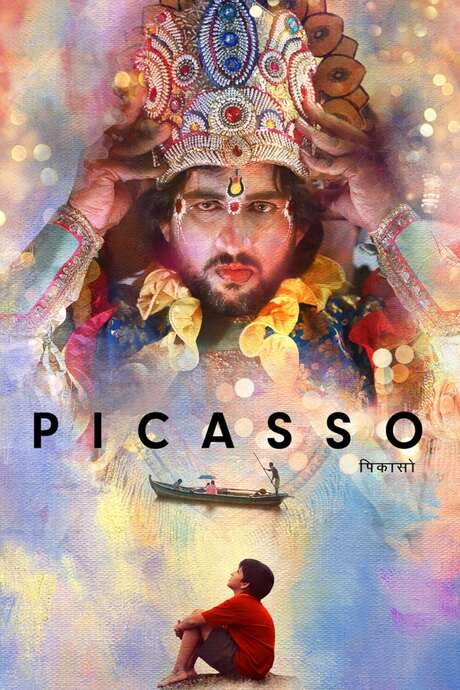
Gandharva Pandurang Gawade, a seventh-grade student from a remote village in the Konkan belt of Maharashtra, stands at the center of a hopeful moment. He is selected for the national level Picasso Arts Scholarship, a competition that promises a transformative journey: the winner gets to travel to Spain—Picasso’s birthplace—to further refine their art. The news arrives with a practical obstacle, though—the fee required to move to the next level of the competition. Gandharva shares this detail with his family, only to hear the painful truth that they cannot afford it.
Gandharva’s father, Pandurang Gawade, is a Dashavatari artist who performs in a nearby village. Once a capable actor, he now wrestles with the shadow of alcohol addiction, a struggle that has dimmed his former talents and strained the family’s resources. The mood at home is heavy: an ailing mother and mounting debt compound the pressure, threatening to derail the young boy’s dream before it can truly take flight. The family’s challenges are not just monetary; they touch the heart of their daily life, testing hope against hardship.
The narrative focuses on whether Pandurang can confront his demons and rekindle the artistry that once carried him and his family through tough times. It also follows Gandharva as he holds fast to a dream of Spain, hoping that this opportunity might open a doorway to a brighter future for himself and those he loves. The film frames art as a possible lifeline, suggesting that creative expression can heal wounds that money, illness, and despair cannot easily mend.
Gandharva’s world is deeply rooted in local culture and performance. The story introduces theatre artists who shape the village’s artistic fabric: Bappu and Shreenath Ambeskar, whose presence underscores the communal nature of art-making and the steady support networks that sustain young talents. Their roles illuminate how performance traditions—like Dashavatari—live on through communities that nurture new generations of artists.
In a meta-theatrical thread, the film features a play-within-a-play segment that blends the stage with life offstage. The in-play characters add texture to the storytelling: [Narad] in the play, brought to life by Vitthal Gaonkar, and [Mohini] in the play, portrayed by Nilkanth Sawanth. This interplay emphasizes how art mirrors life and how the boundaries between theatre and real life can blur, offering a richer understanding of character, fate, and resilience.
At its core, Picasso is a story about fathers and sons, about hopes and dreams, and about the ways life can imitate art even in the face of overwhelming odds. It explores how art—whether in a traditional performance, a classroom, or a festival stage—can heal, unite, and inspire. The film suggests that the pursuit of beauty and mastery is not just a personal quest but a communal one, capable of lighting a path through debt, illness, and despair toward something enduring and transformative. Picasso, in its gentle, hopeful arc, invites the audience to believe that dedication, culture, and love for art can sustain a family and lift a young dreamer toward a Spain-bound horizon.