Plot Explained Spoilers guaranteed!
Plot Explained

Browse by genre

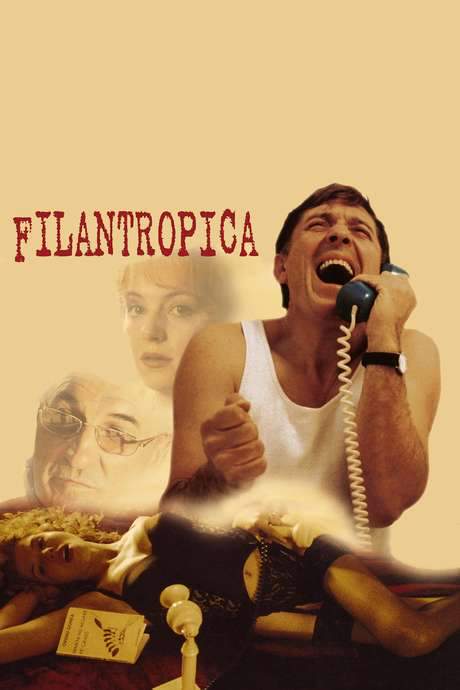
Philanthropy (2002) movie poster

Plot Summary

Philanthropy (2002) Plot Summary Explained

Release, runtime and language
2002 · 110 mins · Romanian
Loading streaming availability…
Starring
Anamaria Marinca, Ovidiu Niculescu, Valentin Popescu, Nae Caranfil, Mircea Diaconu, Marius Capotă

In modern Bucharest, a Saturday night outing with an attractive woman is a costly gamble. Ovidiu, a modest high‑school teacher, cannot afford such luxuries. Determined to earn more than his modest salary, he is drawn into the shadowy world of organized beggars, where a hand without a story receives no alms.

On this page (6)
  1. 1 Where to watch
  2. 2 What happens: full plot
  3. 3 Plot questions answered
  4. 4 Movie threads
  5. 5 Movies like Philanthropy
  6. 6 Every angle
Loading streaming availability…

Full plot summary · contains spoilers

What Happens in Philanthropy: Full Plot Summary

The whole story of Philanthropy (2002) explained, from the opening scene to the final frame: every key event, every twist and what it all adds up to. Read it as a quick recap before the sequel, to check a scene you missed, or to finally understand what really happened.

Ovidiu Gorea Mircea Diaconu is a jaded high-school teacher and aspiring writer in his mid-40s who still lives with his parents, his mother Monica Ghiuță and his father Constantin Drăgănescu in a quiet Bucharest orbit. He has just published a collection of short stories titled Nobody Dies for Free, but bookstores reject it and buyers stay away, leaving him with a sense that his literary dreams are slipping through his fingers. The film opens with this tension: a capable, intelligent man who feels unseen and underappreciated, stuck in a routine that pays little and promises less.

The high school principal entrusts Ovidiu with a fragile task: to handle a trouble-making student named Robert. Ovidiu tries a straightforward approach—having Robert call one of his parents for a conversation—but the teen instead sends his sister, Diana Viorica Vodă, a striking, perceptive girl who immediately unsettles him. What begins as a flirtation quickly spirals into something more dangerous for Ovidiu as he is drawn into a misguided plan to win Diana’s interest through a night of bar-hopping, coffee turning into a cascade of reckless decisions that nearly drains his pockets and his dignity.

One night, a shabby, intoxicated beggar appears and offers to recite poems in exchange for vodka. The exchange opens a door to a much larger, darker opportunity. The beggar introduces Ovidiu to the Filantropica Foundation, a desolate basement operation run by the enigmatic Pavel Puiuț [Gheorghe Dinică], a former convict who has built an empire out of emotional manipulation. He has learned that begging earns more when each beggar has a carefully crafted, tear-jerking backstory. The “foundation” becomes a pimply, intricate machine that preys on generosity, turning pity into profit. Puiuț sees potential in Ovidiu and invites him into a new “project” that will test his wits, his charm, and his ethics.

Ovidiu is paired with Miruna [Mara Nicolescu], the Foundation’s sharp secretary, and they are set to perform at high-end restaurants under the pretense of being a couple of poor teachers celebrating an anniversary. In each scene, they act out the ruse: a first dinner where they pretend to struggle to pay the bill, a hungry guest is asked to step in and settle the tab, and the two of them split the payoff once back in the alley. The scheme begins to yield real money, and Ovidiu’s previously dull life starts to sparkle with material improvements. He rents a roadster, takes Diana to lakeside clubs, and flaunts the purchases and experiences that his new “success” allows, all while his sole objective is still gaining Diana’s affection.

Puiuț grants Ovidiu access to the Foundation’s show-house—a place meant to wow others with a visible sign of success. However, a mis-timed phone call betrays his cover, and Diana distances herself in irritation, leaving him to face the consequences of his choices. Meanwhile, Miruna’s feelings grow complicated: she falls for her partner in crime and resents Ovidiu’s constant complaints about the “bimbo” who’s not a real woman. Her resentment deepens into desire, and she quietly engineers a shift, coaxing Ovidiu to play the scam not just as a performance but as a genuine experience.

The operation expands beyond the dining rooms. Miruna persuades Ovidiu to an evening that should have been a shared victory, but the karaoke bar’s loud music thwarts their calculated scene. A waiter not in on the ruse pulls Ovidiu aside and beats him in the back, exposing the fragility of their deception. Puiuț reveals the full purpose of the project: Ovidiu must appear, with Miruna, on Chestiunea Zilei, a popular late-night program, to recount the karaoke incident and to announce that the Filantropica Foundation has opened a customer account for people who wish to donate to the “poor teachers.” The plan turns public and personal at the same time, turning their private scheme into a public spectacle.

Back in the school, two thugs arrive demanding repayment for Robert, who owes $3,000 to someone and has only two days to settle. Ovidiu withdraws the money from the Foundation’s account and transfers it to Diana, who pretends to be impressed and urges him to visit her again that night. Yet she misleads him again by leaving the city in the afternoon, and Ovidiu discovers that Robert’s supposed sister was nothing of the sort, a lying “chick” who used him to push the debt further from sight.

The story’s momentum twists as Ovidiu returns home to find the media and Puiuț claiming he has just won a lottery prize, a sly payoff that confirms to Ovidiu that he has become a tool in Puiuț’s larger business. The con’s price is steep: Ovidiu accepts his fate and Miruna as his wife in the foundation’s game, trapped by a web of manipulation that he helped to weave.

The film closes on a chilling, unnerving note, as Pavel Puiuț confronts Robert in the street and uses him to illustrate the cold calculus of their operation. Then, in a final meta-moment that underscores the movie’s critique of spectacle and complicity, Puiuț breaks the fourth wall: “Do you feel pity for this piece of trash? Hah! Got your money!” The line lingers, reframing the audience’s gaze—pity, profit, and the price of a lie are all bound together in a city that rewards cleverness over conscience.

In this story of ambition, need, and moral compromise, the characters navigate a precarious economy of emotions. Ovidiu’s longing for recognition and affection collides with a societal system that monetizes hardship, while Miruna’s evolving feelings pull her toward a different, perhaps more dangerous, version of success. The Filantropica Foundation operates as a mirror, reflecting not only the hunger of its beggars but the hunger within the people who seek to fill their emptiness with power, status, and money. The film ends with an unsettling blend of triumph and loss, leaving viewers to ask where the line lies between art, manipulation, and genuine human connection.

Last updated: October 09, 2025 at 15:27

Was this helpful?

Plot questions answered

Philanthropy Plot Explained: Your Questions Answered

The questions people ask most about Philanthropy (2002): what happens in the confusing scenes, why the characters do what they do, the twists, hidden details and what the ending means. Each answer contains spoilers.

Q1

How does the Filantropica Foundation scam work?

The foundation stages elaborate begging performances at upscale restaurants. Puiuț pairs a man and woman posing as underprivileged teachers celebrating an anniversary. They create a scene where they can't afford the bill, prompting wealthy diners to spontaneously pay. The restaurant waiter splits the charitable payout with them, and Puiuț takes his cut. The entire operation is built on fabricated tear-jerking backstories that exploit human pity for profit.

  • filantropica foundation
  • scam
  • begging
  • puiuț
  • restaurant scheme
Q2

Why does Ovidiu agree to work for Puiuț?

Ovidiu is desperate for money after his book fails and he spends nearly all his savings trying to impress Diana during a night of bar-hopping. When a beggar explains he earns two to three times a teacher's salary by selling tragic stories, Ovidiu sees an opportunity. Puiuț pitches him a scheme that uses his intelligence and charm, promising financial relief from his stagnant life.

  • ovidiu
  • motivation
  • money
  • desperation
  • puiuț
Q3

Who is Diana really and what happened to her?

Diana is not Robert's sister, she was a woman Robert recruited to seduce Ovidiu and pull him deeper into debt. When Ovidiu gave her $3,000 to help Robert pay off loan sharks, she pretended to be impressed and asked him to visit that night, but instead left the city. She was part of a larger scam operation using attractive women to manipulate men into paying off Robert's debts.

  • diana
  • robert
  • scam
  • deception
  • sister
Q4

Why does Puiuț stage the lottery prize for Ovidiu?

When Ovidiu withdraws 3,000 from the foundation's account to pay Robert's debt, the money goes missing and threatens to expose the operation. To cover the shortfall and prevent Ovidiu from being confronted by loan sharks, Puiuț orchestrates a fake lottery win. This simultaneously protects the foundation's reputation and traps Ovidiu deeper into Puiuț's control.

  • lottery
  • puiuț
  • cover-up
  • money
  • debt
Q5

Why does Ovidiu end up marrying Miruna?

After the lottery cover-up, Ovidiu finds himself trapped in Puiuț's operation with no way out. Miruna has already fallen in love with him and become his partner in the scheme. Marrying her is part of the ongoing deception, Puiuț uses their relationship as another layer of legitimacy for the foundation. Ovidiu accepts his fate, realizing he has become a permanent tool in the fraudulent operation.

  • miruna
  • marriage
  • ovidiu
  • trapped
  • puiuț
Q6

What is Miruna's background and why does she reveal it?

Miruna was a former prostitute whom Puiuț recruited to run the foundation's office. When she sleeps with Ovidiu, she reveals her past to create emotional vulnerability and manipulate him further. By sharing something personal and shameful, she binds him to her through shared secrets, pulling him deeper into the operation.

  • miruna
  • prostitute
  • past
  • manipulation
  • seduction
Q7

Why does Diana leave after the show-house incident?

Puiuț gives Ovidiu access to a rented 'show-house' meant to impress wealthy clients. However, a client calls at the wrong time and hears Ovidiu's cover being blown, exposing the fraud. Diana witnesses this embarrassment and walks out in irritation. This incident destroys the false image of success Ovidiu was trying to maintain to win her affection.

  • diana
  • show-house
  • exposed
  • ovidiu
  • embarrassed
Q8

What does the ending fourth-wall moment mean?

In the final scene, Puiuț confronts Robert on the street and breaks character to address the audience directly. He asks if they feel pity for Robert, then declares 'Got your money!' This meta-moment reveals that the audience themselves have been manipulated, just as the foundation exploits pity from restaurant diners, the film exposes how viewers are also drawn into emotional narratives for entertainment. It underscores the film's critique of how pity itself becomes a commodity.

  • ending
  • fourth wall
  • puiuț
  • audience
  • pity
  • manipulation
Q9

Why does the karaoke bar scam fail?

Miruna pushes Ovidiu to perform their restaurant scam at a karaoke bar for their own benefit. However, the loud music drowns out their carefully staged表演, making it impossible to execute the scheme. A waiter who isn't part of the operation becomes suspicious and beats Ovidiu in the back, exposing the vulnerability of their deception outside the controlled restaurant environment.

  • karaoke
  • scam fail
  • ovidiu
  • miruna
  • exposed
Q10

Why does Robert become a beggar at the end?

After Robert fails to repay his 3,000 debt, loan sharks threaten him. Puiuț offers a way out by recruiting Robert into the foundation's operation, turning him into a beggar with a fabricated tragic backstory. This completes the cycle: the victim becomes part of the exploitative system, demonstrating how Puiuț preys on desperate people and converts them into tools for more profit.

  • robert
  • beggar
  • recruited
  • debt
  • puiuț
Q11

What is the Chestiunea Zilei TV appearance about?

After the karaoke bar disaster, Puiuț orchestrates a public spectacle by appearing with Ovidiu and Miruna on Chestiunea Zilei, a popular late-night show. They recount the karaoke incident and announce that the Filantropica Foundation has opened a donation account for 'poor teachers.' This transforms their private fraud into a public fundraising operation, exponentially expanding their criminal enterprise.

  • chestiunea zilei
  • tv show
  • public
  • foundation
  • donation

Movie threads

More Movies Like Philanthropy, by Mood & Story

Curated lists built around what makes Philanthropy tick: the same mood, the same kind of story or the same emotional payoff. Each list explains why these movies belong together.

Movies about moral compromise like Philanthropy

Ordinary characters making ethically dubious choices for survival or success. If you were fascinated by the ethical unraveling in Philanthropy, this collection features similar films where characters negotiate their values for personal gain. These movies explore the slippery slope of corruption, often set against a cynical social backdrop.

  • morally ambiguous
  • cynical
  • desperate
  • unsettling
  • satirical
  • anxious
  • Tone: dark, cynical
  • Pacing: steady, methodical
Why these movies?

The story pattern: Narratives in this thread typically follow a clear cause-and-effect chain, beginning with a catalyst of desperation (financial, emotional, professional) that pushes a relatively ordinary protagonist toward a tempting but unethical opportunity. The plot charts their escalating involvement, often leading to a hollow victory or a bittersweet realization of what they have sacrificed.

Why they belong together: These films are grouped by their shared focus on a character's ethical journey. They consistently feature a cynical tone, a steady pacing that allows for the methodical charting of moral decay, and an ending that reflects the cost of the protagonist's choices, creating a coherent experience of exploring the price of ambition.

Dark satirical movies like Philanthropy

Stories that use dark humor to critique exploitative social and economic structures. For viewers who appreciated the biting social critique in Philanthropy, this section highlights films that use satire to dissect exploitative worlds. These movies blend comedy and drama to reveal the absurdity and cruelty within systems that profit from deception.

  • satirical
  • cynical
  • unsettling
  • thought-provoking
  • dark humor
  • systemic critique
  • Tone: satirical, dark
  • Pacing: steady, observational
Why these movies?

The story pattern: The narrative pattern often involves a protagonist becoming enmeshed in a flawed system, serving as a vehicle for the audience to explore its inner workings. The plot highlights the system's mechanics through irony and exaggerated logic, leading to conclusions that underscore the tragicomic nature of the situation rather than offering neat resolutions.

Why they belong together: These movies share a specific tonal blend: a darkly satirical approach to serious themes, creating an experience that is both intellectually stimulating and unsettling. They balance a moderate level of humor with a underlying seriousness, resulting in a thoughtful and often anxious vibe centered on systemic critique.

If you liked this

Movies Like Philanthropy

Similar movies to Philanthropy: the same genre, themes or kind of story. Each one comes with its own plot summary, timeline and ending explained.

Browse all movie summaries

Every angle

Philanthropy (2002) Explained: Plot, Timeline & Characters

Everything about Philanthropy in one place: what happens in the plot summary, the timeline in chronological order, the characters and meaning and a spoiler-free summary. What's After the Movie adds the cast, box office and post-credit scenes.

Coming soon on iOS and Android

The Plot Explained Movie Summary App

Plot summaries, endings explained and timelines on your phone. Catch up on any movie in minutes, save your favorites and never miss a twist again.

Be the first to know when we launch. Your email stays private, always.

Learn more about the app