Plot Explained Spoilers guaranteed!
Plot Explained

Browse by genre

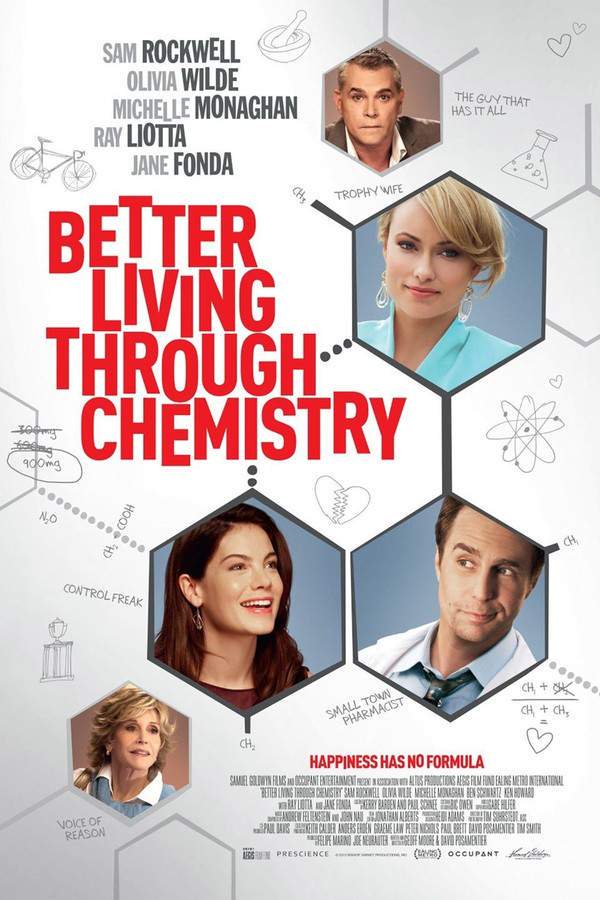
Better Living Through Chemistry (2014) movie poster

Plot Summary

Better Living Through Chemistry (2014) Plot Summary Explained

Release, runtime and language
2014 · 91 min · English
Loading streaming availability…
Directed by
David Posamentier, Geoff Moore

This drama explores the remarkable partnership of Sasha and Ann Shulgin, a chemist and therapist respectively. Together, they conducted pioneering research involving psychedelic substances, seeking to understand their potential for personal growth and therapeutic applications. Their work led to groundbreaking insights into the human mind and offered new perspectives on self-discovery and the exploration of consciousness.

On this page (6)
  1. 1 Where to watch
  2. 2 What happens: full plot
  3. 3 Plot questions answered
  4. 4 Movie threads
  5. 5 Movies like Better Living Through Chemistry
  6. 6 Every angle
Loading streaming availability…

Full plot summary · contains spoilers

What Happens in Better Living Through Chemistry: Full Plot Summary

The whole story of Better Living Through Chemistry (2014) explained, from the opening scene to the final frame: every key event, every twist and what it all adds up to. Read it as a quick recap before the sequel, to check a scene you missed, or to finally understand what really happened.

Jane Fonda portrays herself as a Pharmacy customer and narrator in this intriguing tale. The life of Douglas "Doug" Varney, played by Sam Rockwell, a methodical pharmacist, takes a wild turn when he embarks on an affair with the alluring trophy wife of a customer. This whirlwind romance leads him down a treacherous path filled with sex, drugs, and the looming specter of murder.

Doug's personal life is far from perfect; he is married to Kara Varney (Michelle Monaghan), and their relationship is strained. Doug has dedicated years to running Walter Bishop's pharmacy, owned by Kara's father, played by Ken Howard. However, after Doug buys the business, he is frustrated that it retains the original name, which he feels undermines his efforts. Further complicating his life, Doug's family, including his own son, shows little respect for him. Meanwhile, Kara, a competitive cyclist, frequently belittles Doug in front of her friends, showcasing her superiority in the sport.

Despite being a conscientious pharmacist who meticulously provides the correct medications to his small-town clientele and manages to tolerate his unreliable employee, Noah (Ben Schwartz), Doug's complacent life is about to change dramatically. During a delivery to the home of Elizabeth Roberts (Olivia Wilde), the beautiful and troubled wife of Jack Roberts (Ray Liotta), Doug finds himself drawn into her world of drug addiction. When she can't pay for the delivery, she attempts to seduce Doug, leading to a passionate encounter.

As their relationship develops, Doug confesses that he once aspired to become a doctor but forfeited that dream when Kara became pregnant. Their affair intensifies, with Elizabeth teaching Doug about style and intimacy, while he experiments with pharmaceuticals in search of happiness and fulfillment. Doug's escapades become reckless as he mixes drugs for heightened experiences, embracing the notion of “better living through chemistry.”

Driven by a mutual desire to escape their mundane lives, Doug jokingly suggests that Elizabeth could poison Jack by tampering with his medication. However, she takes the suggestion seriously, complicating their already tangled relationship. When DEA Agent Andrew Carp (Norbert Leo) arrives to review Doug's inventory, Doug manages to keep his cool, staving off any immediate repercussions.

Trouble escalates when Doug's son Ethan is suspended from school, prompting Doug to take charge and bond with him. In a moment of rebellion, they deface the pharmacy’s sign, reclaiming Doug's identity. Determined to prove himself, Doug creates a drug that enhances his performance and challenges Kara during a cycling competition, claiming victory and rekindling their intimacy.

However, Agent Carp's second visit brings renewed anxiety as discrepancies in Doug's inventory are scrutinized. In a desperate bid to escape, Doug plots to overdose Jack with a heart medication switch, but in a twist of fate, he discovers remorse over the plan when he connects with Jack, only to find out he’s unintentionally put him in danger.

Chaos unfurls as Doug learns Noah has overdosed, inadvertently clearing him of guilt. The shocking news punctuates Doug's life, revealing that Jack is still alive. In the end, as Elizabeth prepares to leave town to avoid suspicion, Doug decides to stay for his son, leading to a mutual understanding and a divorce from Kara. Thus, Doug embarks on a journey of self-discovery, entangled in a web of chaos yet emerging with newfound clarity.

Last updated: October 27, 2024 at 22:08

Was this helpful?

Plot questions answered

Better Living Through Chemistry Plot Explained: Your Questions Answered

The questions people ask most about Better Living Through Chemistry (2014): what happens in the confusing scenes, why the characters do what they do, the twists, hidden details and what the ending means. Each answer contains spoilers.

Q1

Why does Doug start an affair with Elizabeth Roberts?

Doug begins his affair with Elizabeth during a routine pharmacy delivery when he discovers she's troubled and cannot pay for her medications. Elizabeth seduces him, and Doug is drawn into her world. Beyond the physical attraction, Doug confesses to Elizabeth that he once aspired to become a doctor but gave up that dream when Kara became pregnant. His affair represents his attempt to reclaim the excitement and self-worth missing from his mundane life.

Foreshadowing: Earlier scenes establish Doug's frustration with feeling unappreciated at home and work, making him vulnerable to Elizabeth's attention.

  • Doug Varney
  • Elizabeth Roberts
  • affair
  • motivation
  • midlife crisis
Q2

How does the poisoning plot with Jack Roberts come about?

During a moment of frustration and dark humor, Doug jokingly suggests to Elizabeth that she could poison her husband Jack by tampering with his medication. Elizabeth takes this suggestion seriously, which complicates their relationship significantly. Doug later acts on this idea by switching Jack's heart medication, attempting to cause an overdose so they can escape together.

Foreshadowing: The suggestion emerges from Doug's growing recklessness and desire to escape his current life, foreshadowing his later descent into criminal behavior.

  • Jack Roberts
  • poisoning
  • murder plot
  • heart medication
  • Elizabeth
Q3

Why does Doug decide to stay in town instead of leaving with Elizabeth?

When Elizabeth prepares to leave town to avoid suspicion regarding Jack's poisoning, Doug chooses to remain for his son Ethan. This decision marks a significant turning point where Doug prioritizes his role as a father over his chaotic escape with Elizabeth. He realizes he wants to build a better future and be present in Ethan's life, ultimately choosing responsibility over rebellion.

Foreshadowing: Doug's earlier bonding with Ethan after his son's school suspension foreshadows this decision, showing his growing commitment to fatherhood.

  • Doug Varney
  • Elizabeth departure
  • Ethan
  • staying
  • son
  • family
Q4

What happens to Jack Roberts - does he die?

Jack Roberts does not die. After Doug switches Jack's heart medication in an attempt to cause an overdose, Doug experiences remorse when he discovers Jack is in danger. Before the plan can be fully carried out, Doug learns that Jack is alive. The news shocks Doug and adds to his moral reckoning, though Jack's exact condition remains precarious due to the medication switch.

Foreshadowing: Doug's moment of connection with Jack before the poisoning plan intensifies his guilt and foreshadows his change of heart.

  • Jack Roberts
  • alive
  • heart medication
  • overdose
  • survival
Q5

Why does Doug create performance-enhancing drugs for the cycling competition?

Doug creates a performance-enhancing drug after his son Ethan is suspended from school, which prompts Doug to take charge and bond with Ethan. In a moment of rebellion, they deface the pharmacy's sign together, reclaiming Doug's identity. Feeling the need to prove himself, Doug uses his pharmaceutical knowledge to create a drug that enhances his cycling performance, allowing him to challenge and defeat his wife Kara, rekindling their intimacy.

Foreshadowing: The sign defacement represents Doug's assertion of identity, directly connecting to his desire to prove himself in the cycling competition.

  • Doug Varney
  • cycling competition
  • performance drug
  • Kara
  • Ethan
Q6

How does the DEA investigation impact Doug's situation?

DEA Agent Andrew Carp makes two visits to Doug's pharmacy to review inventory discrepancies. During the first visit, Doug manages to keep his cool and averts immediate trouble. However, the second visit increases Doug's anxiety significantly, as he fears his involvement with Elizabeth and his drug experimentation will be discovered. The investigation adds pressure that contributes to Doug's desperate decision to switch Jack's medication.

Foreshadowing: The timing of the second visit coincides with Doug's escalating criminal plans, creating mounting tension.

  • DEA Agent Andrew Carp
  • investigation
  • inventory
  • pharmacy
  • consequences
Q7

Why do Doug and Kara get divorced?

Doug and Kara divorce after Doug decides to stay in town rather than escape with Elizabeth. Their marriage had been strained throughout the film, with Kara often belittling Doug in front of her friends. Despite a brief rekindling of intimacy after Doug's cycling victory, the fundamental problems in their relationship cannot be overcome. Doug's choices throughout the film, including the affair and criminal behavior, ultimately lead to their mutual decision to separate.

Foreshadowing: The earlier scenes showing Kara's constant criticism and Doug's feelings of inadequacy establish the broken foundation of their marriage.

  • Doug Varney
  • Kara Varney
  • divorce
  • marriage
  • separation
Q8

How does Noah's overdose affect Doug's legal situation?

When Doug's unreliable employee Noah overdoses, it inadvertently clears Doug of direct guilt in the escalating situation with Jack. This chaotic event shifts attention away from Doug's criminal plans and provides him with some relief from suspicion, though it adds another layer of emotional turmoil to his already complicated life.

Foreshadowing: Noah's unreliability and drug issues established earlier make this overdose plausible within the story's logic.

  • Noah
  • overdose
  • employee
  • cleared
  • guilt
Q9

Why does Doug attempt to switch Jack's heart medication?

Doug switches Jack's heart medication as a desperate plan to cause an overdose and eliminate Jack so he can escape with Elizabeth. Driven by the mounting pressure from the DEA investigation and his desire to escape his current life, Doug concocts this plan. However, when he accidentally discovers Jack is in danger of death, Doug experiences remorse, complicating his moral situation further.

Foreshadowing: The earlier suggestion of poisoning, combined with Doug's escalating recklessness, establishes his willingness to commit murder.

  • Jack Roberts
  • heart medication
  • overdose
  • switch
  • murder plan
Q10

How does Doug's relationship with his son Ethan evolve?

Doug's relationship with his son Ethan improves significantly after Ethan is suspended from school. Rather than reacting with anger, Doug uses the opportunity to bond with his son. Together, they deface the pharmacy's sign in an act of rebellion, which symbolically reclaims Doug's identity. This bonding experience ultimately influences Doug's decision to stay in town rather than flee with Elizabeth, as he chooses to be a present father.

Foreshadowing: Ethan's initial lack of respect for Doug, shown early in the film, makes this transformation more meaningful.

  • Doug Varney
  • Ethan
  • son
  • bonding
  • father
  • relationship

Movie threads

More Movies Like Better Living Through Chemistry, by Mood & Story

Curated lists built around what makes Better Living Through Chemistry tick: the same mood, the same kind of story or the same emotional payoff. Each list explains why these movies belong together.

Movies about suburban rebellion like Better Living Through Chemistry

Ordainary lives unraveled by reckless choices and self-destructive liberation. If you enjoyed the midlife crisis and small-town chaos of Better Living Through Chemistry, explore more films about characters breaking free from their stifling ordinary lives. This thread features darkly comedic dramas and character studies where desperation leads to reckless, liberating, and often self-destructive acts.

  • rebellious
  • seductive
  • chaotic
  • desperate
  • anxious
  • liberating
  • Tone: dark, chaotic
  • Pacing: steady, escalating
Why these movies?

The story pattern: The narrative typically follows a protagonist who feels suffocated by their predictable life. A catalyst—often an affair or a forbidden temptation—triggers a spiral of increasingly risky behavior. The plot steadily escalates the chaos, forcing the character to confront the wreckage of their old life and ultimately achieve a bittersweet, hard-won sense of self-awareness.

Why they belong together: These films are grouped by their shared focus on a specific character arc: the 'breakout' from suburban or middle-class conformity. They blend dark comedy with dramatic tension, maintain a steady pacing that builds towards chaos, and culminate in endings that are more liberating than purely tragic.

Dark moral comedies like Better Living Through Chemistry

Where good people make bad choices with grimly humorous results. Searching for movies similar to Better Living Through Chemistry? This thread collects darkly comedic stories about moral compromise and desperate actions. If you liked the film's blend of drug abuse, infidelity, and a murder plot presented with a steady, anxious pace, you'll find more compelling character studies here.

  • anxious
  • dark humor
  • unsettling
  • desperate
  • satirical
  • tense
  • Tone: dark, wry
  • Pacing: steady, methodical
Why these movies?

The story pattern: These films follow protagonists who, often driven by desperation or boredom, willingly step over ethical lines. The humor arises from the absurdity of their situations and the gap between their normal personas and their illicit actions. The narrative structure methodically charts their downfall or transformation, rarely offering a clean, happy resolution but instead a nuanced, self-aware conclusion.

Why they belong together: This thread unites films based on their unique tonal blend: a darkly comic sensibility applied to heavy themes like crime and addiction. The pacing is typically steady, allowing the audience to witness the methodical unraveling of a life, and the emotional weight is medium, serious enough to matter but lightened by the comedic framing.

If you liked this

Movies Like Better Living Through Chemistry

Similar movies to Better Living Through Chemistry: the same genre, themes or kind of story. Each one comes with its own plot summary, timeline and ending explained.

Browse all movie summaries

Every angle

Better Living Through Chemistry (2014) Explained: Plot, Timeline & Characters

Everything about Better Living Through Chemistry in one place: what happens in the plot summary, the timeline in chronological order, the characters and meaning and a spoiler-free summary. What's After the Movie adds the cast, box office and post-credit scenes.

Coming soon on iOS and Android

The Plot Explained Movie Summary App

Plot summaries, endings explained and timelines on your phone. Catch up on any movie in minutes, save your favorites and never miss a twist again.

Be the first to know when we launch. Your email stays private, always.

Learn more about the app